Cosmo Landesman

MenToo

These are tough times for what I call the #MeToo Men — those white, liberal, high-minded men who pride themselves on being good feminists. Disgusted with Trump and horrified by Harvey, they want to show solidarity and be good allies to the women of the #MeToo and Time’s Up movements. So they wear their feminist hearts on their sleeves and their Time’s Up pins in their lapels — and they wear them with pride. But pride comes before the fall, especially if you try to parade your feminist credentials in public. Just ask actor James Franco and comedian Aziz Ansari. After appearing at the recent Golden Globe awards, both of these #MeToo Men were spotted sporting Time’s Up pins and ended up being denounced for sexual misconduct. Poor Franco.

Riot chic

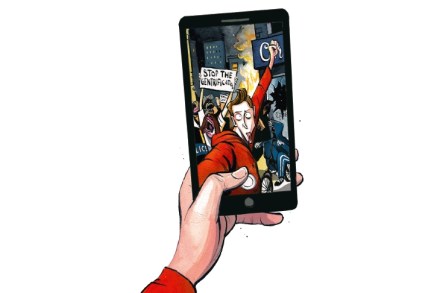
Last weekend, I got into a conversation with the son of an old friend. He’s a nice middle-class boy, mid-twenties, who plays in a band and has lots of tats and piercings. We got into a conversation about summer festivals. I was telling him about a wonderful one I’d been to — the Curious Arts Festival — and then I asked him, ‘You been to anything exciting?’ ‘Yeah,’ he said with a grin, ‘I went to a riot in east London.’ The riot, I discovered, had been a protest for Rashan Charles, a 20-year-old black man from east London who died after being chased and apprehended by a police officer in Dalston. It was a horrible death, the circumstances of which are still being investigated.

Do you know a flake fatale?

It was the third time in a row that she had cancelled our date for drinks. The first time she’d forgotten. The second time she remembered a previous engagement and the third time she claimed she’d got the dates mixed up. The next day I got the text she always sends: ‘Sorry darling, I’m such a flake!’ I used to have friends. Now I have flakes — people who are always screwing up arrangements to meet. Flake has become the catch-all explanation and excuse for the bad manners or bad behaviour of friends and loved ones. Cosmo Landesman and Freya Wood discuss the modern affliction of flakiness: We all know about ladies who lunch. But what about the ones who forget you were even having lunch?

Toff luck

F. Scott Fitzgerald got it wrong; it’s not the rich who are different from you and me — it’s the posh. There is no social act so rude or outrageous that it cannot be explained and then excused on the grounds that the perpetrator was posh. I was recently at a drinks party and saw a man scratching his bottom in front of the buffet table — a full, hand-down--trouser buttock-scratch. With the very same hand that he’d used on his bottom, he picked up a sausage, examined it and put it back in the pile. He then picked up another sausage and put it back. Then, after another quick bottom--scratch, he began to poke around the samosas.

Class act | 24 November 2016

I wish I could say that some of my best friends are working-class, but it’s not true. I do have Dave — my plumber and political sparring partner. Bright and well informed about politics, Dave loves to tease me because I live in Islington, I read the Guardian, I eat organic food and I was against Brexit. In the Dave scheme of things I represent Islington Man — one of those snooty, sneery liberal elitists who looks down on people like Dave. Actually, Dave looks down on people like me. He’s a plumber who earns far more money than I do. Dave does not have a white van; he has a new BMW. (I have only a bus pass.) What’s more, Dave thinks I’m ‘well gay’ after he saw the vast collection of fragrant scrubs and skin gels in my bathroom.

There’s nothing new about the sharing economy – it’s the swinging sixties all over again

On the same day I put my spare room on Airbnb I also had my first cabshare experience, courtesy of Uber. When I mentioned this to a young friend of mine, he patted me on the back and said, ‘Welcome to the sharing economy!’ The sharing economy is one of those buzz terms that everyone uses these days — but what exactly is it? Apparently, it refers to a whole range of online goods and services that instead of buying and owning, we can borrow, rent or have access to — sometimes free, usually for a price. Likewise, we can be the ones providing these goods or services, and make a profit. Share a taxi ride, borrow a dog for an afternoon or rent out your flat for the weekend and you’re part of the sharing economy.

Like Uber, but for hippies

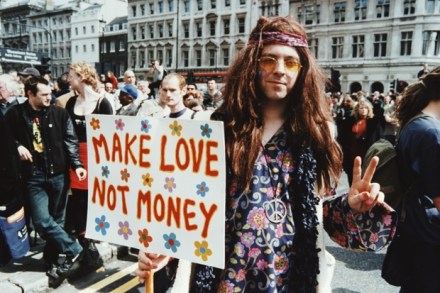
On the same day I put my spare room on Airbnb I also had my first cabshare experience, courtesy of Uber. When I mentioned this to a young friend of mine, he patted me on the back and said, ‘Welcome to the sharing economy!’ The sharing economy is one of those buzz terms that everyone uses these days — but what exactly is it? Apparently, it refers to a whole range of online goods and services that instead of buying and owning, we can borrow, rent or have access to — sometimes free, usually for a price. Likewise, we can be the ones providing these goods or services, and make a profit. Share a taxi ride, borrow a dog for an afternoon or rent out your flat for the weekend and you’re part of the sharing economy.

Public trans sport

I had just sat down on the top deck of a number 38 London bus when I saw him looking at me. He was black and wore a fake-fur coat and orange leggings. There were glittering rings on his fingers, fake diamonds around his neck and bright red lipstick on his lips. In his large hands, a mauve purse. He looked like the kind of Andy Warhol drag-queen who wiggled on the wild side of life back in the 1970s. He made strange chirping sounds and he batted his heavy eyelashes my way. I couldn’t tell if he was a touch crazy or just over-the-top camp. Then he smiled at me. Uh-oh, I thought. But I decided to be brave, so I gave him one of my big, anxious chimp smiles back. He then came over and plopped himself next to me. ‘Hi,’ he said, with a soft, low American purr.

Women’s issues are for everyone now, not just feminists

Like all right-thinking lefty men who came of age in the women’s liberation movement of the 1970s, I always thought of myself as a feminist. But now, thanks to Meryl Streep, I’ve been liberated from the label. Last week I heard her on the radio promoting her new film Suffragette. Asked why the story of the suffragettes hadn’t been made into a film before now, she said that in Hollywood the men with the power to get films made didn’t see this subject as anything to do with them. ‘It wasn’t their fight,’ said Streep. But now things were changing. ‘Increasingly we think that women’s issues and women rights are men’s issues,’ she said. ‘But it belongs to all of us to right this imbalance.

Sorry, but I don’t think feminists can fight the male gaze by baring their breasts

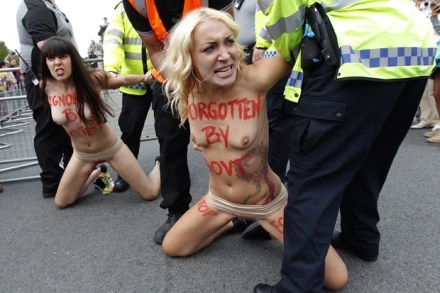
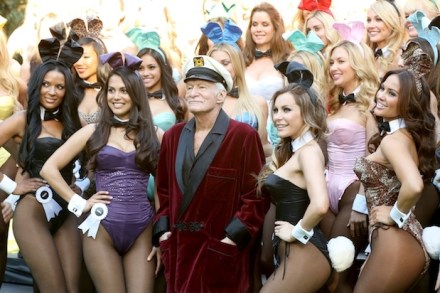
Imagine that you have stepped back in time to the 1970s. Feminists are out on the streets of London protesting against the Miss World competitions. There you meet a sleazy men’s magazine publisher who tells you he has a new idea for getting women to show men their breasts. He’s not going to offer them money or fame like Playboy or Penthouse. No, he’s going to get them to take off their tops in the name of women’s liberation. ‘I have seen the future of feminism,’ he tells you, ‘and it has great tits!’ Naturally you think: this man is insane! Surely no woman would fall for that? Wrong. Not only did they, but the link between showing your breasts and serving the feminist cause didn’t come from men but from women themselves!

Straight white males are the winners in the sexual counter-revolution

When it comes to the battle of ideas, it’s often said that the right won the economic argument and the left won the cultural one. But consider the case of the radical lesbian with the deluxe dildo I met at a north London squat party in the early 1980s. We were having an argument about sexual politics. She was drunk and trying to be provocative when she pointed the dildo at me and declared, ‘You lot are finished. The future belongs to us: the sexual freaks.’ By ‘you lot’ she meant white, middle-class heterosexual men like me. (And ‘us’ were radical lesbians, gays, the S&M brigade, bisexuals, transsexuals, try-anything-once-sexuals.

What Julie Burchill’s ex-husband thinks of her new memoir

Unchosen is the journalist Julie Burchill’s account of how she — a bright and bratty working-class girl from Bristol — fell in love with the Jewish race. It’s an exhilarating and exasperating mix of the utterly brilliant and the totally bonkers. Poor Julie — she thought that her teenage dream of marrying a Jewish man had come true when she married me back in the 1980s. Yes, she got her Jew, but the -ish bit was missing. My family and I earn a chapter in her book called ‘Meet the Perverts’ and all I can say is: Oy vey! You think you’re a smart and funny man to be married to — and then you read an ex-wife’s memoir and you wonder: was I that boring?

Porn-agains: meet the middle-aged men – and women – warped by internet porn

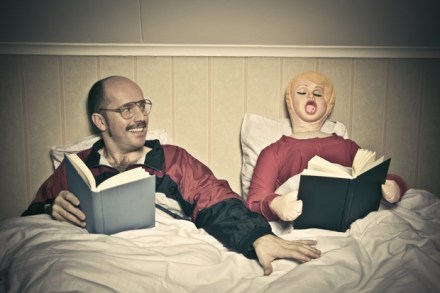
I met a nice, middle-aged, middle-class mother at a dinner party who told me  that she was very worried about the effects of internet porn on adolescent males. What, she wondered, was all this internet porn doing to the young? Did we really want a generation of teenage boys whose idea of emotional intimacy was anal sex? Weeks later we ended up in bed and it left me wondering: what is all that internet porn doing to nice, middle-aged mums you meet at dinner parties? Do we really want a generation of forty/fifty-something women whose idea of emotional intimacy is anal sex? Society’s anxiety about internet porn has been so focused on how it affects the young that its impact on the older generation has gone largely unnoticed.

Right-wing women are sexier

[audioplayer src="http://traffic.libsyn.com/spectator/TheViewFrom22_17_July_2014_v4.mp3" title="Cosmo Landesman and Margaret Corvid discuss whether right-wing women are sexier" startat=1454] Listen [/audioplayer]Not long ago I was out drinking with a group of friends and we started playing the If-You-Had-To game. The idea is to present players with two people they would never want to sleep with — and then make them choose which they’d sleep with. Here are some of the fiendish alternatives I had to face: Imelda Marcos or Wallace Simpson? Ayn Rand or Yoko Ono? Gertrude Stein or Virginia Woolf? Then one joker said: Theresa May or Jemima Khan? Everyone laughed at this no-contest choice. Everyone except me.

When did it become OK to be boring?

[audioplayer src="http://traffic.libsyn.com/spectator/TheViewFrom22_8_May_2014_v4.mp3" title="Cosmo Landesman and Lara Prendergast debate if the bores have taken over" startat=1297] Listen [/audioplayer]I can remember back in the 1970s when a girlfriend of mine, sensing my lack of interest in her very long and very detailed analysis of the lyrics of Bob Dylan suddenly said, ‘Am I boring you?’ Of course she was. And of course I denied it. Why? Because it was a hurtful and embarrassing thing to say to someone. Back then to be seen as boring was the verbal equivalent of having bad breath or body odour. But today no one worries about boring other people — or being branded a bore.

Why working class grandparents are better than middle class ones

When I told a friend that my nine-year-old son was staying with his grandparents for the whole week of the half-term, she said: ‘A whole week! My son would be lucky to get his grandparents for a weekend! Who are these people?’ ‘His grandparents are working class,’ I said. She looked puzzled. ‘What?’ I explained. ‘Working-class grandparents are the best you can have — these days middle-class grandparents are bloody useless.’ I’m not alone in thinking this about the middle-class grandparent (MCGP).

I’m nearly 60. I’m still interested in sex. Is that a problem?

[audioplayer src="http://traffic.libsyn.com/spectator/TheViewFrom22_13_February_2014_v4.mp3" title="Cosmo Landesman and Mary Wakefield discuss what defines a 'dirty old man'" startat=683] Listen [/audioplayer] The other day I casually remarked to my ex-wife that our son’s new teacher is ‘really hot’. She gave me a look of disgust, shook her head and said, ‘You dirty old man!’ It’s not the first time I’ve been called that, and usually I just keep smiling and stay silent. But this time I bridled. Recently, in two separate courtrooms, both Dave Lee Travis and Bill Roache had been denounced as ’dirty old men’. OK, I confess: maybe I did emit a ‘phwhoar!

It’s a stupid lie to say we’re all bisexual

It was lust at first sight and love after the third martini. Over a get-to-know-you-dinner I discovered all I needed to know: I had found the Perfect Woman. All the boxes were ticked and the taxi was winding its way to my bedroom when she said: ‘You should know that I’m bisexual.’ She must have seen the frown on my face because she quickly added, ‘But everyone is bisexual.’ ‘No. I’m not,’ I said gently. ‘Yes you are,’ she insisted. ‘No, I’m a heterosexual,’ I said through gritted teeth. ‘No, we’re all bisexual,’ she said with muffled exasperation. There followed an infantile exchange of Yes you are!/No I’m not!

Gloom and doom

A young American documentary film-maker recently said to me, ‘Do you want to know why no British documentary film-maker would ever make a film about something like the Diamond Jubilee celebrations? There was no blood! No violence! No crack babies! No tears! People were happy, and one thing British documentary film-makers hate is happy people and happy endings. If you want to get a doc made and shown in Britain, you gotta go for gloom and doom.’ Of course my American friend was exaggerating — but by how much? Think British documentary and what comes to mind? For me it’s Pete Postlethwaite wagging a finger and making apocalyptic warnings of ecological disaster in The Age of Stupid.

Prize dupes

Britain now takes the Oscars seriously. That’s a crying shame There was a time when the British took a great deal of pleasure — and not a little bit of pride — in laughing at the self-adoring parade that is the Academy Awards ceremony. The Oscars were regarded as the film equivalent of the Eurovision Song Contest: a fun event that brought out the British talent for mockery. It was nothing more than a chance to check out the fashions and watch Hollywood’s A-list make fools of themselves with overlong and overwrought speeches. Ah, those were the days. It has all changed now that Britain’s The King’s Speech is up for 12 Academy Awards, including Colin Firth for best actor.