Constantin Eckner

Constantin Eckner is a Berlin-based journalist and historian. He works for numerous German newspapers and broadcasters

Germany’s fuel price relief has backfired on motorists

The temporary ceasefire between the United States and Iran was certainly a relief for car drivers across Europe. Ever since the US and Israel began to attack the theocratic Islamic republic, oil and gas prices on the international markets have skyrocketed, affected by the uncertainty about supply and the closure of the Strait of Hormuz. Consumer prices at filling stations have also been affected. In Germany, this prompted the government to introduce a new law on 1 April. Backed by a decisive majority in the Bundestag, the national parliament, the new legislation stated that filling stations could raise prices just once per day moving forward. More precisely, they are now allowed to raise the price for petrol and diesel only at noon.

Merkel’s radical lockdown plan could quickly backfire

In its flailing response to the Covid crisis, the German government appears to have finally given up on federalism. Angela Merkel's latest idea is to introduce nationwide ‘emergency brake’ measures to combat rising case numbers, replacing a patchwork system across the 16 federal states. But will it help bring Germany's third wave under control? Legal changes to grant the federal government unprecedented power to enforce coronavirus regulations in all states have been backed by ministers. The final obstacle for the German Infection Protection Act is parliament. If Merkel's plan is approved, it will mark a big change in the way Germany is governed. It will also make it clear that Merkel is increasingly desperate for answers.

Merz is feeling the pressure of Germany’s state elections

Amid growing uncertainty caused by the US-Israel offensive against Iran and surging gas prices, Germany had its first major election of the year yesterday, with the new state parliament of Baden-Württemberg elected. Forecasts indicate that the Greens, who have been governing the state for the past 15 years, will remain in control of the premier office in Stuttgart, while the Christian Democrats (the CDU) have come in as a close second. Over the past couple of months, it appeared as if the Christian Democrats, with their leading candidate Manuel Hagel, could win the election. But negative vibes from Berlin impacted Hagel's campaign, as promised reforms continue to stall and Friedrich Merz's CDU-led government faces record low approval ratings.

Germany isn’t happy about the EU-US trade deal

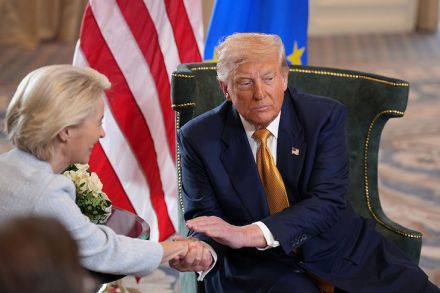
The US-EU trade deal has been given a lukewarm reception in Europe. Although the agreement between US president Donald Trump and the president of the European Commission Ursula von der Leyen is merely a framework, rather than a full-trade deal, there are already major concerns on the continent, especially in Germany – a country famously reliant on exports. German chancellor Friedrich Merz did not seem too pleased with the deal, negotiated by his party colleague von der Leyen. 'I'm not satisfied with the result in the sense that (it was said) this is good as it is,' Merz stated. 'Which, in plain terms, means the German economy will suffer significant damage.

Why German beer is going flat

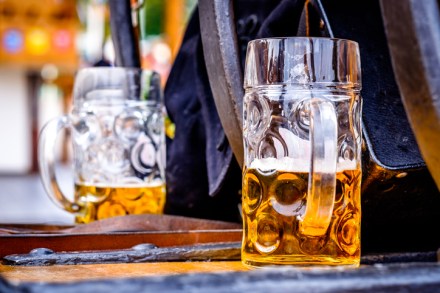
German beer has been an important part of the country's culture and history for centuries. When tourists think about travelling to Germany, many consider visiting one of the beer gardens in Bavaria or elsewhere. The Oktoberfest is not just the world's largest Volksfest, but also represents Germany's fun side. But how much appetite is there for German beer still? Beer exports were down six per cent in 2024 compared to ten years ago, according to figures released by the country's Federal Statistical Office. Meanwhile, beer consumption in Germany has dropped by 15.1 per cent in the same period. Beer consumption per capita in Germany reached its peak in 1980 That many Germans appear to be snubbing beer spells trouble for the country's brewers.

Can Friedrich Merz fix Germany?

Sunday’s federal election in Germany was historic for more than one reason. After the collapse of the so-called 'traffic light' coalition under chancellor Olaf Scholz, it was only the fourth time a snap election had been held in post-war Germany. And just like in 1983 and 2005, a Christian Democrat will be taking over the chancellor's office. Friedrich Merz and his alliance of the Christian Democratic Union (CDU) and Christian Social Union (CSU) emerged as the winners with 28.5 per cent of the votes on Sunday. For Merz, it seems likely that his incredibly long wait to be chancellor is over. Over 20 years ago, he lost an internal battle against Angela Merkel and was essentially in the political wilderness until a few years ago.

Germany’s year is off to a bleak start

Germany’s politicians have a short list of New Year's resolutions: to make considerable improvement across the board. As the new year gets underway, the country is staring down the barrel of a federal election next month. Whoever comes to power must combat economic stagnation, get immigration under control, find a way to effectively collaborate with Donald Trump’s administration on trade and the war in Ukraine, and win back the reins of power within the European Union. Last year was a turgid year for Germany. Not only did Germany's federal government collapse in the wake of ongoing internal disputes between the three ruling parties, but the economy continued to stagnate with no hope of growth any time soon.

Germany’s traffic-light coalition was doomed from the start

Germany’s ruling traffic-light coalition – which has looked shaky since it was formed three years ago – has finally collapsed. Chancellor Olaf Scholz said he had no trust in his finance minister Christian Lindner, who leads the Free Democrats. Scholz's decision to act against Lindner follows months of disagreements between Scholz's Social Democratic Party (SPD), the Free Democrats and the Greens over budget policy and the country’s economic direction. A vote of confidence, which could pave the way for early elections, will take place early next year. As the ruling coalition has been busy tearing itself apart, Alternative for Germany (AfD) has been making headway, gaining support in several federal states.

When will Germany’s economy bounce back?

Germany was once the powerhouse of Europe; for decades, its economy has helped drive the continent's growth. No longer. Berlin's economy ministry plans to downgrade its growth forecast for this year. The German government now expects the economy to shrink by 0.2 per cent in 2024 – down from a previous estimate of 0.3 per cent growth, Sueddeutsche Zeitung reports. Is this the medicine the German economy needs to get it back on to its feet? Germany appears to be on the brink of a second year in a row in which its economy is going in the wrong direction. German output contracted 0.3 per cent last year and the country's economy – weighed down by inflation and high energy costs – was among the weakest performers in the world.

Germany’s plot to face off Chinese car tariffs has failed – for now

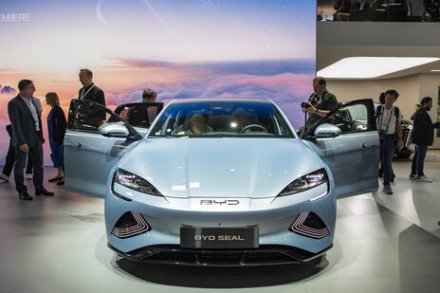
Germany has voted to oppose a proposal by the European Commission to introduce additional tariffs on electric cars imported from China. This was no surprise: in the days leading up to today's meeting, German chancellor Olaf Scholz and other government officials in Berlin had made clear that they had instructed the country's representative not to vote in favour of such tariffs, widely described as 'punitive'. Alongside Germany, Hungary, Slovakia, Malta and Slovenia voted against the introduction of the tariffs. A majority of states representing at least 65 per cent of the population in the EU – or 14 of the bloc's members states – would have been needed to stop the Commission's plans. The Commission aims to put up additional tariffs of up to 35.3 per cent on electric cars from China.

Will AfD voters ever return to the mainstream?

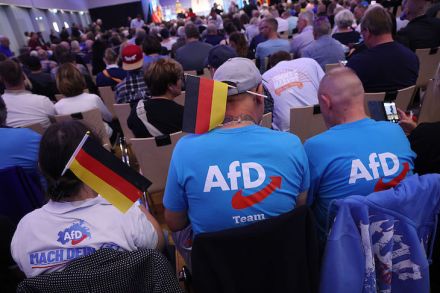
For the second time in three weeks, the Alternative for Germany party (AfD) has received a significant percentage of the votes at a state election in eastern Germany. The far-right party won 29.5 per cent of the votes in Brandenburg, the state surrounding Berlin. Given the polls going into Sunday, the AfD might even be disappointed that it did not place first, rather than second behind the Social Democratic Party (SPD). Even though the SPD won by a slight margin, the pressure on the federal government led by Olaf Scholz and the Social Democrats may increase further in the coming weeks. In the lead-up to the elections, tensions within the SPD rose. Dietmar Woidke, the SPD’s state president, did not want to appear together with Scholz during election campaign events.

Germany’s border crackdown is a gamble

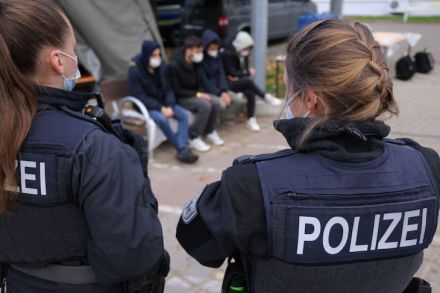
From next week, Germany will enforce controls at its borders once again. The decision, announced by interior minister Nancy Faeser, comes only a little more than a week after the far-right Alternative for Germany (AfD) achieved major successes in several regional elections. Faeser said that border controls would be applied to tackle irregular immigration as well as to strengthen internal security against the threat of Islamic terrorism and international criminality. These permanent controls will replace the usual spot checks common at borders within the European Union for six months, although it is possible that they could be extended.

Could Germany resurrect Britain’s Rwanda migrant scheme?

When Keir Starmer became Prime Minister he immediately dumped the Tories' Rwanda deportation scheme. The Labour leader said the £310 million scheme, under which those seeking asylum in Britain would be sent to Africa, was 'dead' and 'buried'. But Germany is now considering resurrecting the plan and using Rwanda as a third party country for migrants with facilities paid for by Britain. Germany’s special commissioner for migration agreements, Joachim Stamp, proposed deporting asylum seekers coming through Russia and Belarus to Rwanda while their applications are processed.

What the AfD’s ‘historic victory’ means for Germany

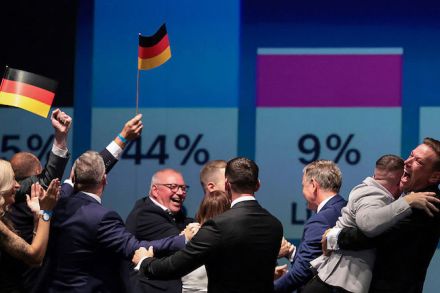
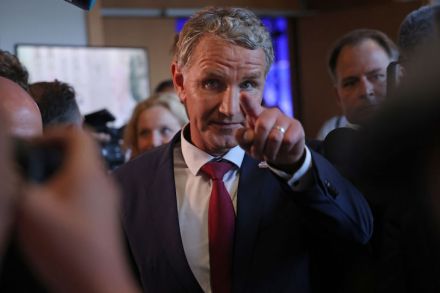
Alternative für Deutschland's success in east German state elections marks a major blow to the government in Berlin. The AfD is set to win almost a third of the vote in Thuringia – putting it nine points ahead of the conservative Christian Democrats (CDU). The AfD's top candidate in Thuringia, Björn Höcke, hailed a 'historic victory'. Despite the best efforts of the centrist parties, the AfD is not going away. Scholz's remarks ignore a simple reality: that the AfD has transcended its status as a mere party of protest. This result, if confirmed once all votes are counted, would mark the first victory for a far-right party in a state parliament since World War Two. The anti-immigration Alliance of Sahra Wagenknecht (BSW) also enjoyed success in Saxony.

Will Germany’s ‘Rwanda-style’ migrant plan ever materialise?

Germany's chancellor is cracking down on asylum seekers – but he is not doing so willingly. The country's federal government is weighing up a system – similar to the UK's mooted 'Rwanda plan' – for asylum applications to be processed abroad. But Olaf Scholz, who was essentially cornered into the announcement following a marathon session with regional leaders from Germany's 16 state governments, is sceptical. 'There are...a whole series of legal questions,' Scholz said after emerging in the early hours of Tuesday morning from an acrimonious meeting with state leaders. The plan, a 17-page agreement, is an attempt to counter the rise of far-right parties like Alternative für Deutschland (AfD).

Will Germany’s new left-wing party challenge the AfD?

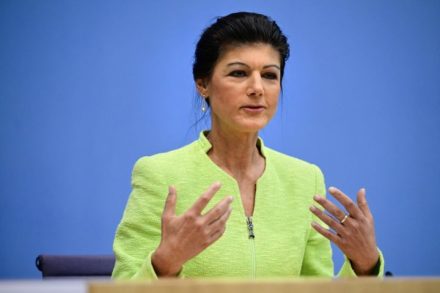
Sahra Wagenknecht, a pivotal figure of the German left, has decided to go up against her former party by launching a new protest movement. Today, Wagenknecht gave a press conference announcing that she was leaving Die Linke party to run an organisation called the 'Sahra Wagenknecht alliance'. She argued that Germany’s infrastructure was in a bad way and warned that the country faces a loss of prosperity if, among other things, it does not give up on its dogged pursuit of green policies. 'Things cannot continue the way they are currently going,' she said. Over the past decade, Wagenknecht has become one of the most well-known left-wing politicians in Germany, regularly assuming anti-capitalist positions and thereby becoming an icon of the extreme left.

Why Germans are going wild for King Charles

King Charles III is going down a storm in Berlin. Hundreds of wellwishers have turned out to greet the King during a reception at the Brandenburg Gate – and the monarch, who is on his first trip abroad since taking the throne, seems relaxed. But amidst the selfies and Burger King hats (which many of those who turned out to see the King have opted to wear), there is serious business to be done – and German politicians are optimistic that Charles's visit can repair some of the damage caused by Brexit. While Charles's mother Elizabeth was seen as apolitical, the King's past commitments to social and ecological causes have raised expectations that he might be able to bridge the gap between the UK and Germany in the post-Brexit era.

How anti-lockdown protesters are outwitting German police

As Germans marked the new year last night, Chancellor Olaf Scholz’s message was somewhat muted: 'It’s clear to all of us: the pandemic is not over', Scholz said in a televised address: 'I appeal to all of you: let yourself be vaccinated.' His message was aimed at the large number of Germans who are yet to be jabbed. Only 71.2 per cent of Germans are fully vaccinated, one of the lowest rates in western Europe. As well as encouraging his countrymen to get vaccinated, Scholz and Germany's other leaders face another problem: how to deal with protests following the introduction of new restrictions. Social gatherings across Germany have been limited to ten people since 28 December and there was no exception for New Year's Eve.

Merkel’s blundering lockdown U-turn

During her 16 years in office, Angela Merkel has produced a couple of memorable sentences that will be imprinted into her legacy. She added a few more on Wednesday, when she announced that the government rescinds plans of a radical Easter shutdown, saying: ‘This mistake is my mistake alone.’ Merkel’s CDU is rapidly losing the support of voters — their approval rating has dropped 9 per cent to just 26 within a week It is quite remarkable to see a leader taking the full blame for what has been perceived as a hasty and impetuous decision. Merkel and Germany’s 16 state premiers had agreed on a radical lockdown over the Easter holidays in yet another attempt to curb the rise of coronavirus infections.

Merkel declares a ‘new pandemic’ as Germany locks down again

A year on from the onset of the Covid crisis, Angela Merkel had grim news for Germans this morning: our country is in the midst of a 'new pandemic'. 'The British mutation has become dominant,' she warned, as she announced a strict new lockdown, which will shut almost all shops and churches over Easter.  The new lockdown rules were thrashed out in a tetchy 12-hour meeting between the chancellor and Germany’s state premiers. It used to be EU summits that prevented Merkel from catching some sleep. Not any longer. The leaders struggled to find common ground on an approach to contain the spread of coronavirus, amidst a worrying spike in infections which has seen cases climb to 7,500 a day.