Coffee House

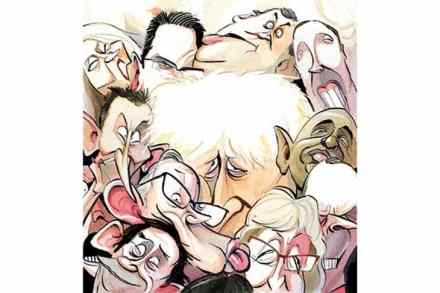
The 57 Tory ministers who resigned – forcing Boris to go

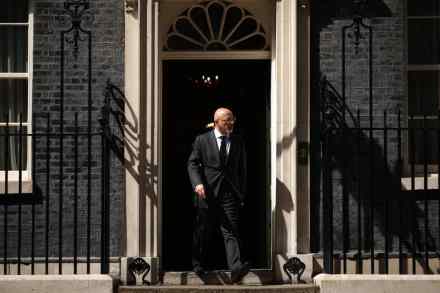
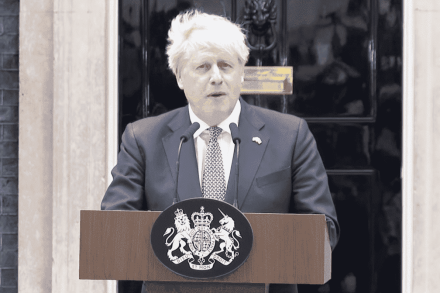
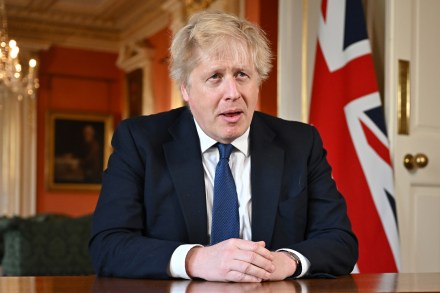
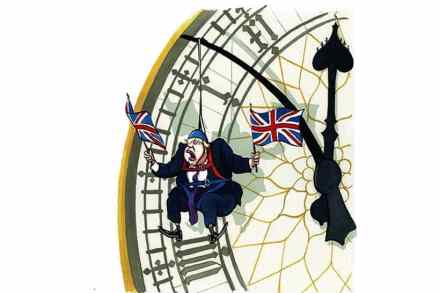
Boris Johnson has announced that he is resigning as Prime Minister after facing a tide of ministerial resignations. Below is the full list of cabinet ministers, junior ministers and other government employees who resigned, forcing the Prime Minister to act. Cabinet ministers who have resigned from Boris Johnson's government: 1. Oliver Dowden, party chairman (5.35 a.m. 24 June) 2. Sajid Javid, health secretary (6.02 p.m. 5 July) 3. Rishi Sunak, chancellor (6.10 p.m. 5 July) 4. Simon Hart, Wales Secretary (10.30 p.m. 6 July) 5. Brandon Lewis, Northern Ireland Secretary (6.49 a.m. 7 July) 6. Michelle Donelan, Education Secretary, (8.53 a.m. 7 July) Junior ministers, trade envoys and party officials who have resigned from Boris Johnson's government: 1.

Live: Michael Gove sacked as Boris Johnson begins reprisals

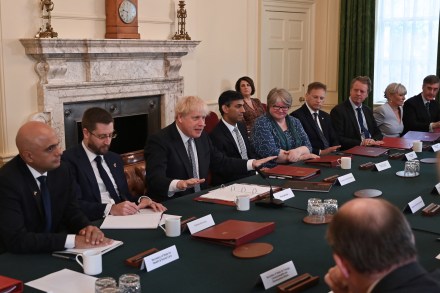
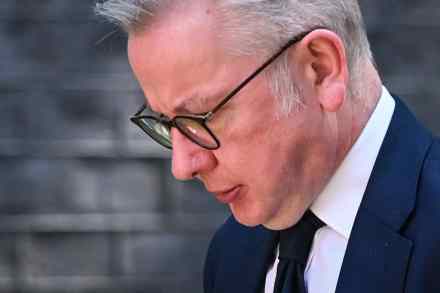
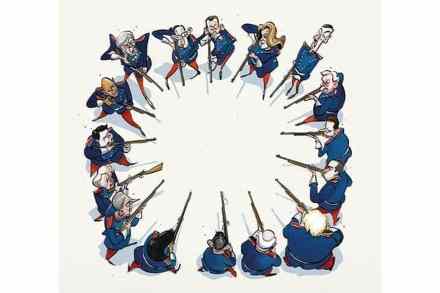
Michael Gove has been sacked from the cabinet, as Boris Johnson attempts to reassert control after today's 41 ministerial resignations. The Levelling-Up secretary had urged the Prime Minister to quit, a message later reinforced by a delegation of cabinet ministers who gathered in Downing Street earlier this evening. Nadhim Zahawi, the newly-appointed Chancellor, Michelle Donelan, the newly-appointed Education Secretary, Grant Shapps, the Transport Secretary, and Simon Hart, the Welsh Secretary, who has since resigned, are among those who told the PM to go. But Johnson has refused to do so and is now willing to risk a confidence vote which may come on Tuesday.  Follow the latest developments on Thursday’s live blog here. 11.30 p.

Live: The Tory MPs calling for Boris Johnson to go

How can Boris Johnson survive this one? That's the question all of Westminster is asking today after the resignations of Rishi Sunak and Sajid Javid. A number of other colleagues have chosen to follow them out of the door: you can keep track of resignations here. But it's not just ministers who want Boris gone: more than a dozen backbenchers have now gone public with their frustrations. This follows last month's no-confidence vote when 148 Tory MPs voted against Johnson's leadership; a number that has only increased since then. Below is the growing list of those who have gone public with their demands for Johnson to go... MPs who have lost faith in Boris Johnson's leadership and/or called for the PM’s resignation: 1.

Roe is gone – what happens now?

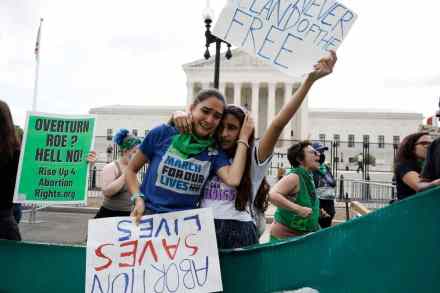
The US Supreme Court has today officially overturned Roe v. Wade, the landmark ruling which gave women the constitutional right to have an abortion. The Court had been examining the case of Dobbs v Jackson Women's Health, which was challenging a Mississippi law which banned abortion after 15 weeks. Following the Dobbs decision, some states will now serve as sanctuaries for the unborn, while others will be sanctuaries for women seeking abortions, sometimes right up until the moment of birth. Let’s start with the states that have ‘trigger laws’ to ban abortion if Roe is overturned. They are Arkansas, Kentucky, Idaho, Louisiana, Mississippi, Missouri, North Dakota, Oklahoma, South Dakota, Tennessee, Texas, Wyoming and Utah.

Full list: the Tory MPs backing Boris Johnson

Graham Brady, the chair of the Tory backbench 1922 committee, has announced that Boris Johnson will face a confidence vote at 6 p.m. this evening. He told the Prime Minister yesterday that the required 54 letters had been received and that would face a vote imminently. Voting for Conservative MPs finishes at 8 p.m. and we can expect the result to be announced later this evening. Johnson will need the backing of 180 MPs to remain leader of the Conservative party. A statement from Number 10 said:  'The PM welcomes the opportunity to make his case to MPs and will remind them that when they are united and focussed on the issues that matter to voters there is no more formidable political force.' MPs who have publicly backed the PM: 1.

Full list: every bill in the Queen’s Speech

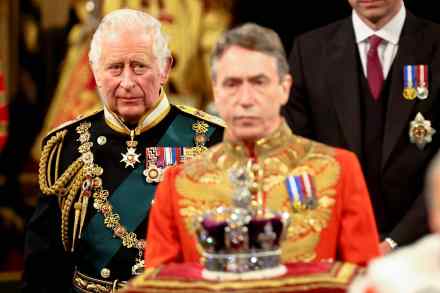
After 73 years of waiting, Prince Charles today delivered his first speech from the throne in the House of Lords to mark the State Opening of Parliament – watched on by Her Majesty in Windsor via television. Charles was escorted by Prince William, after the Yeoman Warders concluded their traditional search of the Palace of Westminster. The Palace of Westminster was fully owned by the sovereign until 1965 when the Queen agreed to hand over control of the Commons and the Lords. The Crown still retains technical ownership of some parts, such as the robing room, with the last monarch to live there being Henry VIII. Some 21 bills were announced by Prince Charles. These were the following: 1.

Full list: which Tory MPs are backing Boris?

Boris Johnson last night addressed the 1922 committee, ahead of Thursday's crunch vote on whether to conduct a parliamentary investigation into his handling of partygate. The Prime Minister received a warm reception from Tory MPs but many are still refusing him to back him publicly. Of the 357 Conservative MPs in the House, fewer than a third have spoken out in support of Johnson.  Nine MPs calling for him to go: 1. Nigel Mills: 'He’s been fined, I don’t think his position is tenable.' 2. Anthony Mangnall: 'Horrified by the conduct of the PM.' 3.Caroline Nokes: 'I have not withdrawn the letter of no confidence in Boris Johnson that I wrote months ago to Sir Graham Brady...

Who said they would vote against vaccine passports?

Note: This article was written in advance of Tuesday's vote. For a full list of those who actually did – or didn't – rebel to vote against vaccine passports, please click here. On Tuesday, a vote will be held on Boris Johnson's new Covid restrictions to tackle the Omicron variant. They will include vaccine passports for large gatherings, compulsory face masks in more places,  and people being asked to work from home when they can (but told they can still go to parties). When the health secretary Sajid Javid introduced the measures in the Commons this week, he was greeted with jeers and calls for him to ‘resign’ from his own party members.

Boris Johnson’s reshuffle, as it happened

Boris Johnson's long-awaited cabinet reshuffle is over (at least for today). After weeks of rumours that the Prime Minister would shake up his top team, today Boris finally made his move. Here are the changes to his top team: Dominic Raab has been demoted from Foreign Secretary to Justice Secretary, replaced by Liz Truss.Gavin Williamson has been sacked as Education Secretary. Nadhim Zahawi will take on the job (the new vaccine minister is yet to be appointed).Michael Gove has been appointed Housing Secretary. Steve Barclay is his replacement as Cabinet Secretary.Anne Marie-Trevelyan has been appointed Trade Secretary, replacing Liz Truss who becomes Foreign Secretary.Robert Jenrick and Robert Buckland have been sacked. 6.25 p.m.

‘We failed’: Dominic Cummings’s evidence, as it happened

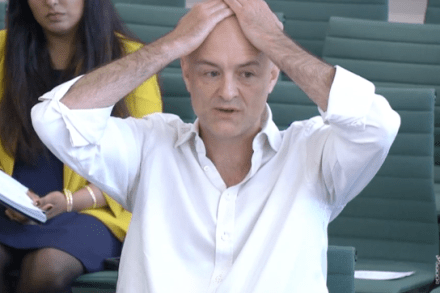
Dominic Cummings has given evidence to a joint meeting of the science and technology select committees about the government's response to Covid-19. Below is how the bombshell session unfolded. The top lines:  Cummings said the government's response to Covid-19 meant that 'tens of thousands of people died who didn't need to die'. (14:12)Matt Hancock 'categorically told' No. 10 he would test those discharged from hospital into care homes. Hancock failed to do so, according to Cummings: 'It was complete nonsense'. (13:15) Boris Johnson initially dismissed Covid as a 'scare story', comparing it to swine flu. (09:53)Cummings said he moved his family to Durham because of security threats.

Beyond the stethoscope: transforming the NHS with new technology

For technology manufacturers, healthcare is already big business, and, with an ageing population increasingly comfortable with technologies that would’ve been unthinkable even a decade ago, the opportunities to innovate are only going to increase. The Future Health Index, a global report commissioned by Philips, supports the fact that it is not just the UK’s younger generation that are embracing these technologies. However are these products – from popular or trendy FitBits to state-of-the-art imaging equipment – really going to revolutionise the country’s medical care? And will the NHS require a head to toe change of ethos to accommodate them?

Are we doing enough to secure Britain’s digital future?

The UK’s digital economy represents nearly one third of the UK economy, and if nurtured properly, it could transform government, society and culture. But are we doing enough to secure Britain’s digital future – and if not, what more can be done? This was the topic discussed by politicians and financial and technology experts at a recent Spectator dinner, hosted by Mastercard. One of the main topics of conversation was around British start-ups and the investment opportunities available in the UK. Jeremy Silver, CEO of the Digital Catapult, has built and sold two technology businesses in the past fifteen years – selling both of them to American tech companies. That’s not through choice, however.

Could Brexit be sweet? The British beet sugar industry after the European Union

With Britain's exit from the European Union looming and no sign of trading instructions from Downing Street, Britain's domestic producers and exporters are still in the dark as to whether Brexit will free them up or tie them down. Sugar is one of these sectors, but, with British sugar beet farmers already providing over half of the country's supply, Brexit could be very sweet for their industry. What opportunities might deregulation afford? And will Britain get a seat at the global sugar industry's top table?

Will Philip Hammond’s Budget reveal the truth behind the Surrey ‘sweetheart deal’?

Isabel Hardman has been investigating the social care issue in Surrey for the Spectator in recent days. Yesterday, she spoke to the man whose texts Jeremy Corbyn quoted at PMQs today, the leader of Surrey County Council, David Hodge. Isabel and Hodge spoke just after Tory-run Surrey County Council had made the decision not to hold a referendum on a 15 per cent council tax increase to pay for social care. He told Isabel that ‘we have always believed that there was a way forward which wouldn’t involve a council tax referendum and I genuinely believe that the government now understands the scale of the crisis’.