Clare Mulley

What did you do in the last war, Maman?

From our UK edition

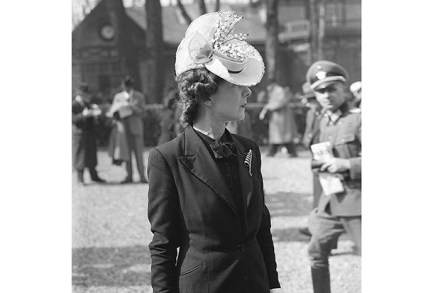
‘La France,’ as everyone knows, is female. Perhaps this is due to gendered assumptions about the beauty, cuisine and couture of the French capital, the symbolic revolutionary Marianne, or the patriarchal nature of language. Between 1940 and 1945, however, Paris was more literally female. Most of the capital’s men were serving with the Allied effort overseas, were POWs or forced workers in Germany. The women of Paris had stayed behind to keep the city running, put food on the table and care for their children, parents and in-laws. For some when France fell, Paris felt emasculated in another sense. Suddenly Parisian women found themselves having to decide how they were going to live alongside their almost entirely male Nazi conquerors and occupiers.

The house that Alfred built

From our UK edition

This is a book about boundaries — and relationships. At its heart is the eponymous house by the lake, which in 1927 was the first of many small wooden summer houses to be built in the village of Gross Glienicke. Both its situation, just outside Berlin in the lakeside area that would later abut Gatow airport, and its many occupants, from well-established German Jews to partying neo-Nazis, would expose the property to the more tidal waters of modern German history. But the house has not just provided a stage for human drama; arguably it has been integral to the action itself, helping to shape lives, just as it was itself transformed by Germany’s changing politics.

Mission near impossible

From our UK edition

Operation Thunderbolt was, Saul David contends in this gripping book, ‘the most audacious special forces operation in history’. In June 1976 Air France Flight 139, travelling from Tel Aviv to Paris via Athens, was hijacked above the Gulf of Corinth by two Palestinians from the Popular Front for the Liberation of Palestine and two Germans from the Revolutionary Cells, a violent leftist organisation connected to the Baader-Meinhof gang. Eventually landing in Uganda at Entebbe airport, the crew and passengers were guarded by Idi Amin’s troops while the president attempted to take credit for promoting negotiations. The demands were the release of 40 pro-Palestinian militants imprisoned in five countries, within 48 hours.

The beginning of the end

From our UK edition

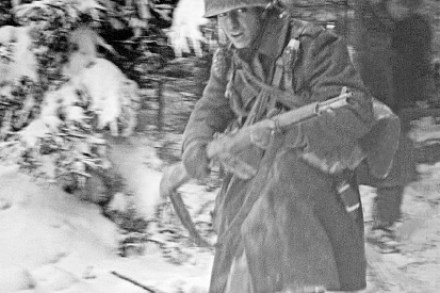
Christmas Eve 1944 found thousands of Allied — mostly American — troops dug into trenches and foxholes along the Belgian front, where they sucked at frozen rations and, in some places, listened to their enemies singing ‘Stille Nacht’. Their more fortunate colleagues in command posts gathered around Christmas trees decorated with strips of the aluminium foil more usually dropped from planes to jam enemy radar signals. The following morning a wave of Junkers dropping magnesium flares led the German Christmas Day onslaught, soon answered by American P-47 Thunderbolt fighter bombers, dropping napalm ‘blaze bombs’ or strafing with machine guns.

A passion for men and intrigue

From our UK edition

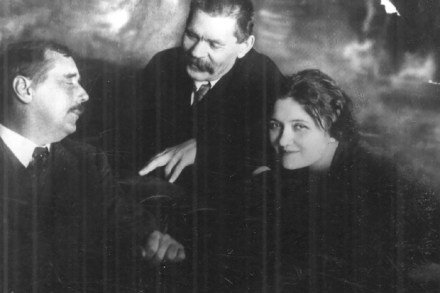
Moura Budberg (1892–1974) had an extraordinary life. She was born in the Poltava region of Ukraine, and as a young woman she danced at the Sanssouci Palace at Potsdam with the Russian Tsar and the German Kaiser. In her twenties by 1917, she had a well-placed aristocratic husband, two children and several fine homes in different countries. This might have been enough for most of us, but for Moura it was merely a preamble — we are only on page 15. Revolution, espionage, embezzlement, murder, executions, plenty of intimacy and arrests by several different nations take us through a few more chapters.

Reliving the most famous last stand of the French Resistance

From our UK edition

Published to mark the 70th anniversary of the Battle of Vercors, perhaps the most famous stand of the French Resistance in the second world war, there is an awful inevitability to this book. Tragedy looms like the great plateau itself, overshadowing the individual stories of the people who lived, fought and died in these mountains. The strategic and tactical failings that led to their defeat run like strata through the history: a lack of clarity in Allied communications; failure to deliver sufficient heavy weapons or reinforcements; the mistaken use of a guerrilla army as a fixed, defensive force and, above all, the tendency to let diplomacy and politics trump military common sense.

She Landed by Moonlight, by Carole Seymour-Jones – review

From our UK edition

The subtitle of Carole Seymour-Jones’s quietly moving biography of the brilliant SOE agent Pearl Witherington is ‘the real Charlotte Gray’. As quickly becomes evident, the real thing was more than a shade superior. Like the fictional Gray, Witherington had determined to serve behind enemy lines in France with the dual aims of fighting the Nazi occupation of her adopted country, and being reunited with the man she loved, in Witherington’s case her fiancé, the escaped French POW Henri Cornioley. Unlike Gray, however, Witherington would quickly achieve both her public and private missions, meeting up with Henri within just days of her arrival.

‘Cruel Crossing: Escaping Hitler Across the Pyrenees’, by Edward Stourton – review

From our UK edition

‘One afternoon in September 1942,’ Edward Stourton opens this important and rewarding book, ‘a young man and a young woman could be seen sitting on the back steps of a farmhouse in south west France, looking up at the Pyrenees.’ It is like the first image in an album packed with snapshots set against this same glorious setting. ‘There is no neat way of telling this piece of history’, Stourton concedes; ‘it is a jumble of individual lives’. Collectively these brief glimpses tell the story of the perilous passages over the mountains between France and Spain during the second world war.