Cindy Yu

Cindy Yu

Cindy Yu is a Times columnist, and formerly both an assistant editor of The Spectator and presenter of our Chinese Whispers podcast.

How should the UK manage its relationship with China?

17 min listen

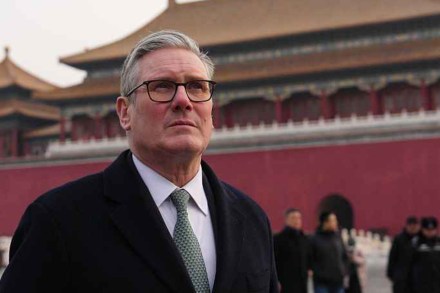
As Keir Starmer's visit to China draws to a close, Sam Olsen – who runs the States of Play substack – and Times columnist Cindy Yu join Patrick Gibbons to discuss how the UK should manage its relationship with China. Starmer's visit has drawn criticism from various China hawks – and from President Trump – but is there a way for the UK to balance legitimate security concerns with the need to trade with the world's second largest economic power? Plus, to what extent to the British public care about these geopolitical concerns? Cindy and Sam explain why is it important for policymakers to explain how these trips link back to domestic issues – and Cindy name checks James Cleverly as she highlights the importance of consistency amongst the political class.

How should the UK manage its relationship with China?

Haunted by my great-grandfather’s second wife – by Alice Mah

Alice Mah didn’t enjoy finding her roots. Even though ‘ancestor tourism’ is increasingly popular among westernised descendants of Chinese émigrés like her, she felt a nameless sort of dread when visiting the village in the Cantonese county of Taishan where her great-grandfather came from. It didn’t help that she’d just attended the morbid Qingming festival, when the Chinese remember their dead by sweeping their tombs. Mah’s memoir opens here, and we nervously anticipate the tragedy or horror that will surely strike – and are left waiting. Other than the pushiness of Taishanese cousins, who demand ‘red pockets’ (a traditional way of gifting money in small red envelopes) and donations for the village from their richer compatriots, the trip seems uneventful.

‘The art of the deal’?

15 min listen

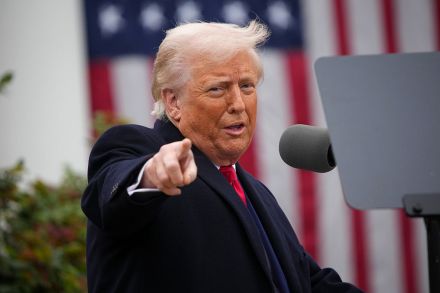
Two days ago, talk of a 90-day pause on Donald Trump’s ‘reciprocal tariffs’ was branded ‘fake news’ by the White House. But yesterday, the President confirmed a 90-day pause on the higher tariff rates on all countries apart from China. There is some confusion about whether this was The Donald's plan from the start – although the safe assumption is that it wasn't, and that someone senior in the White House sat him down and explained the market chaos he has caused. Is this 'the art of the deal’? Regarding China, the President wrote: ‘Based on the lack of respect that China has shown to the World’s Markets, I am hereby raising the Tariff charged to China by the United States of America to 125 per cent, effective immediately.

What does it take to be ‘an old friend of the Chinese people’?

38 min listen

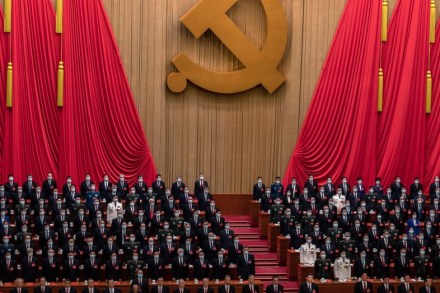
The term ‘old friend of the Chinese people’ might seem a colloquial, almost sentimental, phrase to appear in official diplomatic language, but in the Chinese context, those words have a very specific meaning. Most often, they refer to high profile foreigners whose actions have helped the Chinese Communist Party in one way or another. The most famous of these is Henry Kissinger, who led the way for American rapprochement with China. That the CCP gives various foreigners this honour is revealing of China’s priorities over the decades, but also of its attempts to co-opt foreign forces to its cause. Think back to the United Front strategy, which we looked at on the podcast earlier in the year.

From Chimerica to Cold War II: how US-China relations soured

37 min listen

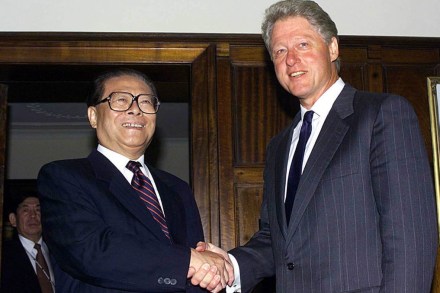
It’s easy to forget that, as recently as the start of this century, the US was China’s biggest ally. Washington saw Beijing as a necessary bulwark against Moscow, and consistently supported China’s entry into the world economy ever since rapprochement in the 1970s, including its accession to the World Trade Organisation. These days, the relationship couldn’t be more different. Why have relations cooled quite so fast? When was the turning point? And can we now say that rapprochement was a strategic mistake from the US? Bob Davis is a former senior editor at the Wall Street Journal, who was posted to China between 2011 and 2014.

Is Keir Starmer a Tory?

19 min listen

Slashing the winter fuel allowance, maintaining the two child benefit cap, cutting international aid, cutting the civil service, axing NHS bureaucracy, possibly slashing welfare expenditure... you'd be forgiven for thinking the Conservatives were in power. But no, these are all policies pursued by the current Labour government. So on today's Saturday Shots Cindy Yu asks Michael Gove and James Heale, is Keir Starmer a Tory? While Michael admits to giving Starmer a 'painful' two cheers, he does say there is historic precedent for Labour governments enacting right-leaning measures: from Jim Callaghan's migration policies to the economic ones of Ramsay MacDonald. How has Starmer got away with it? And what does his premiership of pragmatism tell us about the future direction of Labour?

Rana Mitter on the legacy of Sun Yat-sen

43 min listen

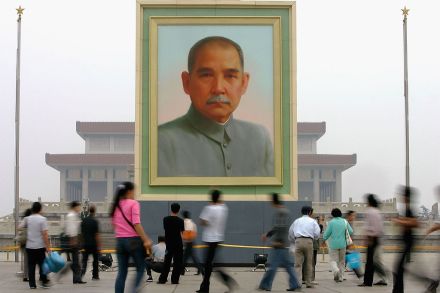
Walking around Taipei a couple of years ago, I spotted a familiar sight – a bronze statue of a moustachioed man, cane in his right hand, left leg striding forward. The man is Sun Yat-sen, considered modern China’s founding father. I recognised the statue because a larger version of it stands in the city centre of Nanjing, the mainland Chinese city that I was born and raised in. That one figure can be celebrated across the strait, both in Communist PRC and Taiwanese ROC, is the curious legacy left behind by Sun. March 12th this year is the centenary of Sun’s death, so what better opportunity to look at his legacy, and who better to discuss Sun than the historian Rana Mitter, who needs no introduction with Chinese Whispers listeners.

Can Starmer charm Trump?

12 min listen

Keir Starmer is in D.C. for what will probably be one of the most important bilateral meetings of his premiership. The goal is to charm Trump and secure some guarantees for Ukraine's security after a negotiated peace in the war. Can he succeed? Cindy Yu talks to James Heale and Peter Quentin, Rusi Associate Fellow and former policy adviser to Ben Wallace. Produced by Cindy Yu.

Why is Kemi struggling at PMQs?

12 min listen

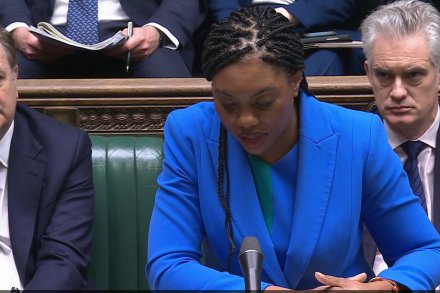
For the second week in a row, the leader of the opposition seemed to struggle at Prime Minister's Questions, ending up accusing Keir Starmer of being 'patronising' after having a couple of her questions rebuffed. Cindy Yu talks to James Heale and Isabel Hardman. Produced by Cindy Yu.

What China’s planned mega-dam means for Asia

29 min listen

Just before the end of 2024, Chinese state media Xinhua slipped out an announcement – the long discussed mega-dam in Medog County, Tibet, has been greenlit. When built, it will generate three times more energy than China’s Three Gorges dam, currently the largest in the world. The Xinhua write-up gave few other details, but the news has caused reverberations across Asia as the river on which the dam would be built, the Yarlung Tsangpo, flows into both India and Bangladesh. The existence of the dam could, as we will hear in this episode, have extensive impact on these downriver countries.

Can Farage navigate the Trump-Zelensky maze?

9 min listen

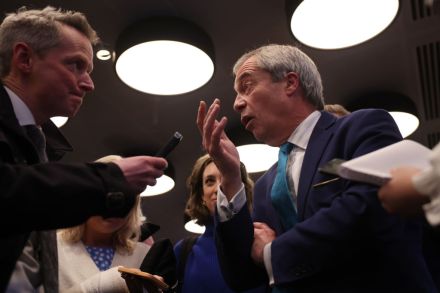
Donald Trump's latest comments on Ukraine and its leader have united the British political spectrum in condemnation – almost. Nigel Farage has tread a careful path given his friendship with the U.S. President, but also the fact that the majority of the British public disagree with Trump's critical attitude towards Ukraine. Can he keep this up? Cindy Yu talks to Katy Balls and James Heale. Produced by Cindy Yu.

Have America’s chips controls backfired?

57 min listen

Beginning in the first Trump presidency and expanded under Joe Biden, the US has taken a strategy of technologically containing China through restricting its access to cutting edge semiconductors. As Chinese Whispers has looked at before, these chips form the backbone of rapid advances in AI, telecoms, smartphones, weaponry and more. Washington’s aim was clear: to widen the technological gap between the two powers But has this strategy worked? Lately this has become a hot topic of debate as Chinese tech companies such as Huawei and DeepSeek have nevertheless made technical strides. Some even argue that the export controls have spurred on Chinese innovation and self-reliance. In this episode of Chinese Whispers, two very informed and smart guests debate this issue.

Was Peter Mandelson the right pick for ambassador to the US?

22 min listen

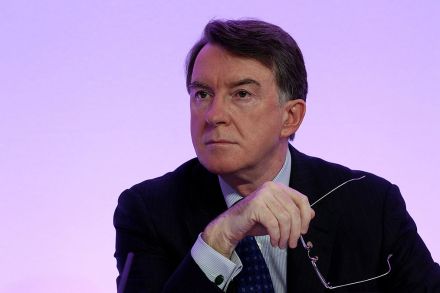
‘An absolute moron’ – those were the words used by Chris LaCivita, a senior campaign advisor to Trump, to describe Peter Mandelson. Lord Mandelson is Keir Starmer’s choice for the next ambassador to the US, but Trump may yet refuse his letters of credentials. How wise is this appointment at the dawn of an uncertain era of US-UK relations? Cindy Yu talks to James Heale and Sophia Gaston, UK foreign policy lead at the security think tank ASPI. Produced by Cindy Yu.

Can Reform turn more Tory donors?

15 min listen

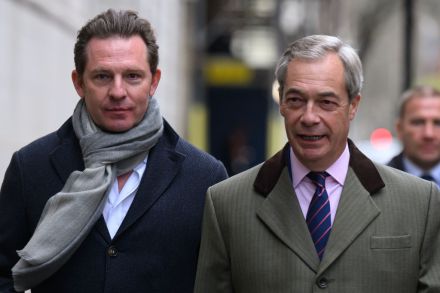
Tuesday night's Reform fundraiser was designed to spook the Conservative party, says Conservative peer and journalist Paul Goodman on today's episode. He talks to Cindy Yu and James Heale about whether Kemi Badenoch can keep her cool under Reform's domination of the airwaves. Produced by Cindy Yu.

What is China’s ‘United Front’ agenda?

34 min listen

When Chinese spy scandals break, like the latest involving Prince Andrew and his Chinese business associate, one organisation often comes up – the United Front. Mao Zedong had dubbed it one of the Chinese Communist Party’s three ‘magic weapons’. So what is this mysterious ‘United Front’ and how important is it to advancing the CCP’s agenda? Joining the podcast is Charlie Parton, a former British diplomat in Beijing and a special advisor on China to the Foreign Affairs Select Committee. He is now chief advisor to the Council on Geostrategy’s China Observatory. ** Chinese Whispers is nominated in the Political Podcast Awards 2025.

Is Donald Trump warming to Keir Starmer?

16 min listen

Starmer and Trump have finally spoken, with a 45 minute phone call taking place between the two leaders. The pair reportedly discussed the ceasefire in Gaza, and trade and the economy, with Starmer attempting to find common ground by talking up his plans for deregulation. Cindy Yu speaks to Katy Balls and Kate Andrews about their relationship. Do these early signs suggest it will be wholly positive, or are there thornier issues to come?  Also on the podcast, Rachel Reeves is set to deliver a speech this week outlining her plans for growth - just how important is this week for her? Produced by Patrick Gibbons and Cindy Yu.

RedNote is breaking down the Great Firewall of China

I turned to Xiaohongshu during the pandemic. At a time when I couldn’t visit China, the Chinese social media app (also known as ‘RedNote’) was a little slice of the motherland when I was bored with Instagram or Twitter. I was hooked immediately: like Instagram, the app is good for beautiful pictures and well-produced reels. It also has cute animals and an excellent sample of the dry wit of Chinese millennials. I’ve probably swiped through hours, maybe days, of short videos of beautiful street scenes from Chinese cities, vlogs from people who have swapped mega-cities for rural villages, cooking videos from all corners of the country, Mandarin comedy skits and dance routines in Han dynasty costumes. But in the past few days I’ve barely recognised my Xiaohongshu timeline.

Eva Dou on ‘The House of Huawei’

49 min listen

Chinese Whispers is nominated in the Political Podcast Awards 2025. Vote for it to win the People's Choice category here. Among the casualties of Donald Trump’s trade war with China in his first presidency was the telecoms giant Huawei. Founded by former military engineer Ren Zhengfei, the company is a world-leading manufacturer of everything from telecoms equipment to smartphones. But it fell foul of the Trump administration as it tried to become integral to the world’s rollout of 5G, leading to a backlash in the West and even the house arrest of Ren’s daughter. At the centre of the row is a suspicion that Huawei is essentially a state-owned company, working at the behest of the Chinese Communist Party.

Keir Starmer wants to redefine crime and punishment

How far should a government go to stamp out people smuggling? This month, the Home Office is set to introduce powers that will allow courts to place expansive restrictions on those suspected of people smuggling and other serious crimes. Penalties are set to include social media bans, restrictions on banking and even curfews, imposed pre-arrest. Infringement of these court orders would be a criminal offence punishable by up to five years in jail. Some have welcomed this as tough action from the Labour government; finally, you may think, they’re doing something about illegal immigration. But tough policies aren’t always good policies.