Cindy Yu

Cindy Yu

Cindy Yu is a Times columnist, and formerly both an assistant editor of The Spectator and presenter of our Chinese Whispers podcast.

Is British defence ready for the 2020s?

36 min listen

What is the role of intelligence in defence? Knowing your enemy has always been vital in traditional warfare, but with the dawn of digital technology and social media, defence seems to have taken on a different character – one where information is not just vital to war and peace, but its defining characteristic. Our relations with Russia is a case in point – though we are not at war, the British government is constantly battling information attacks from Moscow – whether in the form of disinformation campaigns, or cyber attacks. To win in this new age of defence, Britain must establish what some have called ‘information advantage’. So how well equipped are we?

Is British defence ready for the 2020s?

What is the role of intelligence in defence? Knowing your enemy has always been vital in traditional warfare, but with the dawn of digital technology and social media, defence seems to have taken on a different character - one where information is not just vital to war and peace, but its defining characteristic. Our relations with Russia is a case in point - though we are not at war, the British government is constantly battling information attacks from Moscow - whether in the form of disinformation campaigns, or cyber attacks. To win in this new age of defence, Britain must establish what some have called 'information advantage'. So how well equipped are we?
Planet Corona: is this the tipping point for globalisation?

38 min listen

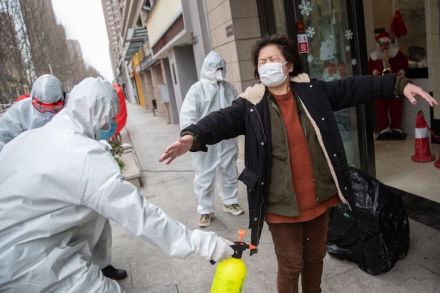
As the coronavirus sweeps across the globe, it's causing businesses, consumers, and governments to rethink their globalised lives. Is this a tipping point for hyper-globalisation (1:00)? Plus, is the government slimming down its Budget plans (13:40)? And last, is it harder to be eco-friendly if you are a woman (26:35)?

Beware the super-spreaders of coronavirus conspiracy theories

When a new virus is discovered, conspiracy theories often spread faster than the disease. I’ve been following the debate in China and the latest theory doing the rounds on social media is: what if the coronavirus didn’t come from China, but originated in the US instead? It would be classic CIA, wouldn’t it? The outbreak of this particular rumour can be traced to a medical pundit on Taiwanese TV two days ago. He referenced an academic paper which shows five different ‘families’ of coronavirus: A to E. But all 80,000 Chinese coronavirus cases belonged to one group: C. In the US, there are only 70 cases but a far greater variety with all five ‘families’ present.

The Edition: can the UK and EU bridge their Brexit gap?

41 min listen

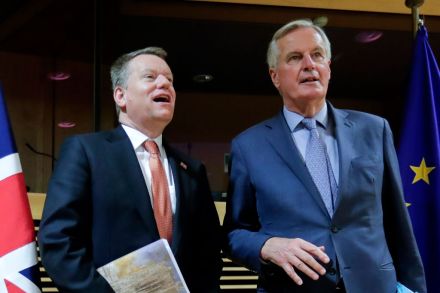
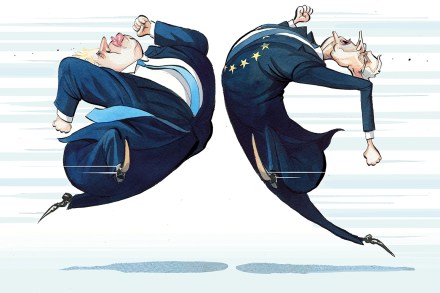
Next week, the trade negotiations between the EU and the UK begin in earnest. But in the days ahead, the positions set out by both sides are so far apart that the negotiations can only be heading towards an almighty row. James Forsyth writes in this week's issue that it's better if they get this over with quickly, in order to move on to the compromise 'landing zone' that is a deal by the end of the year. On the podcast, I speak to him and Peter Foster, Europe editor of the Telegraph. It gets a little fiery as Peter challenges James on exactly why Britain would want to diverge, anyway. I also speak to Colin Freeman, whose piece in the Spectator this week takes a look at Alpha Condé, the Guinean president who is trying to abolish term limits.

Here comes Bloomberg

39 min listen

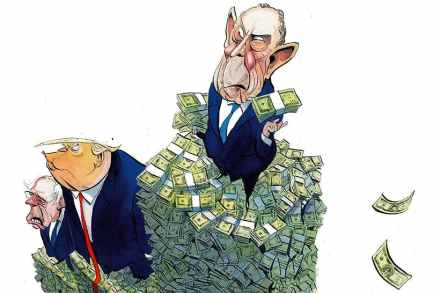
This week, has Mike Bloomberg blown his presidential hopes with a disastrous TV debate (00:50)? Plus, has the BBC really gone downhill (12:05)? And last, Toby Young reveals all about his first stand up comedy gig (26:30).

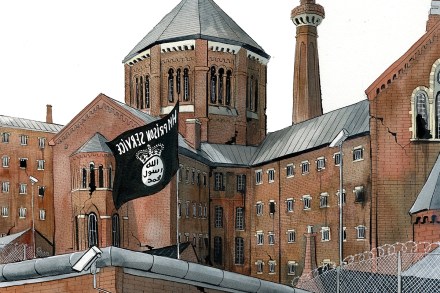
How the Streatham terrorist exploited a loophole in our knife laws

When I worked at Lidl, there were a few products that we took extra care with. Some of these were high-value goods at risk of being stolen (like the £100 laptop we once sold, causing biblical scenes of chaos in the middle aisle). Others were to comply with laws on selling dangerous goods. Knives were always locked up behind the till. In Lidl's Tooting branch, in a relatively rough area near Streatham, the knives were all taken out of their boxes and locked up in the managers’ office. To purchase, you’d have to show ID and wait at a till as a manager brought back the knife. So how was it possible that Sudesh Amman, barely out of his teenage years, was able to swipe a knife from a local high street shop?

Revolution in the air: redrawing Britain’s air routes

30 min listen

The UK’s aviation industry has today pledged to achieve net zero carbon emissions by 2050. It’s a promise that has been met with scepticism by some campaigners, so how does the industry think it can achieve this goal, while also matching Britain’s post-Brexit ambitions on connectivity and trade? One major reform could be the modernisation of British airspace, to make flight routes more fuel-efficient. It’s a project that’s been a long time in the coming. We don’t always think of airspace as a series of roads in the air – but there is a complex infrastructure system right above our heads.

China’s response to coronavirus shows a one-party state in action

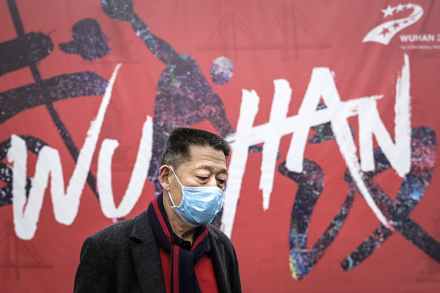
My hometown of Nanjing is more than 300 miles away from Wuhan but my family there, like Chinese families everywhere, have been gripped by the coronavirus story. We use WeChat (a Chinese version of WhatsApp) to share medical tips, the latest intel and even a spattering of dry jokes. A snippet of information from an official bulletin — passed on by my aunt — jumped out at me. The disease had made its way to Nanjing, with three patients reported. And the authorities knew rather a lot about their location. The government message read: ‘Patient Two: January 18th at 16:15 to 17:54 shopped at Hanzhongmen Avenue Oushang Supermarket (Hanzhongmen Avenue No 151); January 20th at 10:00 took the Number 48 bus at Chating East Street Bus Stop, and disembarked at the terminal station.