Christopher Snowdon

Christopher Snowdon is Head of Lifestyle Economics at the Institute of Economic Affairs

Is this the last gasp of the Covid state?

From our UK edition

In the week ending 15 April, there were 644 deaths registered in England and Wales involving Covid-19 as the underlying cause. In total, there were 9,919 deaths registered. Or, to put it in terms that a Covid hysteric might understand, enough people to fill 24 jumbo jets. You don’t hear much about the 9,275 deaths that didn’t involve Covid because other respiratory diseases haven’t attracted a vocal lobby group that puts platitudinous opposition to them at the very core of its being. Despite the latest wave of Covid being on its way out in Britain, there still exists a surprisingly resilient and increasingly hysterical movement calling for lockdown restrictions to be reintroduced.

Deaths of despair: how Britain became Europe’s drugs capital

From our UK edition

37 min listen

In this week’s episode: Is there any substance to the government’s new drugs agenda?In The Spectator this week Fraser Nelson writes the cover story on the government’s new 10 years drugs plan and finds that while on the surface this seems like a new war on drugs, it might actually have some thoughtful and effective policies buried within it. Fraser is joined on the podcast by Christopher Snowden, the head of lifestyle economics at the Institute of Economic Affairs. (00:52)Also this week: Can Islam save Britain’s churches?Britain has for a long time now has been becoming a more and more secular nation. This has meant that many churches that used to have full pews are at risk of turning into luxury flats or another Tesco Express.

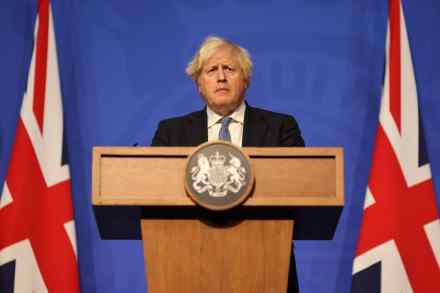
Is this the real reason Boris introduced Covid restrictions?

From our UK edition

If a day is a long time in politics, 36 hours is a lifetime with this government. On Tuesday morning, Dominic Raab told the BBC’s Today programme: ‘We don't think Plan B is required. Why? Because of the success of the vaccine programme.’ It was a reasonable analysis and a sound conclusion. The UK has delivered an incredible 120 million Covid vaccines in the last year, including 21 million booster doses in the last few months. In South Africa, the epicentre of the Omicron outbreak, only 25 per cent of the population has been fully vaccinated and almost no one has had a booster shot.

Do we want the nanny state tracking our every step?

From our UK edition

The best thing that can be said about the government’s latest anti-obesity scheme is that it's cheap. For now. The new HeadsUp app, which will track people’s diet and exercise regimes and reward them with cinema tickets, clothes vouchers and the like, has a price tag of £3 million. This is peanuts in public health terms. The NHS burns through £3 million every eight minutes. It amounts to 4p for every man, woman and child in the UK. The bad news is that it is only a pilot scheme. If bribing people with their own money is seen to ‘improve rates of physical activity and inspire healthier eating’, as the Office for Health Improvement and Disparities (formerly Public Health England) expects, it will go nationwide and the budget will rocket upwards.

Turning the tide: how to deal with Britain’s new migrant crisis

From our UK edition

40 min listen

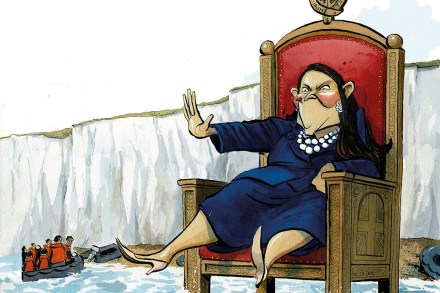
Is there a humane solution to Britain’s migrant crisis?(00:52) Also on the podcast: Why is the WHO so down on e-cigarettes?(16:23) and finally... after a year and a half inside how angry will strangers make us?(27:01) With Douglas Murray; award winning film maker and producer for the Trojan Women project Charlotte Eagar; Christopher Snowdon; Clive Bates the director of The Counterfactual and previous head of ASH; Damian Thompson; and Stuart Prebble creator of the hit TV show Grumpy Old Men.

The WHO’s bizarre war on e-cigarettes

From our UK edition

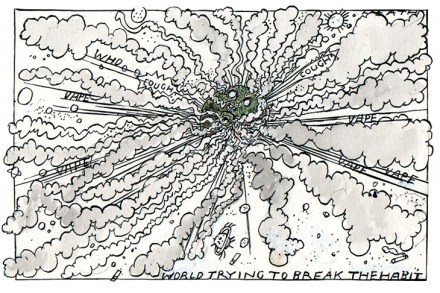
When the COP26 climate change conference hits Glasgow at the end of October, the media will be out in force to discover how world leaders are going to meet their ambitious carbon emission targets. It will be on the front pages. Edited highlights will be on television. Boris Johnson and Nicola Sturgeon will be elbowing each other out of the way to get in the limelight. Extinction Rebellion will be performing their doomsday japes outside. But when COP9 begins in November, few will notice. Admittedly, this event is being held online this year, but it would have flown under the radar even if it had been held in the Hague, as planned. It always does. Like COP26, it is a United Nations conference, but that is where the similarities end. You probably haven’t even heard of it.

A salt and sugar tax doesn’t make much sense

From our UK edition

What is the point of the National Food Strategy? When Henry Dimbleby was hired as Britain’s ‘food tsar’ several years ago, the idea was to develop some blue sky thinking and to have someone look at the issue with a fresh pair of eyes, but when he produced his first report last year, it contained the same generic, flat-pack, bone-headed, nanny-state recommendations that every other voice of the establishment had been calling for. So predictable were his conclusions that the government had already committed itself to implementing most of them by the time it was published and he resorted to moaning about Percy Pigs to give himself an angle. The second part of the strategy has now been published and it is, incredibly, even worse than the first.

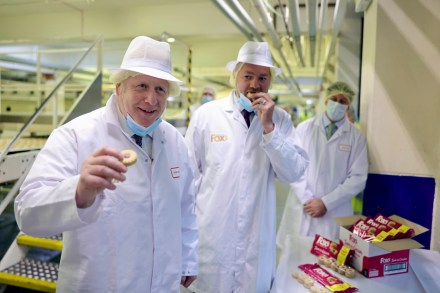
Boris’s junk food crusade is absurd

From our UK edition

The government is to ban 'junk food' adverts before the 9 p.m. watershed as well as restricting online food ads. Boris Johnson seems to have realised that he is overweight and so now we must all be subjected to an ever-growing assortment of gastronomic restrictions.  The first of many problems, however, is that civil servants don't actually have a definition for 'junk food'. The category used instead is 'high in fat, sugar and salt' (HFSS), a designation that is ridiculously broad. So now certain foods that would normally fall into the category are exempt. Honey, olive oil, avocados and Marmite are among those reportedly saved.

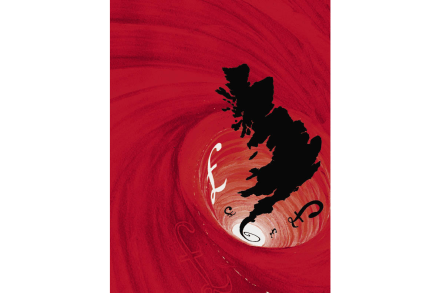
The insanity of Britain’s housing market

From our UK edition

On the day the Office for National Statistics announced a sharp rise in consumer price inflation, albeit to a still modest 1.5 per cent, we discovered that house prices have jumped by a staggering 10.2 per cent in the last year. The average house in England now costs £275,000, close to ten times the average annual income. In 1992, the average house cost three times the average income. A housing boom during a pandemic in the wake of the deepest recession in 300 years doesn’t make a lot of sense, but a few recent events can partially explain it. After three lockdowns, there is pent-up demand, including for houses. The abrupt shift to working from home has led to a permanent change in how some people do their jobs.

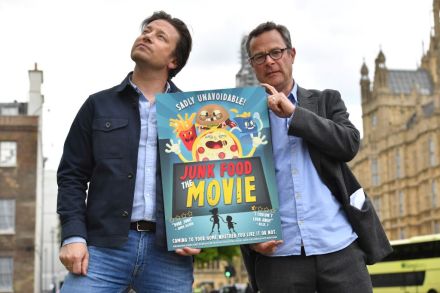
The problem with Hugh Fearnley-Whittingstall’s war on obesity

From our UK edition

With his little round spectacles and earnest expression, Hugh Fearnley-Whittingstall is the Penfold to Jamie Oliver’s Dangermouse. Both men have been largely forced out of the restaurant business due to public indifference and now spend their time writing endless cook books and lobbying the government for tougher laws on food that is deemed high in salt, sugar and fat. This is a dangerous game for chefs to play since they use a great deal of salt, sugar and fat at work, but Oliver’s been getting away with it for the last twenty years and neither he nor Fearnley-Whittingstall do much cheffing these days in any case.

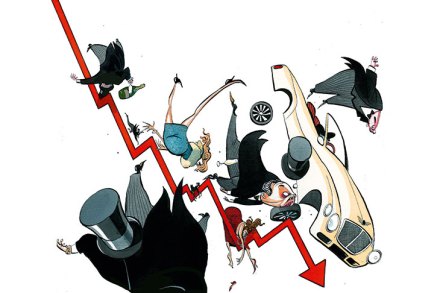
Why 2021 could be the year of economic Armageddon

From our UK edition

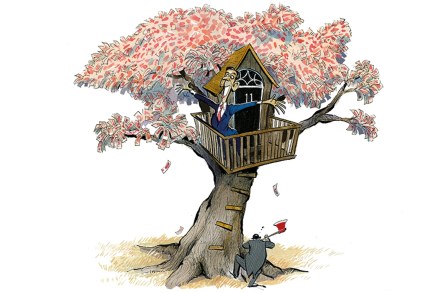
The British economy is wrapped in bandages – we won’t know whether the wound has scabbed or turned septic until they are ripped away. By the time the furlough scheme ends in April, whole sectors of the economy will have been out of action or severely incapacitated for over a year. Cash grants and the job retention scheme, both riddled with fraud, have propped up zombie businesses, some of which would have gone bust in the last year even without a pandemic. Of the businesses frozen in March 2020, how many will come out of hibernation in April 2021? How many people on furlough will discover that they have, in effect, been on gold-plated unemployment benefit for a year? No one knows, but the signs are not good.

The great alcohol cover-up: how public health hid the truth about drinking

From our UK edition

The text below is the basis of a talk given by Christopher Snowdon, head of lifestyle economics at the Institute of Economic Affairs, at the Spectator annual health debate 2016. The debate was entitled: ‘Can we trust health advice?’ Before answering the question of whether we can trust health advice we must first ask: ‘Which health advice?’ It varies so much over time and between countries. In 1979, the government advised men to drink no more than 56 units of alcohol a week. This was later reduced to 36 units, then 28 units and then 21 units. Last month, the Chief Medical Officer reduced it once again, this time to 14 units.

Don’t listen to the health fascists — drink up

It was always likely that once the killjoys had done their work on smoking they would turn their attention to alcohol. Sure enough, with the Dietary Guideline Advisory Committee going through its twice-a-decade revision of what, and how much, Americans ought to be eating and drinking in order to look after their health, drinking alcohol is being subjected to the same demonization process that was once applied to smoking tobacco. There is a campaign to lower safe drinking limits in the US, in the same way that they have been lowered in other countries. Worse, there is pressure to eliminate altogether the concept of a ‘safe level’ of alcohol consumption — and make out that every drop brings a drinker a little closer to his or her demise.

drink alcohol

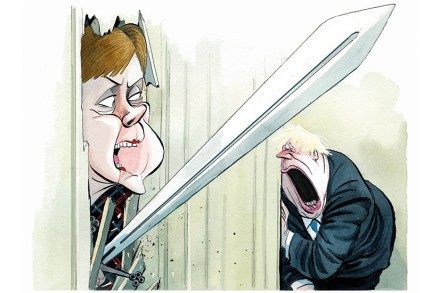
Nicola Sturgeon’s Covid prohibition

From our UK edition

So now we know the threshold at which Nicola Sturgeon pulls the trigger. If the number of daily hospital admissions for Covid-19 exceeds a tenth of the number recorded at the April peak, she will lay waste to the hospitality industry. From Friday, all pubs and licensed restaurants in Greater Glasgow and Clyde, Lanarkshire, Forth Valley, Lothian and Ayrshire and Arran – where two-thirds of Scots live – will be forced to shut their doors for at least sixteen days. So too will snooker clubs, casinos, bowling alleys and bingo halls. In the rest of Scotland, pubs and restaurants will be allowed to serve food and soft drinks – but not alcohol – until 6pm. Cafés which don’t have an alcohol licence can also stay open until 6pm.

The true cost of coronavirus on our economy

From our UK edition

When future historians look back on 21st-century mortality statistics, they will struggle to find anything out of the ordinary in Britain in 2020. When they look at the economic data they could be forgiven for thinking we were hit by an asteroid. The Office for Budget Responsibility predicts a fall in GDP of around 12 per cent in 2020, the equivalent of having the 2008-09 recession twice in one year. The second quarter saw GDP fall by 20.4 per cent, breaking the record set during the Great Frost of 1709. The economy rallied by 6.6 per cent in July — which sounds impressive until you consider that it only took the economy back to where it was in the spring of 2013.

Farewell, Public Health England

From our UK edition

Farewell, Public Health England. Hello, National Institute for Health Protection. As expected, the hammer has fallen on the agency that promised to ‘protect the public’s health from infectious diseases’ but floundered hopelessly when tested by coronavirus. PHE failed to expand diagnostic testing, failed to engage with the private sector, stopped contact tracing when the virus was just getting going, discouraged the use of face masks, refused to share infection data with local authorities and couldn’t even count the number of people who died of Covid-19 properly. Good riddance. According to Matt Hancock, its replacement will have a ‘single and relentless mission – protecting people from external threats to this country’s health’.

Boris Johnson’s absurd nanny state crusade

From our UK edition

If reports in today's papers are to be believed, the government will propose a new raft of nanny state policies on Monday. This time the target is food. A ban on advertising sugary, salty and fatty food on television before 9 p.m. is said to have been given the green light. The government will also dictate where these products can be legally displayed in shops. No more Lindor at the entrance. No more bacon at the end of the aisle. Despite my libertarian disposition, I take a perverse satisfaction in some of this. The television companies that spent years hyping the childhood obesity ‘epidemic’ and demanding tough action from government are now set to lose £200 million a year in advertising fees.

The Edition: are white working class boys being left behind?

From our UK edition

38 min listen

White working class boys consistently perform worse than other demographics in the UK's education system - why? (00:45) What is it like to be 'cancelled'? (14:20) And is it time to return to the office? (24:50)With the IEA's Christopher Snowdon; former Ucas head Mary Curnock Cook; journalist Kevin Myers; the Spectator's columnist Lionel Shriver; editor of the Oldie, Harry Mount; and Director of UK in a Changing Europe Anand Menon.Presented by Cindy Yu.Produced by Cindy Yu and Max Jeffery.