Christopher Snowdon

Christopher Snowdon is Head of Lifestyle Economics at the Institute of Economic Affairs

Why did it take so long to give Tim Martin a knighthood?

From our UK edition

The news that Tim Martin, the founder of JD Wetherspoon, has been given a knighthood in the New Year Honours list caused predictable outrage among the perpetually outraged. The gong was awarded for Sir Tim’s ‘services to hospitality and culture’, but the usual crybabies on social media asked whether it was really because he supported Brexit. The real question is why did it take so long? The first Wetherspoons opened in 1979 (named after a teacher who told him that he would never amount to anything). There are now more than 800 of them. His services to hospitality and culture are indisputable, but Wetherspoons is more than a successful business. It is almost a charity. No one has done more than Sir Tim to shield pubgoers from the cost-of-living crisis.

KFC is right to take on the public health zealots

From our UK edition

There was some good news for the people of Sunderland last month when local councillors managed to stop a small business from opening. They had received an application to open a Mexican takeaway restaurant on premises formerly occupied by a dog grooming salon on Tunstall Village Road. Spotting the words ‘Mexican cuisine’ in the temporary change of use application, the council concluded that the company would ‘not support or improve the health and wellbeing of local communities’ and turned it down.  Those who live in and around Tunstall Village Road may have been saved from having burritos within walking distance, but the residents of less fortunate communities remain at risk.

Sunak has doomed Britain to a total ban on smoking

From our UK edition

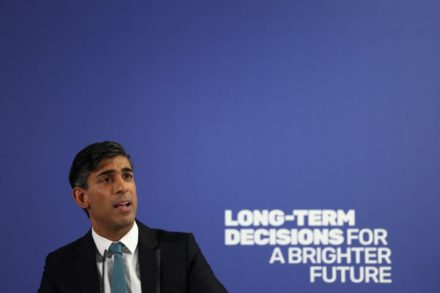
It is an indictment of the intellectual vacuum in British politics that when a prime minister is looking for a legacy, they so often decide to give smokers another kicking. Tony Blair introduced a smoking ban to take our minds off Iraq, leaving office four days before it came into force in case things turned ugly. Theresa May set her successors the target of going ‘smoke-free’ by 2030 at the fag end of her time in Downing Street. For Rishi Sunak, way behind in the polls and failing to meet most of his five targets, a generational ban on tobacco sales offers a place in the history books. Jacinda Ardern had the same idea in New Zealand, but the new centre-right government has decided to repeal her prohibitionist policies (which included taking nicotine out of cigarettes).

The many flaws in Sunak’s smoking wheeze

From our UK edition

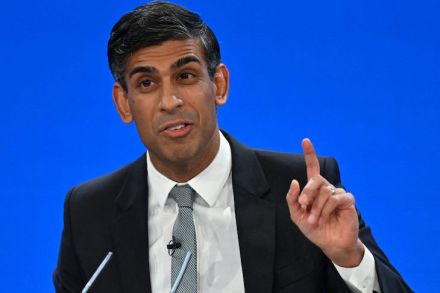
In the run-up to the Conservative party conference, Rishi Sunak was promoting himself as a serious politician who wanted workable policies that respect consumer choice. No more war on motorists! No more pie-in-the-sky net zero promises! Here was a practical man in tune with the concerns of ordinary people. Having teed himself up as a pragmatic, back-to-basics Conservative, it was all the more puzzling when, in his keynote speech, he announced a preposterous anti-smoking gimmick borrowed from Jacinda Ardern that no one was asking for. New Zealand is the only country to have taken seriously the idea of increasing the age at which people can buy cigarettes by one year every year. Last December, the Kiwis banned anyone born after 2010 from ever buying a pack of fags.

Rishi Sunak is right to get rid of 20 mph zones

From our UK edition

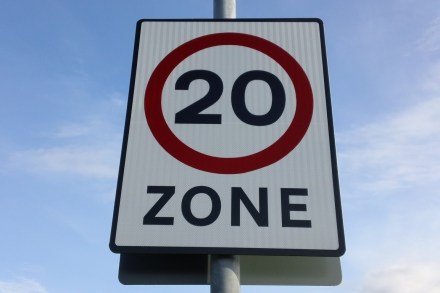
Are we seeing the real Rishi Sunak at last? Since telling the nation on 20 September that his government will be taking a more realistic approach to reducing carbon emissions, the Prime Minister has announced – or, more often, refused to deny – that he intends to introduce a whole bunch of policies that horrify bien pensants but go down rather well with the general public. Nine days ago, the Economist warned that ‘If Mr Sunak hopes attacking its green plans is a way to turn around the polling figures, then he is almost certainly wrong.’ Within days, Labour’s lead in the opinion polls had been slashed by eight points according to Deltapoll and by five points according to YouGov.

The senseless ban on snus

From our UK edition

As the government considers banning disposable vapes because they are thought to appeal to children, it is worth reflecting on the strange saga of the EU’s ban on snus, a Swedish smokeless tobacco product that delivers nicotine into the body via a small pouch placed under the lip. The story begins when Edwina Currie was health minister in 1988. She announced a ban on oral tobacco in response to a panic about Skoal Bandits, an American brand of snus with a masked cowboy on its logo which was presumed to appeal to children. The product itself was assumed to cause mouth cancer. In 1990, the EEC got involved. It argued that unilateral prohibition by a member state was a threat to the internal market and banned snus across the bloc.

When will the Scottish government get a grip on alcohol deaths?

From our UK edition

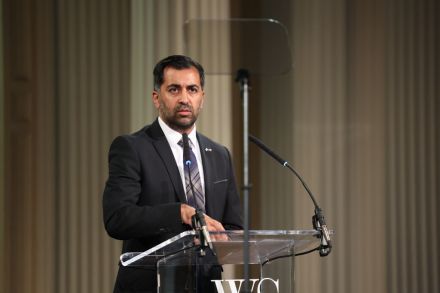
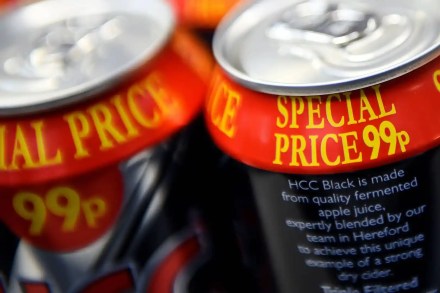
Is there any amount of evidence that could convince the 'public health' lobby that one of their bright ideas didn't work? What would it take for them to admit that they failed? It is now five years since the SNP introduced minimum unit pricing for alcohol. It was supposed to be the most effective policy available to tackle alcohol harm — yet figures released today show that alcohol-specific deaths in Scotland have reached a 14-year high. Is it perhaps time for a rethink? Is it time to abandon a policy that has cost Scottish consumers hundreds of millions of pounds and instead start focusing on dependent drinkers who need help? Not in the slightest, according to the Scottish government.

Reintroducing wolves to Britain is pure insanity

From our UK edition

Should we release packs of ravenous wolves into the English countryside? The answer is so obviously ‘of course not, are you insane?’ that I anticipated no disagreement when I scoffed at a pro-wolf Guardian article by George Monbiot last week. Monbiot has found common cause with wolves because he hates sheep-farming and wants to ‘rewild’ Britain. His latest article uses deer as an excuse to promote the interests of the wolf lobby. There are too many of them, apparently, and the best way to deal with a surplus of deer is to have them torn apart by apex predators.

The CMA is wrong to go after high supermarket fuel prices

From our UK edition

Picture two village shops. If both shopkeepers are doing nicely out of selling the same product at a high price, they may decide to keep their prices the same even when the wholesale price falls. This is known as tacit collusion. Both retailers have an incentive to co-operate with each other at the consumers’ expense. But each shopkeeper also has an incentive to lower the price to make more sales and more profit. If another shop opens, this temptation will grow stronger. If a dozen shops open, it is almost certain that one of them will start a price war. Unless, that is, they form a cartel – which would be illegal. Once again, the government is getting dangerously close to entertaining the idea of price controls British supermarkets are certainly not a cartel.

Is it time for Britain to leave the WHO?

From our UK edition

Since declaring Covid-19 to be ‘over as a global health emergency’ early last month, the World Health Organisation (WHO) has made it very clear that it has no intention of reforming. At its World Health Assembly two weeks ago, North Korea was among ten nations elected to sit on the WHO’s Executive Board, thereby giving Kim Jong-un’s totalitarian state the power to appoint WHO regional directors and potentially vote for the next director-general. The World Health Assembly did not censure North Korea for its countless human rights abuses, which include starving its own people. Instead it singled out Israel for criticism.

The unstoppable rise of the nanny state

From our UK edition

It has been a pathetic sight to watch politicians pleading with the supermarkets to lower food prices. Inflation has yet again proven to be more persistent than the government expected and it will do almost anything to bring it down. The Chancellor has even said that a recession would be a price worth paying to get the cost of living under control. But while the government resorts to ‘voluntary price caps’ on food, it still plans to ban most buy-one-get-one-free food offers in October. A double-digit hike in alcohol duty will come into effect in August. Smokers of rolling tobacco have already endured a tax rise of inflation plus 6 per cent this year.

Is it time to stop changing the clocks?

From our UK edition

15 min listen

On this special Saturday edition of Coffee House Shots, The Spectator's James Heale, journalist Peter Hitchens and the IEA's Christopher Snowdon argue the cases for and against daylight saving time. Are we all being needlessly robbed of an hour in bed? Or should we lighten up and embrace the longer days?  Produced by Natasha Feroze and Oscar Edmondson.

Jonathan Portes – my part in his downfall

From our UK edition

In 2018, the Equality and Human Rights Commission commissioned and promoted a report which predicted that an extra 1.5 million children would be plunged into (relative) child poverty by 2021/22 if the government implemented Universal Credit. The proportion of children living in (relative) poverty would, it said, rise from 29 per cent to the unprecedented figure of 41.3 per cent. Portes’ prediction was a totem for all economic forecasting, most of which is little better than guesswork and should not be taken seriously If you think such prognostication is beyond the remit of the Equality and Human Rights Commission, I can only concur. The report was written by Howard Reed and Jonathan Portes.

Why is the British Medical Journal investigating the Beano?

From our UK edition

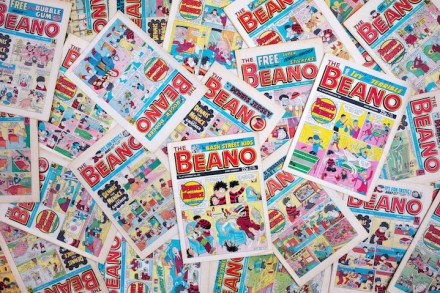
One of the regular characters in Viz is an old woman called Meddlesome Ratbag who goes to great lengths to engineer situations in which she can be offended so she can complain to the authorities. I was reminded of her this morning when I read the British Medical Journal's investigation into the Beano. Yes, you did read that correctly. One of the world’s leading medical journals has been devoting its attention to a children’s comic. It turns out the Beano has a popular website that has been visited by nearly 48 million kids since its launch in 2016, according to the investigators. It stands accused of mentioning the brand names of various sweets, treats and fast food companies. These products are not advertised on the website and no money has changed hands.

Is sharing cake in the office really like passive smoking?

From our UK edition

‘If nobody brought in cakes into the office, I would not eat cakes in the day, but because people do bring cakes in, I eat them.’ Who is this co-worker from hell? Who is this whining, snivelling infant demanding that the rest of the world forfeits small pleasures because she has no self-control? It is none other than the head of the Food Standards Agency, Susan Jebb, who is in the Times today comparing cakes to passive smoking. The full quote reads: ‘We all like to think we’re rational, intelligent, educated people who make informed choices the whole time and we undervalue the impact of the environment… If nobody brought in cakes into the office, I would not eat cakes in the day, but because people do bring cakes in, I eat them.

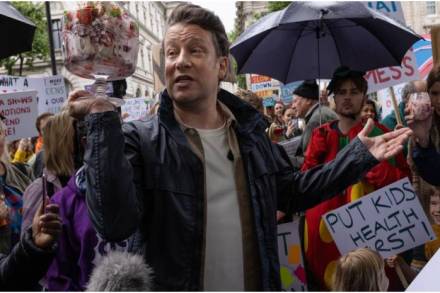
Why does Jamie Oliver always get an easy ride?

From our UK edition

There are many annoying things about the celebrity chef Jamie Oliver, but none of them grates my gears as much as the media’s obsequiousness towards him. I suspect that his political campaigning is largely a self-serving gimmick to keep the Jamie Oliver brand in the public eye, but that is besides the point. The point is that he would be the first to describe himself an activist and yet he is never asked the questions that activists, let alone politicians, are asked. He gets the celebrity interview when he should be getting the political interview. He has never been hauled up on the facts. He has never been given a grilling. Hardened journalists become starstruck in the presence of a man who, in media circles if not in the country at large, is regarded as a national treasure.

It’s time to stop turning the clocks back

From our UK edition

British households could save £400 a year if we left the clocks alone this weekend instead of putting them back an hour, according to Professor Aoife Foley, an energy expert at Queen’s University Belfast. The logic is simple. We use a lot more electricity in the evening than in the morning. That is why daylight savings time was introduced in Europe and North America during the First World War. Some countries later abandoned it only to bring it back during the Second World War and during the energy crisis of the 1970s. Every time the reason was the same: it saves precious energy. As Britain and Europe grapple with an energy crisis going into winter, it is surprising that so few people have suggested the easy fix of year-round British Summer Time (BST).

Therese Coffey should leave smokers alone

From our UK edition

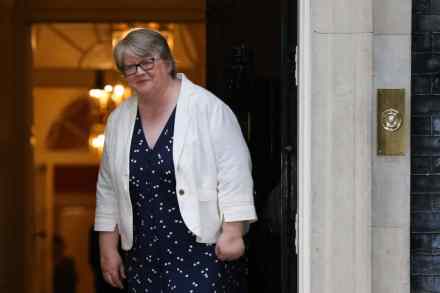
So Thérèse Coffey, the health secretary, is putting the tobacco control plan on ice. Or is she? As in many other areas of public policy these days, all we have are rumours. Someone may be flying a kite with this rumour, but it is not clear whether it is the health secretary or a disgruntled civil servant at the Department of Health holding the string. All Coffey has said officially is that she was not ‘aware’ of what’s going on with it. You may not be aware of it at all and I can hardly blame you.

Liz Truss should scrap the sugar tax

From our UK edition

In public health circles, it is considered terribly gauche to expect policies to work. You might think, for example, that a trailblazing intervention designed to reduce obesity would be considered a failure if obesity rates rise to record highs after it has been implemented. Not so with the sugar tax. Obesity among both children and adults has gone up since it was introduced in 2018, but the health lobby does not consider it to be a failure. Contrary to the evidence of your eyes, they say, it has actually been a success. The only failure is the failure of the government to do lots of other things in addition. This is one of a number of ways in which ‘public health’ differs from medicine.

The anti-drinking lobby’s twisted logic

From our UK edition

In 2018, the Lancet published a study from the 'Global Burden of Disease Alcohol Collaborators' which claimed that there was no safe level of alcohol consumption. This was widely reported and was naturally welcomed by anti-alcohol campaigners. The BBC reported it under the headline 'No alcohol safe to drink, global study confirms'. (Note the cheeky use of the word confirms, despite the finding going against 50 years of evidence.) The study wasn't based on any new epidemiology. Instead, it took crude, aggregate data from almost every country in the world, mashed it together and attempted to come up with a global risk curve. As I said at the time: The study contains no new evidence and uses an unusual modelling approach based on population-wide data from various online sources.