Christopher Snowdon

Christopher Snowdon is Head of Lifestyle Economics at the Institute of Economic Affairs

Obesity isn’t a ‘disease’, whatever the American Medical Association may think

From our UK edition

This week, The Guardian informed us, a study revealed the ‘scale of the British public’s denial about weight problems’. Data collected by the Association for the Study of Obesity found that ‘more than a fifth of Britons who think their size is healthy or normal were in fact overweight’. This apparent delusion has been attributed to the normalisation of obesity in modern society. ‘We’ve almost become accustomed to people being bigger',  Prof David Kerrigan told The Guardian, ‘because they don’t stand out.’ Dare we offer an alternative explanation for why a minority of overweight people see themselves as normal and healthy? Could it be that they are normal and healthy?

‘Binge Britain’ has ended. Get over it

From our UK edition

A certain amount of amnesia is required if you are to believe everything the ‘public health’ lobby tells you. Alcohol is frequently in the media but the only story relating to drink that is genuinely newsworthy is the steep decline in drinking that has occurred in the last decade. Britain has been witnessing its biggest fall in alcohol consumption since the 1930s. This trend was ignored for a long time, but once it became clear that it was not a statistical blip the truth began to seep out. The BBC, which has never seen an anti-alcohol press release it doesn’t like, asked in 2011: ‘Why is alcohol consumption falling?

Ignore the latest fad theory. The ‘secret’ of weight loss is to eat fewer calories than you burn

From our UK edition

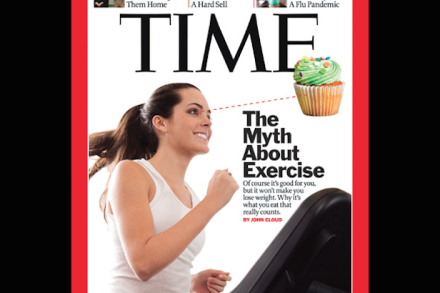
Before I got sidetracked by bogus obesity predictions, I was discussing the equally bogus controversy about whether physical inactivity is linked to obesity. It's now fashionable to argue that exercising doesn't help you lose weight. As I mentioned in my previous blog post, this is the line taken by Dr Jason Fung, a Toronto-based kidney specialist who runs something called Intensive Dietary Management. He reckons that people are exercising more than ever and yet are becoming fatter and fatter. But, as I argued, it's simply not true that we're exercising more as a population. Now let's look at the effect of exercise on individuals. Fung – who coined the term 'Calorie Reducation as Primary', or CRaP, to describe 'current obesity thinking' – is unequivocal.

I don’t trust these latest obesity predictions from the nanny state

From our UK edition

Seventy-four per cent of men and 64 per cent of women in Britain will be overweight or obese by 2030, or so the newspapers have reported today. In Ireland, the situation will be still worse, with the obesity rate amongst women predicted to rise from 23 per cent today to 57 per cent (!) in 2030, with 89 per cent of Irish men overweight. The research in question was presented at a conference in Prague today but remains unpublished so we do not know how its authors arrived at these figures. A representative of the World Health Organisation says, 'the data needs to be taken with extreme caution', but this advice has not been taken by the writers of such headlines as 'Almost everyone in Ireland will be overweight by 2030'.

Why are we getting fat while exercising so much? Try reading George Orwell

From our UK edition

Last week I mentioned a widely reported article in the British Journal of Sports Medicine which claimed that ‘physical activity does not promote weight loss’. The article was taken down by the journal last week due to 'an expression of concern'. It remains offline as I write this, but the controversy rumbles on. At the risk of further upsetting the low-carb community (who seem particularly antagonistic to the doctrine of 'calories in, calories out'), I am returning to it today. Let's start by looking at a series of blog posts by Jason Fung of Intensive Diet Management that have been doing the rounds on social media. He, too, argues that 'there is no measurable association between obesity and physical activity'.

Cheap alcohol leads to violent crime, say ‘experts’. Where’s the evidence?

From our UK edition

Stanley Cohen, the legendary criminologist and author of Folk Devils and Moral Panics, once commented on 'the unique dilemma of the moral entrepreneur who has to defend the success of his methods and at the same time contend that the problem is getting worse'. The eager activist cannot afford to solve the problem he is paid to tackle – but nor can his methods be seen to fail too blatantly. One problem that is manifestly not getting worse in Britain is violent crime. Every measure of violent crime has been in retreat almost continuously for 20 years. This is a dilemma for those who fretted about the effects of so-called '24 hour drinking' and it is a challenge to those who continue to fret about the 'pocket-money prices' at which alcohol is supposedly sold.

The dodgy science behind the claim that exercise doesn’t help you lose weight

From our UK edition

You may have heard the news that the nation's doctors have had a change of heart about physical activity and no longer believe it to be a sensible way of staying slim. Don't be too quick to put your feet up. All is not as it seems. The doctors responsible (or, arguably, irresponsible) for this claim are Aseem Malhotra, Tim Noakes, and Stephen Phinney. Malhotra is a Croydon-based cardiologist who rose without trace several years ago, first attacking junk food and then climbing aboard the anti-sugar bandwagon. Now the scientific director of the wacky pressure group Action on Sugar, he explicitly tells people to eat more saturated fat and implicitly tells people not to bother exercising –unusual advice from someone who looks after people's hearts for a living.

Rushing to judgement on the ‘crack cocaine of gambling’

From our UK edition

Ed Miliband’s pledge to crack down on the ‘crack cocaine of gambling’  is a significant moment in the extraordinary moral panic over fixed-odds betting terminals (FOBTs). Earlier this year, the Department for Culture, Media and Sport found that there was very little data to back up the anecdotal evidence of the anti-FOBT brigade and so decided to commission some research. This process will take 18 months and a decision about stakes and prizes will be made once there is some evidence to study. This eminently reasonable, evidence-based approach has naturally been howled down by the anti-gambling lobby whose campaign has thus far relied on anecdotes and, at best, half-truths.

Why is the government so confident minimum alcohol pricing will work?

From our UK edition

Given the decidedly mixed record of minimum alcohol pricing around the world, why is the government so sure it will work in Britain? The figures it quotes are certainly striking: a 50p unit price will reduce annual alcohol-related mortality by 900, 3,393, “more than 1,000” or “nearly 10,000” a year in England alone. But how solid are they? The Adam Smith Institute did some digging, and found that all of these predictions can be traced back to a computer model designed by a team at Sheffield University. The model has numerous flaws, many of a technical nature, and like all models it is only as good as the data and assumptions that are pumped into it. These assumptions range from the questionable to the demonstrably false.