Christopher Sandford

Christopher Sandford is the author of The Rolling Stones: Sixty Years (Simon & Schuster).

The waste disposal racket

The conceit that today’s US householder has never been better served, nor had more choices, has been put about for many years. The evidence often suggests otherwise. It’s a peculiar feature of our times that we’re constantly reminded how our “consumer experience” has so improved, and yet actually endure it as having worsened. Anyone who’s spent forty minutes on hold listening to the canned strains of Barry Manilow while being intermittently assured how truly vital their call is, and that the next available representative will be with them shortly, may know what I mean.

trash waste

Tina Turner was greater than a rock star

Even rock and roll can have produced few stranger paths than the one that led a then physically unprepossessing, raspy-voiced African-American named Anna Mae Bullock from her early days as a devoutly Baptist sharecropper’s daughter in Depression-era Tennessee, to her final years as a practicing Buddhist living in a whitewashed mansion overlooking the dove-blue haze of Lake Geneva. That was the life trajectory of the artist known to the world as Tina Turner, who died Wednesday at the age of eighty-three.

tina turner

The Seattle mayor’s CHOP cover-up

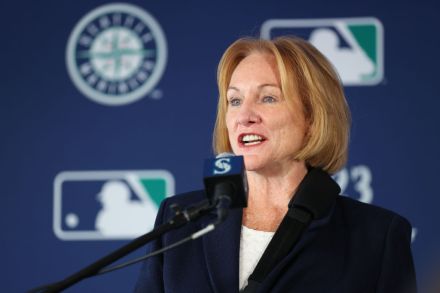
Ah, Seattle, that environmentally obsessed city where all is decorous, the sidewalks immaculately swept, the parks rigorously trimmed, proverbial for its shimmering lakes and charming rows of variegated tents housing those of no fixed abode — and recently, too, for a municipal government with much the same level of restraint as a bus being driven downhill by the Marx Brothers. Readers may be familiar with the strange phenomenon of a civic treasury that marries heady rhetoric about its prudent stewardship of public money with a cynical disregard for the suckers who actually foot the bills.

seattle jenny durkan

The king and queen who saved the British monarchy

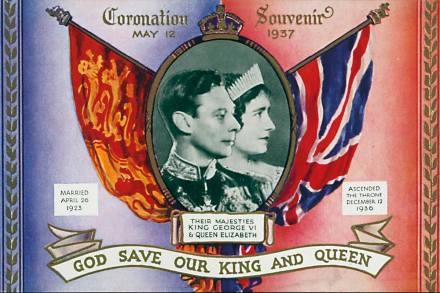
In some ways, the world of George VI and his consort Elizabeth, the future Queen Mother, from 1936-52 was very different from how we envision that of today’s British royal family; its rituals seem to belong to an era of Jurassic antiquity. In George’s day, Britain was still a global power, and its monarch ruled over both an empire and an elaborate court system with a “Page of the Backstairs” and a “Yeoman of the Pantry” — not to mention a fully staffed, oceangoing yacht — at his disposal. His coronation in May 1937 was as protracted as that of any maharajah. The Edwardian braid and sashes on display during more recent military pageantry look sadly Ruritanian by comparison. In other ways, their lives resonate more clearly with our own.

George queen

Watching baseball as Seattle crumbles

It’s a better thing to travel hopefully than to arrive, Robert Louis Stevenson wrote back in 1881. I find myself inwardly repeating that line almost every time I venture out to a public event. Whether it’s someone’s phone repeatedly inserting the klaxon-like intro to the Black Eyed Peas’ “I Gotta Feeling” into the hushed denouement of a play, or the musical hooliganism of the idiot who chats his way through Paul McCartney singing “Eleanor Rigby” (it’s the Beatles classic we came to hear, mate, not a monologue about your dog’s bowel issues), it seems that narcissistic self-absorption is the rule on these occasions, and an even tenuous grasp of other people’s existence the exception.

seattle

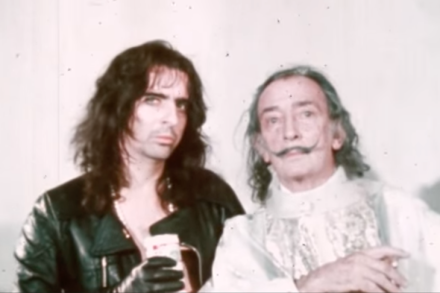
When Salvador Dalí met Alice Cooper

It was the ultimate summit between the two kings of pop-art camp, and one of the weirdest celebrity encounters even by the standards of 1970s New York. Salvador Dalí might have been the century’s most notorious modernist, but by the spring of 1973, when he was turning sixty-nine, his reign as the high priest of surrealism had descended into self-parody. Paintings such as his 1931 “The Persistence of Memory,” with its array of limp watches set in a barren landscape, had once sharply polarized critical opinion. For years, people saw Dalí either as a beacon of intellectual and emotional freedom, or as a madman who was more interested in money than art.

salvador dalí alice cooper

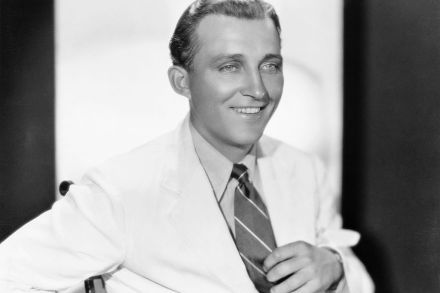
A century of Bing Crosby

If, in the spring of 1923, you’d somehow found yourself in the tumbleweed junction of Spokane, Washington, you might have shaken the dust from your feet at the strange and magnificent Davenport Hotel. Still standing today, this vast folly, soaring up in the middle of town like a gaudily iced wedding cake, was evidently greeted by cries of disbelief upon its opening in 1914. In the rural west of the early twentieth century, the Davenport was the last word in luxury and refinement. The lobby was a work of art in itself, with lamps in alabaster shells mounted on a twisted bronze column in each corner, and an Italian marble fountain set under a chandelier that tilted at a slightly drunken angle, like one of those ghostly photographs taken onboard the wreck of the Titanic.

bing crosby

The earthquake that will devastate Seattle

At around eleven in the morning on February 28, 2001, I was standing in front of a mirror in my home in suburban Seattle, adjusting what remained of my hair prior to driving downtown to meet a friend for lunch, when the ground began to shake beneath my feet. The movement lasted about twenty seconds and wasn’t entirely unpleasant, with just the slightest hint of the old days when I was a devotee of Bacchus. After a bit, I checked that the house was all right, looked in on my infant son peacefully asleep in his crib, said goodbye to my wife, started the car and went on my way into the city. It was bedlam out there.

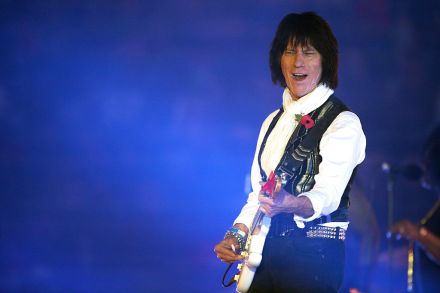
Jeff Beck was that good

Relatively few rock musicians would care to replace Eric Clapton in a band, or to veer spectacularly off course to record a free-form jazz-inflected album that defied prediction to sell two million copies, or for that matter to laughingly turn down an invitation to become a fully fledged member of the Rolling Stones. The British guitarist Jeff Beck, who died this week at the age of 78, did all of these things and more. A brilliantly gifted instrumentalist, he never kept still musically. To call Beck the David Bowie of the guitar world would be to confer a somewhat misleading sense of consistency on a maverick who seemed to reinvent himself with every album, and sometimes every song.

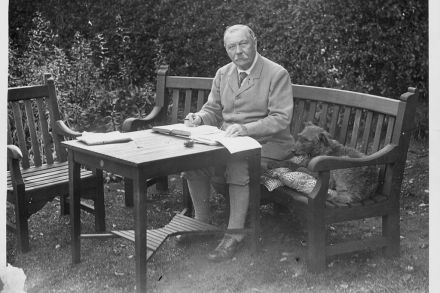
How Houdini and Arthur Conan Doyle invented the modern celebrity feud

1922 saw its fair share of shocks in the literary world, among them the publication of James Joyce’s Ulysses, Sinclair Lewis’s Babbitt and T.S. Eliot’s The Waste Land. But perhaps the strangest book-related event of the year didn’t involve any writing at all, at least not as performed by human agency. Instead, the author was a ghost. The setting was a darkened room at the Ambassador Hotel in New Jersey’s Atlantic City, where on the warm Sunday afternoon of June 18, 1922, Arthur Conan Doyle of Sherlock Holmes fame sat down between his wife Jean and the celebrated escapologist Harry Houdini to hold a séance. The first two of these individuals were advocates of spiritualism, the last of them a skeptic.

The spy novelist who became an Irish nationalist

The period of the First World War was a golden age for the spy novel. There’s nothing like a really cataclysmic global conflict to stir any halfway attentive author. And perhaps the pick of the literary crop was 1903’s The Riddle of the Sands, by the Anglo-Irish writer, soldier, and politician Erskine Childers. The novel mixes some gentle satire about the graded snobberies of the Edwardian class system with a seafaring adventure involving a couple of topping British chaps going after German spies in the Baltic. It’s not only a riveting tale in itself, but so cogent in its account of the state of Britain’s maritime defenses that it prompted the Admiralty to hurriedly install a series of new coastal gun batteries.

cooper

Fifty years ago, D.B. Cooper changed air travel forever

I flew from Seattle down to Las Vegas the other day to watch the Rolling Stones in action. Great show, Kafkaesque journey. There are times in life when the miseries of the world threaten to engulf us, when the precariousness of the human condition, far from appearing a worthwhile and even noble struggle, seems an infinite rebuke. That’s the way I feel when I pass through a modern-day American airport. Many Spectator readers will be familiar with the ordeal. It was shortly after 6 a.m. when I boarded my outward flight, and my reporting skills perhaps weren’t at their best. Nonetheless, I made a note of some of the many exhortations, appearing in either written or spoken form, that enlivened the morning. Stand here. Look at the camera.

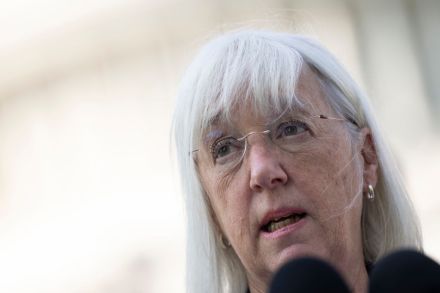
Patty Murray makes an anguished face

Seattle Some strange things have been happening here in the Pacific Northwest. We've had a freakishly warm and dry October, for one, and just the other day Seattle apparently boasted the worst air pollution in the world. That was thanks to the smog from all the nearby wildfires, though I’m pleased to report that more normal monsoon conditions have since returned. Elton John was in town for the fifth or sixth time as part of his interminable farewell tour, and in an unrelated development, hundreds of young people, many sporting wigs and dressed in their underwear — if even that — took to the streets to illustrate their role in the city’s annual LGBTQ+ zombie-apocalypse Halloween rave.

Remembering Mussolini’s March on Rome

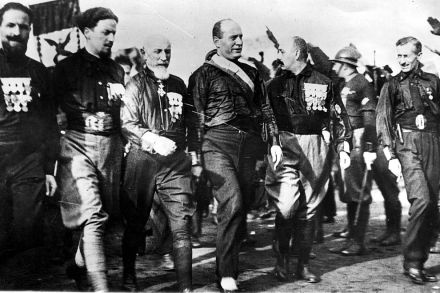
Shortly after 11 on the unseasonably warm Monday morning of October 30, 1922, a 39-year-old, one-time schoolteacher-turned-political journalist — and former Socialist Party activist — named Benito Mussolini stepped down from a train arriving at Rome’s Termini station. He had traveled in overnight from his home in Milan, and before embarking he told the local station master, pausing to cast his black eyes up and down the empty platform, “I need to be punctual. From now on there must be no more delays.” This was the source of the sardonic joke that at least under Mussolini the trains always ran on time.

How the British helped JFK navigate the Cuban Missile Crisis

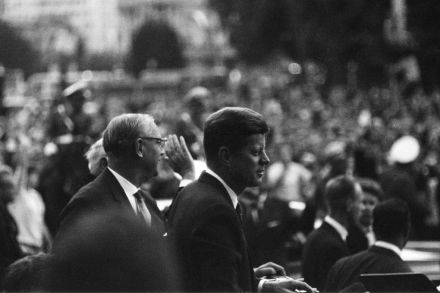
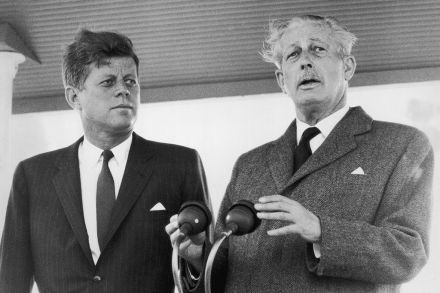
The Atlantic alliance hasn’t always been quite as special as politicians on both sides of the sea like to pretend. To take just the last sixty years: there were the differing views on Vietnam that led Lyndon Johnson to assess the British premier Harold Wilson as "a creep," while Richard Nixon privately considered Ted Heath "weak" and "as crooked as a corkscrew" (which was saying something coming from him). In October 1962, however, the principal Western leaders really did have something special. Between them, they probably helped save the world from nuclear annihilation. When on October 16, President John F.

Chess grandmaster Bobby Fischer’s fall from grace

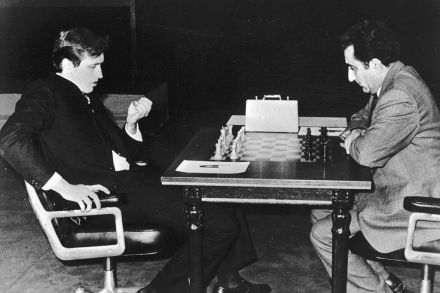
“Paradoxes arise within an individual in proportion to their growing status or fame,” the author Stewart Stafford reminds us. Whether it’s the sexual peccadilloes of Bill Cosby or Harvey Weinstein, Lance Armstrong’s relaxed approach to his diet, or the apparent reluctance of certain well-known television performers to overdo it when it comes to wearing trousers in the green room, for many of our celebrities it seems that personal license is the rule and sustained self-restraint the exception.

bobby fischer

Patty Murray is no longer endearing

Someone once asked Johnny Depp about the secret of good acting, and he replied: “I pretty much try and stay in a constant state of confusion just because of the expression it leaves on my face.” Okay, maybe Depp’s not someone to hold up as a sage on the human condition. But I think we can at least agree that he knows what he’s talking about when it comes to projecting the sort of halfway engaging befuddlement that earned him a reported $90 million as Captain Jack Sparrow in Pirates of the Caribbean: Dead Men Tell No Tales. I mention all this only in so far as it applies to seventy-one-year-old Patty Murray, Democrat from Washington state. Murray won her primary election on Tuesday ahead of what could be a sixth consecutive term in the US Senate.

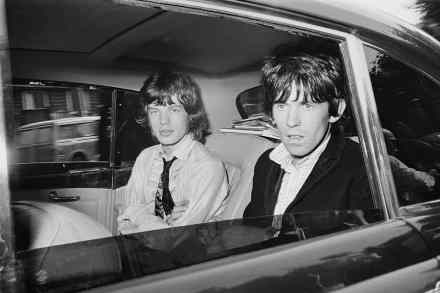
My night with the Rolling Stones

From our UK edition

That’s another prime minister the Rolling Stones have outlasted. When the band first plugged in under that name at London’s Marquee Club on July 12, 1962, Harold Macmillan was in No. 10 dealing with the ‘little local difficulty’ of sacking a third of his cabinet. Then came Alec Douglas-Home, Harold Wilson, Ted Heath, Wilson again, Jim Callaghan, Margaret Thatcher, John Major, Tony Blair, Gordon Brown, David Cameron, Theresa May and now the soon-to-depart Boris Johnson. Thirteen administrations, an even dozen US presidents and six popes. And through it all the Stones themselves have just kept rolling along. Not bad for a band of misfits that everyone, including them, thought would last a year or two at most.

Stop enabling the crisis junkies

Did you make good use of the neatly palindromic 2/22/22? To refresh your memory, it was a day that turned out be the narrow window between the moment when the evolving “science” suddenly allowed Democratic governors to start lifting their states’ mask mandates, and Vladimir Putin launching his special mission to “protect the people” in eastern Ukraine. I hope you enjoyed it, because given the way the mainstream media portray the news these days, it may be a while before we’re all allowed our next respite from the seemingly permanent existential crisis that runs as a through-line to our human condition.

crisis

Are drive-by shooters victims of ‘systemic racism’?

SEATTLE — From Roger Baldwin of the ACLU to the Supreme Court’s late Ruth Bader Ginsburg, many Americans have tried to address inequality in the nation’s justice system. Now Washington State’s part-time legislators believe they have discovered a new way. Later in January, Washington’s state assembly will debate House Bill 1692. If passed, the law would significantly reduce the criminal penalties for the drive-by shootings that have become something of a boom industry here in the Northwest, where violent assaults are up 80 percent on five years ago. It would do so by prohibiting state prosecutors from adding the word “aggravated” to any murder charge involving a perpetrator in a moving vehicle.

drive-by