Christopher Howse

Christopher Howse is an assistant editor of the Daily Telegraph.

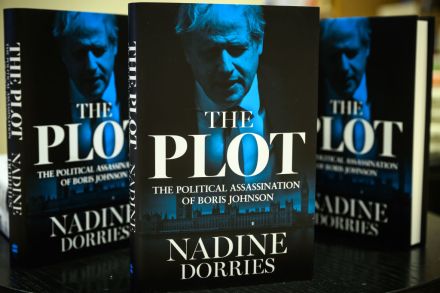
Has Nadine Dorries lost the plot?

14 min listen

This week Nadine Dorries’s new book The Plot: The Political Assassination of Boris Johnson has been published, and it has ruffled some feathers in Westminster. In it, she claims there was a plot orchestrated by a secret cabal of back room advisors, politicians and individuals in the media to overthrow Boris Johnson. Just what is ‘the movement’? James Heale speaks to Fraser Nelson and Christopher Howse, assistant editor at the Telegraph.  Produced by Oscar Edmondson.

How to speak London

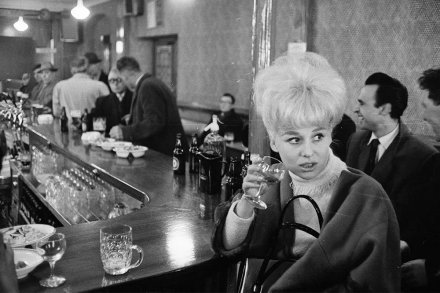
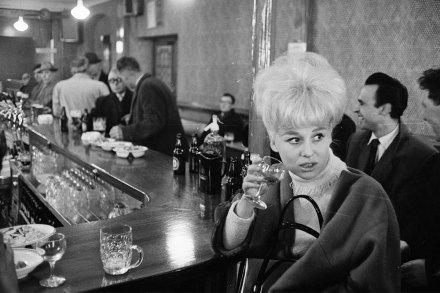
Cockney is dead, but so is the King’s English. Long live Standard Southern British English. The Cockney Barbara Windsor yelling ‘Ge’ aah-a my pub’ is as fossilised as Eliza Doolittle. And what a shock it is today to hear the late Queen, aged 21, declare: ‘My whole life whether it be long or short shall be devoted to your service and the service of our great imperial family.’ She seems to say devated, sairvice and end (for ‘and’).

Open and shut case: the evolution of windows

Upstairs rooms in new houses are likely to be darker because building regulations now demand they should be at least 3ft 6in from the floor. Given the stingy heights of rooms these days, this reduces the glazed area. The regulators are worried about window safety. ‘Is there a plague of people falling out of them?’ asks Nicholas Boys Smith of the Create Streets pressure group. He answers himself: ‘Of course not.’ There are two ideas of a window, if the history of words were to be believed. The English language sides with the notion of a vent: ‘wind-eye’ in origin. It’s not only for Anglo-Saxon sparrows flying into mead-halls; the Spanish call it a ventana, a ventilating aperture.

The surprising beauty of Mass in a burnt-out church

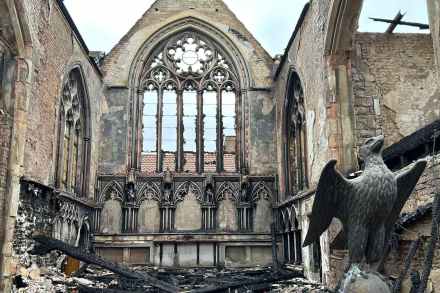
As I sat down on the folding chair at Sunday morning Parish Mass, it sank a little into the mud. We were in a tent with one side open, floored with bruised and quaggy grass, like an agricultural show on a chill bank holiday. There were 13 of us and nine in the choir, who sang a brief setting by Monteverdi. The celebrant, the Revd Kate Harrison, in alb and stole, sat behind the wooden altar on a tall office chair. A server produced clouds of incense with a thurible. A homemade board hanging from the tent-poles gave the hymn numbers: 430, 234, 408, 440. A blackbird joined in after Communion. We were in the fresh spring air because the church of St Mark, in St John’s Wood, had burnt down on 26 January, leaving nothing but empty windows, a shell of walls and a charred steeple.

Farewell to arms: Britain’s depleted military

39 min listen

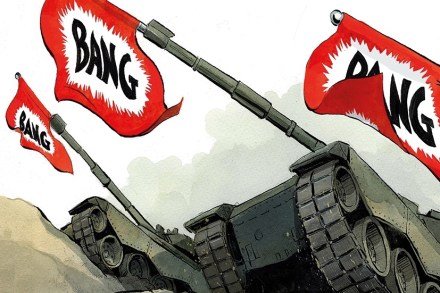
This week: In his cover piece for the magazine, Andrew Roberts says that the British Army has been hollowed out by years of underfunding and a lack of foresight when it comes to replacing the munitions we have sent to Ukraine. Historian Antony Beevor and author Simon Jenkins join the podcast to discuss Britain’s depleted military (01:04).  Also this week: do religion and politics mix?  In The Spectator Isabel Hardman asks why it is that only Christian politicians are forced to defend their beliefs. This is of course in light of the news this week that Kate Forbes’s bid for SNP leadership may be derailed by her views on gay marriage.

The mysterious world of British folk costume

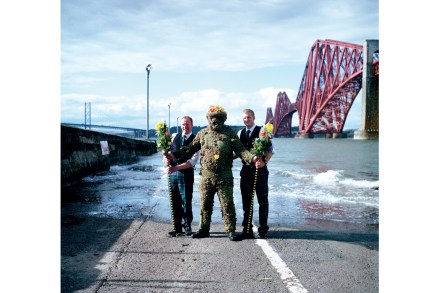
In a remarkable photograph by Benjamin Stone, from around 1899, six men in breeches of a criss-cross floral pattern hold up great reindeer antlers. (Carbon dating of these objects produced the year 1066, plus or minus 80.) A man in a bowler hat holds a squeeze box and on the right a serious-faced boy stands with a hobby-horse head emerging from the cloth that swathes him. The photograph features in the exhibition Making Mischief: Folk Costume in Britain. It shows the Abbots Bromley horn dance, performed annually on the Monday after Old St Bartholomew’s Day (4 September). Never mind that the breeches were made in the 1880s by Mrs J. Manley Lowe, wife of the vicar of this Staffordshire parish.

Owen Matthews, Christopher Howse and Olivia Potts

23 min listen

On this episode, Owen Matthews examines the original sin of Russia’s exiled media (00:44), Christopher Howse says Handel’s Messiah is as much a Christmas tradition as a pantomime (09:08), and Olivia Potts gives her recipe for boiled fruit cake (18:01). Get the full recipe to Olivia’s boiled fruit cake here: https://spectator.

Handel’s Messiah is as much a Christmas tradition as pantomime

It was 9.45 p.m. and yellow light beamed from the church windows into the rainy night. As I opened the door the last bars of the ‘Hallelujah Chorus’ reverberated from the chancel. This was a rehearsal by the London Docklands Singers. ‘Everyone knows the “Hallelujah Chorus”,’ said the conductor, Andrew Campling. ‘It’s in the DNA of the public.’ In his 33 years’ conducting he has put on Handel’s Messiah ten or 12 times.  He can’t help laughing at the judgment of the librettist of Messiah, Charles Jennens, who in 1743 wrote of Handel in a letter: ‘His Messiah has disappointed me, being set in great haste, tho’ he said he would be a year about it, & make it the best of his Compositions.

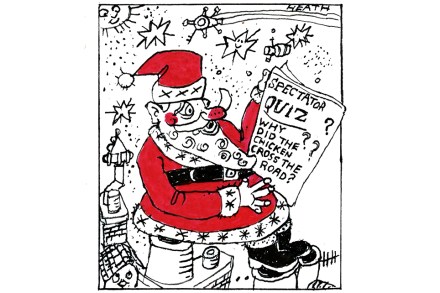
The Spectator’s 2022 Christmas quiz

Verbals In 2022, who said: 1. Them’s the breaks. 2. I know that we will deliver, we will deliver, we will deliver.  3. Dear, oh dear. 4. Excessive consumption of alcohol is not appropriate in a professional workplace. 5. For God’s sake, this man cannot remain in power. 6. I could be wrong, but Hitler also had Jewish blood. 7. The British people deserve to know which party is serious about stopping the invasion on our southern coast. 8. Dio, Patria e Famiglia non è uno slogan politico ma il più bel manifesto d’amore. 9. The jury’s still out. 10. Nous aussi on t’emmerde. Royal prerogatives In 2022: 1. For her Platinum Jubilee, Queen Elizabeth was filmed taking a sandwich out of her handbag. Who was her guest for tea at the time?

The beauty of gaslights

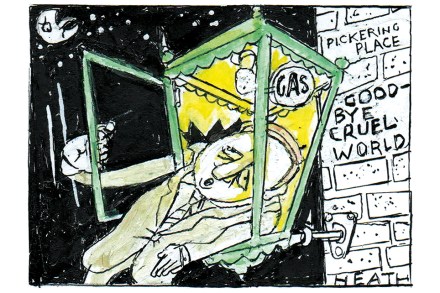
Turn down an alley off St James’s Street (the east side), lined with old painted panelling, and you are in Pickering Place, which pub quizzers say is London’s smallest public square. It is certainly charming, with stone paving, wrought iron railings, Georgian windows and a sundial on a pedestal. A gaslight on a wall bracket used to glow sympathetically in the space. Now Westminster Council has replaced it with an LED. It had threatened to do the same for all its 299 gaslights still under council control, but a rearguard action has halted its plans. The beauty of gaslights may depend on your starting point. They were, at a crucial moment of his life, anathema to John Ruskin.

With Mary Wakefield, James Ball and Christopher Howse

22 min listen

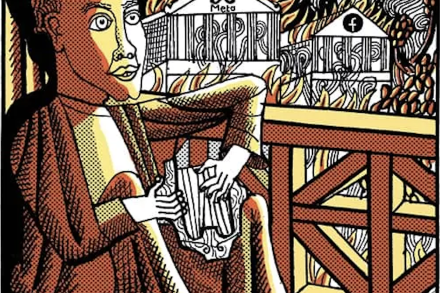
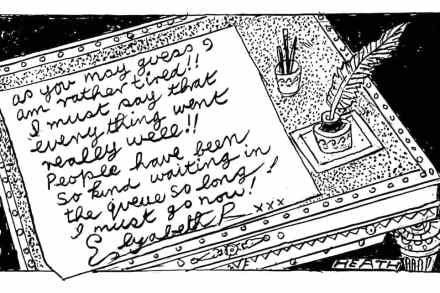
This week on Spectator Out Loud: Mary Wakefield tells us about her frustrating experience trying to give blood (00:49), James Ball says that it may be the beginning of the end for Mark Zuckerberg (07:04), and Christopher Howse reads his Notes on... signatures (16:44).Produced and presented by Oscar Edmondson.

What your signature says about you

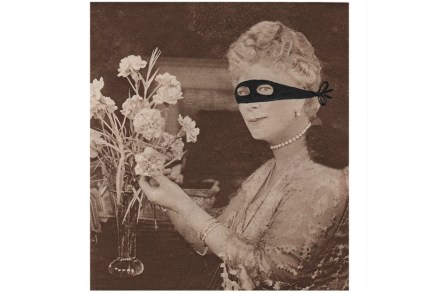
I have a photograph of Queen Elizabeth II and her parents on the wall of my bathroom, not out of any lack of respect but because the gloom there prevents it fading. It is signed Albert, with an odd droop forward of the bar of the T to join a single flourish beneath, and Elizabeth in a familiar hand. This is not the late Queen’s signature, though, for it was made in 1927, when Princess Elizabeth was hardly into talking, let alone signing. Queen Elizabeth, whom we still think of as the Queen Mother, was a simple royal duchess then. Yet one can’t help thinking that in choosing her style of italic signature she had taken note of that of her namesake: the first Queen Elizabeth.

What I’ve learnt from editing a newspaper letters page

Letters to a daily newspaper have a curious power to gain an impetus of their own. ‘I owned a Triumph Herald many decades ago,’ wrote Robert Brown of Crosby to the Telegraph in January. ‘She was my first love. On cold winter nights I would keep her warm with an old mackintosh thrown over her engine under the bonnet. Perhaps it was this that protected her from a thief one night. She was driven off our drive on to the road but steadfastly refused to go any further.’ It soon became clear that we’d hit a seam of experience in recent history, when lives and loves were expressed through small British cars of doubtful reliability.

Should have been even longer with less gore: The Northman reviewed

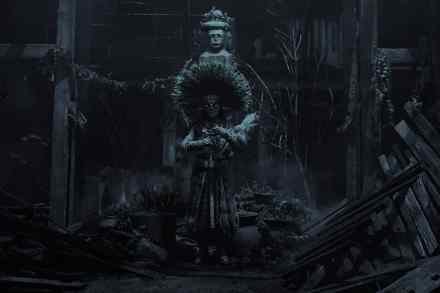
In Rus, which we now call Ukraine, Amleth (Alexander Skarsgard) begins his pursuit of revenge. A sea captain who later aids him is called Volodymyr. But these incidentals have no relevance to the current war, except in one aspect that I want to come on to. Though the film’s hero is called Amleth, the original of Shakespeare’s Prince Hamlet, you can forget Elsinore. The director Robert Eggers’s world in The Northman is that of the Norse sagas, of corpse-eating ravens, runes, mud, gore, human sacrifice and sudden violence. One of the runes on the title cards between scenes is named after the word for ‘ulcer’. The sun never shines. It is surprising that, in their wet homespuns, everyone isn’t shivering.

Christopher Howse, Richard Florida and Olivia Potts

28 min listen

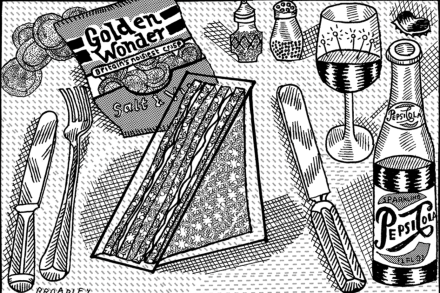
On this week's episode, we'll hear from Christopher Howse on the destruction of Ukrainian churches. (00:50)Next, Richard Florida on how Covid has changed London for the better. (13:52)And finally, Olivia Potts on her love of the crisp sandwich. (23:56)Produced and presented by Sam HolmesSubscribe to The Spectator today and get a £20 Amazon gift voucher.

Biden’s war

36 min listen

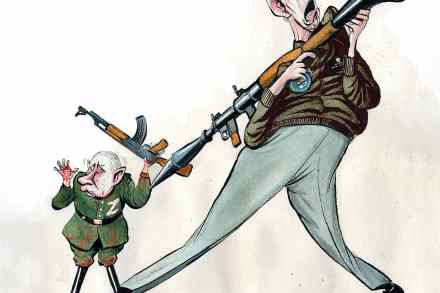
In this week’s episode: Is Biden’s approach to the war in Ukraine more calculating than it seems? For this week’s cover piece, in this week’s cover piece, Matt Purple examines Biden’s response to the situation in Ukraine. The good, the bad and the gaffs. He joins the podcast along with the founder of Political Human Emma Burnell. (00:52) Also this week: How many of Ukraine’s churches have been destroyed? In this week’s issue, Christopher Howse writes poignantly on the destruction of Ukrainian churches and how Vladimir Putin, a man claiming to be a defender of Christianity is desperate to keep the images of destroyed holy sites out of the news.

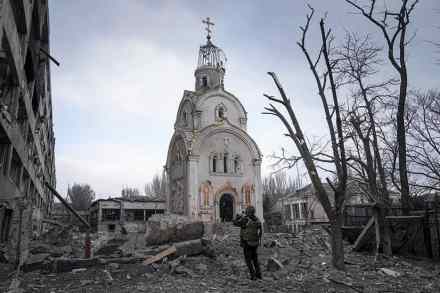
Why the destruction of Ukraine’s churches matters

One small, deadly incident in the Ukrainian war proved memorable because it involved the ordinary things of life. A mother and two children trying to leave the town of Irpin on foot on 6 March died from Russian shelling. Their suitcases fell beside them and, miserably, a pet dog carrier. They lay on an ordinary road that could be in Surrey, on the steps of a memorial to Soviet dead from the second world war. That spot is opposite a little row of bells under a tiled roof in the grounds of the Ukrainian Orthodox church of St George. A neat hoarding was visible in 2015 on the building next to the modest unfinished church, showing what it would look like when the five domes were roofed and gilded.

Stupendous: The World of Stonehenge at the British Museum reviewed

This exhibition is Hamlet without the Prince, and all the better for it. Stonehenge is not there; it remains in Wiltshire. But 430 astonishing artefacts from the neolithic and bronze ages fill a hairpin course like a Roman chariot-racing circuit in a vast room. It is blessedly free from videos of prehistoric Britons tugging on ropes to move monoliths. There is a henge on display, though. (The word in its technical sense was invented in 1932 by Sir Thomas Kendrick, later director of the British Museum.) This is the Seahenge that emerged on the shore at Holme-next-the-Sea in 1998: 55 big oak posts round a two-ton upturned rooted trunk. Gloriously, being trees, they can be dated to a year: 2049 BC. It was sad that it had to be dug up, but here it is, anatomised in a museum.

Lara Prendergast, Christopher Howse, Lionel Shriver, Peter Hitchens, Joanna Lumley and Caroline Moore

55 min listen

On this week's very special Christmas episode, we'll hear from Lara Prendergast on why she’s planning to party hard this Christmas. (00:57)Next, Christopher Howse on those helping to preserve the UK’s medieval churches. (06:31)Then it's, Lionel Shriver on the Covid heretics she admires most. (16:41)Followed by, Peter Hitchens on Christmas in Russia during the last days of the Soviet Union. (25:23)Penultimately, we have Joanna Lumley on getting the key to the Sistine Chapel. (35:69)And finally, Caroline Moore on how ghost stories became a British Christmas tradition.(41:51)Produced and presented by Sam HolmesSubscribe to The Spectator magazine this Christmas and get the next 12 issues – in print and online – for just £12.