Christopher Fildes

What went wrong

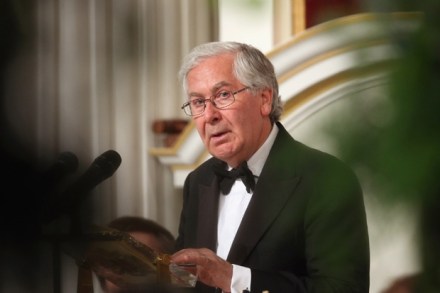
I once asked an American friend to come and talk to the Centre for the Study of Financial Innovation. He told them that he was against it. That put him ahead of his time, but Mervyn King agrees with him. In his decade as Governor of the Bank of England, he had seen what innovation could do, in good times and bad — in crisis, and in the fitful recovery that followed. He has resisted any temptation to write a memoir with himself as hero. Instead, he has set out to explain what went wrong and what must change to stop it happening again—and since we all need to know that, he wanted to write, not in economists’ algebraic shorthand, but in English. That shorthand gave an illusion of certainty.
The Downfall of Money, by Frederick Taylor – review

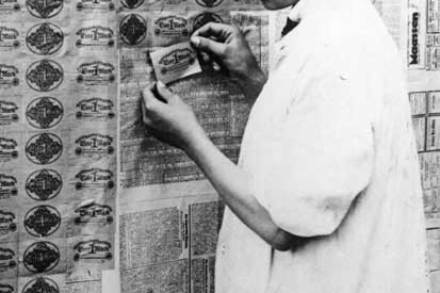
In Germany in 1923 money was losing its value so fast that the state printing works could not keep up. The work had to be contracted out to 130 different printing firms, all churning out marks with the lifespan of mayflies. Only ten years earlier, the mark had been as good as gold. Then Germany had set out to fight a short war and send the bill to the losers. This had worked well the last time round: after the 1870 war, France had handed over 5 million gold francs, not to mention two provinces. But the 1914 war turned out to be longer and far more expensive, and Germany had to pay its own way — which meant borrowing — and the Reichsbank, as a wartime precaution, had taken the mark off the gold standard. In the end there were losers all round. Frederick Taylor tells the story.

9 March 2002: What though the spicy breezes blow soft o’er Buenos Aires, incompetence messes it up

As the world braces itself for the inevitable Greek default, and investors look nervously at potentially exposed banks, perhaps it's worth recalling Argentina's implosion a decade ago. Here is what the Spectator made of it at the time: The missionary Bishop Heber wrote a hymn about Ceylon: 'Where every prospect pleases And only man is vile.' On being told that this was unfair to his converts, he corrected 'Ceylon' in the second edition to 'Java', but his point stands: there is no prospect, however pleasing, that is beyond the power of human and governmental incompetence to mess it up.

Gold’s eternal allure: only Gordon could resist it

Unhappy anniversary. Ten years ago the Chancellor of the day was congratulating himself audibly on a job well done, and in the vaults of the Bank of England grumpy porters were sticking labels on the ingots to indicate a change of ownership. This was Gordon Brown’s great clearance sale. He had chosen to auction more than half the nation’s gold reserves — a matter of 395 metric tonnes out of a holding of 715 tonnes — and to take payment in paper money, at the lowest price available for two decades. The gold was sold for $3.5 billion in 17 auctions between July 1999 and March 2002 at an average price of $275 an ounce. As we went to press it was worth around $1,125 an ounce. Sellers sometimes can’t be choosers, but this was no fire sale.

Advice to the next Chancellor

The best moment in a chancellor’s life comes early. ‘Mr Deputy Speaker,’ he says, ‘we have examined the books. The position is grave. My first duty is to put the public finances in order.’ He then sends for the Hungarian middle-distance runner, Savij Kutz. This bogeyman, first identified by Alan Watkins, has been off the track for years but is making a comeback. Nick Clegg for the Lib Dems gave him a friendly wave. Gordon Brown mutters his surname through gritted teeth. David Cameron lets it be known that he wouldn’t want Kutz to be confrontational. He may not have the choice. Public profligacy has seen to that.

A new bank from a very old stable

My racing correspondent, Captain Threadneedle, thought that banking and racing went together. He wanted Barclays to buy the Tote: perfect synergy, he thought, with matching systems, merged accounts, an overlapping customer base and a marketing slogan that would write itself: ‘You can bet on your overdraft with Barclays.’ He was, as we now know, before his time — and then the banks (Barclays included) took to betting on their own account, splashing out on doubles, trebles and accumulators, collecting piles of toxic betting slips and deservedly losing their boots. It has been left to Weatherbys, a very old name in racing, a new name in banking, to vindicate the Captain’s insight and to solve the equation.

The state of the railways

The Treasury thought the railways were in terminal decline. John Major’s government thought they were a political nuisance — vexed commuters meant lost voters. Privatisation would get the railways off the government’s back, and breaking them into 100 pieces would mean that if one piece was on strike, the other 99 would not be. In the event, they refused to go away, and have maintained an obstinate tendency to put on business. Successive governments have had to cope with the consequences, and we must soon be due for the next set of answers. For New Labour, sweeping into power a dozen years ago, the first and easiest answer was to abandon its costly threats to buy the railways back.

The market’s favourite scapegoat

Oh, dear, what a setback. The usual suspects have slipped through the net. They will have to be locked up in the Financial Services Authority’s waterside fortress for 42 days, while the investigators try again to find some evidence. These suspects are the short sellers: everyone’s favourite scapegoat. They are accused of rocking the banks’ leaky boats, of destabilising the stock market, of profiting from other people’s misfortunes, of driving share prices downwards to suit their own book. If it wasn’t for them, we should all be rich, or richer, at any rate, than we are now — or so we are led to believe. The textbook way to become a short seller is to borrow some shares and then sell them.

Global rules made in London? Brussels sniffs conspiracy

Christopher Fildes on international accounting standards   How gratifying. One set of rules for the whole world, and all of them springing from a fountainhead in Cannon Street, London EC4. There will have been no such display of global authority since the sun set on the British empire. Washington is warming to it. Brussels is restive. These are the rules that set the standards for companies reporting on their financial affairs to their shareholders. They come from the International Accounting Standards Board, and they are accepted in more and more centres where shares are traded, from London to Beijing.

Under starter’s orders

Christopher Fildes on the business dealings at Newbury Forget Cheltenham. That was just a warm-up. The big meeting next week is at Newbury, and it will have everything — fierce contests and driving finishes and bitter objections and stewards’ inquiries and prize-money running well into eight figures — everything, that is, except horses. Trooping into Newbury Racecourse on Wednesday morning, its shareholders will find themselves invited to sack three directors: Nicholas Jones, Brian Stewart-Brown and Sir David Sieff, the chairman. All three are boardroom heavyweights and two of them are members of the Jockey Club, but the Guinness Peat Group wants them out and wants one of its own directors, Richard Todd, in.

The disappearing bezzle

My friend Herbie from the Last National Bank of Boot Hill understood about rogue traders. When another hapless bank owned up to losses ‘due to unauthorised trading’, he added: ‘They mean nobody authorised the guy to get it wrong.’ Now that a French trader called Jerome Kerviel has set a new record by losing £3.6 billion, Société Générale, whose money it was, is left to wonder how it happened and to search for some deep, dark conspiracy. It looks more like a familiar story with extra noughts on the end. A swashbuckling trader buckles when he should have swashed, and then tries to double up and cover up. The money all goes to the people on the other end of his deals.

This party’s well and truly over

The old ones are the best, so allow me to remind you of Sibley’s Law. Giving capital to a bank (said that worldly banker, Nicholas Sibley) is like giving a gallon of beer to a drunk. You know what will become of it, but you can’t know which wall he will choose. By now we have some of the answers, and if the inundations are extensive, it was, after all, quite a party. At the head of the world’s biggest banking group, Charles ‘Chuck’ Prince was enjoying himself to the end — when his bank, Citigroup, admitted to losses of $11 billion, not counting the mere $42 million that he took with him when he was chucked out. Other banks’ chiefs have followed, and on Canary Wharf, where Citi maintains a 12,000-seat corral, there will soon be empty saddles.

Before and after the Bang

25 October 1986 My friend the stockjobber closed his book, turned his back on his pitch, and walked with me off the Stock Exchange floor, down Throgmorton Street and into Bill Bentley’s fish house. We raised our glasses of Montrachet to the last of the good old days. On Monday he must quit the floor and settle down at his work-station, one of hundreds in a huge carpeted financial factory arranged, like all smart City factories, round an atrium. A deputy will man his pitch, empowered to deal on a modest scale, but not, like my friend, to make or lose on his own book a million pounds in a day. The big deals will come upstairs, to be made over the telephone and the screen, from atrium to atrium.

Lovely girls on the townhouse’s staircase —it’s how The Spectator works best

A health warning greeted me: ‘LIBEL. Mr Christopher Fildes and Mr Auberon Waugh have today joined the staff of The Spectator. As from today, The Spectator is no longer insured against libel. Gatley’s Libel and Slander (sixth and seventh edition) may be consulted in my office. Nigel Lawson, Editor.’ Times were hard. I had come to write a City Notebook and found myself in the attic of a tall, narrow, messy townhouse. The bicycle in the hall was Jock Bruce-Gardyne’s. Lovely girls climbed the stairs in short skirts. Writing was done at the last frantic minute. This still seems to be how The Spectator works best. Bron Waugh and I managed not to libel anybody, although he tinkered with the contents page and varied George Gale’s name to Lunchtime O’Gale.

Sayonara, Pilks — we’re short of owners with their hearts in the business

A sprig of the Pilkington family was saying goodbye to his hosts. ‘I’ve an early start,’ he explained. ‘I’ve got to be at the bloody glassworks in the morning.’ When he arrived, he found that the chairman, Sir Harry Pilkington, was there before him and had left a note on his desk: ‘My boy, it seems to me that your heart is not in the business...’. Family businesses need enough sprigs to allow for such pruning, and this one was a model. Then some stray aunts and cousins wanted a price for their shares. Now Pilkington is just another public company, and in Sir Harry’s place sits Sir Nigel Rudd, a serial non-executive chairman, Pilks is on the receiving end of a bid from Nippon Glass, and Sir Nigel’s board is recommending it.

Back from the grave and ready to party — that’s the London Stock Exchange

Asked what he did in the French Revolution, the Abbé Sieyes explained that he survived it. Against all the odds, this has been the London Stock Exchange’s achievement. It is still there. Its dreary old building looks better as a hole in the ground, but the Exchange has found itself a new perch in Paternoster Square, and remains an independent British entity. You could have bet against it. Not long ago its only choice seemed to be whether to surrender to the Germans or the French: ‘Levez les mains’ or ‘Hande hoch’? Not so long before that it agreed to join up with the Frankfurt exchange, Deutsche Börse, whose Swiss surpremo, Werner Seifert, would come in and run the merged business.

Round in circles and over the edge — that’s the way the money goes

This week’s message from the Confederation of British Industry: we’ll just die and then you’ll be sorry. I take this as more of a threat than a promise, but since it is all about pensions, anything is possible. Many (perhaps most) of the CBI’s member companies must now be stuck with underfunded pension schemes, the regulators want to set them a timetable for topping up their funds, and the CBI says that if this is taken literally, one company in every five will be put out of business. A perverse logic would work itself out: overstretched companies and underfunded schemes are always likely to go together. Companies like these would be required to find more cash in more of a hurry. They would also have to contribute loaded payments to the Pension Protection Fund.

A foxy Chancellor knows many things, but a hedgehog learns the hard way

Tutti possono sbagliare: we can all make mistakes, as the hedgehog observed, getting down from the hearth-brush. Whether our prickly Chancellor is a student of Italian proverbs, I cannot say, but he could learn from this one. In the five and half years since he auctioned half the nation’s gold reserves, the price of gold has doubled. He was bid rather less than $280 an ounce, the hammer fell, and he put the proceeds into dollars, yen and euros — but none of them has been as good as gold. Looking on as the price soared above $560, I could only reflect on the timing that caused him to sell at the lowest price on offer for two decades. He was, after all, under no pressure. Did he want to take a clever initiative, to cut a dash and to overshadow his neighbour in Downing Street?

The Bad Investment Guide’s gilt-edged entry: trust in governments, settle for little

This is the time of year for virtuous resolutions, so let us resolve on a visit to the Bad Investment Guide, which now has a gilt-edged new entry. In among all the flaky oil-drillers and flats brought off the drawing board for a quick turn, we can note the stately presence of Her Majesty’s Government’s 41/4 per cent Treasury stock, due for redemption in 2055. Proudly launched by the Chancellor, Gordon Brown, last summer, this stock now stands at a small premium, which means that if you were to buy it and sit on it for the next 49 years, you would be guaranteed to lose money. Along the way, though, you would receive a steady income. Putting the two together, your investment would yield you 3.9 per cent — before tax, that is, and before the corrosive effects of inflation.

I get a bung from the unjust steward — he must be due for an audit

Gordon Brown is a son of the manse, so he will have been brought up on the Parable of the Unjust Steward. As stewards have been known to do, this one, we are told, had been fiddling the figures, and realised that his accounts would soon be audited. When that day came, he knew, he would need friends — so now was the time to ingratiate himself with his customers. He hurried about to offer them rebates and discounts. Can it be that the Chancellor has borrowed this idea from holy scripture? First of all he sends me an entirely welcome tax rebate. Then he follows it up with a straightforward £400 bung. Half of it, he explains, is a winter fuel payment to help me pay my heating bill.