Charles Moore

Charles Moore

Charles Moore is The Spectator’s chairman.

He is a former editor of the magazine, as well as the Sunday Telegraph and the Daily Telegraph. He became a non-affiliated peer in July 2020.

The error of involving Gordon Brown

Sir Keir Starmer says the House of Lords is ‘indefensible’. It is an odd thing to say about an institution which has lasted more than 700 years. It is slightly like saying the common law is indefensible, and extremely like saying that the monarchy is indefensible (which is, I think we know, what Sir Keir does actually believe). There are several defences to be made for the Lords. They are just not, strictly speaking, democratic ones. But I must stick to my rule (see last week) of avoiding the subject of House of Lords reform. The funniest bit of Sir Keir’s constitutional plans is that he chooses to justify them in economic terms. Apparently, his new layer of elected regional non-Lords will bring new prosperity to the United Kingdom.

It is harder to run a dictatorship than a democracy

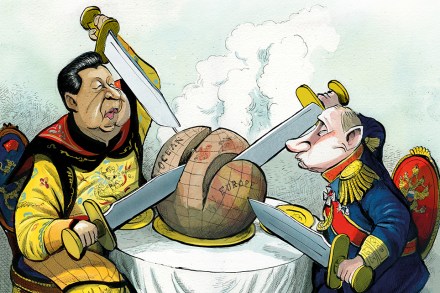
Things are currently so bad in the western democracies that we tend to ignore how much worse they are in what one could politely call ‘non-democracies’. China’s policy of developing Covid in a lab, and then covering up its leak, seemed to work at the time. Western scientists, some corrupted by their links with China, helped persuade many that Beijing had the best policy for infection control. But it is increasingly clear that Chinese people themselves do not believe this and are rebelling. In Russia, Putin’s policy of war has isolated his country, humiliated his armed forces and bound his democratic enemies more closely even than did anti-Soviet feeling in the Cold War. In Iran, more than 300 people have been killed in riots against the oppression of women.

MPs won’t ditch the House of Lords

The Supreme Court decided rightly on Wednesday, rejecting the Scottish government’s claim that a second referendum on independence was not a ‘reserved matter’. But since it was obvious from the beginning that this was the case, why did Nicola Sturgeon insist on bringing an unwinnable action? Presumably to lay blame, as usual, on UK authorities. The Supreme Court is presented as the enemy of the people, Ms Sturgeon conveniently forgetting that the people, when last asked, voted against independence and may not wish to be asked again in the hope that they will give the ‘right’ answer. The SNP will now claim that the next Scottish parliament election will be amount to the referendum ‘London’ has forbidden. Will this help the SNP?

Cop and the League of Nations

In order to understand why all Cops (Conference of the Parties), including the one which began this week, are so unsatisfactory, historical analogy may help. They resemble the League of Nations between the wars. The League’s aim was to ensure world peace. The purpose of Cops, and their associated UN processes, is to arrest climate change. Neither purpose was/is achievable by the chosen means, chiefly because the countries where the problem was/is greatest were/are the least likely to cooperate. Germany, defeated in the Great War, was not allowed into the League in the first place. Japan and Italy withdrew from its council so that they could get on with their aggressions. This week, the leaders of China, India and Russia were all absent from Sharm El Sheikh.

Greta’s right about Cop being useless

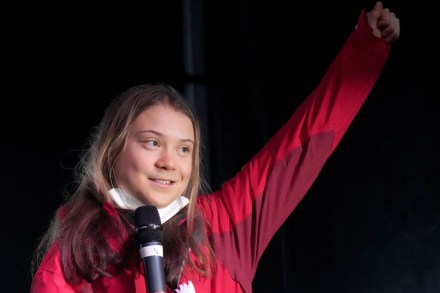
Greta Thunberg said, in a newspaper interview, that Cop27 is a ‘scam’ for ‘greenwashing, lying and cheating’. Then she said to Jeremy Vine: ‘The fact that one of the most powerful people in the world [Rishi Sunak] doesn’t have time for this, it’s very symbolic and says that they may have other priorities.’ It is very disappointing that Mr Sunak did not listen to her words, recognising that the Cop is indeed a place of greenwashing etc and sticking to other priorities (though not ones pleasing to Greta). He has now gone back on his promise to stay away. This is a dreadful sign of weakness. His appeal lies in his sense of what matters most. There have already been 27 years of Cops, and yet global carbon emissions have continued to rise. They do not work.

The personal faith of PMs

I have seen it suggested that because Rishi Sunak is a Hindu, it would be wrong for him to have any role in the appointment of bishops in the Church of England. This is a non-sequitur. So long as the C of E remains the church by law established, its main appointments must, in formal terms, be made by the Supreme Governor of that church, the monarch, ‘on advice’. That advice, though informed by the views of the hierarchy, must be tendered by the Prime Minister. Gordon Brown, when prime minister, tried to shuffle off these responsibilities, perhaps feeling rather Presbyterian about them; but this does not work. If the Church of England has the privileges of Establishment, it must permit an exterior eye on whom it appoints.

Has a Conservative government got any power at all?

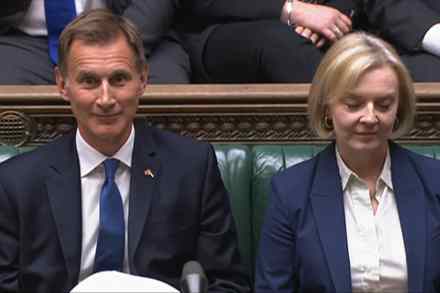
In the House of Commons on Monday, someone accused Liz Truss’s government of being ‘in office but not in power’. By chance, I was sitting in the peers’ gallery immediately behind the author of that famous phrase, Norman Lamont, who applied it to John Major’s administration in his resignation statement as chancellor in 1993. It grows ever more apt. I sometimes wonder if modern politicians positively welcome this situation. It is a general feature of the structures of the EU, where no elected politician has real power, but none seems to mind.

The case against a stripped-back coronation

The last King Charles was crowned in 1661. Samuel Pepys attended the ceremony. He was captivated by ‘the sight of all these glorious things… sure never to see the like again in this world’. He later became so merry, he told his diary, that ‘my head began to turne and I to vomitt…Thus did the day end, with joy everywhere’. We live in a more decorous age, but I think Pepys imbibed the right spirit. The coming coronation of King Charles III should be joyful too. The paradox is that joy will not be achieved unless the ceremony is solemn and magnificent. Early signs give slight cause for concern. On Tuesday last week, the coronation was announced for 6 May, half the traditional time gap.

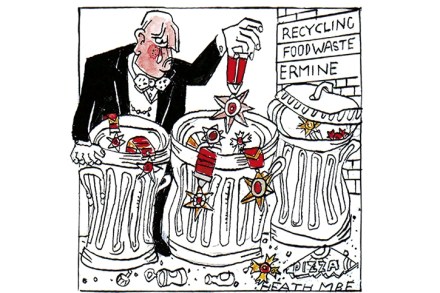
Why should Tom Watson be given a peerage and not Paul Dacre?

Much of this is not Liz Truss’s fault. The great big adjustment all over the West is that the era of low interest rates is now over. This is causing a crisis because most people, businesses and governments – and, we now discover, most pension funds – planned their finances on the basis that the era would go on for ever. It was bad luck that this hit markets just as Britain got its new prime minister. However, the Trussties undoubtedly overreached. Having been caught out, they are forced to become the sober-sides they previously mocked.

Hacked Off shouldn’t be allowed to scupper Paul Dacre’s peerage

It sounded like an exciting game of Consequences. The Duke of Sussex, Lady Lawrence (mother of Stephen), Sir Elton John, Liz Hurley and Sadie Frost said they will take the Daily Mail to court for alleged phone hacking. The leading lawyers in this case, Hamlins, put out a press release accusing Associated Newspapers, the Mail’s publishers, of grave crimes and wrongs, but no legal papers have been filed.  It makes me wonder whether these accusations are serious, or just examples of the depressing 21st-century passion for ‘lawfare’ This is rather unusual. Why the rush over these historical claims? The answer lies in another press release, issued by Hacked Off, the group backed by the late Max Mosley.

The trouble with Nick Robinson’s Thoughts for the Day

Thought for the Day appears every morning on BBC Radio 4. This preachy slot is hallowed by longevity, if not because of its content. But when Nick Robinson presents the accompanying Today programme, he often uses the moment after the hourly news and papers to contribute a political Thought for the Day of his own. Before he settles down to attack a government minister with his dentist’s drill, Nick likes to deliver his own wisdom about the foolishness of political leaders. ‘Making promises is easy,’ he told listeners on Tuesday. ‘Explaining how you’ll pay for them is rather harder, as the Chancellor and the Prime Minister are beginning to discover.’ What is the point of such remarks?

The genius of Hilary Mantel

Yes, but why did the IMF put out its Tuesday night statement? Even if all its criticisms of the government’s new economic policy were correct, why the rush? The IMF’s action is insulting to a G7 country and premature because its thoughts were inevitably composed without full knowledge. It is best seen as part of a pattern, like the early attempts to reverse Brexit, or the US government’s related interventions over the Northern Ireland Protocol. The people who have been running the developed world badly for more than two decades resent those who now challenge them. They pick their moments. The coup de grâce to Boris Johnson earlier this year was delivered by Lord Macdonald, the former head of the Foreign Office.

Should Queen Elizabeth II be made a saint?

If this were a Catholic country, up would go the cry for canonisation. When Pope John Paul II died, the crowds in St Peter’s Square shouted ‘Santo subito!’ And the Polish Pope was indeed made a saint with unusual speed. What about St Elizabeth, with Windsor as her Compostela? Well, we are not a Catholic country, and if we were, Elizabeth II would never have become our Queen. She clearly did, however, possess the first of the two formal qualifications for sainthood, what the Church calls ‘heroic virtue’. The second is to prove two miracles effected by intercession to the person concerned. This can take time, but the world is already full of people who believe the late Queen cured them of this or that.

The night the Queen refused to read my book

‘So it is come at last, the distinguished thing!’ exclaimed Henry James on his deathbed. Such a thought is reflected in funerals – always more powerful than a memorial service or ‘celebration’ – because the person’s body is present. When it comes at last to Elizabeth II on Monday, it will be the most distinguished of all the ceremonies. The Household Division is in charge. It is always and only the Grenadier Guards who make up the bearer party. By then, all serving Guards officers will have stood watch over the coffin for the lying-in-state. The Guards are so called because they must guard the Sovereign in life. Their last, distinguished duty is to guard her in death.

The Grenadier Guards’ final duty for Queen Elizabeth

‘So it is come at last, the distinguished thing!’ exclaimed Henry James on his deathbed. Such a thought is reflected in funerals – always more powerful than a memorial service or ‘celebration’ – because the person’s body is present. When it comes at last to Elizabeth II on Monday, it will be the most distinguished of all the ceremonies. The Household Division is in charge. It is always and only the Grenadier Guards who make up the bearer party. By then, all serving Guards officers will have stood watch over the coffin for the lying-in-state. The Guards are so called because they must guard the Sovereign in life. Their last, distinguished duty is to guard her in death.

Queen Elizabeth II: coronation, reign and succession

12 min listen

Freddy Gray, The Spectator's deputy editor, is joined by our former editor Charles Moore, and our political editor James Forsyth, to discuss the Queen's death. What was her coronation like? Should unionists be concerned? How important was the Queen's faith to her? What do we miss about the Queen?

Why Liz Truss’s political journey matters

As is now well known, Liz Truss has travelled politically. Her parents are left-wing, and there is a photograph of her as a child posing with them and their CND banner in Paisley. She herself was active in the Liberal Democrats. Professor Truss is reportedly upset that his daughter became a Conservative. I can identify with this story a little since both my parents were/are (my mother is still alive) ardent Liberals and I fear my own move to the right – though never really a party-political thing – upset them. Parents tend to be more upset by children moving to their right than to their left. This is because non-conservative politics is pseudo-religious. It sees political allegiance as a test of virtue and political programmes as means of salvation.

‘You can’t have your cake and eat it’: Rishi Sunak talks to Charles Moore

The morning after the first one-on-one Tory leadership debate, Rishi Sunak came to 22 Old Queen Street to speak to Charles Moore for SpectatorTV. This is an edited transcript of their conversation. CHARLES MOORE: Rishi Sunak, welcome to the offices of The Spectator. Just a preliminary – because you mentioned it first in the debate last night [Monday] – David Trimble died and you paid tribute to him. Almost the last thing he intervened on in public life was on the Northern Ireland Protocol. He was worried because he said it threatened the Belfast Agreement. Do you agree? RISHI SUNAK: David Trimble was someone who did an enormous amount to support the Union and bring peace to Northern Ireland, and we’ll miss him dearly for that.

Trimble may prove to be Unionism’s last statesman

David Trimble, who has just died, has rightly been praised for his courage. History may prove him to have been Unionism’s last statesman. But the well-known people who sincerely eulogised him this week – Tony Blair, Bill Clinton, Jonathan Powell – all helped end his career. There are many good things to be said for the Belfast Agreement, and no one said them better than David, but it achieved at least one big, bad thing: it undermined moderation in Ulster politics. By persuading Trimble to move so far, Blair and co separated him from his political roots. This broke Trimble’s Unionists and empowered the much more sectarian followers of Ian Paisley.

A rather funny story about Ivana Trump

The death of Ivana Trump last week reminded me of a story I had always meant to check. I rang its central figure, Sir Humphry Wakefield, who was forthcoming. In the late 1980s, Ivana, then married to the man she called ‘the Donald’, was doing up the Plaza Hotel in New York, which her husband owned. She decided to name the Plaza’s 12 top suites after great British country houses – Chatsworth, Wilton, Floors etc. So she commissioned Humphry, whose company specialises in the perfect reproduction of important furniture, to install copies of relevant objects from the houses in the appropriate suite. This involved Humphry meeting the couple, although Donald was frequently interrupted to take calls from three angry men in Atlantic City who seemed to be annoying him.