Charles Moore

Charles Moore

Charles Moore is The Spectator’s chairman.

He is a former editor of the magazine, as well as the Sunday Telegraph and the Daily Telegraph. He became a non-affiliated peer in July 2020.

Medieval farmers could stop flooding – so why won’t the Environment Agency?

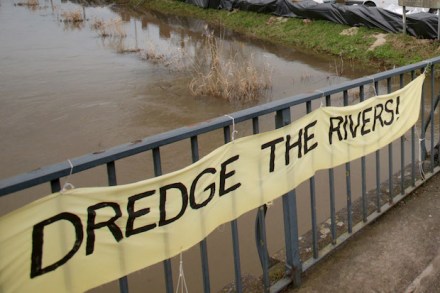
Our neighbour Philip Merricks is a farmer on Romney Marsh, 90 per cent of whose land is below sea level. The marsh would not exist without the medieval ingenuity which ‘inned’ it from the sea. Phil is therefore well placed to understand the interests of farmers on the Somerset Levels who have now been inundated for a month. But he is also a conservationist, owning and running two bird reserves, so is pro-farming and pro-wildlife, which too few are. Last week, he went to the Somerset Levels as chairman of the Hawk and Owl Trust, which has a reserve down there. He tells me that while the usual winter waterlogging is good for wildlife, what is happening in Somerset now is as terrible for wildlife as it is for farmers — too deep, too widespread, too prolonged.
What medieval farmers knew – and the Environment Agency doesn’t

Our neighbour Philip Merricks is a farmer on Romney Marsh, 90 per cent of whose land is below sea level. The marsh would not exist without the medieval ingenuity which ‘inned’ it from the sea. Phil is therefore well placed to understand the interests of farmers on the Somerset Levels who have now been inundated for a month. But he is also a conservationist, owning and running two bird reserves, so is pro-farming and pro-wildlife, which too few are. Last week, he went to the Somerset Levels as chairman of the Hawk and Owl Trust, which has a reserve down there. He tells me that while the usual winter waterlogging is good for wildlife, what is happening in Somerset now is as terrible for wildlife as it is for farmers — too deep, too widespread, too prolonged.

The Spectator’s Notes: George Osborne’s personal recovery

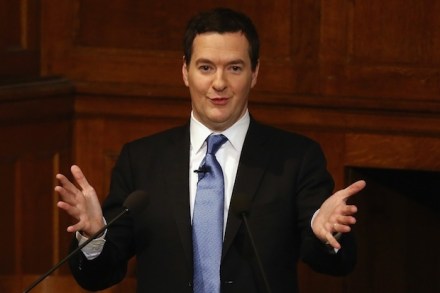
Now that the economic statistics are looking better, people are beginning to rediscover the once-fashionable thought that George Osborne is a great strategist. Things are coming together before the 2015 election in a way which makes life uncomfortable for Labour. I am not sure that ‘strategist’ is the right word, but I do think Mr Osborne deserves praise for something else. If you compare this government with the last, you will see that it is not dysfunctional in its internal relations. The coalition has constant frictions, but these are, as it were, built into the system. After nearly four years, there is no serious split or even known personal hatred at the top of the government.

The top level of government isn’t riddled with personal hatred – thanks to Osborne

Now that the economic statistics are looking better, people are beginning to rediscover the once-fashionable thought that George Osborne is a great strategist. Things are coming together before the 2015 election in a way which makes life uncomfortable for Labour. I am not sure that ‘strategist’ is the right word, but I do think Mr Osborne deserves praise for something else. If you compare this government with the last, you will see that it is not dysfunctional in its internal relations. The coalition has constant frictions, but these are, as it were, built into the system. After nearly four years, there is no serious split or even known personal hatred at the top of the government.

The Spectator’s Notes: French presidents used to have a touch of the monarch. Not any more

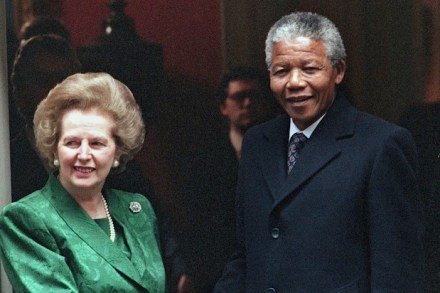
When I interviewed Valéry Giscard d’Estaing, the former president of France, for my biography of Margaret Thatcher, I asked him why, when she lunched with him at the Elysée Palace for the first time, he had been served before her: she had been offended. M. Giscard explained that no slight had been intended. It was a matter of protocol — the president is the head of state, the British prime minister only the head of government. ‘You must remember,’ he added, ‘that the president is in the line of sovereigns.’ I recalled these words when reading about President Hollande and his amorous adventures in his helmet. To the British, it is a puzzle that French presidents are protected from the media scrutiny we inflict on our own leaders.

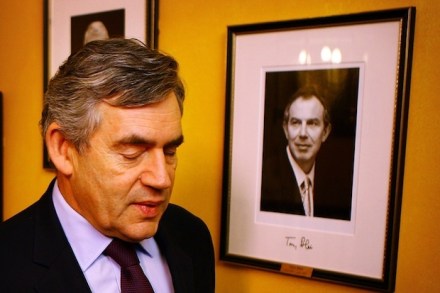
Gordon Brown’s Chang Song-Thaek-style plot

Before Chang Song-Thaek was executed in North Korea last month for being a ‘wicked political careerist, trickster and traitor for all ages’, he allegedly confessed to his crimes. ‘I didn’t fix a definite time for the coup,’ he said, ‘But it was my intention to concentrate … all economic organs on the cabinet and become premier when the economy goes totally bankrupt and the state is on the verge of collapse …I thought that if I solve the problem of people’s living …by spending an enormous amount of funds …after becoming premier, the people will shout “hurrah” for me and I will succeed in a smooth way.’ Luckily, North Korea is well enough run to have stopped this terrible chain of events.

Mugabe envy in Scotland

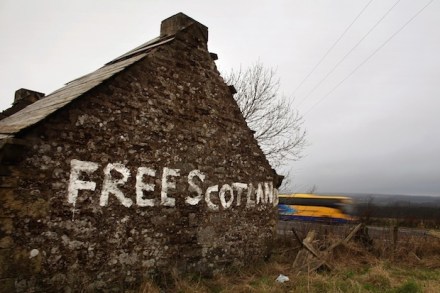
Who owns Scotland? The people who most commonly ask this question believe that the land has been wrested from ordinary Scots by evil lairds and rich foreigners (by which they chiefly mean the English). Now the Scottish government is bringing out a report on how to correct this alleged injustice. It may recommend extending community ‘right to buy’ powers and allowing tenants to buy their holdings even if the owners do not want to sell.  This would have the unintended effect of ending all new tenancies. But the SNP’s misunderstanding of the situation is even more radical than that. It believes that big Scottish landowners are rich because they own the land. For a long time now, it has been the other way round. They own the land because they are rich.

How is Alex Salmond like Robert Mugabe?

Who owns Scotland? The people who most commonly ask this question believe that the land has been wrested from ordinary Scots by evil lairds and rich foreigners (by which they chiefly mean the English). Now the Scottish government is bringing out a report on how to correct this alleged injustice. It may recommend extending community ‘right to buy’ powers and allowing tenants to buy their holdings even if the owners do not want to sell.  This would have the unintended effect of ending all new tenancies. But the SNP’s misunderstanding of the situation is even more radical than that. It believes that big Scottish landowners are rich because they own the land. For a long time now, it has been the other way round. They own the land because they are rich.

Charles Moore’s notes: Why Ireland fears Scottish independence

In Dublin, where I am writing this column, people are watching the Scottish referendum campaign more closely than in London. Despite the polls, they almost expect a Yes vote, but most do not want one. People fear that Yes would weaken the UK and therefore make it a less useful ally for Ireland in the EU. They also think that an independent Scotland might overtake Ireland as a cute little place for foreign investors who like the combination of kilts, bagpipes and general Celtic carry-on with tax breaks and commercial access to the Anglosphere. Finally, they worry that Scottish independence would reopen the Irish question. At present, the Republic enjoys the fact that the settlement in the North has driven the call for a United Ireland into the background.

The Irish are fearful of Scottish independence

In Dublin, where I am writing this, people are watching the Scottish referendum campaign more closely than in London. Despite the polls, they almost expect a Yes vote, but most do not want one. People fear that Yes would weaken the UK and therefore make it a less useful ally for Ireland in the EU. They also think that an independent Scotland might overtake Ireland as a cute little place for foreign investors who like the combination of kilts, bagpipes and general Celtic carry-on with tax breaks and commercial access to the Anglosphere. Finally, they worry that Scottish independence would reopen the Irish question. At present, the Republic enjoys the fact that the settlement in the North has driven the call for a United Ireland into the background.

If Scotland leaves, will we be left with FUK?

In Whitehall, there is a phrase for the entity which would be left if Scotland were to vote Yes to independence next year. The acronym is rUK, which stands for ‘the rest of the United Kingdom’. This device of referring to a country’s altered state in its name has a precedent. After Macedonia broke away from Yugoslavia in 1991, it could only prevent Greece from blocking its UN entry by being admitted as the Former Yugoslav Republic of Macedonia (FYROM). Obviously, it would be embarrassing for the Former UK (FUK) to highlight its initials, but the nomenclature is a real problem.

Boris’s stand on equality prepares him for leadership

Boris Johnson’s Margaret Thatcher Lecture to the Centre for Policy Studies attracted attention for its remarks about IQ, but the media ignored its central thesis. The speech is against equality, eloquently so. I date the mental collapse of the Conservatives from the moment in 1995 when Labour’s newish leader, Tony Blair, jumped up in Parliament and asked the Prime Minister, John Major, whether he accepted it ‘as a responsibility of government to reduce inequality’. Mr Major’s simple answer was ‘Yes’. It shut Mr Blair up that afternoon, but it gave him the advantage ever after. If both parties say government must create equality then the one which promotes more state spending and interference will always look the more convincing.

Charles Moore: What would we call what’s left of the country if Scotland leaves? Obviously Former UK (FUK) won’t do…

Boris Johnson’s Margaret Thatcher Lecture to the Centre for Policy Studies attracted attention for its remarks about IQ, but the media ignored its central thesis. The speech is against equality, eloquently so. I date the mental collapse of the Conservatives from the moment in 1995 when Labour’s newish leader, Tony Blair, jumped up in Parliament and asked the Prime Minister, John Major, whether he accepted it ‘as a responsibility of government to reduce inequality’. Mr Major’s simple answer was ‘Yes’. It shut Mr Blair up that afternoon, but it gave him the advantage ever after. If both parties say government must create equality then the one which promotes more state spending and interference will always look the more convincing.

Charles Moore’s notes: Peston and co would have done more Co-op digging if the Tories had been involved

There has naturally been plenty of unfavourable comment on how the Revd Paul Flowers, the ‘crystal Methodist’, was allowed by the Financial Services Authority to become chairman of the Co-op Bank. But the story does not reflect very well on the media either. If you look at Robert Peston’s BBC blog on the subject, for instance, there is a lot of ‘I am told’ and ‘according to the Manchester Evening News’. Is there no one in the BBC’s enormous staff who could have done a bit of work years ago on the Revd Mr Flowers?

The Paul Flowers scandal exposes the rotten heart of the Labour movement

There has naturally been plenty of unfavorable comment on how the Revd Paul Flowers, the ‘crystal Methodist’, was allowed by the Financial Services Authority to become chairman of the Co-op Bank. But the story does not reflect very well on the media either. If you look at Robert Peston’s BBC blog on the subject, for instance, there is a lot of ‘I am told’ and ‘according to the Manchester Evening News’. Is there no one in the BBC’s enormous staff who could have done a bit of work years ago on the Revd Mr Flowers?

Charles Moore: State broadcasting allows fascism — and we’re paying the fees for it

There has not been much good news out of Greece since the eurozone powers decided to crush the country, but it is heartening that the state broadcasting company, ERT, has been closed down. All such broadcasting systems, including the BBC, are attempts to impose certain political and cultural norms upon the population, and force them to pay for them. ‘This is how fascism works,’ protested one ERT ex-employee, as the riot police evicted her colleagues — who were trying to keep the service running — ‘slyly and in darkness’. She has got it back to front. Fascism (or communism) can prevail only if a state broadcasting system exists.

The Tories should pledge to cut the BBC’s licence fee

There has not been much good news out of Greece since the eurozone powers decided to crush the country, but it is heartening that the state broadcasting company, ERT, has been closed down. All such broadcasting systems, including the BBC, are attempts to impose certain political and cultural norms upon the population, and force them to pay for them. ‘This is how fascism works,’ protested one ERT ex-employee, as the riot police evicted her colleagues — who were trying to keep the service running — ‘slyly and in darkness’. She has got it back to front. Fascism (or communism) can prevail only if a state broadcasting system exists.

Charles Moore: Teaching qualifications must include a stint in business — or the army

The most extraordinary thing about the scandal of Unite at Grangemouth and in Falkirk is how long it took the outside world to notice. Partly, this is an effect of devolution: almost nothing Scottish is now considered news in London, even if it is of kingdom-wide importance. Partly, it results from the loss of media and political attention to trade union affairs. So successful was Mrs Thatcher in taming union political power that newspapers laid off the labour correspondents who, in the 1970s and early 1980s, had been the aristocrats of the news room. As for the Tories, they have forgotten the Cold War arts of keeping dossiers on subversion.

The Grangemouth scandal shows it’s time to keep an eye on the Reds. Again

The most extraordinary thing about the scandal of Unite at Grangemouth and in Falkirk is how long it took the outside world to notice. Partly, this is an effect of devolution: almost nothing Scottish is now considered news in London, even if it is of kingdom-wide importance. Partly, it results from the loss of media and political attention to trade union affairs. So successful was Mrs Thatcher in taming union political power that newspapers laid off the labour correspondents who, in the 1970s and early 1980s, had been the aristocrats of the news room. As for the Tories, they have forgotten the Cold War arts of keeping dossiers on subversion.

In life, Jimmy Savile was excused everything. In death, he is indiscriminately condemned

Jimmy Savile and I were both born on 31 October, though separated by 30 years. Sir James would be 87 this week. While he lived, I must admit, this fact did not give me much fellow feeling with the famous disc jockey, knight and member of the Athenaeum (proposed for membership by Cardinal Hume); but since he has died, I have been distressed that absolutely no one will speak in his defence. What bothers me is the sense that no one knows fully what he did, and few have tried seriously to establish the facts. Operation Yewtree, conducted by the police and the NSPCC, would barely admit that it had not actually investigated individual testimony against Savile. The current inquiry into Savile’s behaviour in NHS hospitals is being much more conscientiously pursued.