Charles Moore

Charles Moore

Charles Moore is The Spectator’s chairman.

He is a former editor of the magazine, as well as the Sunday Telegraph and the Daily Telegraph. He became a non-affiliated peer in July 2020.

The Spectator’s Notes | 28 April 2016

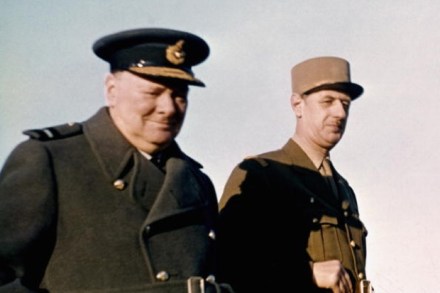
‘England in effect is insular, she is maritime, she is linked through her interactions, her markets and her supply lines to the most diverse and often the most distant countries; she pursues essentially industrial and commercial activities, and only slight agricultural ones. She has, in all her doings, very marked and very original habits and traditions.’ This classic Eurosceptic statement was made, as Daniel Hannan reminds us in his excellent book Why Vote Leave, by a great European, Charles de Gaulle. He was explaining why France was rejecting our attempt to join the EEC in 1963. The General understood what the European project was, and why Britain was not a natural part of it. More than 50 years on, is there much to add?

The FT has become the Daily Mail of the Europhile elite

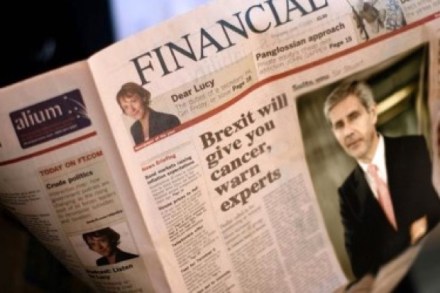
An enjoyable aspect of the EU referendum campaign is the nervous condition of the Financial Times. Unable to maintain its usual pretence at judicious balance under the strain, it has become the Daily Mail of the Europhile global elites, warning of the Seven Plagues which will afflict us if we vote to leave. Rather as the Mail loves the headline beginning ‘Just why…?’, so the FT all-purpose referendum headline begins ‘Fears mount…’ Its star columnists like Philip Stephens and Janan Ganesh pour withering scorn on Eurosceptic ‘nostalgists’ and bigots.

As Matt Ridley discovered, public appointments go to ‘green’ candidates

In last Saturday’s Daily Telegraph, I mentioned how outside candidates for civil service and public appointments feel ill-used by the system. My piece prompted more correspondents. One tells me that little effort was made, when he applied for a permanent secretaryship, to give him the information about the post which was available to insiders but not to people like him. The question on which he had five minutes to speak was ‘The Secretary of State has set out a number of clear priorities for the Department, covering safety and wellbeing of children, educational excellence and preparing young people for adult life; as well as the equalities agenda. How would you lead the Department to deliver successfully on these priorities?

The Spectator’s notes | 21 April 2016

The ‘remain’ campaign is having some success with the line that the ‘leave’ camp cannot say what Britain outside the EU would look like. (Nor can the ‘remain’ campaign, of course, though it doesn’t stop it trying.) But it is crucial to the ‘leave’ cause that it resist the temptation to set out a plan. ‘Remain’ wants it to fall into the SNP trap in the Scottish referendum of proposing something which can then be picked apart. There is a cast-iron reason why ‘leave’ cannot do this. Even if we vote to leave, the ‘leave’ campaign, unlike the SNP in the Scottish vote, will not form a government. It is a campaign in a referendum, not a party in or bidding for office.

Simon Danczuk’s ‘dark place’ excuse should be used more widely

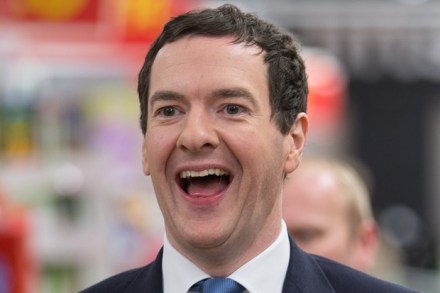
If you are caught doing something bad nowadays, what you are supposed to say (the latest exponent is Simon Danczuk MP, the anti-child abuse zealot, after ‘sexting’ a 17-year-old girl) is: ‘I was in a very dark place at the time.’ At present, the phrase is used to half-excuse sexual misbehaviour, drug-taking and the like. I hope it will extend more widely, as in ‘Mr Osborne, why did you create the Office of Budget Responsibility to make economic forecasting independent of the Treasury, and then use the Treasury to concoct an economic forecast to frighten people into voting to stay in the EU?’ A shamed Chancellor: ‘I was in a very dark place at the time.’ This is an extract from Charles Moore's Notes.

Why are we ignoring David Furnish?

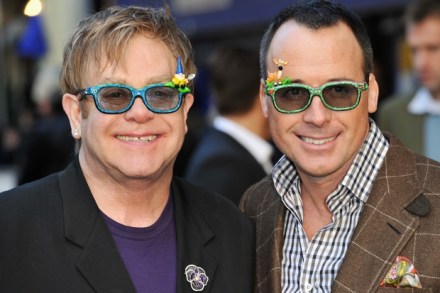
For some reason, possibly homophobic, the media just now is refusing to give any coverage to David Furnish, the spouse of Sir Elton John. I think they are trying to suppress an important argument that Mr Furnish made recently. He pointed out how discriminatory it was that, unlike the wife of a titled man, he derives no title from his knighted spouse. He was too modest to say what title he should be given — and I must say I cannot think of a solution, since ‘Lady John’ would make him sound like the wife of the younger son of a duke — but it is the principle of the thing which matters. Actually, Mr Furnish’s point goes wider than he recognises: the problem also afflicts the male spouses of titled women, such as Prince Philip.

The EU has become a victim of Obama’s Middle East policy

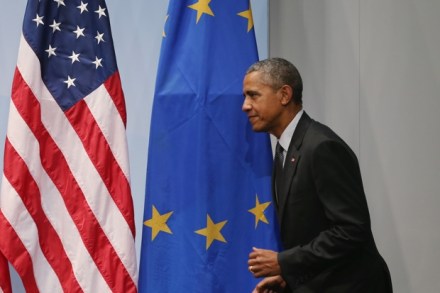
A Middle Eastern friend put to me the other day a point so big that I felt silly for not having thought of it. Why are so many people fleeing from Syria and Iraq, and other parts of the region, beyond the huge, obvious reason that they fear for their lives? Because they believe that the Shias have gained the whip hand over the Sunnis. George Bush’s mishandling of Iraq after he conquered it opened the way for Iranian power. Barack Obama’s abandonment of Saudi Arabia, his refusal to restore order in Syria and his nuclear deal with Iran have erected this mistake into a policy. So one of this policy’s victims is the EU. This is an extract from Charles Moore's Notes. The full article is available here.

The Spectator’s notes | 14 April 2016

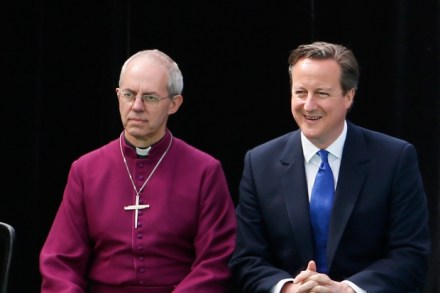
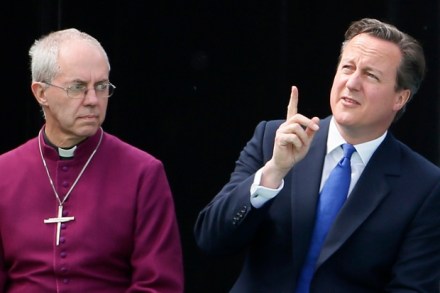
I don’t think there is a Royal College of Public Relations, but if there were, it should teach a course based on a comparison between two stories last week. One concerned the Prime Minister and the other the Archbishop of Canterbury. Both arose from the paternity of the principals and, in both cases, the principals had not done anything wrong. Yet there the similarities end. David Cameron, and those working for him, spent the best part of a week fending off and then changing a story they found embarrassing. Justin Welby, and his much smaller staff, confirmed the truth of a potentially much more painful story in one go, bravely and clearly.

Justin Welby could teach David Cameron a thing or two about PR

I don’t think there is a Royal College of Public Relations, but if there were, it should teach a course based on a comparison between two stories last week. One concerned the Prime Minister and the other the Archbishop of Canterbury. Both arose from the paternity of the principals and, in both cases, the principals had not done anything wrong. Yet there the similarities end. David Cameron, and those working for him, spent the best part of a week fending off and then changing a story they found embarrassing. Justin Welby, and his much smaller staff, confirmed the truth of a potentially much more painful story in one go, bravely and clearly.

Most people try to avoid tax – the rich are just better at it

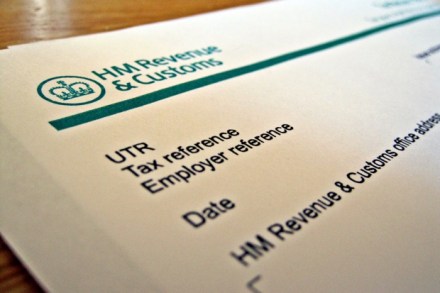
However wicked tax evasion is and however distasteful some tax avoidance may be, people should imagine a world without tax havens and see if they really want it. The prime reason that tax havens exist is that taxes in most countries are too high. If they did not exist, the competitive element would be reduced, and taxes would go up even more. The EU constantly complains about ‘unfair tax competition’, by which it really means just tax competition itself. Tax avoidance is what most of us try to do. Resentment about it is largely because the rich find it easier to achieve than the rest of us. This is an extract from Charles Moore's Notes. The full article can be found here.

The Spectator’s notes | 7 April 2016

However wicked tax evasion is and however distasteful some tax avoidance may be, people should imagine a world without tax havens and see if they really want it. The prime reason that tax havens exist is that taxes in most countries are too high. If they did not exist, the competitive element would be reduced, and taxes would go up even more. The EU constantly complains about ‘unfair tax competition’, by which it really means just tax competition itself. Tax avoidance is what most of us try to do (see next item). Resentment about it is largely because the rich find it easier to achieve than the rest of us. In my latest Notes, I mentioned that the theme of the South of England Agricultural Society this year is sheep. Last week, sheep entered our lives dramatically.

The crusade against FGM shows that a hierarchy of virtue still exists

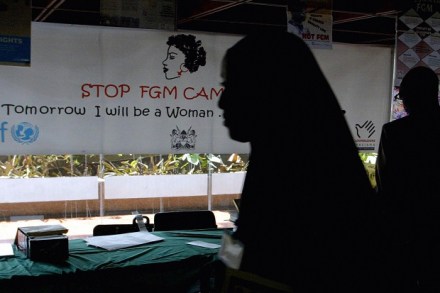
Although you might not think so, female genital mutilation is a welcome subject to many on the left, because it is one of the few areas in which they can be rude about what they would never, in other contexts, dare to call ‘backward’ cultures. In their hierarchy of virtue, women’s rights trump even those of people oppressed by post-colonialism. Though I am not on the left, I’m against FGM too. But there are a couple of points to think about. One is that FGM is not an inexplicable primitive oddity: it is part of a wider culture which sees sexual relations in a completely different way from the choice-and pleasure-based principles of the modern West — as part of tribal relations, family, gender and religious duties and the care of children.

The Spectator’s Notes | 31 March 2016

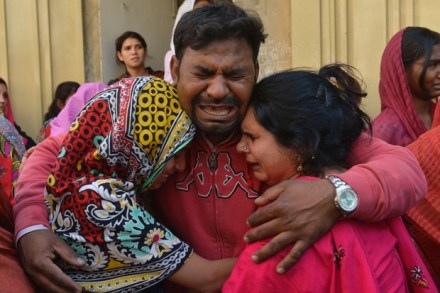
You might expect that the murder of Christians would excite particular horror in countries of Christian heritage. Yet almost the opposite seems to be true. Even amid the current slew of Islamist barbarities, the killing of 72 people, 29 of them children, on Easter Day in Lahore, stands out. So does the assault in Yemen in which nuns were murdered and a priest was kidnapped and then, apparently, crucified on Good Friday. But the coverage tends to downplay such stories — there has been much less about Lahore than Brussels, though more than twice as many died — or at least their religious element.

Witness to the truth

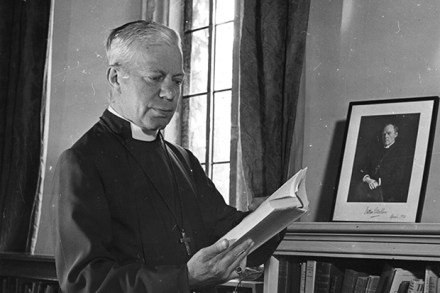
George Bell (1883–1958) was, in many respects, a typical Anglican prelate of his era. He went to Westminster and Christ Church, and passed his career in the C of E’s fast stream. Never a parish priest, he became, first, chaplain (and later, biographer) of the Archbishop of Canterbury, Randall Davidson; next, Dean of Canterbury; finally, Bishop of Chichester. He was not an intellectual or a contemplative. He was an effective, energetic leader, strongly interested in public affairs, a natural candidate to end up as an archbishop of the established church. This did not happen, probably because Bell opposed ‘area’ Allied bombing of Germany in the second world war. Such carpet-bombing threatened ‘the roots of civilisation’, he said.

Secularism does little to protect us from Islamic extremism

You might expect that the murder of Christians would excite particular horror in countries of Christian heritage. Yet almost the opposite seems to be true. Even amid the current slew of Islamist barbarities, the killing of 72 people, 29 of them children, on Easter Day in Lahore, stands out. So does the assault in Yemen in which nuns were murdered and a priest was kidnapped and then, apparently, crucified on Good Friday. But the coverage tends to downplay such stories — there has been much less about Lahore than Brussels, though more than twice as many died — or at least their religious element.

Viva Obama! Viva Fidel! Viva Jean-Claude Juncker!

In Cuba, they are shouting: ‘¡Viva Obama! Viva Fidel!’ What a slogan. The FT headline ignorantly described this as a ‘Nixon in China’ moment: implying that Obama had previously been opposed to Castro’s Cuba. The US President is expected to come to Britain next month to order us to stay in the EU. Let us strew his way with palms. Let all of us — workers, peasants and soldiers — shout with one voice ‘¡Viva Obama! Viva Jean-Claude Juncker!’ This is an extract from Charles Moore's Notes. The full article can be found here.

Spectator’s Notes | 23 March 2016

Why have David Cameron and George Osborne overreached? Why are so many in their own party no longer disposed to obey them? Obviously the great issue of Europe has something to do with it. But there is another factor. Victory at the last election, followed by the choice of Jeremy Corbyn as Labour leader, has convinced too many Tories, including Mr Osborne himself, that they will be in power for ten more years at least. So they get careless and cocky. Then they make mistakes. Then they come up against the most admirable fact about parliamentary democracy, which is that you can never guarantee being in power for ten years. (You can’t even guarantee it for the prescribed five, though the iniquitous Fixed-term Parliament Act of the coalition has made this easier than before.

The Spectator’s notes | 17 March 2016

Do Recep Tayyip Erdoğan and Bashar Assad support ‘leave’ or ‘remain’ in Britain’s EU referendum? I ask because they are the most powerful foreign leaders in deciding the vote, their views being much more effective than any sonorous words that may soon be offered by Barack Obama or any last-minute inducements from Angela Merkel. If President Assad — his position secured by Vladimir Putin — decides to make a dramatic gesture between now and 23 June, and call for some peace conference, preferably in a European capital, then the sense of crisis which makes the EU look so weak will dissipate.

There are no easy answers to the EU question

People — nice people, members of the public, concerned voters — keep coming up to me saying, ‘We want to hear the arguments about the EU referendum.’ It sounds a strange thing to want because, since the last years of Margaret Thatcher’s government, the arguments have rarely been out of the news for a week, and jolly boring they often are. But what such people go on to say is that they seek the objective facts and cannot get them from either side in the campaign. They would like some useful fact sheet which answers all their questions. Well, from time to time, papers like the Telegraph and the Times do contain short investigations of claims made about many of the issues involved, but the truth is that it isn’t easy.

The Spectator’s notes | 10 March 2016

Surely there is a difference between Mark Carney’s intervention in the Scottish referendum last year and in the EU one now. In the first, everyone wanted to know whether an independent Scotland could, as Alex Salmond asserted, keep the pound and even gain partial control over it. The best person to answer this question was the Governor of the Bank of England. So he answered it, and the answer — though somewhat more obliquely expressed — was no. For the vote on 23 June, there is nothing that Mr Carney can tell us which we definitely need to know and which only he can say. So when he spoke to the Treasury Committee of the House of Commons on Tuesday, his opinion was no better than that of any intelligent and well-connected person who deals with money.