Charles Moore

Charles Moore

Charles Moore is The Spectator’s chairman.

He is a former editor of the magazine, as well as the Sunday Telegraph and the Daily Telegraph. He became a non-affiliated peer in July 2020.

Emmanuel Macron was right to scold his over-friendly fan

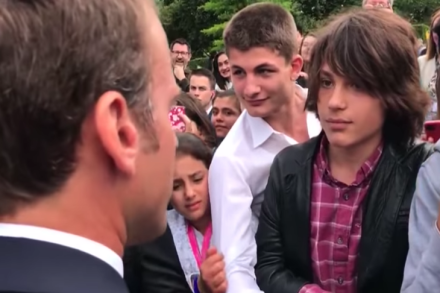
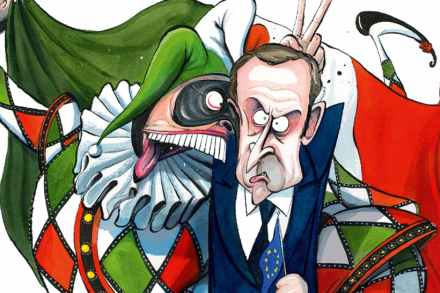
Obviously, one mocks little President Macron for telling a teenager to call him ‘Monsieur le President’. How long before the French will have to say ‘Vive l’Empereur!’? But I do have a sneaking sympathy for the man one must not call ‘Manu’. The presumption of modern culture that everyone is on first-name terms makes people confused because they come to believe they really are friends with ‘Harry and Meghan’, or whoever it may be. The famous people thus addressed are also unhappy, because they cannot remember who they do and don’t know, and because they feel that people are trying to own them. Full, formal modes of address provide a ‘Noli me tangere’ which preserves sanity on both sides. Look at the Queen.

Why I will miss Paul Dacre

I really will miss Paul Dacre when he steps down as editor of the Daily Mail. There have been times, I must admit, when I have attacked the Mail’s grotesque behaviour and stupefying hypocrisy, but the following are good and true points to be made about Paul. 1) He fully, properly edits, and his proprietor has the sense to let him do so. 2) He values good writers, and pays them accordingly. 3) He is brave, especially in not minding the disapproval of polite society; and this courage has enabled him to crash around in the china shop of political correctness at a satisfying decibel level. For us in Sussex, there may be a compensation for Paul’s departure.

The Spectator’s Notes | 14 June 2018

‘Trudeau or Trump?’ was a choice which Theresa May, with unusually ready wit, evaded in Parliament on Monday. No doubt I am in a minority, but I feel that, of the two, Mr Trudeau — the G7 host at La Malbaie — is the more absurd figure on the world stage, being just as vain as the President and far more pointless (if you doubt me, compare the two men’s tweets). In the same parliamentary statement, Sir Vince Cable asked ‘What is the point of the G7?’ It is part of President Trump’s subversive skill that his actions prompt people to ask such questions.

The churches’ new app will delight snoopers

The Archbishops of Canterbury and Westminster have launched an ecumenical app which allows users to report car washes if they think they are employing slave workers. The Bishop of Derby, who ‘leads on modern slavery’ for the Church of England, spoke of people who had been ‘kept in conditions like animals’ and even of some whose shoes had become melded to their feet. I would not be surprised if abuse does take place. Whenever I have my car washed in this way (about once a year), I ask the workers where they come from and am amazed by the variety of countries named, though perhaps Albania predominates. The presence of a watchful boss is usually very noticeable. The app may help catch bad actors.

Italy’s populists have won – but they’re still not in charge

Recently, the ‘populist’ (i.e. electorally victorious) new government of Italy wanted to appoint an anti-euro finance minister and was told by the President of the Republic that it couldn’t. This caused outrage in Italy, and it made rational people here assume that there would have to be new elections, or the impeachment of the president. In fact, however, both sides have won, or at least lived to fight another day. Professor Savona is not to be finance minister, but Europe minister instead, and the populists are still in charge, yet not in charge. This should not be surprising if one remembers Professor Savona’s own dictum that the euro is ‘a German cage’. Bravely identifying this fact does not give one the key to escape from it.

The Spectator’s Notes | 7 June 2018

A distinguished retired EU diplomat from a small EU member state sends me a thoughtful letter. He complains that Brexit ‘has been handled in the most amateurish way by British politicians’. ‘When one removes something,’ he goes on, ‘one has to be ready with its replacement’: Mrs May ‘is far from clear in her plans, but those who criticise her are not any clearer’. All this is true, and it points to the weirdness of our current situation, which is that Brexit is not being executed by a government that wants it. In conversation, people often say ‘The Brexit supporters promised X’, and then accuse them of breaking that promise.

Richard Madeley was wrong to ‘terminate’ Gavin Williamson

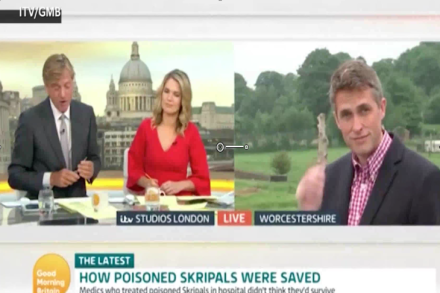
Richard Madeley pulled the plug on his interview with Gavin Williamson, the Defence Secretary, last week because Mr Williamson kept avoiding his question. Madeley’s decision seems to have been popular. He did what he did ‘on behalf of the viewers’. There is a false assumption here, which runs deep in our culture and gives interviewers a massive advantage over their subjects. If someone asks us a question, we think it is rude or evasive to refuse to answer. Sometimes it is (and Mr Williamson certainly was evasive), but we do not subject the questioner to the same scrutiny. Why has he picked that particular question? What right has he to set the entire agenda of the encounter? Is his editor whispering in his ear that he must try to ‘get’ X on the subject of Y?

How to fix the BBC’s Brexit bias

Starbucks will close all its outlets for four working hours to train its staff out of ‘unconscious bias’, a decision which surely shows unconscious bias against all customers who might want a cup of coffee that day. The training was ordered after a member of staff called the police when two black customers came in and one asked to use the lavatory without buying anything. I wonder if the BBC might try such a shutdown on a grander scale. It would take at least four weeks — possibly four years — to train its staff out of unconscious bias on Brexit, Christianity, the sex war, paedophile accusations, immigration, Israel, Trump, abortion, global warming and so on.

The Spectator’s Notes | 31 May 2018

To understand how the European Union works, and how it doesn’t, it helps to think of it as an empire. Empires are not fashionable just now, but they have their uses. At their best — Rome, Britain — they are capable of upholding common standards, preserving peace and prosperity, and helping civilisation flourish. The EU has often achieved some of these things. But when empires are challenged by significant numbers of their inhabitants, their fundamental lack of legitimacy is exposed. The EU has now reached this stage because of imperial overstretch and imperialist doctrines — the euro and mass immigration being the most important. Anti-imperial independence movements take many forms. Brexit is one.

A ban on wood burners would kill off our country pubs

If stoves and fires come under attack, country pubs and restaurants will collapse. This will happen, I suspect, even if Mr Gove does not ban them, because he is opening up a new world in which they will come under official disapproval. Before long, it will be alleged that pub staff suffer from the equivalent of passive smoking because of open fires, and landlords will face lawsuits which bring village inns to their knees. We shall not even be free to relieve our feelings by burning Mr Gove in effigy, since he is setting out to ban bonfires too. This is an extract from Charles Moore’s Spectator Notes, which appears in this week’s magazine.

In praise of Hugh Grant

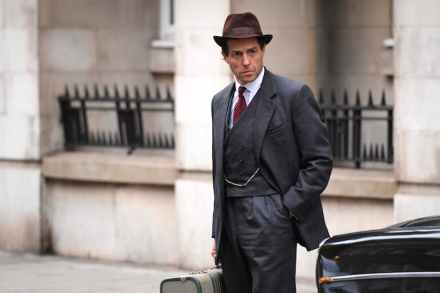
The first episode of A Very English Scandal (BBC1), the story of the Jeremy Thorpe affair, was brilliant. So often, dramas about the past suffer from the disbenefit of hindsight. They use the dead as mannequins to wear their contemporary thoughts and attitudes. History, in their hands, is a form of what is now called ‘cultural appropriation’, paying no respect to the reality of the lives depicted. There is a brief moment in A Very English Scandal which teeters on the edge of this, when dear Lord Arran, sitting in his own house and in the presence only of his wife and Leo Abse MP, makes a rather pious speech about how wicked it is that homosexual acts are illegal.

Who is the only cabinet minister who never stops thinking?

‘Onward’ is the name of the latest movement — ‘think-tank’ is not quite the right phrase — to try to revitalise Conservatism. It is led by some of the most able of the new political generation, such as Neil O’Brien and Tom Tugendhat, and under the patronage of the only current cabinet minister who never stops thinking — Michael Gove. It will perform the necessary healing work of linking metropolitans and provincials currently at loggerheads — Camerons and Mays, you might say — in a creative alliance. But there is an annoying convention of party political thinking that one always has to be gooey about the future. Words like ‘modern’, ‘En marche!

The Spectator’s Notes | 24 May 2018

Michael Gove wants to punish those who use wood-burning stoves and possibly even open fires. It would be hard to think of a more direct attack on country life. All houses in the country are cold, and impossibly expensive to keep warm by central heating alone. The cheapest and most cheerful way of heating individual rooms is by burning wood in them. In the north, there are many houses that need such heat every day of the year. Even in the sunny south, where we live, we light fires in every month except June and July. Such fires are the heart of the house and life would become truly sadder without them. Instead of gathering round them, family members would retire shivering to their beds to keep warm.

Morgan, Clegg and Miliband just don’t get the message

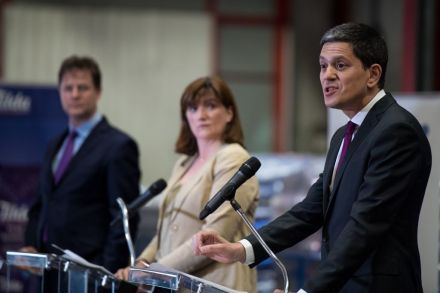
Watching Nick Clegg, Nicky Morgan and David Miliband sort of launching what might one day become a sort of new centre party amid a granary-full of Tilda rice in Essex, I realised why we still need the Labour party. Despite their equation of themselves with rationality — Sir Nick’s office advertises itself online under the name of Open Reason — the moderates are a bit crazy. They are centrist Bourbons, who have forgotten nothing about how they all, in their different ways, fell from power, yet have learnt nothing about why. How could they possibly think that the key to the future of our country is to be found in membership of the European Economic Area? I think I can see the chain of reasoning that got them there, but the conclusion is irrational nevertheless.

The Guardian’s tabloid switch is failing

As previously mentioned in my Spectator Notes, the Guardian has not adapted well to tabloid form. I feel particularly sad about its Review section on Saturdays, which were the fullest books pages in Fleet Street and well understood how to be broadly left-wing without becoming doctrinaire and therefore unliterary. Now tabloid, the Review has boiled itself down to a repetitive essence in which almost every cover is about women’s rights — abortion in Ireland, Meghan Markle being ‘divorced, a woman of colour and a feminist’, and ‘Why feminist fiction needs to break free’ (to take three recent examples). You have to be very woke indeed not to fall asleep.

The Spectator’s Notes | 17 May 2018

The last time we had a royal wedding of comparable dynastic importance (i.e. only a bit important), Prince Andrew married Sarah Ferguson, in 1986. The Spectator of those times, which I was editing, carried almost nothing about it. The only piece was a television review by Alexander Chancellor, complaining that ‘The royal family are at the moment completely out of control.’ He found this very upsetting. He was ‘absolutely in favour of the royal family. I have always liked the way they keep their heads down, avoid controversy, shun jokes, and conceal whatever personalities they may have.

Prince Harry and Meghan should restrain their personalities

The last time we had a royal wedding of comparable dynastic importance (i.e. only a bit important), Prince Andrew married Sarah Ferguson, in 1986. The Spectator of those times, which I was editing, carried almost nothing about it. The only piece was a television review by Alexander Chancellor, complaining that ‘The royal family are at the moment completely out of control.’ He found this very upsetting. He was ‘absolutely in favour of the royal family. I have always liked the way they keep their heads down, avoid controversy, shun jokes, and conceal whatever personalities they may have.

Why the BBC weather forecasts wind me up

One of George Santayana’s most famous dicta is that ‘To be interested in the changing seasons is a happier state of mind than to be hopelessly in love with spring.’ This may be a metaphor for life, but it is also literally true. It matters in countries such as ours, where no season is so extreme that it cannot be enjoyed. If you agree with Santayana, you will be irritated by our BBC weather forecasts, which misrepresent the weather as a constant, and generally losing, battle to get warmer. In their language, temperatures are forever ‘struggling’ — always to rise, never to fall.

Donald Trump is right to take on Iran’s mullahs

The point behind the argument about the Iran nuclear deal goes beyond precise nuclear facts. It is like the row over SALT II when Ronald Reagan succeeded Jimmy Carter as US President in 1981. SALT (the Strategic Arms Limitation Treaty) was not formally junked, but it did not operate because, after the Soviet invasion of Afghanistan at the end of 1979, the Americans felt the necessary trust was absent. Better times, including the coming of Mikhail Gorbachev, allowed Reagan to pursue negotiations which culminated (under his successor, the first George Bush) in START I (the Strategic Arms Reduction Treaty) being signed in 1991. By then, the United States and its Nato allies had backed huge changes in the Soviet bloc and won the Cold War.

The Spectator’s Notes | 10 May 2018

The point behind the argument about the Iran nuclear deal goes beyond precise nuclear facts. It is like the row over SALT II when Ronald Reagan succeeded Jimmy Carter as US President in 1981. SALT (the Strategic Arms Limitation Treaty) was not formally junked, but it did not operate because, after the Soviet invasion of Afghanistan at the end of 1979, the Americans felt the necessary trust was absent. Better times, including the coming of Mikhail Gorbachev, allowed Reagan to pursue negotiations which culminated (under his successor, the first George Bush) in START I (the Strategic Arms Reduction Treaty) being signed in 1991. By then, the United States and its Nato allies had backed huge changes in the Soviet bloc and won the Cold War.