Charles Moore

Charles Moore

Charles Moore is The Spectator’s chairman.

He is a former editor of the magazine, as well as the Sunday Telegraph and the Daily Telegraph. He became a non-affiliated peer in July 2020.

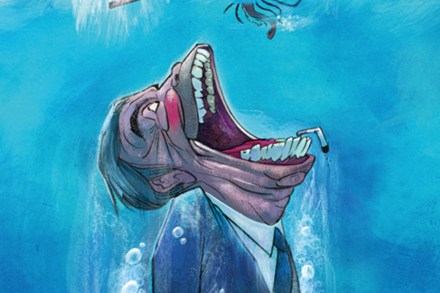
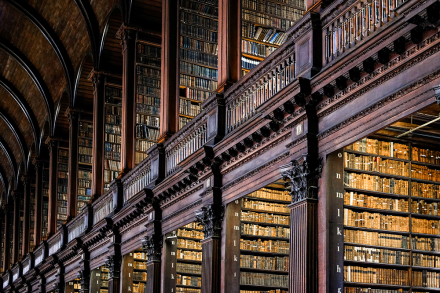
Will books soon become extinct?

I am glad that Radio 4 is producing a series called How Reading Made Us, presented by the subtle, super-literate Times columnist James Marriott. I must declare an interest. Roughly 98 per cent of my earnings over 45 years have depended on the fact that plenty of people like reading. Now we are thinking harder, however, about the fact that form affects substance. The idea of an encyclopaedia, for example, as developed (from classical roots) in the 18th century, was that all needful knowledge on a particular subject could be assembled and consulted in a book or series of books. With AI, there is little need for this form. The form of a book, which often seemed so compendious, can now seem cumbersome. Fiction, too, is affected by form.

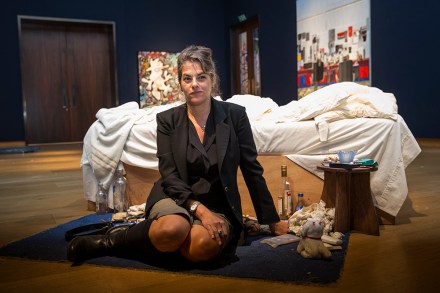
Tracey Emin should remake her bed

Sir Keir Starmer’s position on the US bombing of Iran is inglorious, but one should suspend disapproval to understand how he must have been thinking politically. His party had just lost the Gorton and Denton by-election to the Greens (backed by a strong Muslim vote). His leadership had never seemed weaker. So he calculated that he could not unequivocally back the actions of Israel and Donald Trump. He will have had the Iraq war in mind, particularly the role of the attorney general. Over Iraq, the then attorney general, Lord Goldsmith, was criticised for seeming to change his legal advice to Tony Blair in order to legitimise British participation in the invasion. Sir Keir’s Attorney General, Lord Hermer, is much more central to the administration than an AG ever should be.

Am I a Zionist?

The death of Quentin Deranque is strangely under-reported here. He was a 23-year-old beaten up in Lyon on 12 February by supporters of the main party of the left, Jean-Luc Mélenchon’s France Insoumise (FI). He had been part of a group escorting what the BBC website calls ‘far-right feminists’, helping them protest against the visit to a university by a far-left politician. There was a fracas in the street with masked opponents connected with the Young Guard, a leftist FI-related group declared illegal last year. Deranque died of his injuries two days later. One of those arrested is a special adviser to an FI deputy.

Does Sadiq Khan approve of colonising?

How to report Iran? It is a huge story. Perhaps as many as 30,000 people were recently murdered there by the tottering regime, but it won’t let western media in. The BBC’s solution is a deal: their correspondent can enter and report, but the report cannot appear on their Persian service. This agreement is rightly explained on air, unlike the BBC’s iniquitous deal with Hamas over Gaza. Do the terms of the deal benefit journalism, however? We are always told that BBC foreign language services are the lifeblood of truth for citizens of dictatorships. Why are Farsi speakers to be deprived of this? Also, what do we learn from Lyse Doucet walking the Tehran streets in a headscarf? (Is it compulsory or voluntary? Either way, she should explain.

How Keir Starmer might still hang on

A government minister and I dined just after the fiasco of the 2017 general election, with Theresa May clinging to office. We agreed our feelings: ‘Well, she’s utterly useless, but she’s got to stay.’ Similar emotions arise today. Nobody – and I genuinely mean nobody – can truthfully say that Sir Keir Starmer is doing a good job, but politics is not, thank goodness, a logical occupation, so it does not necessarily follow that he should resign. If you lead your party to a victory fair and square in a general election, it is your duty to try to go on governing until the next one. You owe it to voters and colleagues. It could even be said that you owe it to the office itself. The British premiership must not decline into a ‘King for a day’ stunt.

Why did Peter Mandelson want Jeffrey Epstein to read my column?

Last Saturday, a friend in Washington emailed to say he had been studying some of the latest 3.5 million pages of Epstein files. A few months ago, I had pointed out here (Notes, 11 October 2025) that much of Epstein’s famous ‘black book’ was just the contacts book of Oxford friends of Ghislaine Maxwell. As their contemporary, I congratulated myself on having been at Cambridge, thus avoiding meeting Ghislaine. So my friend’s message came as a bit of a blow. He rubbed it in: ‘You may be interested to hear that you, yourself, feature no fewer than 40 times.’ His second paragraph, however, kindly explained: the 40 references to me were repetitions or duplicates of one reference, in an email from Peter Mandelson to Epstein on 29 November 2009.

Nigel Farage is not infallible

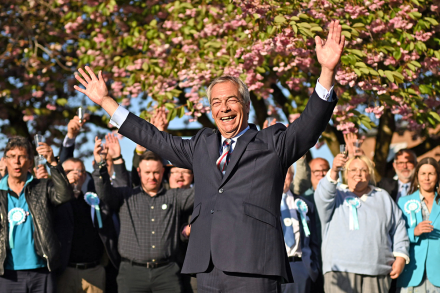
In our online edition, Danny Kruger, who is a dear man and my former employee, attacks our editor, Daniel Finkelstein and me for not joining Reform when ‘their party [he means the Conservatives] faces total extinction’. Lords Gove and Finkelstein are indeed Conservatives, but I am not a member of ‘their party’. I sit in the Lords as a ‘non-affiliated’ peer. My approach to life is definitely Tory, but not in a party sense. I would vote – if I had the vote – for any party that showed convincingly how it would govern in the light of conservative views. According to Danny, we should ‘stand barefoot in the snow’ in penitence and receive ‘absolution’ from Nigel Farage – whom he compares to Pope Gregory VII at Canossa.

Donald Trump’s Putinist view of history

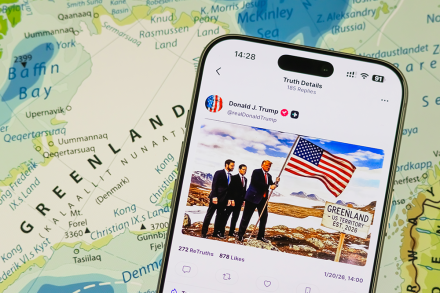
Donald Trump’s long-standing and ever more ardent desire to own Greenland helps explain his attitude to Putin. Putin used cod history of imperial Russia to justify aggression against Ukraine and was allowed by a feeble West to turn that aggression into actual invasion. Trump avoids condemning that invasion and has supported Putin’s version of Russia’s rights. In relation to Greenland, he produces a sketchy historical account about how American boats got there first and an overdramatised theory, akin to Putin’s Ukraine one, about how a Greenland not owned by the United States threatens his country’s security. Frustrated by what he sees as the prissy pygmies of Nato, he envies the freedom of action of his friend and fellow imperialist, Vladimir.

The UK is an undeveloping country

Returning from Pakistan on Monday, I sat at my desk and looked out at the pouring rain while the latest news explained that 30,000 homes in our part of Sussex and neighbouring Kent are ‘still without water’. Then I opened the pile of post. A letter from South East Water, the culprit in the case, enclosed a note which began: ‘From 1 April 2025, the amount you’ll pay for drinking water will go up.’ Since we are now in January 2026, I assume they either misprinted the date, or accidentally stuck in last year’s explanatory letter. Anyway, the increase is real enough – £655.23 was due in July 2025; £875.11 is due from this month. Pakistan is a ‘developing country’ and has many associated problems (we experienced frequent power cuts), but at least it moves forward.

Should I wear a burka in the House of Lords?

On Advent Sunday, our grandson Christian became a Christian. He was baptised, sleeping, in the font of our parish church. On the whiteboard in the maternity ward, the newborn’s name beneath his was Mohamed. As is usual (and, in my view, preferable) nowadays, he was christened in the middle of the communion rather than separately. As is less usual, the rite was that of the Book of Common Prayer, ‘The Ministration of Publick Baptism of Infants’. It is tougher than the modern version. The godparents, in the name of the child, had to ‘renounce the devil and all his works, the vain pomp and glory of the world, with all covetous desires of the same, and the carnal desires of the flesh’, but managed with perfect equanimity to drink champagne afterwards.

The conservatism of Tom Stoppard

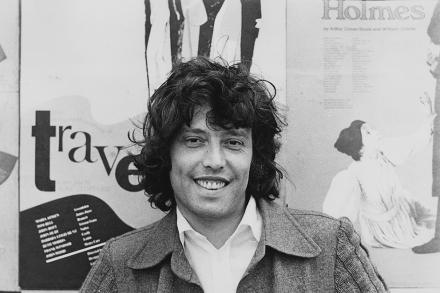
Sir Tom Stoppard, who died last week, never wrote a memoir, but he did sort of speak one. Just over ten years ago, he told me that he and his new wife, Sabrina Guinness, had become tenants of an old rectory in Dorset. I asked him if he would therefore speak as guest of honour at the AGM of the Rectory Society, a fan club for existing and former clergy houses which I invented in 2005. The AGM always takes place in a central London church, and in 2015, the year I invited Tom, it was held in the Queen’s Chapel beside St James’s Palace. Beyond expressing a tepid wish that speakers make some small reference to the society and its purposes, I never specify their subject.

What my pyjamas taught me about China

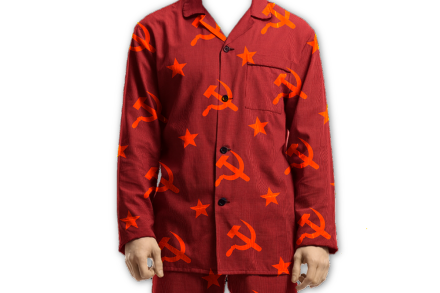
About seven years ago, I bought two pairs of pyjamas, one British, the other Chinese. At the time, they seemed of roughly similar quality, the important difference being that the Chinese ones were half the price of the British. Given that they have the same ‘lived experience’, I can make a direct comparison. The British ones, by Peter Christian (‘gentlemen’s outfitters’ accompanied by an image of two hares boxing), show few signs of the passing years. Their reddish colour with green and yellow stripes holds fast. There is very little wear and no tear at all. The Chinese pair (labelled ‘sleepwear’) tells a different story – the drawstring disappeared, the elasticated waist (which the British one wisely eschews) decayed, the blue checks faded, the cotton thinned.

The true cost of the Chagos deal

When the BBC denies ‘systemic bias’, it denies the main, the crucial thing exposed by Michael Prescott’s now-famous leaked internal memo. Prescott was not presenting a ragbag of mistakes, but examples from many different areas of subjects where an institutional view prevailed – against Donald Trump, pro-trans, pro-immigration etc, all of them defensible views but none of them following rules of impartiality or accuracy. For this reason, the Prescott material about Israel/Gaza coverage is the most important by a long way, though less expensive for the BBC than its doctoring of Trump’s words.

The rudeness of Reform

Critics see Rachel Reeves as betraying her election manifesto tax promises; but she may well be trying ‘The Lady’s Not for Turning’ gambit. Her speech from Downing Street delivered before the markets opened on Tuesday, resembled – in content, if not in style – Margaret Thatcher’s 1980 party conference speech. In both cases, the incoming government had failed to get public spending and borrowing under control. (Indeed, government borrowing costs then were 6 per cent of GDP, compared with a mere 5.1 per cent today.) Also in both cases, the government sought simultaneously to go against earlier promises not to raise taxes, yet to do so in the name of long-term consistency. Both faced what was then called ‘a funding crisis’ in the bond market.

Minimum wage was a mistake

As others, including Nigel Farage, were quick to point out, Sarah Pochin got it wrong. She uttered words which, shorn of their context (as they obviously would be), made her sound racist. But the almost compulsory use of persons of colour to promote products and services is a bit of a wonder of the world. Modernisers often speak of the need for institutions to ‘look like Britain as it is’ (depressing thought), but this seems not to apply on screen. In the style of Ambrose Bierce’s Devil’s Dictionary, I offer a definition of the phrase ‘television ads’, as follows: ‘Short filmic fictions about the blissful and virtuous lives of persons of mixed race or with non-white skin.

How did faith shape Thatcher?

38 min listen

How did faith shape Margaret Thatcher’s politics? To mark the centenary month of Margaret Thatcher’s birth, Damian Thompson introduces a conversation between the Spectator’s Natasha Feroze, Thatcher’s biographer Lord Moore and Bishop Chartres who delivered the eulogy at her funeral. They discuss her relationship with faith, how both her family background and her training as a scientist influenced her beliefs and her understanding of the relationship between wealth and society based on Jesus’s parables. Plus – what would Thatcher have made of the much talked about ‘Christian revival’ in the West? Produced by Patrick Gibbons and Natasha Feroze.

Thatcher & Reagan’s special relationship

40 min listen

To mark the centenary of Thatcher’s birth, Michael Gove is joined by Charles Moore, her biographer, and Peggy Noonan, speechwriter to Ronald Reagan, to reflect on the chemistry that bound the two conservative leaders. Both outsiders turned reformers, they shared not only ideology but temperament – ‘They were partners in crime,’ says Peggy. Yet it wasn’t all harmony. As Charles notes, the pair weathered serious rifts – over nuclear weapons, Grenada and the Falklands. Even in disagreement, they ‘wanted the same thing … to defeat the Soviet Union without fighting’. How did they navigate their differences? And what lessons can we learn from their special relationship? Produced by Natasha Feroze and Oscar Edmondson.

The government is too concerned for the tender feelings of China

Poor old Hamas, losing all those dead Jews. The BBC reports that Hamas ‘could not locate the remaining hostages’ bodies’, of which there are 28. One can understand the problem. When you have been starving and torturing so many for so long, you may not necessarily remember where you left them when they died. In the words of the Balliol student who called for it this week, you have ‘put the Zios in the ground’. Why do more? Don’t your critics know there is (or was) a war on?

The frustrations of the Tory mindset

‘The facts of life are Conservative.’ This sentence is often attributed to Margaret Thatcher, whose centenary falls next week. The exact words are ‘The facts of life invariably do turn out to be Tory’ and were not hers. They appeared in the first major policy document produced under her leadership, ‘The Right Approach’ (1976). The author was probably Chris Patten, the document’s drafter and more of a ‘wordsmith’ – her coinage – than she. (There might even have been a deliberate Patten double-entendre of the sort that always escaped Mrs T since, in those days, the phrase ‘the facts of life’ meant the sex lessons given by embarrassed parents and teachers to children.) The operative phrase in the sentence is ‘turn out to be’.

Sir Tony’s doomed crusade in the Holy Land

It amuses me that the two main parties most averse to the idea of honours, monarchy, chivalry etc are led by knights – Labour by Sir Keir Starmer and the Liberal Democrats by Sir Ed Davey. This is entirely fitting, since they accurately reflect the dominant Blob establishment world-view and so were rewarded by being made Sir rather than staying plain Mr Blobby. But I wonder if the title has electoral disadvantages. Some voters must be subliminally more annoyed by Sir Somebody telling them to be radical, make sacrifices, save the planet and not to be racist than they would be by an untitled politician. On the other hand, it looks as though Sir Tony Blair, a Knight of the Garter, may soon be ruling in Gaza, at the orders of the Emperor Donald.