Charles Moore

Charles Moore

Charles Moore is The Spectator’s chairman.

He is a former editor of the magazine, as well as the Sunday Telegraph and the Daily Telegraph. He became a non-affiliated peer in July 2020.

Who will be the Democrats’ Gorbachev?

As this paper has argued since the time of the Tiananmen Square massacres, this country should offer Hong Kong people a way out via immigration. We made the 1984 Hong Kong agreement with China: we owe some protection to the victims when it goes wrong which, thanks to Xi Jinping, it has. He has torn up the famous ‘One Country: Two Systems’ rule upon which the agreement was founded. Our government has now commendably acted on this principle of protection, allowing holders of British National Overseas (BNO) passports a ‘pathway to citizenship’ via a visa scheme. The problem, however, is that the current proposals exclude a small but significant part of those affected. You have BNO status only if you were born by 1997, the year of the handover.

Why are editors sharing a platform with Miqdaad Versi?

Next week, the Centre for Media Monitoring publishes its report on ‘British Media Coverage of Muslims and Islam 2018-2020’. Its launch webinar will be addressed by, among others, Mark Easton of the BBC, Alison Phillips, editor-in-chief of the Mirror, and Emma Tucker, editor of the Sunday Times. The CfMM, run by Miqdaad Versi, is a project of the Muslim Council of Britain (MCB) which, though arguing there is no one Islam, tries to insist that all media coverage of the subject must have its approval. Muslims, like all believers nowadays, often have just cause for complaint about secular ignorance of their religion, but Miqdaad’s CfMM is something else The MCB’s stance is much more Islamist (i.e.

Peppa Pig’s conservative values

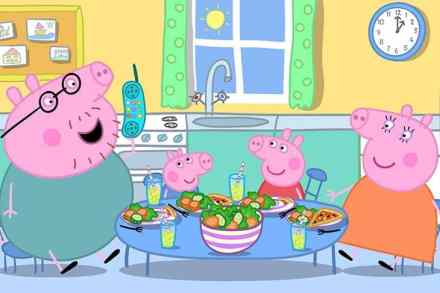
I like to think that Boris Johnson’s rambling performance at the CBI this week was a satire against the organisation which he (rightly) dislikes. But I may well be wrong: it is equally likely to have been a Johnsonian cock-up. Either way, he did well to get memorably on the right side of Peppa Pig, whom he turned into an emblem of unlikely British export success. Peppa and her family speak politely in the traditional English accent which foreigners much prefer to Estuary, and do amiable things like making Daddy Pig bicycle to work to avoid disturbing a spider’s web on his car. Peppa is particularly influential in our own household because she has a younger brother called George whom she forces to play along with her fantasies.

National Trust members fight back

At the National Trust’s annual general meeting last week, the voting was much more unusual than the public will have learnt from media reports. In most resolutions, the numbers voting exceeded 100,000. In past years, the figures have been lower than 40,000. The reason for this high turnout was the controversies of the past 18 months. Motions about the erosion of curatorial expertise and the ill treatment of Trust volunteers would have won easily had not the chairman exercised the right to use the discretionary proxy votes which the Trust’s curious governance permits. Without these, the rebel resolutions would have been more than 15,000 votes ahead.

The cold hard truth about heat pumps

When I went to Poland not long before Covid, I found a country more bitterly divided by a culture war even than we are. So I would not rule out EU leaders being right that the current government there has intruded on the independence of the judiciary for its own political ends. This is the background to recent Brussels fury that the Polish Constitutional Tribunal (supreme court) asserted the primacy of Polish law over that of the EU earlier this month. The problem never arises in the EU, of course, because there the European Court of Justice has never had an independent judiciary to be tampered with. It has aways been the purpose of the ECJ to make sure that its judges use European law to advance the European Union, which democracy tends not to. In that sense, all its judges are political.

Why the baby doomers are wrong

Rarely does a piece of journalism bring a tear to my normally cynical eye, but I did find this happening when I read Tom Woodman’s piece (‘You must be kidding’) in last week’s edition. He and his wife would not have children, he wrote, because climate collapse means that ‘I can’t give them a future’. What made me weepy was his combination of obvious decency and utter mistakenness. How tragic that what he called ‘the facts and figures’ — in reality, contentious projections — have persuaded this couple that no little Woodman must come into the world. ‘Tree,’ I felt like shouting, in reversal of the Green order of priorities, ‘spare that Woodman!

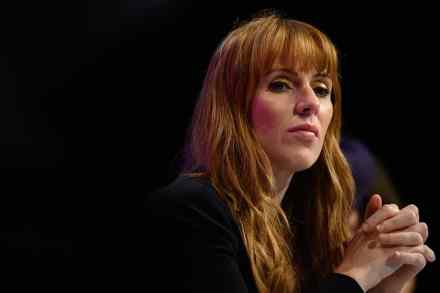
In defence of Angela Rayner

On the one occasion when I spent any time with Angela Rayner, she was funny, direct and friendly. We were both on the BBC’s Any Questions? in Alan Partridge territory and dined together beforehand with Sir Vince Cable. She got through a whole evening without identifying me, either privately or on air, as one of ‘a bunch of scum, homophobic, racist, misogynistic, absolute pile of banana republic, Etonian piece of scum’ (her chosen words at this week’s party conference fringe meeting). True, I am neither a government minister nor a Conservative (in the Lords I sit as ‘non-affiliated’), but she probably felt I was that sort of person. So, now I know how she sometimes talks, I feel grateful for her restraint.

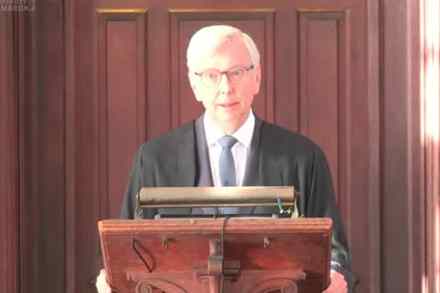
The legacy of Stephen Toope

Stephen Toope, Vice-Chancellor of Cambridge University, has begun this academic year by announcing it will be his last in the post. Professor Toope says, no doubt truthfully, that he wants to see more of his Canadian family, dissevered from him by Covid. But I think it reasonable to relate his departure to wider issues. When he arrived in 2017, the ‘Golden Era’ of UK/Chinese relations still, in theory, existed. Cambridge uncritically welcomed Chinese government and business participation. In 2019, speaking in China, Professor Toope hailed the China Development Forum’s ‘Greater Opening Up for Win-Win Cooperation’ and praised President Xi Jinping’s Belt and Road Initiative.

Is the world we value falling apart?

From time to time, people get worried and ask one another: ‘Is the world falling apart?’ I imagine this is a universal phenomenon, but my experience of it is largely confined to the West (here meant more as a cultural than a geographical expression). It happened in the 1930s, when the broadly correct answer to the question was ‘Yes’, and in the 1970s, of which more later. It happened more recently, after 11 September 2001 and during the financial crash of 2008/09. Some asked the question after Brexit. I have heard it asked again by many highly disparate people in the few days since the American-led Nato scuttle from Afghanistan. What is the answer? My own first encounter with these gloomy discussions was in the 1970s.

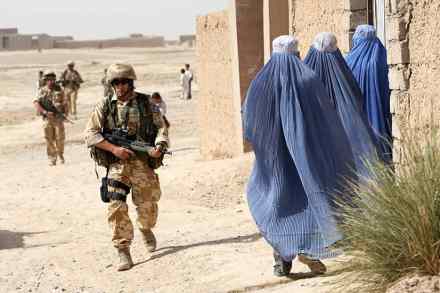
The BBC exaggerates Britain’s importance in Afghanistan

This week, the media pressure was on the British government to extend the deadline for the evacuations from Kabul airport. The government had no power to do this unilaterally: it duly asked the United States, and was duly turned down. The issue was almost beside the point. It is doubtful, given the burning desire of so many to leave the country, whether a few more days of rescue flights would have done much to shorten the suffering queue of hopefuls. Each day is dangerous, so more days are more dangerous. Preoccupation with extension deflected attention from the key point, which is that all evacuation planning assumed that Kabul and its airport would be controlled by the (now former) Afghan government, thereby ensuring an orderly exit.

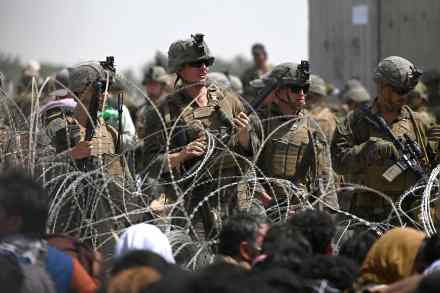
The failed assumption of Biden’s withdrawal

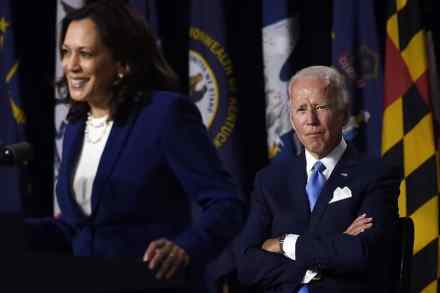
This week, the media pressure was on the British government to extend the deadline for the evacuations from Kabul airport. The government had no power to do this unilaterally: it duly asked the United States, and was duly turned down. The issue was almost beside the point. It is doubtful, given the burning desire of so many to leave the country, whether a few more days of rescue flights would have done much to shorten the suffering queue of hopefuls.  Each day is dangerous, so more days are more dangerous. Preoccupation with extension deflected attention from the key point, which is that all evacuation planning assumed that Kabul and its airport would be controlled by the (now former) Afghan government, thereby ensuring an orderly exit.

It is shabby of Biden to blame the Afghans

Q. Is a Taliban takeover of Afghanistan now inevitable? The President: No, it is not. Q. Why? The President: Because you — the Afghan troops have 300,000 well-equipped — as well-equipped as any army in the world — and an air force against something like 75,000 Taliban. It is not inevitable… Q. Do you trust handing over the country to the Taliban? The President: No, I do not trust the Taliban. Q. So why are you handing the country over…? The President: It’s a — it’s a silly question. Do I trust the Taliban? No. But I trust the capacity of the Afghan military, who is better trained, better equipped, and more re — more competent in terms of conducting war.

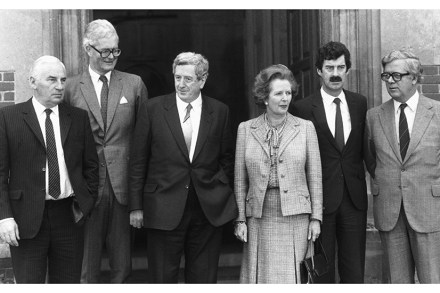
Margaret Thatcher vs everyone else: the making of the 1985 Anglo-Irish Agreement

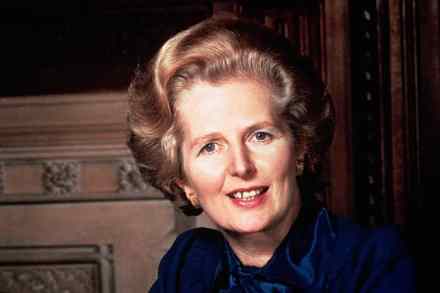
Diplomatic negotiations are rarely fully described by their participants in books, for two reasons. They are usually secret until much later, and their intricacies can be boring. Politicians often include brief accounts in their memoirs, but these seldom reveal much about the process as a whole because, as I discovered by interviewing scores of them for my biography of Margaret Thatcher, they cannot avoid focussing almost exclusivelyon what they did and said (or think they did and said). This book, however, overcomes the secrecy rule, because it is published nearly 40 years after the events described; and it overcomes the boredom problem because of the literary skill and intellectual grasp of its author. It is clear, precise, readable, sometimes drily funny.

Joe Biden’s shabby treatment of the Afghan army

Is a Taliban takeover of Afghanistan now inevitable?The President: No, it is not. Q. Why? The President: Because you — the Afghan troops have 300,000 well-equipped — as well-equipped as any army in the world — and an air force against something like 75,000 Taliban. It is not inevitable… Q. Do you trust handing over the country to the Taliban? The President: No, I do not trust the Taliban. Q. So why are you handing the country over…? The President: It’s a — it’s a silly question. Do I trust the Taliban? No. But I trust the capacity of the Afghan military, who is better trained, better equipped, and more re- — more competent in terms of conducting war.

What ministers won’t admit about A-levels

The tale of A-levels shows how ministers can sometimes find themselves in a position when it is simply too dangerous to admit something that is true. To the exterior eye, it is obvious that the temporary abolition of exams and its replacement by teacher assessment has produced grade inflation. This year’s A-level cohort has not suddenly got a third better than its pre-Covid equivalent. You or I can point that out, but if Gavin Williamson, the Education Secretary, says it, he thereby implies that he has presided over a change which devalues the exam, seriously weakening the basis of admissions to university. He will also be accused of disparaging pupils who, we all know, have had a very rough time.

Chris Packham’s suggestions to save the world

On Monday 2 August, the BBC Today programme offered its ‘Countdown to COP26’. For the rest of the month, Amol Rajan announced, Chris Packham would give us ‘a different suggestion’ about climate change EVERY DAY. I make that 26 Packham slots — Sunday being Today-free — on the main national news magazine programme. Chris’s Day One suggestion to address the ‘colossal, planet-threatening mess that we find ourselves in’ was that everyone should buy an alarm clock (second-hand if possible to save on emissions), set it to wake up 15 minutes earlier and devote that quarter of an hour to doing something helpful, rather as we did, he said, when we abolished slavery.

The West’s moralising over climate change will cost India

On Tuesday, I chaired a session at Policy Exchange addressed by Tony Abbott, the eloquent former prime minister of Australia, now an adviser to the British Board of Trade. Although he acknowledged severe recent difficulties, he declared himself optimistic that free-trading democracies, such as his country and ours, can combine to strengthen rules-based, transparent trade (i.e. the sort of trade China dislikes) across the world. I truly hope he is right. One problem, though, which we barely touched on, is climate change. In the West, this is considered the great global challenge of our time. In developing countries, however, it is often seen as the West’s way of denying them the advantages which made us rich.

Let’s hope the Third World prevails at COP26

On Tuesday, I chaired a session at Policy Exchange addressed by Tony Abbott, the eloquent former prime minister of Australia, now an adviser to the British Board of Trade. Although he acknowledged severe recent difficulties, he declared himself optimistic that free-trading democracies, such as his country and ours, can combine to strengthen rules-based, transparent trade (i.e. the sort of trade China dislikes) across the world. I truly hope he is right.  One problem, though, which we barely touched on, is climate change. In the West, this is considered the great global challenge of our time. In developing countries, however, it is often seen as the West’s way of denying them the advantages which made us rich.

What Dominic Cummings gets wrong

Anyone who thinks Boris Johnson lacks statecraft should pay attention to Dominic Cummings’s attacks on him. They often to seem to show the opposite of what Dom intends. Cummings now reveals that, in January 2020, he and his allies were saying: ‘By the summer, either we’ll all have gone from here or we’ll be in the process of trying to get rid of [Johnson] and get someone else in as prime minister.’ In fact, neither happened. By November, however, Cummings was (to use Mr Pooter’s joke) going; Boris stayed. The winner of the then still recent landslide election victory presumably discovered about his adviser’s seditious conversations and, reasonably, did not like them.

Why Dominic Cummings’s attacks on Boris Johnson backfire

Anyone who thinks Boris Johnson lacks statecraft should pay attention to Dominic Cummings’s attacks on him. They often to seem to show the opposite of what Dom intends. Cummings now reveals that, in January 2020, he and his allies were saying: ‘By the summer, either we’ll all have gone from here or we’ll be in the process of trying to get rid of [Johnson] and get someone else in as prime minister.’ In fact, neither happened. By November, however, Cummings was (to use Mr Pooter’s joke) going; Boris stayed. The winner of the then still recent landslide election victory presumably discovered his adviser’s seditious conversations and, reasonably, did not like them.