Charles Lipson

Charles Lipson

Charles Lipson is the Peter B. Ritzma Professor of Political Science Emeritus at the University of Chicago, where he founded the programme on International Politics, Economics, and Security.

Why America’s future is still bright 

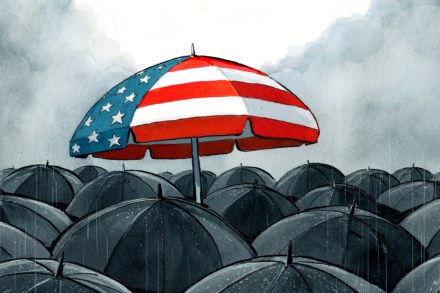
'There is a lot of ruin in a nation.' So said Adam Smith over two centuries ago. He reminds us that strong, stable countries such as my country, America, can survive the pounding we have suffered over the past few years. Our nation may be continually tested, but it has deep reserves of strength. In trying times, like the late 1960s and early 2020s, and today over this Thanksgiving weekend, it is important to remember just how robust and stable our country is. We are finally emerging from the Covid years — so badly mishandled by public health 'experts' — with school shutdowns (much beloved by teachers’ unions) both damaging to students and unnecessary (as Catholic schools proved). We are struggling too with inflation, rising interest rates, and slow growth. We will survive those.
Trump’s pox upon his party

Donald Trump has some well-proven abilities – the ability to cost Republicans winnable elections for the House and Senate, the ability to undermine citizens’ confidence in election outcomes (without providing solid proof the elections were stolen) and the ability to foment some of America’s worst, anti-democratic elements. Trump’s status as party leader contributed to Republicans’ anemic showing in 2022. He was hardly alone in dragging down the party, but he contributed to the losses in two ways. First, the candidates he pushed over the finish line in the primaries disappointed in the general election. His only clear-cut victory was the endorsement of J.D.

Manchin’s rebuke shows how toxic Biden’s energy views are

From our US edition

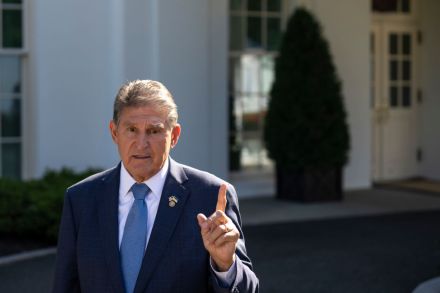
It’s not often that a senator launches a brutal, frontal assault on a president from his own party. It’s even rarer when he does it just before a national election. But that is exactly what West Virginia Democrat Joe Manchin just did to Joe Biden. At issue was Biden’s recent speech attacking coal, a bedrock of the West Virginia economy. Manchin was furious over Biden's promise to shut down all of America’s coal-fired power plants. That view might be red meat for Biden’s audience of green-power advocates and rich California donors, but it is poison in West Virginia. And it is those West Virginians who elected Manchin, the only Democrat still standing in a state that is now deep red. Manchin didn’t just criticize Biden.

Russia’s brutal strategy of war is failing

From our US edition

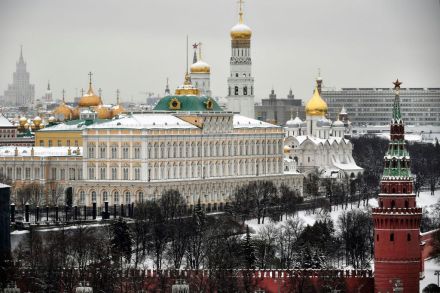
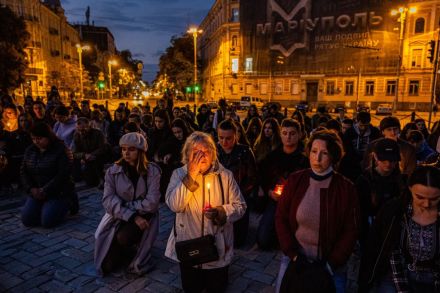
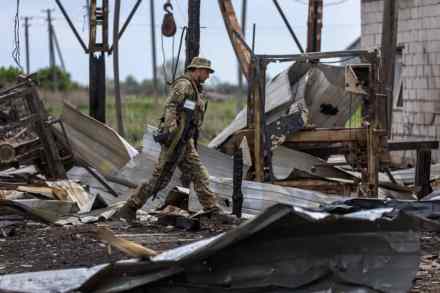
Ukraine’s devastating attack on the Crimean Bridge and Russia’s sickening response — deliberately targeting civilians — perfectly encapsulate how these adversaries are fighting this war. Ukraine has a coherent strategy, effective operational design, and close coordination among its forces. Russia is failing because it has none of this. The centerpiece of Ukraine's strategy is eviscerating Russian combat power without getting into a raw slugfest that would sacrifice its own troops. That means knocking out Russian combat power without a head-on battle, wherever possible. How does Ukraine do that?

Why Republican governors sent those immigrant buses

From our US edition

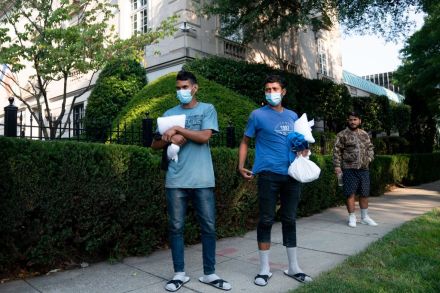
Since President Joe Biden and Vice President Kamala Harris won’t come to the border, the border is coming to them. On Thursday, two buses of illegal immigrants unloaded in front of Harris’s vice presidential residence. Others have arrived in downtown New York, Chicago, and D.C., to the fury of local mayors and governors. A small planeload caused an uproar on Martha’s Vineyard when it landed on that self-proclaimed sanctuary island. More busloads are sure to come, probably in cities like Philadelphia, Boston, Minneapolis, and perhaps a beach community in Delaware. The immigrants are being transported from Republican-led border states to northern Democratic enclaves, which have long proclaimed themselves “sanctuaries” for the migrants they are now so appalled to find arriving.

Ukraine’s incredible success turns the tables on Russia

From our US edition

Ukraine’s swift counter-offensive has captured more territory in four days than Russia’s huge army did in six months. The victories go beyond the 3,000 kilometers of liberated land. The Ukrainians have managed to break and scatter the enemy army across city after city in Kharkiv (in the country’s northeast) and are now moving swiftly into Luhansk (in the north Donbas region). Russian commanders have abandoned major cities and supply hubs, forfeited their hard-won control of vital rail lines and highways, and fled eastward for their lives. Their soldiers have dropped their guns and abandoned vast stores of heavy weaponry, from tanks to anti-aircraft batteries. It has been a complete rout. How did Ukraine accomplish this swift and unexpected victory?

kharkiv

Ukraine turns the tables on Russia

From our US edition

Russia’s brutal war on Ukraine has moved into a new phase, a very encouraging one for Ukraine and its western allies. In Phase 1, Russia tried — and failed — to seize the capital city of Kyiv with a blitzkrieg assault. The idea was to decapitate the Zelensky government quickly and install a puppet regime, subservient to Moscow. After that failed, Russia focused on taking the Donbas region of eastern Ukraine and forming a “land bridge” to Crimea, which Russia seized in 2014. Russia has had some success in this Phase 2 of the war, at very high cost, but movement along that front has now stalled.

Biden robs Peter to get Paul’s vote

From our US edition

It is a truth universally acknowledged that if you rob Peter to pay Paul, you can count on Paul’s vote. That political axiom is the crux of Joe Biden’s decision to forgive vast quantities of student loan debt. He needs Peter's and Patricia’s votes, and he is bribing them with taxpayer money. Taxpayers know it is not a costless gesture. Their backlash is likely to overwhelm any potential gains. The problems begin with the program’s cost and inflationary impact. Spending another $300 to $900 billion, the estimated cost, raises consumer demand without increasing supply. Since the program is not funded by tax increases, it will be paid for by printing money. The inflationary consequences are predictable.

Cleaning house at the FBI and Justice Department

From our US edition

The two most striking features of the FBI’s unprecedented raid on Donald Trump’s Mar-a-Lago home are its bold intrusiveness and the public’s mistrust of the Bureau’s honesty and integrity. The Department of Justice could have used low-profile subpoenas to force Trump to turn over any documents, including the most sensitive ones. It didn’t. Instead, it sent carloads of federal agents to search the former president’s house. That raid was also unusual in a second sense. Although mishandling federal documents is a felony, it happens with some frequency, alas, and is almost never subject to full-scale raids. The blowback has been a Category 5 storm. The damage has grown because the FBI and Department of Justice remained silent for three days, refusing to explain their actions.

mar-a-lago

Ron DeSantis is right to suspend Tampa’s woke prosecutor

From our US edition

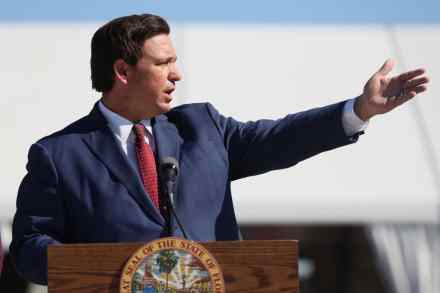
This week, Florida Governor Ron DeSantis made another shrewd political move, showing why many Republicans think he is their best shot to win back the White House. DeSantis suspended Tampa’s woke prosecutor, Andrew Warren, for failing to do his duty and enforce the law. The governor didn’t just assert his power. He laid out a clear, detailed, substantive case for why he is suspending Warren from office. DeSantis’s move was both smart politically and sound constitutionally (assuming the courts uphold his suspension). Let’s take the politics first. Poll after poll shows rising crime is one of the country’s top issues, second only to inflation. What DeSantis’s suspension of Warren did was to make crime and punishment his own issue — one he was willing to act upon.

The attack on Lee Zeldin was an attack on our Constitution

From our US edition

On Thursday, a man jumped onstage and tried to kill one of the two candidates running for New York governor. Fortunately, he failed. Even so, the incident was terrifying, not only because it endangered Representative Lee Zeldin but because it underscores two grave problems facing America. One is the failure of our law enforcement system to treat serious crimes seriously, both to deter them and punish the offenders. This failure makes it a misnomer to speak of our “criminal justice” system. It’s not providing justice, and it's not deterring crime, especially violent crime. The second is the danger violence poses to our established constitutional order, beyond its danger to any individual.

Biden is the emperor with no clothes

The emperor is naked. The public knows it, and they’re finally beginning to speak the obvious truth. The emperor, in this case, is President Biden. He took office with high hopes from voters and a promise to bring the country together. Those aspirations are dead. The public has lost confidence in Joe Biden – lost confidence that he can do the job, and lost confidence that he is even minimally competent. They certainly don’t think he has brought the country together (though they think Republicans share the blame for that). This sour mood hurts more than the President. It hurts his entire party, and will be extremely hard to reverse. Some decline in popularity is inevitable after a new president takes office. For Biden, however, the losses have been huge.

Russia slogs through the Donbas

From our US edition

A brutal artillery battle: that’s what the latest phase of Russia’s war on Ukraine has become. Vladimir Putin failed in his original goal of seizing the entire country swiftly, beginning with the capital of Kyiv, and installing a puppet government. When Ukrainian resistance prevented that, Putin shifted to a smaller, more achievable objective: establishing complete control over two eastern provinces, Luhansk and Donetsk, which border Russia and are jointly known as the Donbas region. That’s where the war is being fought now, with an uncertain outcome. Victory will depend on who wins the artillery battle. Russia has more blunt firepower; Ukraine has more precise, longer-range weapons — or at least it will have them when more NATO supplies reach the frontlines.

artillery

The stench from the Sussmann verdict

From our US edition

Democracies cannot survive without public trust. Citizens must be confident that their elected officials represent their interests, at least in broad terms, and are not corrupt, self-dealing con men. They must believe the courts dispense justice fairly and equally, that there’s not one set of rules for insiders and another for everyone else. They understand that complex societies require bureaucracies and that bureaucracies are inherently non-democratic, but they want the bureaucracies’ rules and procedures to be subject to laws, passed by elected officials, overseen by them, and applied evenly. For transparency, they depend on newspapers and television and, in recent years, on websites and social media.

sussmann

Is Ukraine going to win?

The climactic battle for Ukraine is being fought in the east, on the dangerous, open terrain of the Donbas. Since it will be won with heavy, long-range firepower, Russia ought to have a huge advantage. After all, it has spent decades building a military meant to overwhelm its enemies with vast numbers of tanks, troops and artillery, fighting on terrain just like this. But even in these favourable conditions, Moscow’s plans aren’t working out. The Ukrainians may lack superior numbers, but they could very well win back most of the territory Russia has occupied since 2014. The Ukrainian edge? Their mobile forces, determined fighters, smart leadership, superior intelligence and targeting, and, coming soon, a surge of heavy weapons, arriving after months of delay.

Is Hillary’s lawyer cooked?

From our US edition

Michael Sussmann, a senior lawyer for Hillary Clinton’s 2016 campaign, is currently on trial for lying to the FBI. The allegation is straightforward. As the election approached, Sussmann texted his old friend and fellow attorney, James Baker, requesting a brief, urgent meeting. Baker was the FBI’s top lawyer and Sussmann was a partner at Clinton’s election-law firm. They were friends from their days together at the Department of Justice and continued to know each other socially. According to the indictment, Sussmann told Baker he was coming solely to help the Bureau and not on behalf of any client.

sussmann

Just how long can Russia sustain the war in Ukraine?

The sheer complexity of the war in Ukraine can mask its most important features. So let’s cut through the complexity and focus on where the combatants now stand, how they got there, and what is likely to happen next. The central point is one we all know: Ukraine has prevented a Russian victory but has not yet won the war. There is still hard fighting to come, but the battlefield is increasingly tilted in Ukraine’s favour. Vladimir Putin wanted to seize the capital, decapitate the Zelensky regime, install a puppet government, and control as much of the country as he could, incorporating some of that territory into Mother Russia and establishing “independent” republics in the rest.

Will Ron DeSantis run against Donald Trump?

Last week, Florida governor Ron DeSantis took two big steps to solidify his popularity with the Republican base, not only in his home state but across the nation. First, he won the hearts and minds of conservative voters and many independent parents by passing a law that prevents teachers from discussing the sensitive topics of gender and sexual orientation with young students (grades three and under). Second, he confronted and defeated one of Florida’s largest and most influential employers, Disney World, on a vital issue. He stripped Disney of its special privilege to govern the vast territory it owns near Orlando. Both moves are popular in their own right — the first with parents, the second with Republican voters and perhaps others.

Durham springs the trap on Hillary Clinton’s lawyer

From our US edition

The month of May won’t be a merry one for Michael Sussmann, one of Hillary Clinton’s top lawyers at her favorite election law firm Perkins Coie, who is facing a criminal charge of lying to the FBI when he passed information to the Bureau’s general counsel, James Baker. Sussman stated explicitly that he was acting as a “good citizen,” not as a lawyer for Trump’s election opponents. Wink, wink. Nudge, nudge. The tip was false. It described a secret, traitorous back-channel connection between candidate Trump and the Kremlin and included some “white papers” as “proof.” But that deceit is not part of this criminal charge.

The next phase of the Ukraine war

From our US edition

The fog of war doesn’t just apply to generals, sergeants, and privates. It applies to strategists and outside observers, including the best-informed journalists on the ground. All are swamped by a confusing barrage of information, some accurate, some not, none of it complete or definitive. That’s why, after over a month of fighting in Ukraine, it helps to step back, consider the basic outcomes, and try to project what will happen next. Remember, though, the “fog of war” applies to these assessments, too. First, let’s clear away Russian misinformation. The Kremlin’s recent claim that their main goal was never to seize Kyiv but always to take eastern Ukraine is simply false.