Charles Lipson

Charles Lipson

Charles Lipson is the Peter B. Ritzma Professor of Political Science Emeritus at the University of Chicago, where he founded the programme on International Politics, Economics, and Security.

Trump or Biden? A dreadful choice

From our US edition

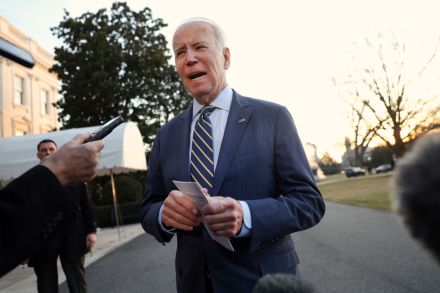
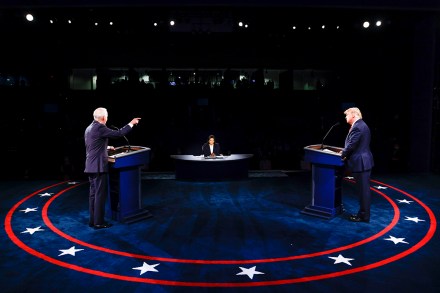
“What a revoltin’ development this is.” That catch phrase from the 1950s sitcom The Life of Riley succinctly describes America’s political morass today. It sums up Washington’s diddling over the debt ceiling, the administration’s inability to close the southern border and, most of all, the dismal quality of the two presidential frontrunners. The phrase, “what a revoltin’ development,” was Chester A. Riley’s description of his woeful situation at the end of each episode — sitting on his front steps, bemoaning his fate over the consequences of some bad decision or ill-conceived scheme. Then, we sympathized as viewers. Now, we identify as American citizens, looking at the country’s leadership. Let’s begin with the sitting president.
debate bruises biden trump

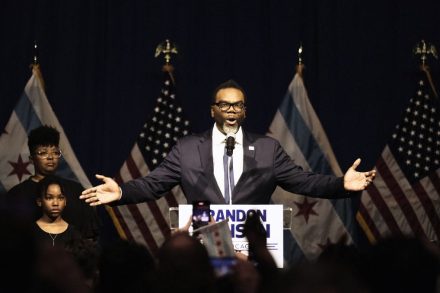
The new mayor of Chicago’s ruin

From our US edition

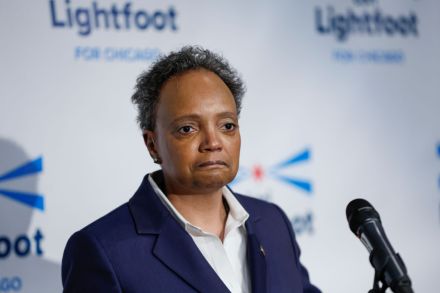
Adam Smith once wisely remarked that “there is a great deal of ruin in a nation.” There is much less room for ruin in a city, as Portland, San Francisco and Seattle have proved in recent years, and Detroit, Memphis and Gary, did even earlier. Now, Chicago has decided to join that dismal parade. The Windy City was already marching toward the abyss under its outgoing mayor, Lori Lightfoot. She was elected four years ago with over three-quarters of the vote. This year, she got so few votes in the first primary (about one sixth) that she was eliminated from the runoff.

brandon johnson

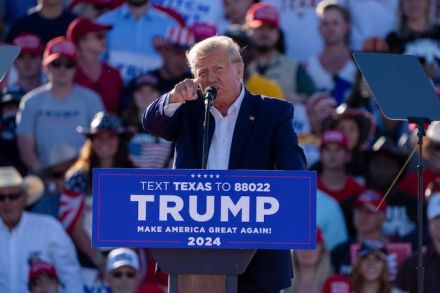
Even Donald Trump’s critics should be troubled by these charges

A New York grand jury has indicted former president Donald Trump over alleged 'hush money' payments to Stormy Daniels, an adult film actress. The jury was empaneled by Manhattan prosecutor Alvin Bragg, a man on a mission. His mission is simple. Get Trump. On anything.  He had to do it with the thinnest of evidence, the weakest of legal theories. He focused on a misdemeanour for which the statute of limitations has expired. Using a novel legal theory, he wants to tie that misdemeanour to other alleged crimes and package them all as a felony. The case, he knows, will be tried before a Manhattan jury that hates Trump as much as he does.  That’s not how our justice system is supposed to work.

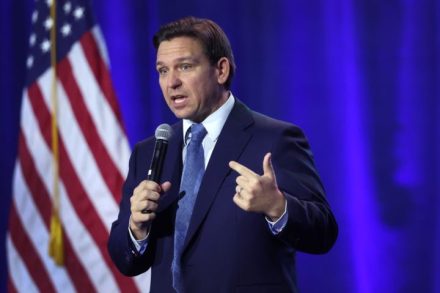
Ron DeSantis is coming for Trump

Donald Trump faces legal jeopardy about payments to porn star Stormy Daniels, but his Republican opponents face political jeopardy about how to handle the issue. Ron DeSantis’s powerful response shows why he’s such a formidable candidate and why Trump fears him.  Most Republicans have opted for the easy answer to the hush-money story: criticise Manhattan district attorney Alvin Bragg for pushing a politically driven agenda. That agenda centres on snagging the former president on a minor, long-forgotten misdemeanour and converting it into a larger, more serious crime. Bragg apparently hopes to use a novel legal theory to upgrade the minor charge to a felony. Since the case would be tried before a Manhattan jury that loathes Trump, that legal legerdemain might work.

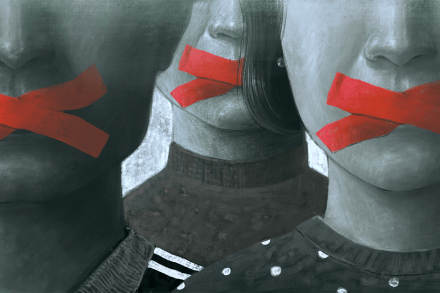
How to stop law students from blocking free speech

From our US edition

When a federal appellate judge speaks at a major law school, he should expect tough questions from a learned audience. He should not expect to be shouted down. When he tries to speak but is heckled, jeered and disrupted, he should expect a university administrator to step in, read the students the riot act and restore order. He shouldn’t expect that administrator to sympathize with the disruptive students and let the trouble continue, as the feckless bureaucrat at Stanford Law School did.   Her shameful behavior is hardly unique. It’s characteristic of mid-level bureaucrats hired to push “Diversity, Equity and Inclusion” at universities across the country. They show very little concern for free speech, alternative views or robust debate.

stanford law students

Lori Lightfoot gets the boot

From our US edition

When Chicago went to the polls on Tuesday, the voters made one thing abundantly clear: they wanted to see the back of Lori Lightfoot, the current mayor. She had come into office on a landslide in 2019, winning some three-quarters of the vote against a well-known, well-liked opponent. Four years later, all that support was gone. She received only 17 percent in 2023, a distant third in a race where only the top two candidates enter the runoff (since none received 50 percent). The candidates going into that runoff are Paul Vallas, with about 34 percent of the vote (twice that of the incumbent), and Brandon Johnson, with about 20 percent. The rest of the vote was spread among the six other candidates, including Lightfoot.

lori lightfoot chicago

Victimhood and mudslinging now define American politics

From our US edition

The 2024 campaign has hardly started, but the air is already filled with noxious fumes, most of it from desperate cable TV hosts and anonymous social-media posters. Don Lemon’s sexist comments about Nikki Haley are the latest example, but the vitriol has spread much wider. It reveals a dank corner of American politics, filled with mud-slinging and name-calling, degrading our public square. Donald Trump specializes in these attacks.. He has already launched several, unsuccessfully, on the man he sees as his most formidable competitor. Calling Florida’s popular governor “Meatball Ron” and “DeSanctimonious” isn’t an argument. It’s an epithet. It has the intellectual heft of giving someone the middle finger.

mudslinging nikki haley victimhood

Putin’s inhumane war strategy is backfiring

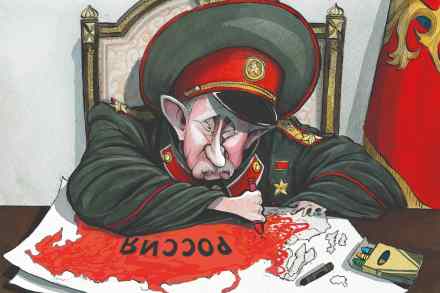
The war in Ukraine changed fundamentally after Vladimir Putin failed to capture Kyiv and decapitate the regime there a year ago. His army settled into Russia’s traditional way of war: a slow, brutal, relentless slugfest. That strategy necessarily expends countless Russian lives. Human-wave attacks rely on untrained troops, dragooned from prisons or off the streets. The idea is to use these expendable men to weaken Ukraine’s front-line defences and then follow them with more sophisticated attacks by Russia’s battle-hardened troops. Risky as it is for Russia to double down, it is really the Kremlin’s only path to victory This strategy has cost countless lives on both sides while producing only minor Russian gains.

The ever-shifting excuses about Hunter Biden’s laptop

From our US edition

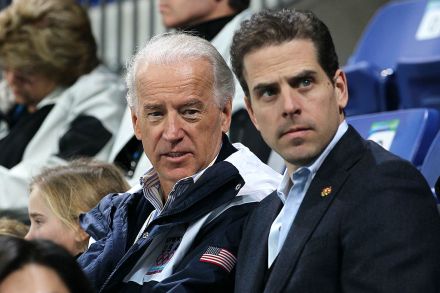
Hunter Biden’s defense about his incriminating laptop sounds like an old joke about a trial lawyer who was accused of letting his dog bite a stranger. The lawyer’s first line of defense was that “it couldn’t happen because my dog was tied up that night.” When told there were witnesses who had seen him walking the dog, he said, “Okay, we were out walking but my dog doesn't bite.” If that fails, then, “Well, yes, my dog did give you a little nip, but it wasn't a bad one.” Then, “Granted, you had to go to the hospital for surgery, but you provoked my sweet pup.” If all else fails, “What do you mean I own a dog?

How to stop politicians from taking classified documents

From our US edition

It should be obvious by now that too many classified documents are floating around Florida, Delaware, and Indiana. They were removed without authorization and stored improperly under Donald Trump, Joe Biden, and Mike Pence respectively. Most of them, it seems, were hurriedly packed by government aides during an administration’s final days, even as the president and vice president were busy handling their official responsibilities. National security law doesn’t distinguish between the accidental and deliberate mishandling of classified documents, but the public does. They know the president and vice president bear heavy, official burdens until the moment they are replaced.

Joe Biden has some difficult questions to answer

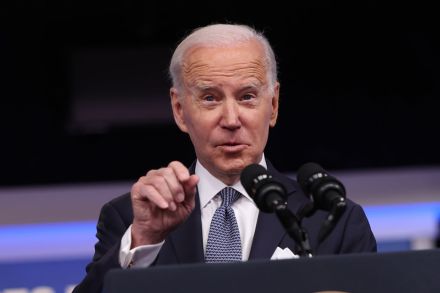
Joe Biden has become the Typhoid Mary of classified documents, spreading them as he goes. They keep turning up in batch after batch, everywhere but the floor at Starbucks. The President has said almost nothing about the mess, except to reassure us that ‘people know I take classified documents seriously’. That defence has since taken on a slight change of punctuation: ‘People know I take classified documents. Seriously.’ He certainly does. He takes them everywhere. Most recently, classified documents were found at the Penn Biden Center, a foreign policy thinktank in Washington, DC established by Biden in partnership with the University of Pennsylvania. The documents raise additional questions. Why were Biden’s lawyers searching there in the first place? We still don’t know.

Losing Crimea would condemn Putin

As the fighting in Ukraine slows for the winter, three things stand out. The first is the most obvious: a small, highly motivated country, equipped with advanced weapons and intelligence, is slowly but inexorably defeating what used to be called the world’s second-most powerful military. We need to remind ourselves how stunning that is. The second is how Western political leaders have failed to explain to their citizens why the war matters. Taxpayers are naturally tiring of footing the bill for an unending flow of equipment and ammunition, and they need to be persuaded that their continued support is essential for their own countries’ interests.

joe biden documents

What you need to know about Biden’s documents caper

From our US edition

We are still in the early stages of discovering what the documents discovered in Joe Biden's office at the University of Pennsylvania contain and how highly they were classified, so we don’t yet know how dangerous the violation was. But there are things to keep in mind as the story unfolds. 1. Biden’s lawyers did him a huge favor by instructing him not to ask about the documents It’s the last stand of “don’t ask, don’t tell.” Still, as one tabloid used to proclaim,“Inquiring minds want to know.” In particular, we want to know how sensitive the material really was (overclassification is a problem in Washington) and where the documents were held between the time Biden left the vice presidency and the time the Penn Biden Center opened. 2.

Kevin McCarthy’s war of attrition

From our US edition

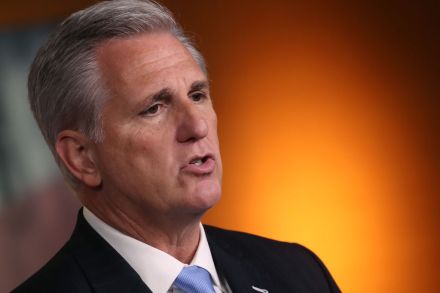
House Republicans are engaged in what military analysts call a "war of attrition." The winner is the side that can hold out the longest, or convince its opponent that it can. The reason the balloting for speaker has continued for so long is that both sides are trying to convince the other that they won't give in. In wars of attrition, firm resolve wins, but you have to convince your opponent that your resolve is stronger. That is exactly what is happening on ballot after ballot. The whole process is damaging the Republican Party, obviously, but that won't sway individual votes. What will sway them the prospect of members losing support within their own districts, or ending up on the losing side because their compatriots are losing support in their’s and cave.

Zelensky’s Congress address was a triumph

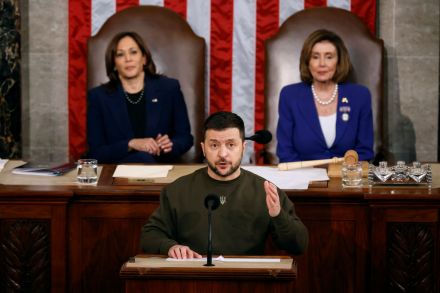
Ukrainian president Volodymyr Zelensky’s address to a joint session of Congress on Wednesday night was a political triumph. It was easily the most impressive speech given to Congress and the American public in years. And it was persuasive, if the audience’s repeated ovations are any indication. Zelensky’s goal was obvious. In thanking the Congress and the Biden administration, he hoped not only to show his nation’s gratitude but to ensure continued American support for Ukraine’s fight with Russia. The subtext was that, ideally, America and its Nato partners would do more than continue the current flow of weapons and ammunition. They would increase them and include more advanced weapons. But Zelensky wisely put those requests on the back-burner.

Surprise, surprise: the J6 Committee found exactly what it wanted

From our US edition

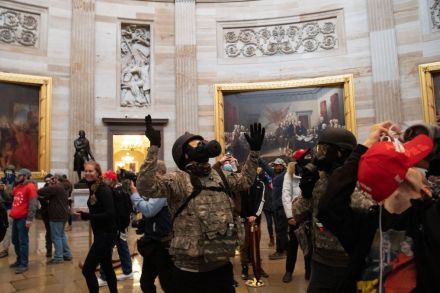
The Capitol Riots on January 6 deserved a serious public investigation because the events were so important. The rioters who entered the Capitol building tried to use violence and intimidation to prevent the peaceful transfer of power by normal, constitutional procedures. That’s as serious as it gets in our democracy. To conduct that investigation, House Speaker Nancy Pelosi established a special “January 6 Committee,” chaired by Representative Benny Thompson of Mississippi and filled with some of the Democrats’ heavy hitters in the House. Its real leader, though, was a Republican: Wyoming representative Liz Cheney, one of Trump’s most outspoken foes.

january 6 committee

The ‘Twitter Files’ are damning for US agencies

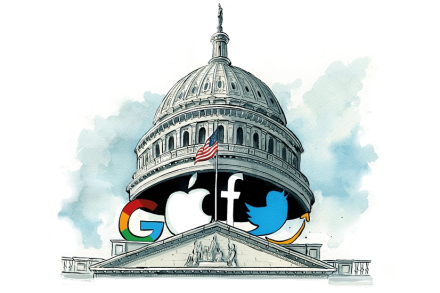
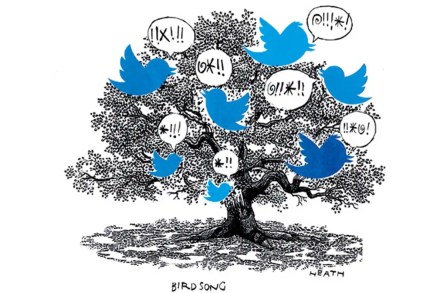
There are two pieces of deeply disturbing news to emerge from the ‘Twitter Files’ released by Elon Musk. The first is that Twitter, under its old management, was not the open, politically neutral platform it pretended to be. Journalist Bari Weiss has shown that Twitter had secret ‘blacklists’ and related methods specifically designed to limit the reach of conservative commentators. Twitter’s old management had denied that bias, repeatedly. Second, we are learning that Twitter worked closely with like-minded government bureaucrats to squelch legitimate news, information, and discussion. They did so to protect favoured candidates (Democrats) and political positions (progressive).

Did US officials suppress political speech on Twitter?

The ‘Twitter files’ Elon Musk released to two journalists have produced a cloud of confusion. So far, we have not seen the files themselves, only what one journalist, Matt Taibbi, has reported about them. The main findings reinforce what we have known all along: Twitter’s former management strongly favoured Democrats and used its powerful platform to aid them. It was far more likely to suppress the speech of conservatives and Republicans than of progressives and Democrats. Twitter’s systematic bias went far beyond its most famous instance, when it killed the New York Post story on Hunter Biden’s infamous laptop. Freddy Gray makes these important points in his recent piece here at The Spectator.