Charles Lipson

Charles Lipson

Charles Lipson is the Peter B. Ritzma Professor of Political Science Emeritus at the University of Chicago, where he founded the programme on International Politics, Economics, and Security.

Trump only harms himself by floating the idea of a third term

From our US edition

Donald Trump this weekend floated the idea of running for a third term. Unless he’s doing it in 1940 when Franklin D. Roosevelt did, it’s unconstitutional. I don’t mean unconstitutional for Judge Boasberg or Judge Chutkin or some zealot in robes in San Francisco or Seattle. I mean unconstitutional in capital letters for any judge, including a 9-0 vote on the Supreme Court. The legal background here is straightforward. When FDR ran for a third term in 1940 and for a fourth in 1944, there was no legal or constitutional prohibition against doing so. There was simply a well-established norm, begun when George Washington returned to Mount Vernon after two terms. That norm was respected by every subsequent president. Until FDR.

PBS and NPR should never have received public funding

From our US edition

Congress has been mulling the future of publicly-funded television and radio. Here’s a spoiler alert: that funding is toast. There is no way a Republican-controlled House and Senate will keep pouring money into networks they believe hate them. They know that hatred is warmly reciprocated. The debate about partisan bias at PBS and NPR is important – the bias itself is obvious – but that’s not the most important point. What matters most is that democratic governments have no business funding or controlling news channels directed at their own citizens. Those channels should be privately owned and operated. Every single one.

npr pbs

Will Putin give peace a chance?

From our US edition

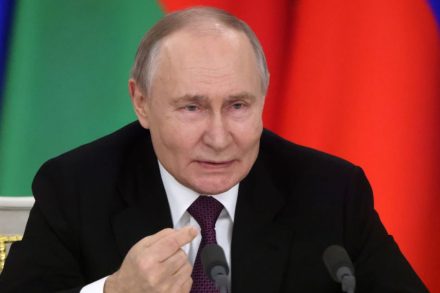
At a summit meeting in Moscow, Ronald Reagan was asked about his basic approach. He famously answered, “Here’s my strategy on the Cold War: we win, they lose.” Vladimir Putin has the same strategy for Ukraine. That is certainly his first response to President Trump’s offer to mediate an end to the war and bring a reluctant Ukraine to the negotiating table. If “we win, they lose” is Putin’s final response, then the war cannot end without Ukraine’s surrender or Russia’s collapse. Putin’s initial reply, filled with his maximalist demands, indicates he is still committed to the conquest of his neighbor, whose independence and sovereignty he has long rejected.

putin

Columbia exemplifies the failure of universities

From our US edition

Yesterday, with growing sadness, I read a wonderful book about teaching and learning, written by one of the great teachers of the past century. Why the sadness? Because the author, Gilbert Highet, was a revered professor at Columbia in the Fifties and Sixties. It is impossible to read his paean to learning, written a half-century ago, without weeping for what his university has become. When Highet wrote of learning, he meant absorbing from history’s greatest minds, from Plato, Aristotle, Thucydides, Virgil, Cicero, Machiavelli, Hobbes and Locke, and teaching their lessons to students who wished to learn from them. Reading Highet’s words a half century later, we realize he was speaking of another time and place — virtually another university.

columbia

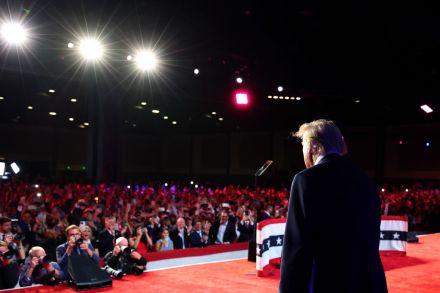
It’s morning in Trump’s America

Donald Trump’s speech to a joint session of Congress on Tuesday night was the most powerful, rousing, and pointed of any presidential address in decades. The first line captured the theme of the night. “America is back...and we are just getting started.” It ended with a peroration that his administration would “take up the righteous cause of American liberty,” and “fight, fight, fight for a country our citizens’ believe in and deserve.” Our country’s “Golden Age,” he said, ”has just begun.” Dozens and dozens of applause lines were planted throughout the speech as Trump laid out his ambitious agenda and his accomplishments so far. It was not the dull laundry list of programs most presidents present to Congress. There was an upbeat coherence to the address.

What’s behind the vicious attacks on Elon Musk?

From our US edition

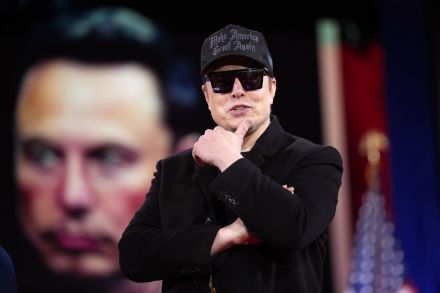
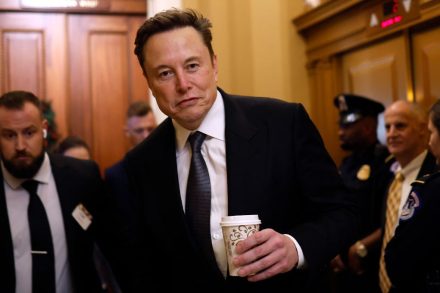
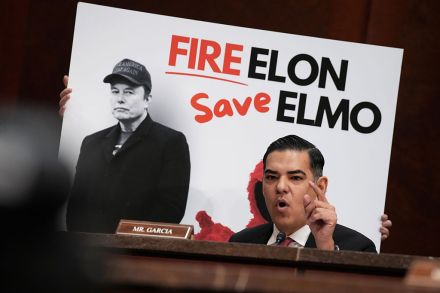
Why are Democrats mounting such a ferocious assault on Elon Musk? Why are mainstream media outlets so eager to go along? The simplest answers are the best. Musk is the most prominent member of the new administration aside from the president himself. He is Donald Trump’s point man for exposing malfeasance in federal bureaucracies, determining where the money is going and cutting the engorged payroll. The more Musk and Trump succeed, the worse for Democrats. They created those agencies; their supporters staff them; and those supporters funnel lots of public money to specially favored institutions and projects. When Musk attacks this partisan nexus, he is attacking a major source of Democratic power and influence. That is what’s really at stake here, beyond cutting the budget.

Trump’s presidency is an ink-blot test for America

From our US edition

Americans are being given a national ink-blot test. Their answers tell us how a divided country sees the political landscape and what they think of President Trump’s bold efforts to reshape it. The scope for differing interpretations is illustrated by a story about one such Rorschach test. The psychiatrist shows his new patient ink blot after ink blot. No response. Finally, the exasperated doctor pleads with him to say something, anything. “Look, doc,” he says, “I didn’t come here for you to show me dirty pictures.” That’s exactly how Democrats see Donald Trump’s presidency. It’s one dirty picture after another. A few moderate Republicans share that perspective, but they are outliers in a party Trump has reshaped in his own image.

The deeper meaning behind Trump’s blizzard of actions 

From our US edition

With Donald Trump moving so rapidly on so many fronts, it is hard to grasp the big picture. What are his overriding goals, politically and electorally? What has he already accomplished?  Here is a summary in case you are keeping score. Trump has done more in a few weeks than any president in history. He took office with a coherent, detailed program and control of Congress (though a very narrow majority in the House). He is acting swiftly before his political capital dissipates.  Trump hopes to sustain his winning electoral coalition beyond his time in office. That’s why he chose a young populist, J.D. Vance, as his vice president and presumptive successor.

actions

When government officials are threatened, they deserve protection 

From our US edition

When US officials and former officials face lethal dangers for the work they did in office, they deserve protection from the country they served. That’s true whether they served the country well or poorly, whether they can pay for that protection themselves — most cannot — and whether they are loathed by the next administration.  Those are pitiful reasons for denying them protection. If today’s officials, or yesterday’s, are threatened because of what they did in office, they deserve protection. They may not deserve our gratitude. They may not deserve our thanks and appreciation. That depends on our assessment of their performance. But they deserve our protection from domestic terrorists and foreign actors such as Iran.

joe biden officials

Donald Trump is a president in a hurry

“The First Hundred Days” was the iconic phrase for Franklin Roosevelt’s rapid-fire acts as the new president. Donald Trump intends to top that with “The First Hundred Hours.” Three months is far too slow for the new president. He made that clear by signing some 200 executive orders on his first day back in office. The media has focused on the substance of those orders, and understandably so. But their substantive content, on the border, birthright citizenship, DEI (Diversity, equity, and inclusion) and more, is only half the story. The other half is the swift, decisive process. Trump had those orders prepared during the weeks between his election in early November and his inauguration in late January. He means to act and to act fast.

Biden opens the jailhouse door

From our US edition

Joe Biden is not going gently into that dark night, politically or cognitively. He is going down with large, bold actions. The latest is a mass commutation for some 2,500 “nonviolent drug offenders.” Biden’s justification is that they were sentenced under laws that have now been overturned as the country has moved to more lenient treatment of all drug offenses and eliminated differences between laws penalizing crack cocaine and powdered cocaine. Those are reasonable justifications, but they are far from the whole story and far from the way the White House is selling the action to voters and friendly journalists. The vast majority of the prison terms were actually given to dealers or violent offenders, mostly members of criminal gangs.

joe biden

When is a fire an earthquake?

From our US edition

The fire now engulfing whole neighborhoods in Los Angeles will soon engulf the politicians who failed to protect them. The first casualties will be Mayor Karen Bass and California governor Gavin Newsom. They are already “dead politicians walking.” It is important to recognize that Newsom and Bass are not being held responsible for a “natural disaster,” even one of horrific scale. Nor should they be. They should be held responsible for failed leadership, for misplaced priorities, for the misuse of high tax revenues (no one can say Californians are undertaxed), and for policy choices that failed to meet the first responsibility of any government: protecting citizens’ lives and property. Responsibility for those failures is bound to spread well beyond Bass and Newsom.

fire

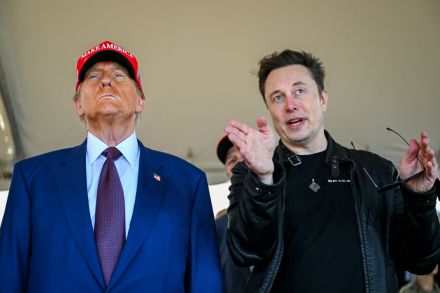
What is DoGE’s hardest task?

From our US edition

The nasty fight between Elon Musk and Steve Bannon over H-1B visas, meant for high-skilled workers, is the Ghost of Christmas Future. That’s not because the visas themselves will be a perennial problem. It’s because of three larger implications, foreshadowed by the visa dispute. One is the battle between populist nationalists (represented, in this case, by Steve Bannon) and growth-oriented American companies with extensive foreign markets. Those are led by hi-tech industries, represented here by Elon Musk, which benefit from bringing in foreign engineers, programmers and others. The second implication is that, in a country with only two major parties, there are bound to be major cleavages within each party on a wide range of issues.

doge

The legacy of Jimmy Carter

From our US edition

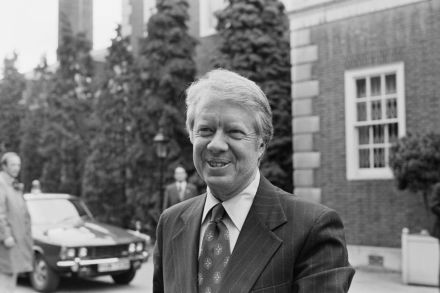
Jimmy Carter will be remembered as a decent, honorable man of faith, who lived a productive life according to those high standards, both publicly and privately.  He was an outlier in his forging of a productive life after leaving office. Instead of grifting and selling access to policymakers, like so many former politicians do today, he had a distinguished second career promoting and monitoring democratic elections around the world. That legacy will live on in the work of the Carter Center in Atlanta. So will his work with Habitats for Humanity, building homes for the poor.  He will be remembered, too, for his long, loving marriage to Rosalynn, whom he married in 1946, when he was a young naval officer. She died only a year ago.  It was a remarkable life.

jimmy carter

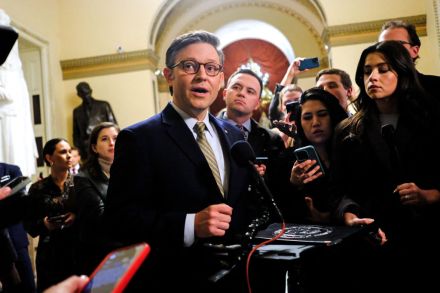
The winners and losers in the fight to keep the government open

From our US edition

As the clock ticked down late Friday night, the US House and Senate finally passed a stopgap funding bill to keep the government operating for another two months. The passage came after two failed attempts by Republican House speaker Mike Johnson to push through earlier versions of the bill. Any additional delays would have led to a temporary shutdown of some non-essential government functions. Essential functions, like the military, would have continued to operate. What can we learn from this shambolic, last-minute process? First, the good news. The first two bills failed because they contained a trainload of pork, a steaming pile of non-essential provisions that rank-and-file Republicans refused to support.

government

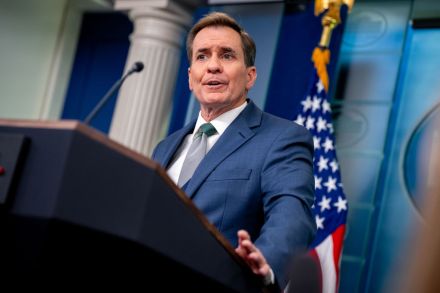
What’s flying over New Jersey?

From our US edition

The nightly news is replicating Orson Welles’s 1938 broadcast of War of the Worlds, which scared Americans by describing an invasion of space aliens. Listeners who tuned into the broadcast a little late didn’t hear the disclaimer that it was fiction. Now, they are tuning in on time and hearing real broadcasts about mysterious objects flying over our skies. And people are asking the same questions they asked long ago, “What are those things?” They have heard the government’s disclaimers, but they are not sure whether to believe them.  The public is frightened, and bland reassurances from Washington aren’t helping.

john kirby drones new jersey

What Trump’s appointments tell us

From our US edition

Donald Trump may have a four-year term, but he has far less time to make a real difference. In practice, he may have a year or perhaps eighteen months before the midterm election looms and Congress slows to a crawl. If Trump wants to be a transformational president — and he clearly does — then he will have to move fast. That’s exactly what he’s doing. He’s beginning with a series of rapid-fire appointments, most of which require approval from the new, Republican-majority Senate. (His White House aides, such as national security advisor, do not require Senate approval.) What message is Trump sending with his appointments so far? First, he demands loyalty — to him and to the agenda he articulated clearly on the campaign trail.

appointments

The two final battles of the culture war

From our US edition

On issue after issue, conservatives — and Republicans — have lost the “culture wars.” Not just lost but lost decisively and permanently. The victories are so secure on most issues that conservatives have abandoned the fight. At times, the result has been a more tolerant public consensus, for example regarding gay rights and marriage. There are two notable exceptions, however, where the cultural battles remain white-hot: abortion and transgender rights. Both issues motivated voters in 2024. On abortion, voters have been mobilized by controversial Supreme Court decisions. The fight began in earnest in 1973, when Roe v. Wade effectively legalized abortion throughout the country and throughout the nine months of pregnancy.

culture

What disputes about trans athletes say about Democratic politics

From our US edition

In the minds of many progressive Democrats, Representative Seth Moulton, a Massachusetts Dem, just committed an unpardonable sin. He told the New York Times that his two girls should not have to compete in sports against men who have become women: Democrats spend way too much time trying not to offend anyone rather than being brutally honest about the challenges many Americans face. I have two little girls, I don’t want them getting run over on a playing field by a male or formerly male athlete, but as a Democrat I’m supposed to be afraid to say that. Moulton’s statement is really about two issues, not one. It is important to distinguish them. The first, obviously, is about women and athletics.

trans athletes

What comes after Trump’s decisive victory?

From our US edition

The candidate who said Americans should be “unburdened by what has been” is now a has-been. The irony will be lost on her.  Also lost was the traditional graciousness — and normative necessity — of conceding defeat clearly and publicly as soon as the loss is certain. When Donald Trump failed to take that step in 2020, after exhausting his court challenges, he violated that norm and deepened our national divisions. He deepened that chasm on January 6 and later by continuing to challenge the rightful winner. Those challenges threaten the peaceful transfer of power and undermine the public consensus that the winner holds office legitimately.  Kamala Harris learned from Trump’s mistake and repeated it.

donald trump victory