Charles Hecker

Charles Hecker has spent 40 years travelling and working in the Soviet Union and Russia. He has worked as a journalist and a geopolitical risk consultant, and has lived in Miami, Moscow and London. A fluent Russian speaker, he holds degrees from the University of Pennsylvania and Harvard University. His book Zero Sum: The Arc of International Business in Russia was published by Hurst in November 2024.

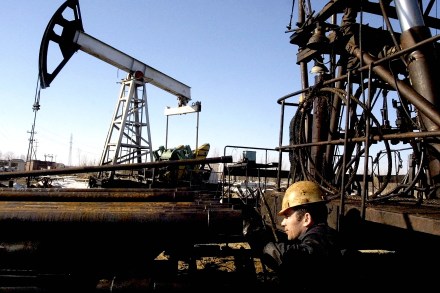
Russian oil is back

Donald Trump on Thursday allowed India to import more Russian oil. India recently did a deal with the US that reduced tariffs in exchange for it buying less crude from Moscow. That deal now seems to be on pause. The move might be seen as a version of the Trump tariff acronym ‘Taco’ (Trump Always Chickens Out), but really it is an acknowledgement of several uncomfortable truths. Scott Bessent, the US treasury secretary, has said that he’s considering lifting sanctions on other Russian oil. Trump knows that increased demand for Russian oil will create a windfall for Russia’s deeply stressed war budget and complicate already difficult peace talks. The Indian license comes only weeks after a fresh round of negotiations in Geneva between the US and Russia to end the war in Ukraine.
Does Davos calm the polycrisis, or make it worse?

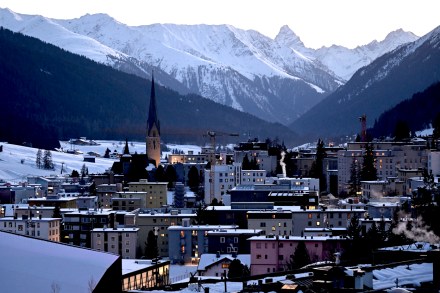
A most unlikely proposition emerged this week in Davos. Larry Fink, interim co-head of the World Economic Forum, proposed moving the annual gathering of the world’s ultra-elite to Detroit or Dublin. The WEF, he said, should ‘start doing something new: showing up – and listening – in the places where the modern world is actually built.’ This is the least of the forum’s worries. Davos this year moved so far from its customary mission that its location hardly matters. An organisation founded to improve the world’s condition and promote global integration – the kind of place where chief executives would routinely ink and announce multi-billion dollar, cross-border deals – has turned into a geopolitical demolition derby. Davos’ transformation has been gradual.

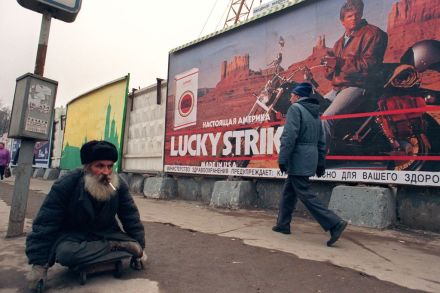
What business does America have in Russia?

It didn’t take long for preliminary discussions between the US and Russia on Ukraine to morph into something dramatically more ambitious. As negotiators left talks in Riyadh this week, both sides signalled their intent to reach agreement not only Ukraine, but also on economic and geopolitical cooperation.  President Donald Trump’s remarks following the talks – which were led by US Secretary of State Marco Rubio and Russian Foreign Minister Sergei Lavrov – made it sound as if a full rapprochement between the US and Russia was within reach. An almost gravity-defying change in US foreign policy toward Russia is in the works.

Could Russia and America ever have got along?

A revealing, damning and fascinating diplomatic memorandum, sent in 1994 from the US embassy in Moscow to the State Department in Washington, D.C. has recently been declassified. It is also a gripping and lacerating read, even for the non-specialist. It comes at time of heightened tension and ongoing head-scratching: why are US-Russia relations so terminally bad? No single topic, let alone a single memo, will unlock the enduring complexity of what is broadly called East-West relations. But at least one strong voice inside the US embassy was warning that the US-Russia relationship was off to a dreadful start.

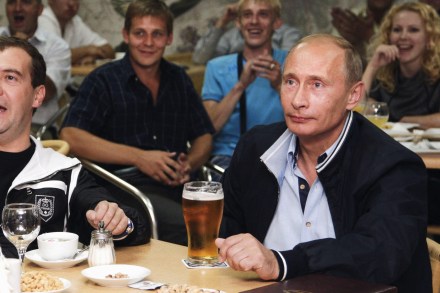
Why Carlsberg left Russia

Carlsberg, the brewing giant whose presence in Russia transformed that country’s beverage market, has left. What remains is the lingering residue of a boozy party that peaked too soon, ended in a brawl and left many questions dangling. As it heads for the exit of Russia’s brutal, wartime asset reallocation process, Carlsberg – a flagship Danish company – takes with it something close to $322 million. This is the price reportedly struck for the sale of Carlsberg’s presence in Russia to a company called VG Invest that, according to the Financial Times, looks like a management buy-out.  It is not certain precisely how much cash Carlsberg will take home as it surrenders Baltika Breweries, Russia’s market leader.