Caroline Moorehead

Monsieur le Commandant, by Romain Slocombe – review

From our UK edition

There can be few characters in modern fiction more unpleasant than Paul-Jean Husson, the narrator in Romain Slocombe’s Monsieur le Commandant. Indeed, he is at times too nasty. If this otherwise compulsively readable novel about betrayal in Nazi-occupied France has a flaw, it lies in Husson’s irredeemable villainy, as if to make such a man more rounded, more subtle, were to allow a flicker of understanding for his actions, or to suspect the author of a degree of sympathy for the man. Husson is an anti-Semite, a Pétainist, a much-decorated hero of the first world war and a member of the Académie Française.

Red Nile, by Robert Twigger – review

From our UK edition

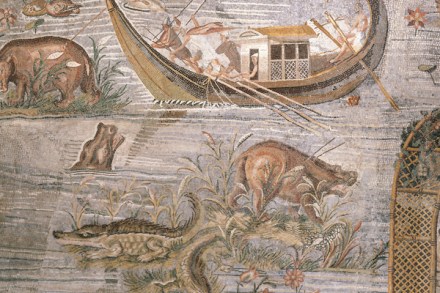
When Bernini designed his fountain of the four rivers for the Piazza Navona in Rome in 1651 he draped the head of the god of the Nile with a loose piece of cloth, to denote the fact that its source remained unknown. Tracing the sources of both the Blue and the White Nile would become one of the most heated and consuming of all Victorian quests and the adventures and tribulations of the men — Petherick, Stanley, Baker, Bruce, Burton, Speke — and one woman, Baker’s Hungarian slave wife, Florenz, have provided rich material for many generations of writers.

Thinly veiled threats

From our UK edition

No one could ever accuse Shereen El Feki of lacking in courage. To spend five years travelling around the Arab world in search of dildos, questioning women about foreplay and anal sex, is not a task many writers would relish. Sex and the Citadel is a bold, meticulously researched mini Kinsey Report, rich in anecdote and statistics. El Feki’s father is Egyptian and a devout Muslim, her mother a Welsh Baptist, who converted early to Islam. An only child, with fair northern features, she grew up in Canada and was raised as a Muslim.

Apocalypse now | 10 January 2013

From our UK edition

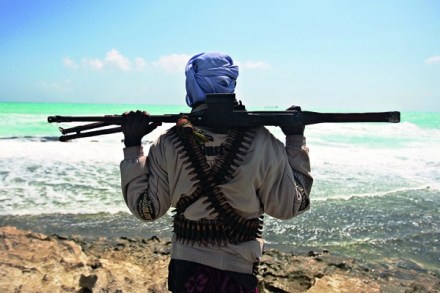
In his introduction, James Fergusson apologises for the title of his book. Somalia, he writes, may no longer be the most dangerous place on earth. Since the summer of 2012, a newly elected government under a former university professor who once worked for the UN is bringing stability to the country, exiled Somalis are going home, Mogadishu is being rebuilt and the pirate menace, if not exactly under control, is being contained. It may be so. But the country Fergusson describes is the stuff of nightmares. In 1960, the former British protectorate and Italian colony united to become an independent Somali republic, under a civilian government.

Occupation Diaries, by Raja Shehadeh

From our UK edition

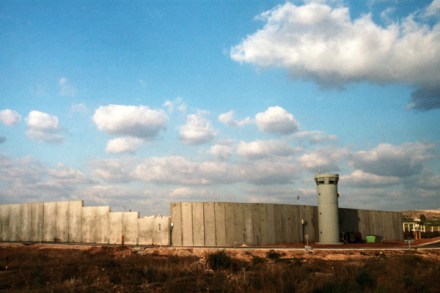
A group of friends, Palestinian and foreign, go to picnic at a wadi between Jerusalem and Jericho. They are wearing bright, casual summer clothes. On a nearby rock sits another party of picnickers, only they are dressed in veils, long skirts and black coats. For a while no one says anything. Then, suddenly, over a gesture of defiance, a row erupts between these secular liberals and the devout Islamicists. Once upon a time, writes Raja Shehadeh in Occupation Diaries, the two groups would have exchanged friendly greetings. Today there is only suspicion and antagonism; the people of Palestine, who not so long ago lived peacefully together, are now driven apart by deep rifts.

From Austria to Australia

From our UK edition

Moriz Gallia from Moravia and Hermine Hamburger from Silesia met and married in Vienna in 1893, when the city was the third largest European capital after London and Paris. They were rich, from making and supplying gas mantles, and they were generous patrons of Vienna’s exceptionally lively artistic world. When their two daughters, Gretl and Käthe, fled to Australia after Kristallnacht, they took with them the finest collection of central European pictures, furniture, silver, glass, jewellery and porcelain to escape the Nazi looters.

Lest we forget | 17 March 2012

From our UK edition

It was not possible, as Primo Levi memorably wrote, to convey the full horror of the Nazi extermination camps because no one had survived to describe death in the gas chambers. There were no ‘sommersi’ (drowned) left alive to speak for the men, women and children driven in naked to die.  Apart from Levi himself, one of the very few people to have got close is Claude Lanzmann, whose nine-and-a-half-hour film on the deaths camps, Shoah, transformed the way successive postwar generations have come to remember and perceive the Nazi killings. In his autobiography, The Patagonian Hare, Lanzmann provides much interesting material on the 13 years spent filming and editing, and on the life that first led him to Israel in the 1950s.

Good companions

From our UK edition

‘Choose your companions’, says an early Arab proverb, ‘thereafter your road.’ In the 1970s, Hugh Leach’s companion on his travels to Northern Yemen was Freya Stark, and she has become his companion again, in this affectionate hommage of photographs and short, scholarly texts. ‘Choose your companions’, says an early Arab proverb, ‘thereafter your road.’ In the 1970s, Hugh Leach’s companion on his travels to Northern Yemen was Freya Stark, and she has become his companion again, in this affectionate hommage of photographs and short, scholarly texts.

Days of wine and shrapnel

From our UK edition

Virginia Cowles was a 27-year-old American journalist working for the Hearst newspapers when she went to Spain for the first time. It was March 1937; the battle of Guadalajara had just brought a victory to the Republicans and besieged Madrid was an exciting place to be. Up till then, Cowles had reported mainly on events of a ‘peaceful nature’. Spain would turn her into a war reporter. Arriving at the Hotel Florida with her suitcase and typewriter, an elegant, resourceful young woman with a high forehead and dark brown hair, she was soon part of the gang of foreigners cheering the Republicans on. There was the bulky Tom Delmer from the Daily Express, in whose room she ate sardines and crackers and listened to Beethoven’s Fifth Symphony.

Stemming the human tide

From our UK edition

Long before the Allies landed in Normandy in June 1944 and began their advance across France, preparations were underway for what to do about the civilians who had been displaced by the German occupiers. What everyone feared was a repeat of the chaos that followed the first world war, when refugees and returning prisoners of war brought with them typhus and a flu epidemic which, by the time it had spent itself, had killed more people than all the casualties of the war itself. What no one had envisaged, however, was either the number of displaced people adrift across Europe, nor the state that they would be in. And, as the Allies advanced, causing more destruction, so the numbers and the confusion grew.

Light thoughts in a dark time

From our UK edition

Ruth Maier’s Diary, edited by Jan Erik Vold, translated by Jamie Bulloch ‘Why shouldn’t we suffer when there is so much suffering?’ wrote Ruth Maier to her friend the Norwegian poet Gunvor Hofmo in a letter smuggled from the ship deporting her from Oslo to Auschwitz in the autumn of 1942. Ruth was then 21, a thoughtful, talented young woman just beginning to make her mark with her poems and water-colours. She had a thin, lively face and had started to model for an artist. Ruth left behind her with Hofmo over 1,100 pages of diary. In the late 1990s, a Norwegian editor, Jan Erik Vold, visited Ruth’s sister, who had taken refuge in Britain in 1939, and gathered together the many letters written by Ruth from Norway.

Poule de luxe

From our UK edition

‘Pauline was as beautiful as it was possible to be’, the Austrian statesman Metternich once observed. ‘Pauline was as beautiful as it was possible to be’, the Austrian statesman Metternich once observed. ‘She was in love with herself alone, and her sole occupation was pleasure’. Metternich was not quite fair. Pauline, as sculpted in Canova’s famous statue of the barely clad reclining princess, was indeed extremely beautiful. But along with her undisputed love of herself, she was also devoted to her brother Napoleon, delighting in his victories, and fretting over his defeats.

Time out in Tuscany

From our UK edition

In the spring of 2006, Rachel Cusk and her husband decided to take their two small daughters out of school and spend three months, a season, exploring Italy. She felt too settled, too comfortable, and if her friends wondered at what seemed like a curse of restlessness, what frightened her more was the opposite, ‘knowing something in its entirety’, and coming to the end of that knowing. ‘Go we must’, she decided, and ‘go we would’. Italy which had so pleased D. H. Lawrence, one of the writers and travellers she returns to on her journey — Italy, said Lawrence, was tender ‘like cooked macaroni — yards and yards of soft tenderness, ravelled round everything’ — seemed to offer the perfect mix of art and history.

The yellow star of courage

From our UK edition

Journal, by Hélène Berr, translated from the French by David Bellos ‘What must be rescued,’ wrote Hélène Berr in her diary on 27 October 1943, ‘is the soul and the memory it contains.’ The need to see and understand and later to remember is the theme that runs through Berr’s remarkable diary of Jewish persecution in German-occupied Paris in the second world war. There were, she believed, two kinds of people in the world: those who recognised what was happening to the Jews, and who felt with them, and those who either could or would not see. And in the first and ‘preferred’ group were to be found surprisingly few friends, but a great many ‘ordinary people’.

A war of words

From our UK edition

Resistance: Memoirs of Occupied France, by Agnès Humbert Paradoxically, wrote Jean Paul Sartre, never had French intellectuals been so free as they were under the German occupation, for having lost all normal rights to speak out, each was forced to question every thought and ask himself: ‘Rather than death...?’ In practice, most of the writers and academics who remained in France after 1940 simply kept their heads down and went on with their own work. Sartre himself had several of his plays staged. There was, however, a number of these men and women for whom collaboration of any kind was immediately intolerable. One of these was a 46-year-old art historian and ethnographer, divorced mother of two adult sons, called Agnès Humbert.

Of zyzzyva and syzygy

From our UK edition

Letterati: An Unauthorised Look at Scrabble and the People Who Play it, by Paul McCarthy Make no mistake: Scrabble is a brutal game. Given a chance to foil an opponent, the dearest friend will turn sly and dogmatic. No surprise then to discover that in North America Scrabble is a cut-throat business, in which computer-generated word-lists, strategy and money have come to dominate the game. For Paul McCarthy, whose account of the North American circuit, Letterati, is a celebration of professional Scrabble, the ‘parlour players’ (sometimes known as ‘kitchen-table players’) who spend lazy Sunday afternoons munching snacks and debating the spelling of arcane words are just so many dinosaurs.

A futile solution

From our UK edition

In 1939, the six-year-old Eva Figes escaped Nazi Berlin for London. Her family were secular Jews and her father, who had been arrested after Kristallnacht, had spent some months in Dachau. Left behind were grandparents and two maids, Edith and Schwester Eva, both Jewish: by 1939, it was forbidden for Jews to employ Aryans. Schwester Eva died of typhus in a concentration camp, but Edith turned up in London 10 years later. It is her story that Eva Figes tells in Journey to Nowhere. The by now adolescent Figes did not learn it all at once. But over cups of tea in their kitchen in Hendon, having seen the newsreels of the liberation of Belsen, she slowly drew it out.

Less mighty than the sword

From our UK edition

Caroline Moorehead on Daoud Hari's memoir of Darfur When Daoud Hari was a boy, the villages of northern Darfur were peaceful places. He had a camel called Kelgi, to which he was much attached, and a vast clan of Zaghawa traditional tribal herdsmen as cousins. Sent away to school in El Fasher, he developed a taste for Charlotte Brontë and Charles Dickens and as a young man he left home to travel in Chad and Libya. It is what he saw when he returned that forms the heart of his remarkable memoir, The Translator. It was 2003. Crossing back into Darfur from Chad, he found the border full of frantic people, fleeing the violence that had broken out between rebel groups and the Sudanese army, helped by the Janjaweed raiders they support.

Putting the jackboot in

From our UK edition

He who holds Rome, Churchill told Roosevelt and Stalin in November 1943, ‘holds the title deeds to Italy’. Two months earlier, immediately after the armistice and the surrender of the Italian forces, the main Allied invasion force had landed at Salerno, just south of Naples, and were now fighting their way north. It was, as James Holland writes, a long and bloody campaign and it would cause immense suffering, to the Allies, to the Germans, and to the hundreds of thousands of Italians caught between the two armies. Italy’s Sorrow: A Year of War, 1944-45, opens soon after a partisan attack on a group of German soldiers in Rome resulted in the reprisal massacre of 335 Italians, most of them civilians, in the Ardeatine caves.

Lost and found

From our UK edition

When Starbucks in the United States decided to promote Ishmael Beah’s memoir of life as a boy soldier in Sierra Leone it seemed to many a surprising choice. A Long Way Gone, with its descriptions of atrocities and terror, is a far cry from the daily travails of footballers’ wives and celebratory chefs. But stories of boy soldiers, casualties of the civil wars endemic across parts of Africa and Asia, have, in recent years, become a growing branch of disaster literature, alongside memoirs of the Holocaust in occupied Europe, the great famine in China, the killing fields of Cambodia, and the contemporary tales of loss and abuse in Western life. Savagery and trauma are now popular reading. Ishmael Beah writes simply and well.