Brigid Keenan

Brigid Keenan is a former fashion editor for the Sunday Times and woman’s editor for the Observer.

What happened to Jonathan Aitken’s young meteors?

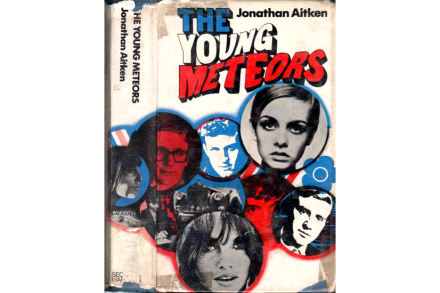
I am not bragging when I say that 56 years ago I was a young meteor. No: it is official. In 1967, Jonathan Aitken, then a young journalist on the Evening Standard (his uncle, Lord Beaverbrook, owned it at the time) wrote a book about the upcoming young movers and shakers in London – the stars of the Sixties (to mix celestial bodies). The Young Meteors it was called, and I was one of them.  At that time, I was 27 years old and the fashion editor of the Sunday Times and Aitken put me in as one of the three powerful influencers in that world. (The others were Marit Allen of Vogue and Georgina Howell of the Observer – both dead now, sadly.
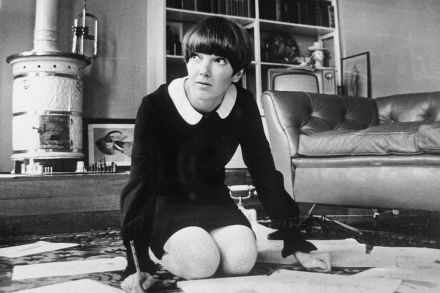
Mary Quant 1930–2023

The fashion designer and icon Mary Quant has died at the age of 93. Brigid Keenan wrote the following piece in 2019. It is almost impossible to explain to today’s readers why Mary Quant (and the other Young Designers, as they became known) had such a huge impact. Over the half-century since, there have been so many ‘new’ ideas in fashion that her and their initial shock value has been diluted. Luckily, though, the Christian Dior exhibition is also showing at the V&A, and a quick visit there — look particularly at the fashions of the 1950s — will give you a clue. Pre-Quant, clothes were constricted: fussy, fitted, buttoned, cuffed, boned. They demanded a lot of the wearer. Mary’s were unstructured and she took her inspiration from surprising places.

The style and substance of Michael Roberts

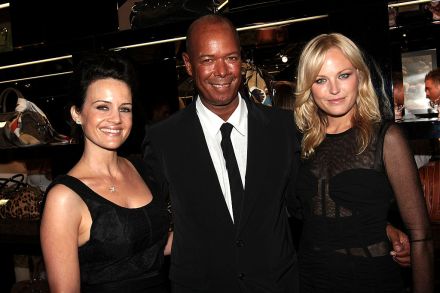
Almost 50 years ago, I was fashion editor of the Sunday Times and a man in his mid-twenties by the name of Michael Roberts was a junior editor. Born in Buckinghamshire in 1947 to an English mother and a father from St Lucia, he was handsome and stood very tall and straight. Even so, when he was named the world’s most elegantly dressed man under 30 at the International Male Elegance Awards, I was baffled. His habitual garment was a second-hand tweed coat done up with a piece of string… how could this be? But it wasn’t long before his creative genius became obvious – to me and to the rest of the world.

The funny truth about life as a diplomat’s wife

In the early 2000s my husband, a diplomat for the EU, was posted to Kazakhstan, a vast empty steppeland next to Siberia. It was winter and the place was covered with thick snow. My family were in England, my husband was mostly in the office; I was 61 and I didn’t know a soul. Our previous posting had been to Damascus and I had occupied myself by writing a book about the old palaces there, but here there were no old buildings as the Kazakhs had been nomads. I had nothing to do. Everyone spoke Russian – I didn’t. As my husband was a senior diplomat we qualified for a cook, but she and I could only communicate using animal noises: chicken was cluck-cluck, beef was moo and lamb was baa. The main foods available seemed to be cabbage, onion and potatoes.

Europe’s panic: what’s behind their vaccine meltdown?

39 min listen

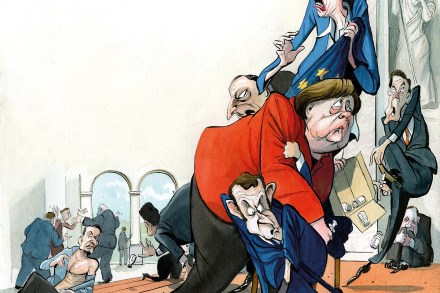
As the EU threatens a vaccine export ban, is their blind panic a sign of incoming crisis? (1:15) Plus, will a new Instagram account for teenage girls to report sexual assault restart a battle of the sexes? (18:05) And finally, what is it like to be one of the last British babies born under the Raj? (28:30)With Labour peer Andrew Adonis; Spectator contributors Matthew Lynn, Julie Bindel, Melanie McDonagh and Brigid Keenan; and historian Alex von Tunzelmann.Presented by Lara Prendergast.Produced by Cindy Yu, Max Jeffery and Sam Russell.

The lifelong effects of being a child in the British Raj

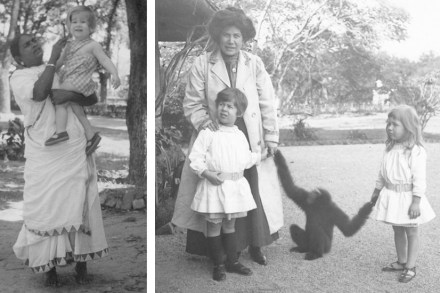
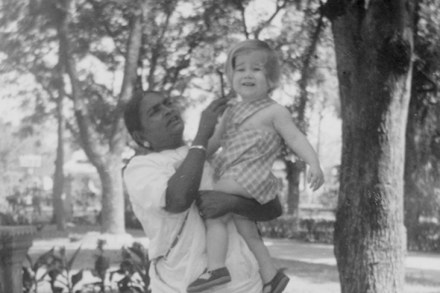
I belong to a dying breed. Well, not a breed exactly, but a dwindling number who witnessed a world and a way of life that will never be repeated: we are the last babies of the British Raj. In my view the doyen of our group was the writer Charles Allen whose many books, starting with Plain Tales from the Raj, are almost all about the India he left at eight years old. He and I were on the same ship coming ‘home’ in 1948: the SS Franconia. So were more than a thousand other British men, woman and children, from typists and missionaries to engineers and soldiers, sailing away from India for the last time, leaving behind the graves of perhaps two million other Brits. Allen died last year aged 80.

How Nova revolutionised women’s magazines

Batsford has just brought out a huge tome on Nova — ‘one of the most influential magazines in history’ — compiled by two of the magazine’s star art directors, David Hillman and Harri Peccinotti. It covers the ten years that the magazine existed, 1965 to 1975, and focuses on the brilliant and groundbreaking layouts it introduced. But somehow it is not quite the Nova that I loved when I went to work there as assistant editor in 1967. For me, Nova was its editor, Dennis Hackett, who had been brought in to save the failing magazine soon after its launch. I don’t know what genius first thought of putting a tough Yorkshire newspaperman in charge of a women’s magazine but he had already made a name for himself on trendy Queen.

There’s something about Mary

I think I probably qualify as the oldest fashion editor in the world, because in spite of my advanced age I am still writing about clothes (in the Oldie). This gives me one USP: it means that I was actually around — even wearing them myself — when the revolutionary fashion ideas that are now the stuff of museum exhibitions were being invented. Next month the Mary Quant exhibition opens at the V&A, and sure enough I have been asked to talk about those giddy times for a video that will be shown at the museum. I was 16 in the autumn of 1955 when Quant’s shop, Bazaar, first shocked the passers-by in the King’s Road, Chelsea, with its startling window displays. One of these featured a black-and-white gingham skirt.

A stroke in Sri Lanka

This time last year, it seemed that life couldn’t get much better for me: I had a new book out to appreciative reviews, had just returned from a literary festival in Mumbai and was en route to a few more, in Galle, Jaipur and Lahore. The Galle festival is small and cosy — a little paradise of sun and sea and authors and books — and I loved my first event, with the lively Sri Lankan writer Ashok Ferrey. Afterwards, signing books, I had a bad headache but I took a paracetamol and tried to ignore it. That night, there was a big dinner organised by Geoffrey Dobbs, the man who started the festival (and who owns several of Sri Lanka’s nicest hotels).

Passage from India

It is not fashionable to feel sympathy for the men and women who lived and served in the British colonies and who had to leave when independence came, whether it was from Kenya, Ghana — or from India, which celebrated the 70th anniversary of its freedom earlier this month. But I do, because I remember the pain and the loss and the homesickness of leaving India — a feeling which has niggled away somewhere deep down all my life. The Indian writer Shrabani Basu (the film based on her book Victoria & Abdul comes out next month) is no friend of the Raj, but she read my recent memoir and said: ‘It must have been particularly painful for the children, as India was the only home they knew.’ Exactly.