Brendan O’Neill

Brendan O’Neill

Brendan O’Neill is Spiked's chief politics writer. His new book, After the Pogrom: 7 October, Israel and the Crisis of Civilisation, is out now.

There’s nothing sweet about Boris Johnson’s sugar tax

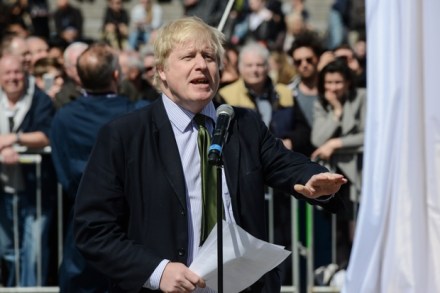
That’s it. The nanny state has won. The nudgers and naggers are victorious. The buzzkilling, behaviour-policing new elite that sees smoking as sinful, boozing as lethal and being podgy as immoral has conquered the political sphere. Its miserabilist writ now extends even into a political zone where once it held no sway: Boris Johnson’s brain. Yes, the once nanny-slating mind that lurks beneath that world-famous mop of self-consciously untidy blonde hair has sadly succumbed to the instinct to harangue people for being fat and having fun. Yesterday Boris announced that he is introducing a sugar tax at City Hall, hiking up the price of all sugar-added soft drinks by 10p in an attempt to wean City Hall workers off the evil, fat-making fizzy stuff.

David Bowie’s dignified death is a reminder of the sanctity of private life

Everyone is paying tribute to David Bowie’s musical feats, as well they should. Seldom, if ever, has one man made such a massive, beautiful dent on pop music and pop consciousness. A gender-bending, genre-hopping genius, deserving of all the accolades coming his way today. But I want to pay tribute to another of Bowie’s feats, which strikes me as quite extraordinary: the fact that he kept his cancer private, or ‘secret’, as the press insists, for 18 months. This, more than anything, has blown me away today. In this era of too much information, when over-sharing is virtually mandatory, Bowie’s decision to suffer away from the limelight, among those closest to him, appears almost as a Herculean achievement.

I hate to break it to feminists, but ‘white male privilege’ is a myth

How’s this for dark irony: throughout 2015, ‘white male privilege’ was the buzzphrase on every rad tweeter and liberal hack’s lips, as they fumed against the easy, pampered lives allegedly enjoyed by human beings who had the fortune to be born with a penis and pale skin. Railing against ‘white men’ and their cushy existences has become the stock-in-trade of many feminists. Yet towards the end of 2015 it was revealed that there’s a social group in Britain more derided and less successful than pretty much every other social group. Guess who? Yep, young white men. Especially young working-class white men.

Free speech is so last century. Today’s undergraduates demand the ‘right to be comfortable’

At No 5 in the Spectator's most-read articles for 2015 is Brendan O'Neill's cover piece describing 'Stepford Students': those who want to shut down debate when it involves people they disagree with and arguments they don't like. Brendan spotted this phenomenon in 2014 but his article returned to our best-read list this year as more and more people cottoned on to the trend for 'safe spaces' and no-platforming in our universities. And it spawned a website edited by defiant Stepford Students. Have you met the Stepford students? They’re everywhere. On campuses across the land. Sitting stony-eyed in lecture halls or surreptitiously policing beer-fuelled banter in the uni bar. They look like students, dress like students, smell like students.

Oliver Letwin’s ‘racist’ memo proves two things: politics change and people change

What Oliver Letwin wrote in that 1985 memo to Thatcher was ugly. But you know what is also ugly? The forced extraction of an apology from Letwin for the things he thought and said three decades ago, when the political world was a very different place. The attempt to drag Letwin’s name into the gutter for a memo he wrote in another era, when thinking on race and society was often a million miles from what it is today, has a nasty, mob-like, fatalistic feel to it. As Letwin himself now says, his memo was wrong. He was wrong to write off the rioting in Broadwater Farm as simply a matter of ‘bad moral attitudes’, and to suggest that encouraging black entrepreneurship would inflame the ‘disco and drug trade’.

Revolutionaries? Podemos belong to the ivory tower, not to the masses

If you hear any of your friends refer to the rise of Podemos in Spain as a revolution, please buy them a dictionary for Christmas. For far from representing the sweeping aside of the political establishment by a new, angry class in society — which is what a revolution is — the success of Podemos speaks to the emergence of simply a different kind of political elite. Let’s call them politico-academics, former inhabitants of the ivory tower, who are armed with PhDs rather than cudgels, and who are more likely to install a Dictatorship of the Professors than a Dictatorship of the Proletariat. This isn’t to distract from the enormity of what has happened.

10 reasons why Corbyn’s critics are the worst people in British politics right now

This has been a difficult year for me. For I have been compelled to break a pact I made with myself when I was 18 years old and do something I promised I would never do, something which goes against every cell and fibre of my being. I’ve defended a leader of the Labour Party. I can’t tell you how alien this feels. Imagine if Princess Diana had become press officer for a landmines factory, or if the Pope started moonlighting for Marie Stopes. Now you know how it feels for me to say vaguely nice things about Labour, a party whose paternalism, illiberalism, killjoyism and cretinism have been rubbing me up the wrong way since I was a Trotsky-admiring teen. But it has to be done.

The sacred mother-baby bond is being eroded by an overzealous state

These figures should send a chill down the spine of anyone who values basic human dignity: in England in 2013, 2,018 newborn babies were taken from their mothers and put into the care of the state. This represents a huge hike from five years earlier, in 2008, when 802 newborns were taken into care. To put it another way: in 2008, 0.1 percent of newborns were taken into the care system, while in 2013 it was 0.3 percent. What’s going on? Education secretary Nicky Moran says the figures, released today by researchers at Lancaster University, are ‘worrying’. She means it’s worrying that so many mums are so rubbish at parenting that their kids are being put at risk.

Hilary Benn’s speech was just a shallow historical re-enactment

What’s with the orgy of fawning over Hilary Benn’s Syria speech? It was eloquent, yes, but content-wise it reminded me of those historical re-enactment shebangs where sad men in their fifties try to inject meaning into their lives by pretending to be a Viking in a field for a couple of hours on a Saturday afternoon. Only instead of donning archaic armour and a horned helmet, Benn and his overnight Bennites - those currently clogging up Twitter with wild claims that his speech was the best oration since the Gettysburg Address - are wrapping themselves in the moral garb of the mid-20th century warriors against Nazi Germany.

Jeremy Corbyn isn’t destroying Labour: backstabbing is

First things first: there is no force in Heaven or on Earth that could induce me to vote for Jeremy Corbyn and his sad brand of sixth-former state socialism. In fact, as someone who believes in freedom and growth, the idea of ever giving my beloved ballot to the illiberal, eco-miserabilist Labour Party, regardless of who’s leading it, fills me with horror. Or is it mirth? It’s one or the other. And yet, despite my Corbynphobia, and my humane desire to see dying Labourism put out of its misery, I increasingly find myself shaking my head in something like fury at Corbyn’s Labour critics. They accuse him of destroying their party. Which is both chronologically and factually wrong.

It’s time to smash the whole welfare system

George Osborne’s Autumn Statement, with its backtracking on the slashing of tax credits, leaves a huge question hanging over 21st-century Britain: who has the cojones to do something about the destructive culture of welfarism? Anybody? It seems not. Both the supposedly small-state right and the apparently pro-work left have become bizarrely reluctant to address the spread of the autonomy-sapping welfare state into more people’s lives. Look, the tax credits thing is definitely complicated. It would have been dodgy to cut them without first putting meaningful pressure on business to pay people a proper wage.

This obsession with ‘cultural appropriation’ is leading us down a very dark path

Just when you thought uptight, fun-dodging, thought-policing millennials couldn’t get any worse, they go and brand yoga as racist. Apparently, when white people bend themselves bonkers while humming or thinking happy-clappy thoughts, they’re not only being self-punishing saps: they are also ‘culturally appropriating’ a practice that has ‘roots in Indian culture’. That’s according to student leaders at the University of Ottawa, who put pressure on a yoga teacher at the uni’s Centre for Students with Disabilities to call off her yoga classes. She was told ‘there are cultural issues of implication involved in the practice’.

Open letter to Narendra Modi: ask David Cameron to safeguard freedom of expression in Britain

Dear Prime Minister Narendra Modi, Re: Urging Action by Indian government to Safeguard Freedom of Expression in Great Britain As a writer committed to protecting and defending freedom of expression around the world, I am extremely concerned about the growing intolerance towards critical voices who challenge orthodoxy in Britain. As your three-day state visit to the United Kingdom kicks off, I am urging you to engage with Prime Minister David Cameron both publicly and privately on this crucial issue. Please speak out on the current state of freedom of expression in Britain, urging Mr Cameron to stay true to the spirit of the democratic freedoms enshrined in British history, from the Magna Carta to the Levellers to John Stuart Mill.

Why are student-union officials censoring criticism of Islamic State?

Just when you thought the self-important, ban-happy uber-bureaucrats who run student unions couldn't get any worse, they go and No Platform a guy who fought with the Kurds against Isis. Yes, not content with expunging lads’ mags from campus, crying for the censorship of everyone from Germaine Greer to Dapper Laughs, and wailing about Robin Thicke’s 'Blurred Lines' like outraged nuns at a school disco, now they have silenced someone who spent five months facing down the head-choppers of the Islamic State. Macer Gifford, a former student at University College London (UCL), was due to give a talk at UCL this week on his experiences with the YPG, the fighting units of Syrian Kurdistan who have valiantly stymied the spread of Isis.

Should people be free to make death threats? Sometimes, yes

The keyboard weirdos bombarding Labour MP Jess Phillips with threats, after she scoffed at the idea of marking International Men’s Day with a debate in parliament, are cretins of the highest order. Pathetically hiding behind made-up names and cartoon avatars, they harangue a politician for saying something they disagree with. Not by saying to her ‘I disagree with you,' but rather ‘I think you should be raped'. If you know one of them, please give them a clip round the lughole, and perhaps confiscate their gadgets. But should these morons be investigated by the authorities? I’m not so sure. Ms Phillips has reported some of her ugly maulers to the police. I think that could be a mistake.

Tony Blair doesn’t need to apologise for the Iraq war

I was against the Iraq War. And I’ve been against Tony Blair ever since I first clapped eyes on his moisturised, illiberal countenance, all teeth and no soul. (In 1996 I was standing on street corners selling a magazine that said ‘Tony Blearghh!’ on its cover, while every other lefty was hailing him a messiah come to save us from Toryism.) Yet I don’t like the obsession with making Blair repent and weep and whip himself for what happened in Iraq. It’s ugly, and even worse it’s wrong: Blair doesn’t bear sole responsibility for that war.

Germaine Greer can say whatever she likes about trans politics

If you want to know how crazy, even Kafkaesque, this young millennium has become, consider this: yesterday it was reported that a person with a penis — Caitlyn Jenner — will be named Glamour magazine's Woman of the Year, while over at Cardiff University a woman who has done more than most to secure the liberation of womankind — Germaine Greer — was denounced by a swarm of Stepford Students as ‘transphobic’, someone who should make all right-minded people feel ‘sick to [their] stomachs’. This is the world you live in, folks. One in which a bloke can be globally celebrated as an inspiring woman — and heaven help the brave soul who asks: ‘But is this strapping former athlete with testicles really a woman?

Graham Ovenden’s art is controversial, but its destruction is a scandal

So, it isn't only the hammer-wielding nutters of Isis who destroy 'immoral art'. So do we, in supposedly civilised Britain. A judge's order that the artworks of convicted child abuser Graham Ovenden be destroyed, on the basis that they do not reach our 'standards of propriety', is an act of medievalism to match any of the statue-smashing antics of the Islamic State in recent months. At Hammersmith Magistrates Court, District Judge Elizabeth Roscoe advertised her philistinism for all to see. She said she was not concerned with the 'historical importance or value' of Ovenden's works.

So what if Lou Reed was a monster?

Another week, another famous dead person having his grave danced on with gay abandon. This time it’s the late, great Lou Reed’s turn to have his reputation trashed by scandal-sniffing vultures. Less than two years after he died — at least they waited for him to rot, which is something I guess — a new book has been published claiming he was a ‘monster’. It is testament to the 21st century’s feverish obsession with hounding dead heroes and exposing their wicked streak that my first response upon hearing this was: ‘Of course he was a monster. Everyone is, right?’ According to the book — Notes from the Velvet Undergound, by Howard Sounes — Reed was ‘a very unpleasant man’.

When the press quivers before the powerful, no one benefits. Except, of course, the powerful

Imagine living in a country where a politician could not only force a newspaper to retract a report but could then make it publish an alternative report on its front page. That would be a bad place to live, right? It would be a place where the relationship between the press and politicians — where the former is supposed to keep in check the latter, not the other way round — had been twisted beyond repair. It would be a country in which pressmen and women would be always on edge, fearful that if they were too stinging or scurrilous about a political player then they, too, might be forced into a humiliating climbdown. And no one benefits when the press quivers before the powerful. Except, of course, the powerful.