Bradley A. Thayer and Lianchao Han

Bradley A. Thayer is a professor of political science at the University of Texas San Antonio and the co-author of How China Sees the World: Han-Centrism and the Balance of Power in International Politics. Lianchao Han is the vice president of Citizen Power Initiatives for China. After the Tiananmen Square Massacre in 1989, Dr Han was one of the founders of the Independent Federation of Chinese Students and Scholars. He worked in the US Senate for 12 years, as legislative counsel and policy director for three senators.

Xi’s dictatorship is a tragedy, not a farce

From our US edition

A successful dictator has to have ruthlessness, control, influence and competence. So how does China’s leader, Xi Jinping, rate as a dictator? Xi has been in power since 2012 and thus has enough of a track record to judge.On ruthlessness, he ranks highly. The concentration camps he has created for China’s Muslim minority in Xinjiang and the suppression of the movement in Hong Kong — in violation of the 1984 agreement with the UK — are the most tangible examples. The November 2019 leak of the 'Xinjiang Papers', more than 400 pages of internal Chinese documents, to The New York Times provided an unprecedented documentation of the origins and implementation of crackdown against Muslims of Xinjiang.
xi

Michael Bloomberg’s Chinese appeasement

From our US edition

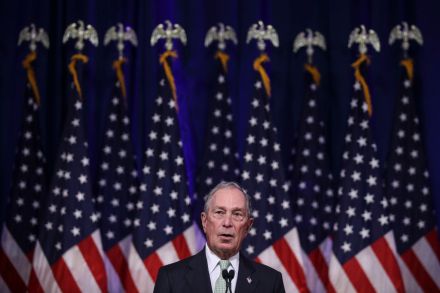
Michael Bloomberg’s entry into the race for the Democratic nomination for president has been underwhelming so far. As the race tightens, one of myriad problems for the candidate will be his close ties to the major national security threat posed by the US’s strategic rival — China under the leadership of the Chinese Communist party (CCP).Bloomberg panders to the CCP and to its leader, Xi Jinping, recently labeling him 'not a dictator' but rather just a politician, like any other duly elected leader, who has to satisfy his constituents. When challenged, Bloomberg stressed the point, saying 'no government survives without the will of the majority of its people, OK?' Xi, like all leaders, 'has to deliver services'.

michael bloomberg

Trump must act on Hong Kong before it’s too late

From our US edition

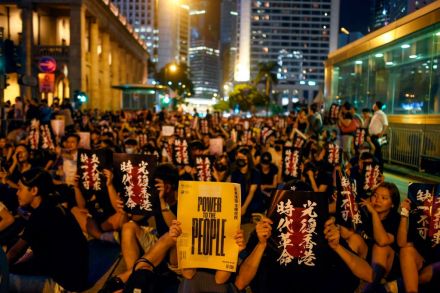
The central question regarding the Hong Kong protests is not whether a crackdown is imminent — it’s already happening — but its final form. After more than 60 days of unrest in Hong Kong, Chinese leader Xi Jinping seeks to bring the city under control as quickly as possible, and without using the military. Rather than repeat the 1989 Tiananmen Square Massacre, Xi wants the repression to occur through aggressive law enforcement and severe punishment, while not yielding an inch to the protesters’ demands. Chinese state propaganda has ominously escalated its rhetoric. The protests are now labeled a ‘color revolution’, and their violence as ‘terrorism'.

hong kong

America should view China as a hostile, revolutionary power

From our US edition

Much has been made of the return of great power competition. In truth, it never went away, although the great game was so one-sided for a time that almost everyone in the West tuned out, assuming the match was over in perpetuity. It was too boring to contemplate and so attention drifted to other concerns and second- and third-order problems. China’s attention did not deviate, and once again it is a great power. Like cholesterol, great powers can be good, in that they accept the present international order, or bad, in that they do not. China does not, and seeks to overturn the contemporary order the West created.  This is the source of what is already the great conflict of 21st century. China is not a status quo great power.

xi jinping power

Our real problem with China: Xi Jinping

From our US edition

At the last minute the Chinese Communist Party chief Xi Jinping vetoed the trade deal with the United States, after his representatives had negotiated and agreed to it. Xi claimed that he will take the responsibility for ‘all possible consequences.’ This left President Trump no choice but to impose higher tariffs on some Chinese imports. This battle over trade marks only the early rounds of the US struggle with China. China’s economic success was achieved in large measure by taking advantage of the working people of both China and the US. It was made possible because the US allowed it to enter the world’s free trade system. Because China entered the West’s economic ecosystem a generation ago, it has flourished.

xi jinping