Bevis Hillier

Spectator books of the year: Bevis Hillier on the closest thing to a British War and Peace

Though artfully plotted and well written, some of Rachel Billington’s early novels, starting with All Things Nice in 1969, had a tinge of Mills & Boon. Reviewing one of them, Auberon Waugh wrote: ‘The hero is described as “smooth and pink”. Good: I hate green, prickly heroes.’ By the time she wrote A Woman’s Age (1979) — a novel covering roughly the same lifespan as that of her mother, Elizabeth Longford — Billington had matured into about the same standing as Elizabeth Jane Howard. Though Howard’s Cazalet chronicles are pleasurable to read and laced with intellect and wit, she is not in the same class of acclaimed ‘literary novelist’ as, say, Colette or Iris Murdoch.
Going for a Song, by Bevis Hillier – extract

  On the Bust of Helen by Canova In this beloved marble view, Above the works and thought of man What nature could and would not, do, And beauty and Canova can! Beyond imagination’s power Beyond the Bard’s defeated art, With immortality her dower Behold the Helen of the heart! — George Gordon, Lord Byron (1788–1824) Precious Stones My Cherrystones! I prize them, No tongue can tell how much! Each lady caller eyes them, And madly longs to touch! At eve I lift them down, I look Upon them, and I cry; Recalling how my Prince ‘partook’ (Sweet word) of cherry pie! — Charles Stuart Calverly (1831–84) A Glass Collection Today I had a big surprise Uncle left me eight glass eyes.

A book on Art Deco that’s a work of art in itself — but where’s the Savoy, Claridge’s and the Oxo Tower? 

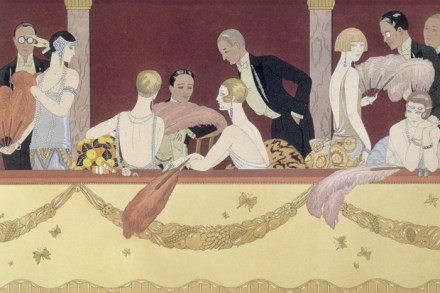
Over the past 45 years, there have been two distinct and divergent approaches to Art Deco. One of them — which was mine when I wrote the first little book on the subject in 1968 — was to treat the subject as a sociological, as well as artistic, phenomenon. As I wrote then, it was ‘the last of the total styles’, affecting almost everything, from letter-boxes and powder compacts to luxury liners and hotels. With that approach, one shows the dross as well as the gold, and asks such questions as ‘Why did the style become so universal?’ ‘How far did it succeed (with mass production) in coming to terms with the machine age’?

Self-portrait as a Young Man, by Roy Strong — review

Eventually, all of Sir Roy Strong’s voluminous personal archive is going — like Alan Bennett’s — to the Bodleian Library in Oxford. Riffling through it, he realised there was something missing: he had not adequately covered the years between 1935, when he was born, and 1967, when he became director of the National Portrait Gallery — as the Daily Mail put it in 1969, ‘Britain’s most improbable civil servant’. He has written this book to remedy the omission. That it is published by the Bodleian is yet another feather in Strong’s fedora. If you were in the anti-Strong faction (I am not, but it does exist), you might summarise the rite of passage chronicled in the book as ‘from geek to freak’.

The ‘ism’ that ruined the West

In 1974, as editor of the Connoisseur magazine, I ran an ‘1874’ issue to mark the centenary of Winston Churchill’s birth, to which John Betjeman, Asa Briggs and Lady Spencer-Churchill all contributed. So I know the virtues of selecting a single year and ‘sinking a shaft into history’. Effective use has often been made of this genre. Robert Lacey and Danny Danziger wrote the bestseller The Year 1000. James Shapiro chronicled a year in Shakespeare’s life, 1599. Thomas Pakenham wrote on 1798: The Year of Liberty (the story of the Irish rebellion). In her nineties, Rebecca West produced a volume on the year 1900, which she had the advantage of remembering as a young Victorian.

Clay pride

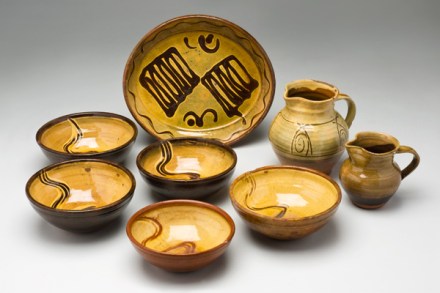
What a superb potter Michael Cardew was. What a fascinating, complex man. And what a lovely book this is. Next to Bernard Leach, who as the seventh Kenzan (that is, seventh in line of pupillage to the 17th-century Japanese artist Kenzan I) had something of the status of an English pope in the world of studio pottery, Cardew is considered by many to be the greatest potter of the 20th century. Others might make claims for William Staite Murray, Hans Coper, Lucie Rie or Edmund de Waal, who visited Cardew just before the master’s death in 1983 and was described in his diary as ‘a very good young man’. Cardew was born of upper-middle-class stock in 1901 — just late enough to avoid being slaughtered in the Great War.

… the bad, and the ugly

At Oxford in 1960, I had history tutorials from Alan Bennett. Just before he shot to stardom in the revue Beyond the Fringe, he was writing a thesis on the retinue of Richard II. Another of his pupils was David Bindman, later a professor of art history at London University. I was collecting pottery and Bindman already had an impressive collection of drawings. In his book Untold Stories (2005), Bennett wrote: David Bindman would show me Old Master drawings he had picked up for a song, and Bevis Hillier would fetch along ceramics. I knew little of either and could neither confirm nor deny the confident attributions both boys put forward. But they taught me a more useful lesson than I ever taught them, namely that my own taste was for surfaces.

Architectural bonsai

In the summer of 1961 I was in my second year at Magdalen College, Oxford with rooms in the 18th-century New Buildings. One of my neighbours there was a quiet man called Jonathan Green-Armytage. Sitting out on the steps of the building’s colonnade, in the sun, we became friends. He was already a distinguished photographer. He showed me photographs he had taken of Edith Sitwell, with her medieval face and gnarled, beringed fingers. They were at least as good as Cecil Beaton’s portraits of the old poet. One day, Jonathan said to me: ‘I think you’d enjoy to meet my god-mother, Vivien Greene; and I think she’d like to meet you.

Wearing well

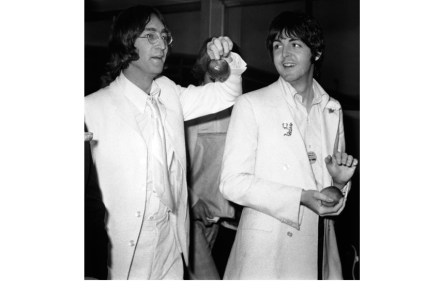
Born in the same year as John Lennon (1940), I was a sucker for the Beatles from the start. They were the accompaniment of my youth, love’s obbligato. I liked their music because it replaced the raw animality of rock ‘n’ roll with sophisticated melody. I think Schubert would have been proud to have composed ‘Yesterday’ or ‘Hey Jude’. Also, unlike most of the rock ‘n’ roll hunks, the Beatles were skinny. So was I — grievously thin — and it was a relief that we skeletons could now come out of the cupboard. In the early photographs of the Fab Four, wearing the monkey-suits their manager Brian Epstein insisted on, they look quite tame; but their hair was already long enough to outrage rednecks.

Art Books: A sumptuous tour

In 1930 Evelyn Waugh, already at 27 a famous novelist, spent two days in Barcelona. He came upon one of the art nouveau houses designed by Antonio Gaudí, who had died four years earlier. Waugh was captivated by the swooshing ‘whiplash’ lines of the building. He hired a taxi and asked the driver to take him to any other buildings in the same style. So he saw a number of Gaudí’s fantastical creations, including his church (often mistakenly called a cathedral), La Sagrada Familia. It took an extra-ordinary leap of taste for Waugh to admire this flamboyant architecture at the height of the Modern Movement, with its insistence on ‘clean lines’ and ‘form follows function’.

Stranger than fiction

Asked to review this book, which I was told was about encounters between unlikely pairs of people, I assumed it would be on the lines of Walter Savage Landor’s Imaginary Conversations. Craig Brown is our premier parodist, the best since the incomparable Max. Might his chatting twosomes include Cleopatra and Janet Street-Porter? The Marquis de Sade and Mary Whitehouse? No one could do that better, I thought; and by the end of it I’d be writhing on the Axminster, to borrow a phrase from the late Alan Coren. I couldn’t wait to split my sides. I was quite wrong. To my surprise, the book describes real encounters. Truth being stranger than fiction, many of them are every bit as bizarre as anything Brown could have invented, and some are as funny.

1951 and all that

The author of this book and I both visited the 1951 Festival of Britain on London’s South Bank as schoolboys. The author of this book and I both visited the 1951 Festival of Britain on London’s South Bank as schoolboys. He was 13, I was 11. We were both old enough to remember the war. We were both enduring the post-war austerity. Much was still rationed. Everywhere there were bombsites. From his generally commendable account, I know we both had a similar reaction to the Dome of Discovery, the Skylon and all the other attractions: there was a sense of renewal, lightness, colour, modernity and excess, in contrast to the drabness and penny-pinching we were used to.

The Midas touch

Now that we can read on Kindle and some people fear that paper-and-ink books will become extinct, one’s first impulse might be to say hurrah for this mighty production. Now that we can read on Kindle and some people fear that paper-and-ink books will become extinct, one’s first impulse might be to say hurrah for this mighty production. But then doubts creep in: isn’t it a bit OTT? It is by far the largest book I have ever reviewed, or indeed handled. A monster of a book, a juggernaut, a Leviathan. And it has a whopping price to match: 400 smackers. I had the sneaking thought: do the publishers, Reel Art Press, really (or reely) expect to sell the limited edition of 1,500 for a total of £600,000?

Exotica, erotica, esoterica . . .

The humorist Paul Jennings suggested that book reviewers could be divided into five vowel-coded groups: batchers, betjers (‘Betjer I could have written this better than him/her’), bitchers, botchers and butchers. In this review of the year’s art books, I am primarily a batcher — dealing with several books at one go. But from time to time I shall take leave to be a bitcher, though not, I hope, a botcher or butcher. Two books stand out from the batch as absolute stars. Both are published by Prestel, a Munich-based publisher with tentacles in Berlin, London and New York. I am afraid either of the books will cost you £80, but they are value for money.

Oh Brother, where art thou?

Benjamin Franklin had this ambition for his body: that after his death it should be reissued ‘in a new and more beautiful edition, corrected and amended by the author’. Benjamin Franklin had this ambition for his body: that after his death it should be reissued ‘in a new and more beautiful edition, corrected and amended by the author’. That is roughly what has happened with The Buildings of England guide to Hampshire. The guides used to fit into an overcoat pocket; now you’d need the glove compartment of a car. High praise is due to the authors of this volume for careful scholarship, an outstanding array of colour illustrations, and a literary style which is not drily academic, but relaxed and colloquial.

Ready for take-off

In 1969 John Gross wrote a justly praised book, The Rise and Fall of the Man of Letters. The phrase seemed slightly archaic then, and is more so now. I was going to suggest that Gross is the last Man of Letters, but I find that Stephen Bayley describes me as that in the current issue of GQ magazine — and I’m that bit younger than Gross. As editor of the Times Literary Supplement, Gross took the brave decision to end back-biting anonymity and give his reviewers by-lines: that was revolutionary, not old-fashioned. If you said he was the best-read man in Britain, I doubt there would be many challengers. Eddie Mirzoeff, who produced the television classic Metro-land with John Betjeman, later made another film with the laureate.

Strawberry Hill forever

When I became a cub reporter on the Times in 1963 (the front page was still covered with small-ads), an old sweat in the newsroom gave me two pieces of advice. The first was: Don’t get too proficient at shorthand. If you do, you’ll find yourself in a stuffy courtroom, recording the proceedings verbatim. The second was: Never describe any incident as ‘unique’ or say it is the first time it has happened. If you do, sure as eggs is eggs, a reader will write in to point out an identical occurrence in the near or distant past. He added: And don’t suggest that such-and-such will never happen again. If you do, it will inevitably happen again before you can say ‘Déjà vu!’.

Fine artist, but a dirty old man

I have always been sceptical of those passages in the ‘Ancestry’ chapters of biographies that run something like this: Through his veins coursed the rebellious blood of the Vavasours, blended with a more temperate strain from the Mudge family of Basingstoke. I have always been sceptical of those passages in the ‘Ancestry’ chapters of biographies that run something like this: Through his veins coursed the rebellious blood of the Vavasours, blended with a more temperate strain from the Mudge family of Basingstoke. Those passages seem to claim too much for heredity, and to bear out A. J. P. Taylor’s dictum that snobbery is the occupational disease of historians.

A choice of art books | 2 December 2009

Had I not been sent this year’s art books to review, the one I would most have liked to receive as a present would be Horace Walpole’s Strawberry Hill edited by Michael Snodin (Yale, £40). Had I not been sent this year’s art books to review, the one I would most have liked to receive as a present would be Horace Walpole’s Strawberry Hill edited by Michael Snodin (Yale, £40). J. H. Plumb — the historian who achieved the unusual distinction of being shouted out as a wrong answer by a schoolboy in Lindsay Anderson’s 1968 film If.... — dismissed the creator of this delectable Gothick meringue of a house as ‘incurably mannered and irrelevant’.

In the best possible taste

In 1968, aged 28, I wrote the first English book on art deco of the 1920s and 30s. Some people who had lived through that entre deux guerres period — in particular, the interior decorator Martin Battersby, who was girding his scrawny loins to write about it but was pipped at the post — resented my poaching on what they felt was their preserve. Just over 40 years on, I suppose I could feel the same way about this book on the 1970s by young art historians; but I don’t. They have given me insights into that fabled decade which escaped me as it swanned and swaggered by.