Anthony Whitehead

A love letter to lonely hearts ads

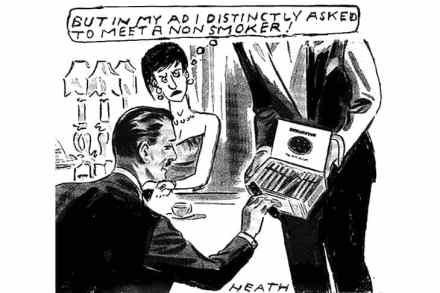
Published in Britain for at least 330 years, lonely hearts ads are now a rare sight – driven to the brink of extinction by the rise of dating apps. This is a pity. ‘The personals’ were a voyeuristic delight. Even if you weren’t looking for love, you still read them. They could be tragic, comic, or both – like this one placed in an 1832 edition of the Dorset County Chronicle: ‘My wife has been dead 12 months ago, last Shroton Fair. I want a good steady woman for a wife. I do not want a second family. I want a woman to look after the pigs while I am out at work.’ His was a straightforward request, clearly stated. But quite often the ads were keyholes through which whole melodramas might be glimpsed.

Kate Andrews, Anthony Whitehead and Michael Simmons

16 min listen

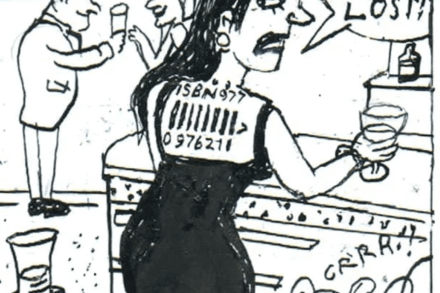
This week: Kate Andrews laments how Truss is hurting the free-market cause (00:51), Anthony Whitehead explains the 'arrogance' of the latest environmental activist movement the Tyre Extinguishers (06:42) and Michael Simmons reads his notes on barcodes (12:54).Produced and presented by Oscar Edmondson.

Crash course: how the Truss revolution came off the road

37 min listen

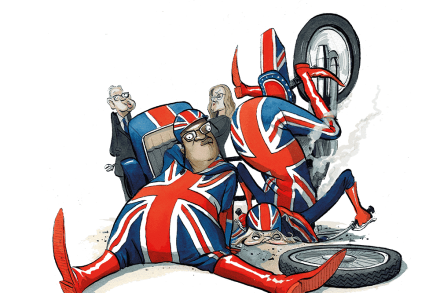
On this week's podcast: As Liz Truss returns from Conservative Party Conference with her wings clipped, has she failed in her revolutionary aims for the party?James Forsyth discusses this in the cover piece for The Spectator, and is joined by former cabinet minister and New Labour architect Peter Mandelson to discuss (01:08).Also this week: Is it time that the West got tough with Putin?Mark Galeotti writes in this week's magazine about the likely scenarios should Putin make good on his thermonuclear threats. He is joined by Elisabeth Braw, fellow at the American Enterprise Institute, to consider how the West should respond (13:14).

Meet the Bristol Tyre Extinguishers

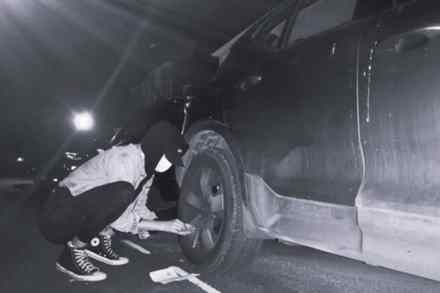
If the world really does face a climate emergency, what ought you, personally, be doing about it? Should you, as increasing numbers of young people are doing, roam the streets at night letting down the tyres of SUVs? The fast-growing movement that calls itself the ‘Tyre Extinguishers’ thinks this is an effective approach, and has targeted thousands of SUVs in cities around the world. My home town of Bristol – always quick to espouse a green cause – has seen at least 200 SUVs ‘extinguished’ in recent weeks. Though they claim to be leaderless, the Extinguishers have a Twitter account where you can keep up-to-date with their latest ‘hits’, and a website that generously invites everyone to get involved.

The phoney war

39 min listen

In this week’s episode: Will Putin invade Ukraine? For this week’s cover story, Owen Matthews argues that if Putin is going to invade Ukraine, he will do so later rather than sooner. He joins the podcast, along with Julius Strauss who reports on the mood in Odessa for this week’s magazine. (00:42)Also this week: Is Brexit working?This week marks the second anniversary of Brexit. But how successful has it been? Joining the podcast to answer that question is Lord Frost who was Chief Negotiator of Task Force Europe from January 2020 until his resignation in December last year - and the journalist Ed West, who runs the Substack, Wrong Side of History (13:12)And finally: What is the allure of a classified ad?

The irresistible lure of classified ads

The great thing about classified ads is that they have not usually been created by an agency — so what you get is the advertiser’s own best efforts to announce themselves, and what they have to offer, in just 20 words or so. You can glean a lot from what they say, and not always in the way intended. Take this particularly telling example from the Spectator personal ads a couple of years ago: ‘Looking to meet woman on HRT (Hormone Replacement Therapy).’ That he added (and paid for) the last three words tells you more than he could ever understand.

It’s about time Bristol’s protestors grew up

As a citizen of Bristol who was kept awake all night, again, by a circling police helicopter, I am growing weary of the riots. Outside of London, we must be the most rioted-in city in mainland Britain. As Robert Gore-Langton writes, we riot with monotonous and increasing regularity, with major events in 1793, 1831, 1932, 1944,1980, 1981, 1987, 1992, 2011, 2019, and in 2020, when the statue of Edward Colston was toppled and dumped in the dock. Apparently, our tendency to become disorderly in public spaces – so marked it has been investigated by sociologists – dates back at least 700 years to the St James's Fair, where people gathered to drink an excess of cider. The fair used to be held just yards from where things kicked off on Sunday night.

Blood and soil

A declaration of nationality is a profound statement. To say ‘I am British’ suggests that somehow I am composed of Britishness — that my fabric, my very being, is British. Except I personally, apparently, am not particularly British. The results are back from my DNA ethnicity test, and I am 63 per cent Irish, 20 per cent Western European, 11 per cent Scandinavian and 3 per cent Iberian. How do I feel about my nationality now? Half a test-tube of saliva was all it took for Ancestry, the genealogical organisation, to come up with these figures and, once you get results like this, the immediate reaction is to say: ‘Well it doesn’t make any difference. I am British, born in England, of parents also born in England, and that’s that.

An elegy for Oldham

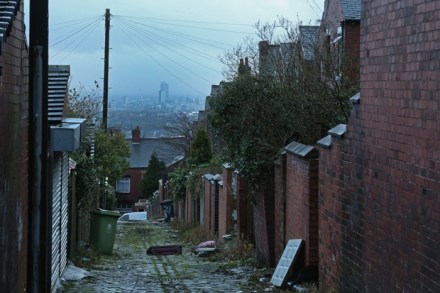
My home town of Oldham is the sort of place people imagine when they think of ‘The North’. It has mill chimneys, redbrick terraced streets and a rain-swept football ground (the third highest in the country) where supporters of the perpetually struggling Oldham Athletic queue for hot Vimto or a bag of black peas. Oldham is now the most deprived town in England, according to the Office for National Statistics. Crime and unemployment are high; investment, wages and prospects generally are pitifully low. Boarded-up shops and dilapidated factories tell a sorry tale of economic woe. It wasn’t always like this. My family’s home, in the leafy suburb of Werneth, was in one of many large houses built around 1900 for the managers of the local textile mills.

Green with rage

I am stuck behind a big yellow recycling lorry in Bristol, which this year became the UK’s first European Green Capital. It is collecting food waste from the special brown bins we have to use, and the stench is horrendous. Behind me are about another dozen cars and, sad to say, I fear that not all of them have turned off their idling engines. Squadrons of recycling vehicles invade every day, blocking our narrow Victorian streets and causing misery and mayhem — starting with the school run: ‘Dad! I’m going to be marked down for a “late” again!’ ‘Sorry son, but these teabags mustn’t be allowed to rot in landfill. And besides, we have our city’s green status to consider!