Anthony Horowitz

The insidious rise of Tannoy spam

Six people meet for a picnic on Richmond Green. They eat Popeyes chicken nuggets, Sainsbury’s sausage rolls, M&S sandwiches, Cadbury Mini Rolls and Walkers crisps. They drink a bottle of Pinot Grigio and several cans of Sol lager. How do I know? I’m no detective but they’ve made it easy for me. After they’ve finished, they’ve simply got up and left the bottles, wrappers, packages and paper plates on the grass, laid out like a meal on the Marie Celeste. There’s always been litter – Bill Bryson described it as ‘a long continuum of anti-social behaviour’ – but this is something different. It feels more like social anarchy, a total blankness. I can’t get my head around it.
Can the British film industry survive Trump’s tariffs?

On the road with a new book, I recently spoke at a literary luncheon hosted by the Cambridge Festival. What could be more civilised than food, wine and conversations about murder with a charming audience… but this is one of many festivals that lost its funding thanks to the organisers of Hay-on-Wye and Edinburgh pulling out of their sponsorship deal with Baillie Gifford, a unilateral decision that has endangered the entire landscape of literary festivals. Cambridge, Wigtown, Stratford and Henley all ended up losing their funding when Baillie Gifford, not surprisingly, decided to call it a day. And what exactly has been gained? The pressure group Fossil Free Books may be preening itself.

Christmas Special 2024 with Rod Liddle, Lionel Shriver, Matthew Parris and Mary Wakefield

71 min listen

Welcome to a special festive episode of The Edition podcast, where we will be taking you through the pages of The Spectator’s Christmas triple issue. Up first: our review of the year – and what a year it has been. At the start of 2024, the outcome of the US election looked very different, the UK had a different Prime Minister, and The Spectator had a different editor! Luckily, The Spectator’s regular columnists are on hand to declare what they got right – and wrong – throughout the year, and whether they’re optimistic for 2025. Rod Liddle, Matthew Parris, Mary Wakefield and Lionel Shriver take us through everything from Trump to trans (03:24).

How on earth does Rishi Sunak keep going?

It’s my birthday this week and the end of my seventh decade (mathematicians will note that this does not make me 79). Looking at my long and generally happy life, I do wonder quite how we arrived where we are with this all-pervading sense of gloom and despondency. Gaza, Ukraine, Putin, Trump, Islamic State, Brexit… whichever way you look, there’s something you don’t want to see. The doomsday clock now stands at 90 seconds to midnight, the closest we’ve ever been to complete annihilation. Happy birthday to me. It’s not all bad though. Last week my son came home with a borrowed Apple Vision Pro, the wrap-around headset which retails at around £3,000.

Katy Balls, Peter Hitchens and Anthony Horowitz

25 min listen

This episode of Spectator Out Loud features Katy Balls on the new divisions within the Labour Party and what Jeremy Corbyn might run for next (01:08); Peter Hitchens describes the joys of cycling and his dislike of e-bikes and scooters (07:40); and Anthony Horowitz joins us from Crete where he ponders the end of the world, becoming a grandfather and travel limitations after Brexit (13:11) Produced and presented by Linden Kemkaran.

Why on earth did The Spectator support Brexit?

The temperature has hit 40°C in Crete, where I am writing this, and although there have been no fires, nothing is quite how it ought to be. I can’t work out whether this is a great opportunity to get a tan or, effectively, the end of the world. My 60-year-old taxi driver tells me that unfeasibly hot summers were a regular occurrence when he was young and that there’s nothing to worry about. But, he adds, he’ll be dead soon anyway so why should he care? Right or wrong, this is the paradox at the heart of the climate change debate. Older people, who could be held responsible for the destruction of the planet, don’t need to worry. And young people, who have so much more to lose, don’t really have a say. We invented plastic. They live with it.

My clash with ‘sensitivity readers’

‘The end of the novel’: so ran a headline in the Times recently. Well, every few years one pundit or another predicts the death of the novel. They have done so throughout my lifetime and by now many of them may well be deceased themselves. But this article cogently pointed out the dangers of the new culture wars whereby writers are castigated for writing about ethnicities or events outside their own ‘lived experience’. Jeanine Cummins’s American Dirt was probably the most notorious example but even John Boyne’s The Boy in the Striped Pyjamas attracted criticism. Could it be that my next murder mystery will have a killer, a victim, a list of suspects and even an amateur detective who are all middle-aged white Jewish London-based men? That seems to be the way we’re heading.

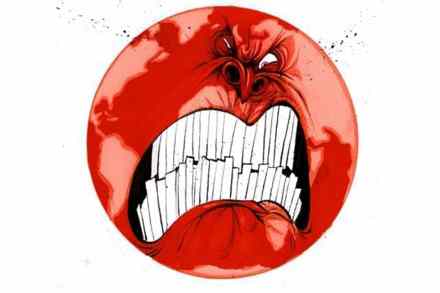
When did everyone get so angry?

I love Suffolk, not just for its beauty but for the stories to be found all around me. Every day I swim with my two-year-old labrador in the river Alde with views of the strange pagodas built on Orford Ness, a long strip of shingle. Amazingly, components of the nuclear bomb were tested here during the second world war. Just up the coast is the wonderfully named Cobra Mist, a radar station active during the Cold War. If you’re lucky enough to go inside, you’ll find computers and surveillance equipment abandoned in the 1970s with lights still blinking and spools turning like something out of The Avengers. The US stealth bomber was apparently tested here. In 1980, UFOs were spotted above Orford on their way to Rendlesham forest. What a location for an author!

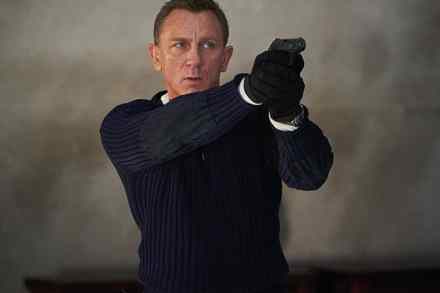
How can James Bond survive?

I have just got back from Cannes, where I was the president of a jury, judging TV dramas. I’ve never had an experience like it. I was put up at the Majestic Hotel, overlooking La Croisette. I had a limousine to take me all of 100 yards to the Grand Palais for screenings and when I chose to walk, I was provided with a bodyguard. I even had my own hairdresser and make-up artist for the nightly photoshoot on the pink carpet. It was all ridiculous of course but it gave me a rare glimpse of celebrity and its pernicious allure. We writers are usually consigned to the engine room, toiling away with sweaty faces and blackened fingers. How lovely, just for once, to be given a sunbed on the first-class deck. I had a novel experience when I arrived at Nice airport. They stamped my passport!

Building Sizewell C would be a nuclear-sized disaster

I love Suffolk. This Christmas I will be there with my family and we’ll almost certainly walk up the coast, joining dog-walkers, bird-watchers, hikers and even swimmers in one of the most beautiful and unspoiled parts of the UK. The secret of Suffolk is its relative inaccessibility. No major motorway connects it and once you arrive you’re committed to a sprawling network of country lanes that twist through heathland and grazing marsh, mudflats and reedbeds. Minsmere, a nature reserve that’s home to 6,000 wildlife species, is among its glories. The nightjar, the woodlark, the Dartford warbler and the silver-studded butterfly are just some of the rare species found there. At least for the time being.

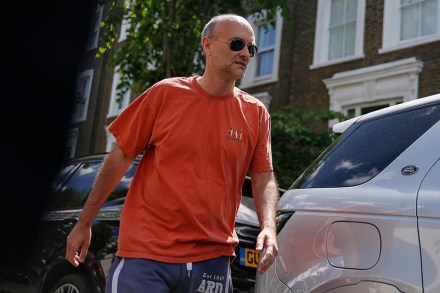
The Cummings road trip debacle is my last straw

I can’t remember the day I realised Santa Claus wasn’t real but I will never forget the moment I lost my belief in the Conservative party. It happened very recently — this morning, in fact. It was an odd day anyway which began with my reading an email from Mary Wakefield, inviting me to write this diary, even as she was appearing on my TV screen: an unnerving experience. Should I accept? Should I pretend that I’m ignorant of the biggest news story of the moment? I’m reassured that the one of the most trenchant and earliest attacks on Dominic Cummings’s road trip was written by Alex Massie and appeared on The Spectator website. It was an extraordinary article and kudos to The Spectator for publishing it.

In defence of modern children’s books

A few years ago, I was surprised to open a newspaper and read that the head teacher of a London public school had decided to ban my books from his library. He described the adventures of Alex Rider, which have sold around 20  million- copies worldwide, in terms so derogatory that I have no mind to repeat them. Suffice it to say that the article quite put me off my cornflakes. But the strange thing was that — once I had got past the sheer offensiveness of his language and a mindset that believed that banning books could ever have good connotations — I was actually quite sympathetic to his wider point of view. Everyone agrees that children benefit from reading, but we seldom discuss what exactly we would like them to read.

If parliament were more modern, might it become less aggressive?

I’m writing this in Crete where a late summer has seen brilliant sunshine and temperatures reaching 25°C — but can I enjoy it? The unrelenting diet of gloom coming at me from every direction leads me to question even the dazzling blue Aegean and the cloudless sky. It’s surely a sign of global warming and the possibility that we are, quite possibly, doomed. I worry about Jeremy Corbyn. Will he be in Downing Street by Christmas Day? Will Trump have started world war three? Will Orfordness lighthouse, which has stood valiantly on its little shingle spit since 1792, have finally fallen into the sea? Everywhere I look, the tide is drawing in. The collapse of Thomas Cook has left Crete — and the rest of Greece — in a fairly terrible state.

Writer’s Notebook | 27 June 2019

Someone should write a guide to the best literary festivals. Sydney and Auckland would certainly be there, along with Sri Lanka, Jaipur and Dubai. Later this year I’m off to Mumbai and I’ve been invited to Mandalay. I swear there are writers who never actually have time to write any more, they spend so much of the year shuffling around all these exotic places. I’ve just come back from the festival of writing at Borris, which I loved. It’s a beautiful house in County Carlow, two hours from Dublin, and the whole weekend was one long party in the company of Michael Morpurgo, Simon Schama, Carl Bernstein and others.

Diary – 24 January 2019

Will I be allowed to take my dog to Europe after 29 March? A trivial question, you might think, in these feverish times, but one that might be an indicator of what the EU thinks of us and how/if they’re going to make us pay for leaving. I took Boss, my Battersea rescue, across France this Christmas and it couldn’t have been easier. The dog was barely noticed on the way out and given a fast, friendly check on the way back. Why should anything change? A pet on the road doesn’t get extra germs just because of the colour of its passport and yet nobody has any idea what’s going to happen. Are UK pet owners about to be punished for no good reason? And if so, what punishments might be extended to the rest of us pour encourager les autres...?

The time I was convinced I heard a ghost

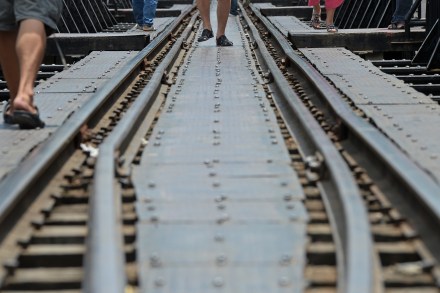
I have never really believed in ghosts, but I actually had a personal experience which I still find hard to explain. I was walking beside the river Kwai in Thailand with my wife. We had been told that a steam train travelled across the famous bridge once a week as a memorial to the POWs who had died — and we were keen to photograph it. So we were shocked when, quite suddenly, we heard it approaching, an hour earlier than had been expected. We both heard it quite clearly; the heavy panting of the locomotive, the rattle of the wheels. Very quickly, we ran up the slope, annoyed with ourselves. The engine got closer and closer. But when we reached the top, there was no train there. In fact, we were told, the train wasn’t coming at all that day. The track was empty.

Diary – 19 October 2017

New York, Philadelphia, Washington, Raleigh, Dallas… I’m on a book tour in Donald Trump’s USA, which feels much like the USA I’ve visited many times before. The tour doesn’t go to any of the so-called ‘rust belt’ cities where Trump has his main support and the people I meet are quietly shocked, apologetic — as if their President is an elderly relative who has displayed horrible manners at the table. Washington is such a handsome, classical city, with its free museums and wonderful collections of art, that I feel a stab of pain as I drive past the White House and think about the man inside.

Diary – 22 June 2017

Five years after I swore I’d finished with him, it’s odd to be back on the road with Alex Rider. It’s also quite confusing. In the 16 years it’s taken me to write the books, Alex has aged just 15 months while I’ve experienced 9/11, the invasion of Iraq, the Arab spring, Brexit, Presidents Obama and Trump, and Theresa May. Until a few months ago, I would have said that life feels much the same in the UK where Alex and I live. But three terrorist attacks, the election and the horrendous fire at Grenfell Tower threaten to tear us apart. Even the queen was heckled when she visited the disaster site... surely a totemic moment. I have a very slender, personal connection with one of the people who died at Grenfell Tower.

The Netflix revolution: Why British TV struggles to keep up

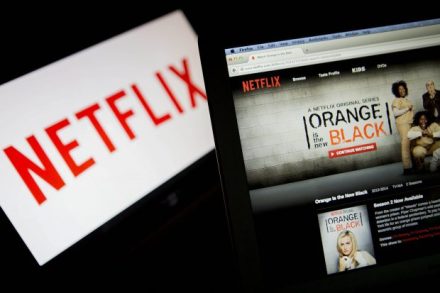
There have been two revolutions in television during my lifetime. The first happened in 1975 when Sony launched its Betamax video system — which allowed viewers to record shows and see them when they wanted. Of course, Betamax was found to be clunky and unreliable and it was soon replaced by VHS but, without realising it, the networks had lost control of their audience. No longer would we watch the films they wanted us to watch when they wanted us to watch them. Never again, as the technology spread, would the whole nation come together as one to find out what the newscasters had been up to on Morecambe and Wise. The second revolution has been even more profound — and it’s happening right now. It can be defined in one word: Netflix.

The Netflix revolution

There have been two revolutions in television during my lifetime. The first happened in 1975 when Sony launched its Betamax video system — which allowed viewers to record shows and see them when they wanted. Of course, Betamax was found to be clunky and unreliable and it was soon replaced by VHS but, without realising it, the networks had lost control of their audience. No longer would we watch the films they wanted us to watch when they wanted us to watch them. Never again, as the technology spread, would the whole nation come together as one to find out what the newscasters had been up to on Morecambe and Wise. The second revolution has been even more profound — and it’s happening right now. It can be defined in one word: Netflix.