Anne de Courcy

Gardening’s bad girl: the genius – and malice – of Ellen Willmott

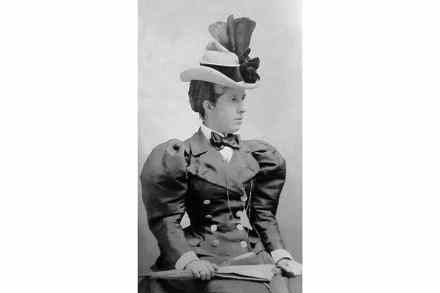
In October 1897, the grandees of the Royal Horticultural Society gathered to bestow their highest award, the Victoria Medal of Honour, struck to commemorate the Queen’s Diamond Jubilee, to 60 of gardening’s greatest luminaries. For the first time, these included two women. One was Gertrude Jekyll, known by all as the Queen of Spades; the other was the 39-year-old Ellen Willmott. But Willmott did not turn up. This public snub was the beginning of her reputation as ‘gardening’s bad girl’, as Sandra Lawrence puts it, one that increased exponentially until it exploded in stories of daffodils being booby-trapped to deter bulb thieves.

It’s a wonder any of our great country houses survived the 20th century

One of Adrian Tinniswood’s recent books, The Long Weekend, is a portrait of country house life in the interwar years. Hedonistic, carefree, fuelled by an army of servants, such an existence now seems a distant dream. In this companion volume he takes the story further, looking at what happened to the country house after 1945. (By country house, he does not mean ‘The Old Rectory’ or ‘The Elms’ but something that tends to end in ‘Hall’, ‘Park’, ‘Court’ or ‘Castle’). Immediately after the war, the outlook for these splendid buildings was bleak.

The elusive adventures of Catherine Dior

When Catherine Dior, one of the heroic French Resistance workers captured by the Nazis, came face to face with her torturer at his trial in 1952, to receive the suggestion from his lawyer that it was a case of mistaken identity, she burst out furiously to the judge: ‘I know what I’m saying. This affair cost people their lives.’ It is one of the very few vivid glimpses we get of her in Justine Picardie’s book. The respected former editor-in-chief of Harper’s Bazaar has tackled what is the most difficult subject for any biographer: a person about whom virtually nothing is known. Claire Tomalin brought it off in The Invisible Woman, the story of Charles Dickens’s shadowy mistress Nelly Ternan.

Shock tactics: the flamboyant life of a Hanoverian maid of honour

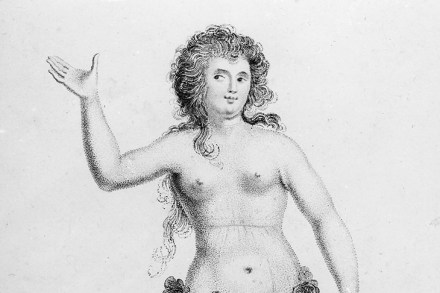
At the masquerade celebrating the end of the War of Austrian Succession no one could take their eyes off the beautiful Elizabeth Chudleigh. She had come, she said, as ‘Iphigenia, ready for the sacrifice’, and it was what she was wearing — or to all appearances not wearing — that caused a sensation that lasted for months. In the candlelight, her clinging costume of flesh-coloured silk made her appear completely naked; ‘a perfect review of the unadorned mother of mankind’, said one account. The furore caused by this episode was only eclipsed when, 27 years later, Elizabeth, now the widowed Duchess of Kingston, was put on trial for bigamy.

Malice and back-stabbing behind Vogue’s glossy exterior

‘What job do you want here?’ asked the editor of Vogue, interviewing a young hopeful. From behind her black sunglasses the 24-year-old replied coolly:‘Yours.’ It took time, but she got it. The girl was, of course, Anna Wintour. Now she is the global Vogue supremo and queen of fashion, before whose lightest frown the whole industry quakes, and the magazine is acknowledged to be the top glossy. Its beginnings were small. It was launched on 17 December 1892, at a cost of ten cents an issue, and its dedicated founder struggled to keep it going. Its first editor was passionate about animals and its second was a female golfer with no previous publishing experience.

A love story — with clothes as heroes

On the weekly ‘opinions’ afternoons, the public would arrive with carefully wrapped parcels holding items to be identified, writes Claire Wilcox. Sometimes this was a length of Brussels lace, sometimes a gown that could be dated not just to the year but to the season, because the fashion then was known: Once, someone brought a box of medieval leather shoes and everyone was sent home while a specialist in protective clothing and mask was called in, in case they had come from a plague pit. She was talking of the textile department of the Victoria & Albert Museum, where she had been senior curator of fashion since 2004.

The hazards of attending a queen

When Queen Alexandra chose her ladies in waiting she prudently surrounded herself with elderly and plainish ones, who did not tempt her susceptible husband Edward VII. ‘These are your wives?’ the Shah of Persia solicitously enquired. ‘They are old and ugly. Have them beheaded and take new and pretty ones.’ In earlier times, beheading was a definite possibility (one of Catherine Howard’s ladies was executed) and court life was, to say the least, fraught. As Anne Somerset reports, Tudor courts were a maelstrom of intrigue, surreptitious liaisons, political in-fighting, struggles for the ear of the monarch and rampant greed.

There was no fairy tale ending for the lovely Gladys Deacon

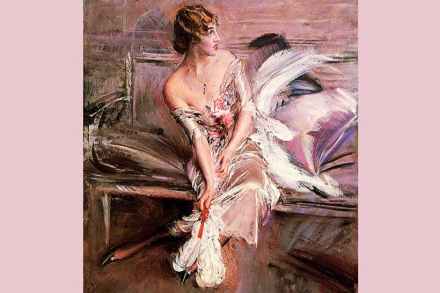
The story of how Hugo Vickers eventually tracked down the former Gladys Deacon, Duchess of Marlborough is almost as fascinating as how Gladys nailed her duke. Both were obsessions that began young, that of the 16-year-old Vickers when he read of ‘The love of Proust, the belle amie of Anatole France’, and was so taken that he wrote his first biography of her 40 years ago, and that of Gladys when at 14 she wrote (of the Duke) ‘O dear if only I was a little older I might “catch” him yet’.’ Gladys (born in 1881) was a star from the word go, extremely intelligent — her tutor called her a ‘brain genius’ — and avid to learn.

When Cartier was the girls’ best friend

The word ‘jewel’ makes the heart beat a little faster. Great jewels have always epitomised beauty, love — illicit or sanctified —romance, danger and mystery. And no one knew better how to cash in on this mystique than the firm of Cartier, for years the go-to jewellers for discreet, elegant razzle-dazzle. Its customers were kings, princes, maharajas and the whole of ‘society’. The iconic panther brooch it created for the Duchess of Windsor sold for $7 million (in 2010). When Francesca Cartier Brickell, searching for a special bottle of champagne in her Cartier grandfather’s cellar, spotted a battered leather trunk in one corner, she opened it to find bundles of letters, each tied and neatly labelled.