Anna Aslanyan

Stolen youth, stolen homeland

‘No testimony from this time must ever be forgotten,’ the great Lithuanian poet Tomas Venclova says in his afterword to Dalia Grinkeviciute’s memoir. The author was 14 in 1941, when the Soviets deported her with her mother and brother from their native Kaunas, Lithuania’s second largest city. In 1949, the women escaped from Siberia and went into hiding. Grinkeviciute began writing about her ordeal, but soon, facing another arrest, she buried the unfinished manuscript in a garden. More prisons and camps followed before she eventually returned home in 1956. Found in 1991 after her death, the memoir was published and became part of the school curriculum in Lithuania.

Close to the bone

From our UK edition

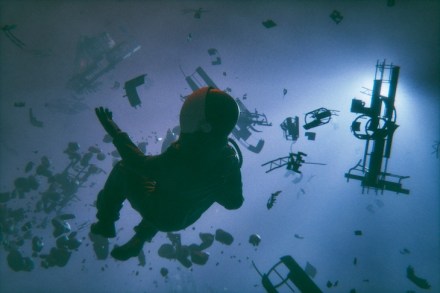
Does J.G. Ballard’s ‘disquieting equation’, ‘sex x technology = the future’, still hold? Not in Lidia Yuknavitch’s novel, which imagines a society better described by the formula ‘the future = technology – sex’. There is no procreation in it, and any manifestation of sexuality is a crime. Its inhabitants have left Earth for a space station, a hi-tech prison only the rich can afford, moving away from ‘a lunar landscape of jagged rocks, treeless mountains, or scorched dirt’, the scene of endless wars fought by child soldiers, where ‘technology is seized by those who kill best’.

Putting the boot into Italy

From our UK edition

A young woman, naked and covered in blood, totters numbly down a night road. A driver spots her in his headlights and swerves. Was he the last to see Clara alive? Did she jump to her death from a parking structure, as stated in the report? Are her rich family trying to hide more than their property deals? What was the preternatural bond that tied together Clara and her brother? Why did she let various older men seduce her? Who is running a Twitter account in her name, having begun with ‘I didn’t kill myself’? These questions will keep haunting you even after you’ve turned the last page of Ferocity.

Travelling hopefully

From our UK edition

Olga Tokarczuk examines questions of travel in our increasingly interconnected and fast-moving world. The award-winning Polish writer channels her wanderlust into reflections upon the places she visits, sometimes in a handful of lines, sometimes in longer chapters, telling other people’s and her own stories. Her prose, however, is anything but conventional travel writing, and she is the first to point out the danger she would be in otherwise: ‘Describing something is like using it — it destroys.’ Trained as a psychologist, Tokarczuk is interested in what connects the human soul and body.

The Baron is back

From our UK edition

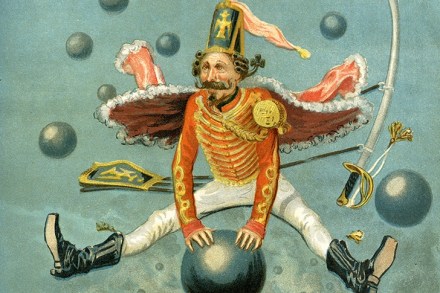
Sigizmund Krzhizhanovsky was born in the wrong place at the wrong time. Had his Polish ancestor not been exiled to Siberia, he might have become a figure in European literature; living in Soviet Russia he was, in his own words, ‘known for being unknown’. His fiction and plays, written in the 1920s–1930s, remained mostly unpublished — unpublishable — till 1989. That he can now be read in English is thanks to the translator Joanne Turnbull, who in collaboration with Nikolai Formozov has brought him out of obscurity. What Krzhizhanovsky lacks in popularity he makes up for in the fame of his hero, Baron Munchausen, an incorrigible fantasist created by the 18th-century author Rudolf Erich Raspe.

Digging deep into history

From our UK edition

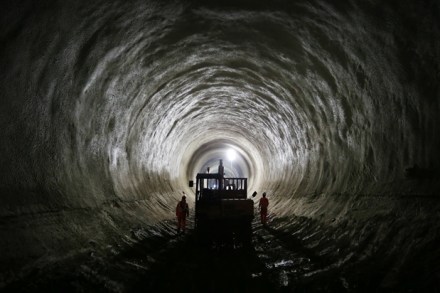
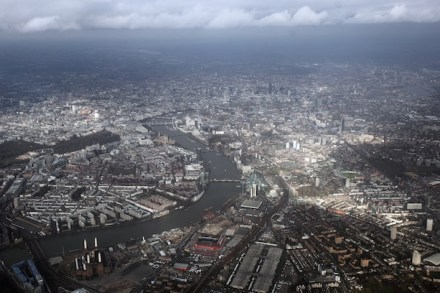
The year is 1963. A girl is walking around Stepney with a pack of index cards, visiting old residents in their dilapidated houses, drinking strong tea with tinned milk, listening to their stories of happy days past and looking at cracked walls and leaking roofs. As she promises them help on behalf of her employer, the Old People’s Welfare Association, redevelopment plans for the area are being drawn up with little regard for its inhabitants, many of whom don’t want to move. ‘There may be heartbreak in store for some,’ breezily remarks a magazine article. That girl was Gillian Tindall, and her interest in ‘the landscape of people’s lives’ has never waned, recently leading her to Crossrail, a project designed to transform London on a colossal scale.

Lost in a time capsule

From our UK edition

On her arrival in Russia in 1914, Gerty Freely finds it refreshingly liberal compared to her native Britain: here servants are treated well, parents encourage self-expression in children, poor students are given support, and intellectual discourse flourishes. Gerty comes to Moscow as the governess to a rich aristocratic family and stays through the war, the revolutions and the Red Terror. A free spirit, she embarks on her adventure with an enthusiasm which only grows in the face of the dramatic events she comes to witness. Gerty falls for the futurist of the title, Nikita Slavkin, an aspiring physicist, and both become ardent supporters of the revolutionary cause.

Revolution now and then

From our UK edition

Maxim Gorky was trumpeted as ‘the great proletarian writer’ by Soviet critics, who considered his novel The Mother one of the most significant books of the 20th century. Completed in 1906, after Gorky had already been recognised internationally, it is based on the events of 1902, when the workers of Sormovo, a factory settlement near Gorky’s native city of Nizhny Novgorod, held what we’d now call a ‘mass anti-capitalist protest’. The demonstration was brutally dispersed and, after a trial that stirred Russia, six of its organisers were sentenced to life in exile. The October Revolution was still 15 years away. The book starts with a description of the settlement’s bleak life, filled with hard work and hard drinking.

Spectator books of the year: Anna Aslanyan enjoys a passionate take on 21st-century London

From our UK edition

My top title of the year is Satin Island by Tom McCarthy (Cape, £16.99), convincing proof that the best writers of our time are anthropologists, and that James Joyce, were he alive today, would be working for Google. I also enjoyed Ben Lerner’s 10:04 (Granta, £14.99), a self-deconstructing novel whose metafictional plot speaks of the nature of time and of things being endlessly interconnected. My non-fiction pick is Iain Sinclair’s London Overground: A Day’s Walk Around the Ginger Line (Hamish Hamilton, £16.99), the psychogeographer’s passionate take on 21st-century London, a place of perpetual change and chronological resonances.

Umberto Eco really tries our patience

From our UK edition

Colonna, the protagonist of Umberto Eco’s latest novel, is the first to admit he is a loser. A middle-aged literary nègre, he dreams of writing his own book, but can’t break the habit of alluding to others’ work: he even refers to himself as a ‘man without qualities’. One day in 1992, he is commissioned to ghostwrite a memoir about a newspaper being launched in Milan. Domani (‘Tomorrow’) will never be published: a tycoon who finances it plans to use it as a blackmail tool in his shady dealings. The proposed title of the memoir, Domani: Yesterday, sets the tone for this pacy book that doesn’t take itself too seriously.

Hurricane Lolita

From our UK edition

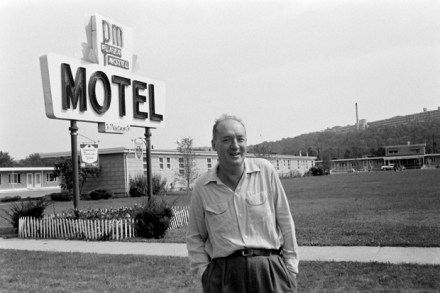
Speak, Memory, Vladimir Nabokov’s nostalgic memoir, reflects on his life from the age of three to 41, taking us from early-20th-century Russia, soon to be engulfed by revolution, to Europe at the start of the second world war. He planned a sequel to it, based on his American years, but Speak On, Memory was never written, partly because much of that experience had found an outlet in his novels. As Robert Roper argues in his literary biography, it was America that made Nabokov the master we now admire. Nabokov in America, a detailed account of the 20 years the writer spent there, revisits some of the less widely known facts and draws a number of fresh analogies.

Reality games

From our UK edition

The title of Victor Pelevin’s 2011 novel stands for ‘Special Newsreel/Universal Feature Film’. This product is made by the narrator, who pilots his hi-tech camera without leaving his room, propped up against cushions. The corpulent Damilola Karpov lives in Byzantion, or Big Byz, an ‘offglobe’ hovering over what’s left of the old world after the collapse of its superpowers and other apocalyptic events. Down below is a country called Urkaine (the apparent misspelling is a pun on a slang Russian word for ‘criminal’), populated by drunks and ruled by gangsters, its symbol a golden ‘spastika’, its economic goal ‘to catch up with and overtake Big Byz in terms of major stock indices’.

Both lyricist and agitator: the split personality of Vladimir Mayakovsky

From our UK edition

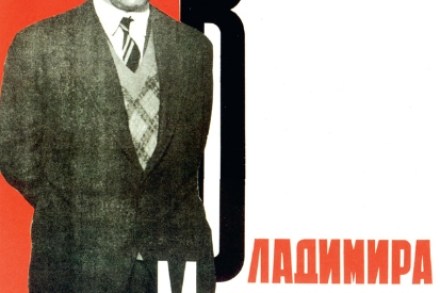
Why increase the number of suicides? Better to increase the output of ink! wrote Vladimir Mayakovsky in 1926 in response to the death of a fellow poet. Four years later, aged 36, he shot himself. What drove the successful author, popular with the public and recognised by officialdom, to suicide? Bengt Jangfeldt provides some clues to this question in his detailed, source-rich biography. Mayakovsky came to poetry as a Futurist, co-authoring the 1912 manifesto A Slap in the Face of Public Taste, which granted poets the right ‘to feel an insurmountable hatred for the language existing before their time’. That the new era demanded a new language was a principle Mayakovsky adhered to all his life.