Angus Colwell

Angus Colwell

Angus Colwell is The Spectator’s daily newsletters editor, and lead author of Morning Press. He also reviews restaurants for the magazine.

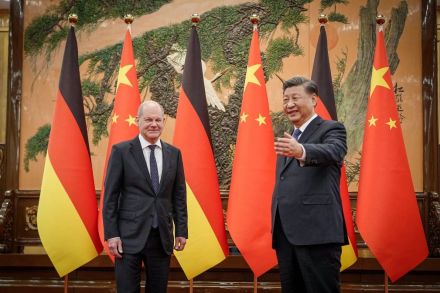
Xi’s nuclear warnings are a coup for Scholz

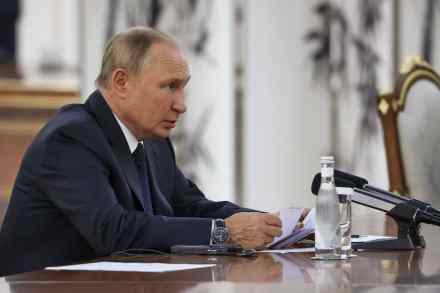
Checks and balances on Vladimir Putin don’t come from inside Russia. The people around him supported forced mobilisation, pushed his plans to annex eastern Ukraine, and wanted more nuclear posturing. Xi Jinping and Narendra Modi, of China and India, can do a much better job at constraining Putin. They’re the only two leaders of major powers that haven’t completely ostracised the Russian leader. He needs them to keep his struggling economy afloat. The pair are putting pressure on the Putin to avoid nuclear conflict. This morning, Xi warned Putin off using nukes for the first time, after saying in February that China and Russia’s friendship had ‘no limits’.

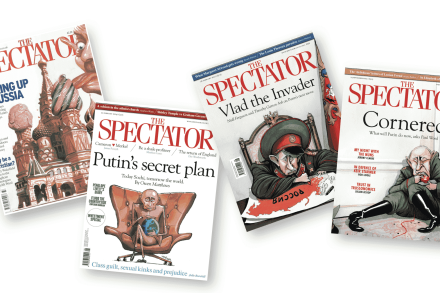
Putin at 70: How The Spectator has covered his life

Vladimir Putin turns 70 today. Since he became Prime Minister of Russia in 1999, some of The Spectator's greatest contributors have asked the perennial questions: who is Putin, and what does he want? We've compiled the following pieces from our fully-digitised archive.  ‘Joking with a nine-year-old boy at a televised awards ceremony by the Russian Geographical Society, President Vladimir Putin said: ‘The Russian borders don’t end anywhere.’’ Portrait of the Week, 1 December 2016 Appointment as Prime Minister  ‘Not surprisingly, given his background, Putin has a lugubrious and somewhat sinister manner.

Welcome to the weird world of the New Right: Subversive podcast reviewed

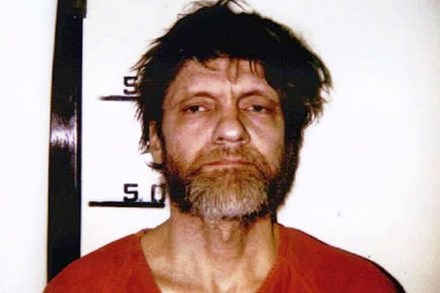
Subversive is a podcast that documents the world of the ‘New Right’, a strange development in conservatism. Host Alex Kaschuta, one of the movement’s intellectual leaders, gives a good sense of the New Right’s weirdness. Trembling minor-key synths play in the theme and Alex purrs that we’re about to hear a two-hour long conversation with ‘Covfefe Anon’. Other guests include ‘Zero H.P. Lovecraft’ and ‘Yeerk.P’. Some are anonymous commentators who have their voices distorted like a drug dealer in a Ross Kemp documentary. Others are known entities: journalists like Sohrab Ahmari, Ed West and Louise Perry. They like the classical world, the Unabomber, steak. They hate CNN, porn, sunflower oil I can’t explain the New Right.

What’s behind Putin’s no-show?

Has Vladimir Putin carried out a cynical stunt, or ducked out of a seismic decision? That’s the debate among Kremlinologists tonight, as the Russian President failed to show up for a planned 8 p.m. address to the Russian people. Faced with catastrophic losses of territory in north-east Ukraine, a weaker Putin has been considering his options. One that has been suggested is fully mobilising the population to fight, and introducing martial law, which the State Duma (parliament) proposed today. Men aged between 18 and 65 would be banned from leaving the country. Today also saw the announcement of referendums on Russian annexation for the Luhansk and Donetsk regions of Ukraine, as my colleague Lisa Haseldine reported.

Katy Balls, John Connolly and Gus Carter

17 min listen

On this week's episode: Katy Balls reads her article on the cadets gunning for the Tory leadership. (00:52)John Connolly reads his investigation into the new warehouse ghettos where Britain is sending migrants. (06:36) Gus Carter reads his piece on why he's not getting invited to any dinner parties. (12:05)Presented by Angus Colwell.Produced by Angus Colwell and Sam Holmes.

Spectator Out Loud: Robert Hardman, Meirion Thomas and Sarah Ditum

23 min listen

On this week's episode, Robert Hardman reads his cover article on the quiet radicalism of Queen Elizabeth II (00:50); J. Meirion Thomas reads his article on the 'total triage' system that is leaving patients unable to see their GPs; and Sarah Ditum reads her review of Sandra Newman's new novel, The Men.Presented by Angus Colwell.Produced by Angus Colwell and Cindy Yu.

The nihilistic rise of ‘loss porn’

It’s been a terrible few weeks for that guy you know. Bitcoin dropped to a ten-month low (apparently thanks to something called ‘stablecoins’), while $1 trillion has been wiped off the largest tech companies on the stock markets. ‘Retail investors’ – non-professionals with little more than an internet connection – are struggling. You might expect many of them to put their heads in their hands and log off. But that would be to misunderstand the nihilism of online culture. Losing is the same as winning, only better. The thing to do is to post evidence of your catastrophic losses.

Why would the Saudis bail out Biden?

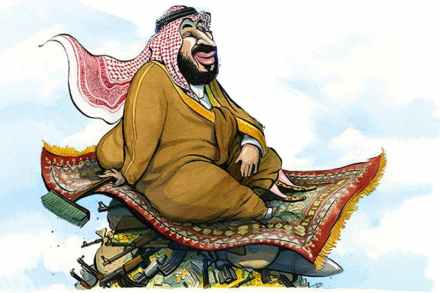
Is Saudi Arabia shunning Washington? Mohammed bin Salman has reportedly been refusing to phone Joe Biden, who wants the kingdom to turn on its oil taps as the West desperately seeks alternatives to the Russian energy market.  Riyadh – the world’s largest oil exporter – has so far failed to accommodate Washington’s pleas. Ahead of the Russian invasion in mid-February, the US asked the Opec+ cartel – of which Saudi Arabia is the most important member – to produce more oil to slow the already rising prices. Opec+ stood firm, and said they would increase production by 400,000 barrels a day in April, a rise agreed before the threat of a Russian invasion of Ukraine.

Glorious and bracing interrogation of the world’s smartest people: Conversations with Tyler reviewed

Tyler Cowen is a man who leaves you at once in awe and perturbed. He is the Holbert L. Harris chair in the economics department at George Mason University, and the co-host of the popular economics blog Marginal Revolution. But his intellectual interests are staggering in scope, enough to unsettle. He is a true polymath. He embodies the American work ethic. He goes through ‘five or ten books’ a day. His Marginal Revolution blog is not for the faint of mind: he sends up to 40 emails each week. At any time of his choosing, Tyler pops into your inbox to show you a new study he’s found (‘which words do men use more than women?’), tips for getting better at watching films (‘get a mentor!’) or news from Norwegian sex resorts.

Are free lateral flow tests about to be scrapped?

Could free lateral flow tests be on the way out? The Sunday Times says said so on its front page but Nadhim Zahawi has denied it outright. It’s clear there’s a split in government over this. Officials quoted in the Sunday Times article say the country needs to realise Covid is here to stay, and to accept that vaccines have blunted most of its force. David Spiegelhalter, one of the most respected statisticians who has been commenting on the pandemic, has said Britain is ‘certainly not going to see a big rise in intensive care admissions and deaths’.

Omicron: cause for hope?

It will be weeks before we know just how worried we should be about Omicron — but the first indications seem hopeful. The epicentre of the first recorded outbreak has been the subject of a study that suggests that it may be milder than Delta. Early data from 166 patients in the Tshwane district comes with the usual caveats, especially that very little Omicron has been found among South African over-65s. But the study nonetheless has two weeks of hospitalised Omicron patients to analyse — more than any other country. Here are the main indications so far:  Fewer people hospitalised with Omicron have ended up in intensive care: 8 per cent, compared to 25 per cent for Delta.Fewer patients need oxygen: only about a third.

The hitch with Hitchens

It hasn’t taken 20 years to work out that Christopher Hitchens was a dud, but this week’s collapse of Kabul obliges us to reexamine the Hitchens back catalog — because Hitchens had an outsized influence on debates about the supersised errors of post-9/11 foreign policy. The briefest of looks exposes the deficits of the neoconservative mind. An even clearer picture emerges of the hubris that led American policymakers, and the West in general, to justify the invasions of Afghanistan and Iraq as the spread of liberal enlightenment, rather than subjecting them to the tests of Realpolitik. Never trust a man whose favorite sport is politics.

TikTok’s fake news problem

Something troubling is happening on TikTok. The video sharing app is sometimes dismissed as a place where young people go to while away the hours watching banal videos. But TikTok is more than just a quirky hobby for younger generations: it's where many come to get their news. What's more, during Covid it's become a window into a world that is effectively shut. This makes the spread of fake news and misinformation on the app something that should alarm us all. This week, a TikTok video claiming that the United States was responsible for reducing Syria to rubble spread like wildfire around the app.