Andy Jones

Andy Jones is a journalist and broadcaster who has reported on global military technology for The Spectator, Wired, The Sunday Times, BBC World Service and Monocle

Why the BBC is so obsessed with drag queens

The BBC has reached peak drag queen. These days, turn on any celebrity quiz, cookery show or news item by the state broadcaster and you are almost certain to be confronted by a bloke in heavy make-up and a dress. Only the other day, two drag queens appeared on the BBC advert for the latest Comic Relief, after ex-rugby player Joe Marler said we could all do ‘with a bit of a laugh’. Despite waning interest in Red Nose Day, it's back for 2026. And despite waning interest in drag queens, that's who the BBC are using to promote it this year pic.twitter.

How Europe can turn the tide on Russia’s underwater warfare

Europe is right now fighting an enemy it cannot see and protecting a vulnerability it has not mapped. Undersea drones are taking the conflict between Russia and the West below water. But these sea drones are not looking for soldiers or civilian targets: they are patrolling infrastructure thousands of metres below sea level, aiming to prevent vital communications cables from being severed. In a silent, deep-sea war, Europe and its allies are already counting the cost of Russian damage to its vital undersea cables In a silent, deep-sea war, Europe and its allies are already counting the cost of Russian damage to its vital undersea cables – the spinal cords that connect us to the global economy. Responsible for the transfer of 99 per cent of all digital data and carrying £7.

We are not ready for drone terrorism

After multiple suspected drone incursions by Russia, the EU has belatedly swung into action with plans for a ‘drone wall’. This network of anti-drone radars, sensors, signal jammers and interceptors – which would mimic Israel's ‘Iron Dome’ defence system – would be built along the 3,000 km eastern front of the union’s territories by 2027. Whether used by terror cells or militarised nations, drones are cheap, simple to fly and easy to pack with explosives But while the EU builds the ‘wall’, the barbarian is already inside the gates. No threat – be it Russia, or any other hostile nation – needs to launch drones in their own territory to cause a mass casualty attack here. They can do so using drones bought legally on the high street.

Twenty years of failing to solve the migrant crisis

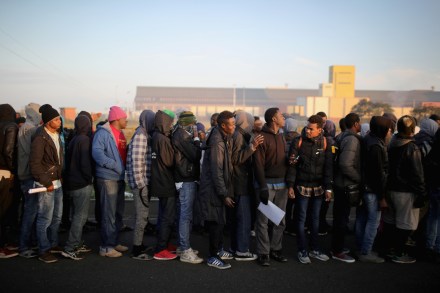
The front desk call out a name, ‘Mohammed Ahmed!’ Four men – or boys as they claimed to be – arrive at the glass window ready for Asda food gift cards and a cash subsistence payment. It’s a small job to find the real Mr Ahmed – the one whose face matches the ID card on file – who eventually gets the payment as the others sit down frustrated. The route has changed, but Britain has don’t nothing to reduce the incentives.

Europe is finally making more TNT

For Europe’s war effort, the time has come for boom or bust. Specifically, it needs more boom. On Monday, Sir Keir Starmer trumpeted the UK’s £1.5 billion investment in six new munitions factories, creating over 1,000 jobs. But we are still miles behind Russia and the rest of Europe when it comes to ammunition. Russia, with assistance from North Korea’s six explosives factories, currently produces over four million artillery shells per year. The European Union and the UK are still collectively trying to drag their production above one million combined.