Andrew Taylor

The mask of death | 17 January 2019

From our UK edition

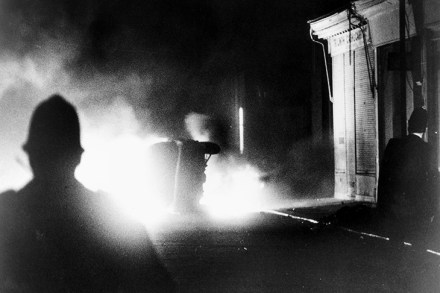
Here is a novel set in the no man’s land between past and present, a fertile and constantly shifting territory whose precise boundaries are unique for each reader. Its author, Jeff Noon, is probably best known for his intellectually adventurous science fiction (his first novel, Vurt, won the Arthur C. Clarke award) and also, to readers of The Spectator, as a crime fiction reviewer. The labels are unfairly reductive, however, since his work has never slotted neatly into genre categories. On the face of it, Slow Motion Ghosts looks as if it might buck the trend and be Noon’s first straight crime novel (if such a thing exists). Set in 1981, in the aftermath of the Brixton riots, the plot centres on the ritual murder of a young musician named Brendan Clarke.
Kidnapped by Kett

From our UK edition

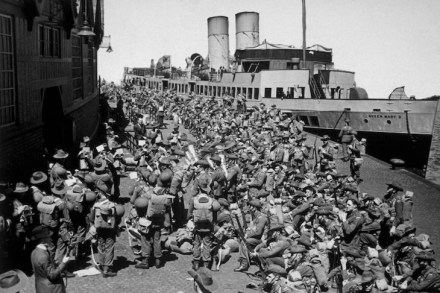
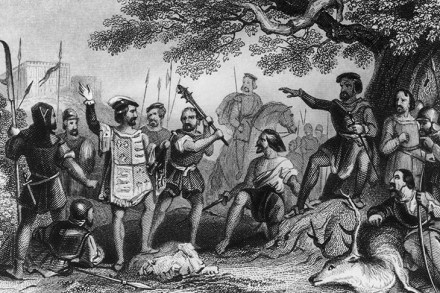
Tombland is not to be treated lightly. Its length hints at its ambitions. Here is a Tudor epic disguised as a historical crime novel. C.J. Sansom’s ‘Shardlake’ series, of which this is the seventh episode, deals with the activities of a hunchbacked lawyer in the 1530s and 1540s. The bloated old king is now dead, and his son, Edward VI, a minor, rules through the Lord Protector, his uncle Somerset. England is in a parlous state — verging on bankruptcy after a disastrous Scottish war, uneasy with the new regime’s ultra-Protestant policies and on the brink of civil unrest. Shardlake has somehow managed to cling to his integrity, despite having some dangerously high-profile clients.

A meditation on history

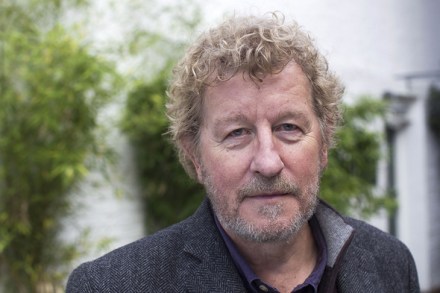
It is a truth universally acknowledged that a serious novel must be in want of a theme. Paris Echo soon makes it clear that it has several. It’s about the shifting nature of history and the mysterious footprints of the past in the present. It’s also concerned with the myriad and biased interpretations that we place on past events. Another preoccupation is the ambiguities of spoken and written French. Modern Paris, the novel’s main setting, allows Sebastian Faulks to explore his themes through two main viewpoints. There’s Tariq, a precociously self-aware 18-year-old Moroccan from a middle-class family in Tangier, who comes to Paris in search of himself, his mother’s French family and an obliging woman who will help him lose his virginity.

A play on the Scottish play

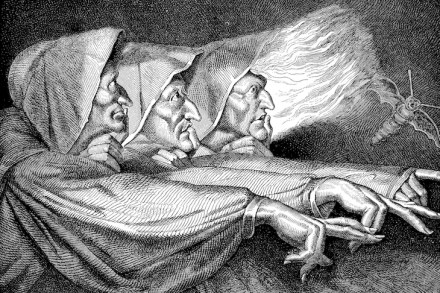
It must have seemed a good idea to someone: commissioning a range of well-known novelists to ‘reimagine Shakespeare’s plays for a 21st-century audience’. The first six novels have come from irreproachably literary authors of the calibre of Jeanette Winterson (The Winter’s Tale) and Margaret Atwood (The Tempest). Now, however, we have something a little different: Jo Nesbo, the Norwegian crime writer, has recast Macbeth as a thriller, allegedly set in 1970, though this timeframe should not be taken too literally. The plot is very loosely connected with Shakespeare’s. The location is a crumbling city in a dystopian country where many of the names have a Scottish ring.

Corpses, clues and Kiwis

From our UK edition

Publishing loves a brand. Few authors of fiction create characters who reach this semi-divine status, but when they do, even death cannot part them from their fortunate publishers. Sherlock Holmes, Hercule Poirot, Bertie Wooster and James Bond are among those who have survived their creators’ deaths, thanks to the assistance of living authors. Now Roderick Alleyn, the ineffably posh Scotland Yard detective created by Dame Ngaio Marsh, returns for a posthumous outing with the help of Stella Duffy, herself a distinguished crime writer. It’s an inspired pairing — Duffy, like Marsh, is a New Zealander with a professional interest in the theatre.

Riddles wrapped in a mystery

From our UK edition

His Bloody Project, Graeme Macrae Burnet’s previous novel, had the sort of success that most authors and creative writing students can only dream of. A psychological crime novel set in 19th-century Scotland, it became a surprise bestseller — and it was also shortlisted for last year’s Man Booker Prize. It is not an easy act to follow. Perhaps wisely, Burnet has chosen to make his next novel, his third, very different in both setting and tone. The A35 in question runs through north-eastern France between Strasbourg and Basel. One evening, at some point in the 1970s, a wealthy lawyer named Bertrand Barthelme is killed when his Mercedes goes off the road as he is driving home to the town of Saint-Louis. The death seems accidental.

Apostle of gloom

From our UK edition

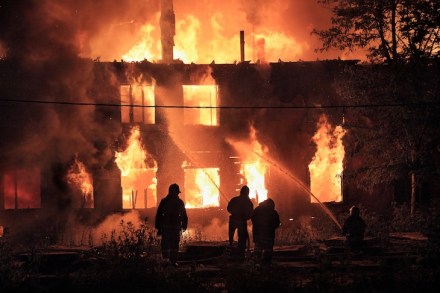
Few people turn to Henning Mankell’s work in search of a good laugh. He’s best known as the author of the grim and darkly fascinating Wallander series of Swedish crime novels, though he also produced a formidable body of other novels, as well as plays, screenplays and children’s books, before his death in 2015. After the Fire is his last book, now published in an admirably smooth English translation. It reprises the main setting and many of the characters of an earlier book, Italian Shoes, including the narrator. Fredrik is a former surgeon whose medical career was destroyed after he botched an operation. Now nudging 70, he lives alone on a bleak island in the Stockholm archipelago. The novel opens one autumn night when he wakes to find his house on fire.

A blast from the past

From our UK edition

If you had to choose one book that both typified spy fiction and celebrated what the genre was capable of doing, then John le Carré’s The Spy Who Came in From the Cold is probably the one to go for. Published in 1963, and set within the comfortably binary framework of the Cold War, it combined moral ambiguity and an air of grim authenticity with a steady narrative pull. It also had an unforced literary distinction that made it impossible to dismiss as ‘mere’ genre fiction. Now, over half a century later, le Carré’s latest novel returns to this murky episode and proceeds to make it even more complicated and harrowing than it was before.

Escapism for boys

From our UK edition

Jack Higgins’s writing routine was said to start with dinner at his favourite Italian restaurant in Jersey, followed by writing through the night until dawn, when he rounded off the working day with a glass of champagne and bacon and eggs. With his estimated lifetime sales of 250 million copies, his routine seemed to work. Len Deighton, on the other hand, takes a more austere view of his craft, arguing that the biggest dangers for a writer are alcohol and praise. He has a weakness for writers’ gadgets, though — in 1968, he leased an IBM Magnetic Tape Selectric Typewriter weighing 200lbs. The front window of his house had be to removed in order to deliver it. That’s true dedication.

In the thieves’ den

From our UK edition

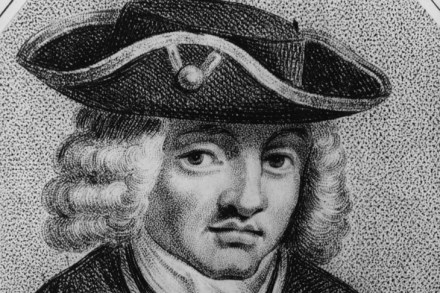
‘To get a confession from a proud male factor, it is always better to call for a poet than a priest.’ These are the wise words of William Archer, the narrator of part of The Fatal Tree and the notional editor of the rest. Mind you, he’s biased: he aspires to be a poet, though he is at best a ‘garreteer’, one of the Grub Street hacks who provide better writers than themselves with lurid copy about the early Georgian underworld they live in. Archer’s world is the ‘Hundreds of Drury’, the streets and alleys around Drury Lane where the thieves, prostitutes and con men ply their trades. Known as Romeville in the thieves’ cant that colours so much of this novel, it holds up a dark mirror to the great metropolis around it.

In hot water

From our UK edition

It’s good to be back in Spook Street, home of the nation’s secret service. From a handful of locations across London, its dedicated employees struggle ceaselessly against the nation’s enemies, when not otherwise engaged in scratching each other’s backs or scratching each other’s eyes out. Spook Street is Mick Herron’s fourth novel in the series, and like its predecessors its focus is the activities of the ‘slow horses’, the Service’s rejects.

A cold case from the Cold War

From our UK edition

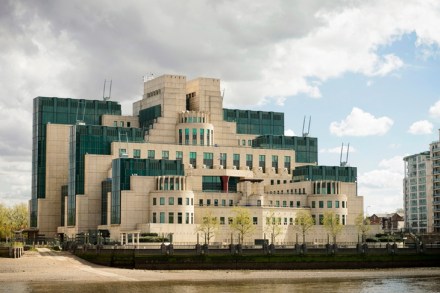
It is a chastening thought that Boris Johnson’s responsibilities now include MI6. Alan Judd’s latest novel is particularly interesting about the relationship between our intelligence services on the one hand and our politicians (and their special advisers) on the other. Deep Blue is the fourth of his spy novels to have Charles Thoroughgood as its central character. (Charles also appears in Judd’s very first novel, A Breed of Heroes, but as a young army officer in Northern Ireland rather than as a spy.) He is now running MI6, a thankless job, particularly as the service is fighting for funds and (worst of all) cast out of central London to an office in Croydon. He’s growing old, too, an analogue spy in a digital world.

Where there’s a will…

From our UK edition

‘Clonakilty, God help us,’ my Irish mother would say automatically when we drove into the town, in pious remembrance of those who had died there during the famine. Clonakilty acquires another corpse in Closed Casket, Sophie Hannah’s second novel to feature Agatha Christie’s Hercule Poirot, which is set mainly in a country house nearby. The continuing success of the Christie brand is one of the marvels of the modern entertainment industry. Estimates of her global book sales start at two billion. Only last August, the BBC announced that it had commissioned seven new Christie adaptations over the next four years.

Good clean fun | 7 July 2016

From our UK edition

The Detection Club is rather like the House of Lords of British crime writing, though considerably more select. (I should declare an interest: I’m a member of the club, so it’s possible I may be biased.) Founded in 1930 by Agatha Christie and Dorothy L. Sayers among others, the club chooses new members by secret ballot. Candidates undergo an initiation ritual involving black candles, a billowing red robe originally designed for G.K. Chesterton, a terrifying sacred oath and a skull called Eric. (Forensic examination has demonstrated that Eric belonged to a female.) The story of the club’s early years has been well told in The Golden Age of Murder by Martin Edwards, the current president.

There’s no escape

From our UK edition

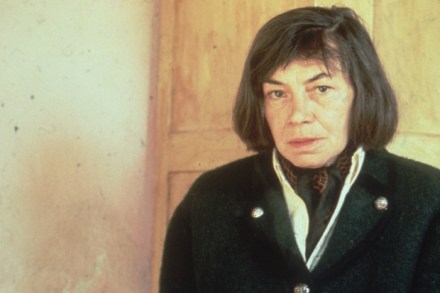
Patricia Highsmith was an accretion of oddities — a woman who doted on her pet snails and carried a selection of them in her handbag, who abandoned her native America for a restless life in Europe, and who turned a habitual paranoia into literature. Now, 20 years after her death, her reputation has been substantially increased by film versions of her Ripley novels and, most recently, Carol (an adaptation of The Price of Salt, her extraordinarily bold novel of a lesbian love affair). For all that, she is generally classed as a crime writer, albeit a very superior one. As one contemporary reviewer commented, ‘Patricia Highsmith is often called a mystery or crime writer, which is a bit like calling Picasso a draftsman.

Who killed murder?

From our UK edition

Pity the poor crime writers. Our earnings, like those of all authors, are diminishing for reasons far beyond our control. Our fictional criminals and detectives are being outsmarted by genetic fingerprinting, omnipresent security cameras and telltale mobile phones. Who needs Sherlock Holmes to solve a tricky crime when you have computers, with their unsporting ability to transmit and analyse enormous quantities of data and identify culprits? But the bigger problem for us novelists (if not for everyone else) is that murder itself is dying. The official homicide rate peaked in 2002, thanks to Dr Harold Shipman, and has since fallen by half — from 944 then to 517 last year.

A leap in the dark

From our UK edition

The first and most important thing to say about The Drowned Detective is that it’s a very good novel and (which is not always the same thing) a pleasure to read. After that, it gets more complicated. The book defies tidy categorisation. Set in a nameless eastern European country, it opens in the literary territory of the crime thriller, with private investigators on the trail of a government minister on the way to visit his rubber-clad mistress. One of them, the narrator Jonathan, is English. He’s furiously jealous of his employee Frank, a hunk who has had a fling with Sarah, Jonathan’s archaeologist wife. In another case, the parents of a missing girl have retained Jonathan to search for their daughter, Petra.

Escaping the Slough of despond

From our UK edition

Most spy novels have a comfortable air of familiarity. We readers can take moles in our stride. We have grown up with cut-outs and dead letter boxes. There’s little we don’t know about angst-ridden, morally fallible spooks in raincoats and sharp-suited, gun-toting agents in casinos. Mick Herron, however, takes a different approach from most other espionage writers. Real Tigers is the third novel in his ‘Slow Horses’ series. Its predecessor, Dead Lions, won the CWA Goldsboro Gold Dagger as the best crime novel of the year. The Slow Horses are a department made up of MI5 rejects — officers who have committed gross errors of judgment or made enemies of powerful figures in the organisation. (‘Persona non grata,’ muses one character.

Multi-fanged

From our UK edition

Nowadays a vampire is usually a Transylvanian in need of an orthodontist. But, as Nick Rennison demonstrates in this entertaining anthology, it was not always so. Bram Stoker’s Dracula was simply one of a crowd when it was published in 1897. Nor was the novel particularly successful at the time. It was only in the 20th century that Count Dracula became the world’s vampire of choice, and that was due to Hollywood rather than Stoker. Dracula’s contemporary colleagues are ripe, as it were, for exhumation. Vampires, particularly in their late Victorian and Edwardian prime, formed a staple of Gothic horror and assumed a variety of guises, some more subtle than others. Their literary ancestry stretched back to 18th-century Germany.

Universal appeal

From our UK edition

As a novelist, Iain Pears doesn’t repeat himself, and he gives with a generous hand. In Arcadia, he provides a dystopian vision of the 23rd century, scholarly espionage set in Cold War Oxford, and an Arts-and-Crafts pastoral called Anterwold, which involves swords and scholars and may or may not be the product of the imagination of one of the characters elsewhere. All this (and much else) is somehow connected to an 18th-century text known as The Devil’s Handwriting containing a mathematical formulation that wasn’t invented until five centuries later. Confused? It gets far more complicated. Arcadia is not so much a novel as a cornucopia of narratives. These unfold through three interlocking universes and involve the viewpoints of ten characters.