Andrew Stuttaford

Aliens probably exist, but they haven’t visited us

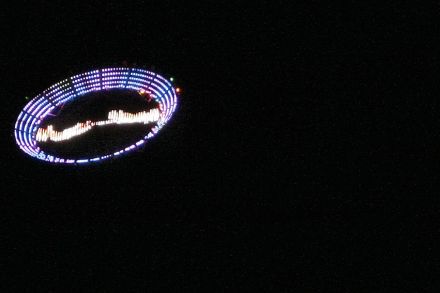
The military types who recently testified before a congressional hearing about their close encounters with UFOs were not the usual suspects associated with such reports. Retired naval commander David Fravor said that he, his weapons service officer and their counterparts in another jet had seen a mysterious ‘Tic-Tac’ shaped ‘object’ while both planes were flying off San Diego in 2004. Speaking to a House of Representatives Oversight subcommittee at the end of last month, he detailed how the object’s dramatic manoeuvres – caught on video by the next flight crew to take off – were beyond the capabilities of the known. Similar objects had, Fravor said, been picked up by advanced radar on ships in his group over the previous two weeks.
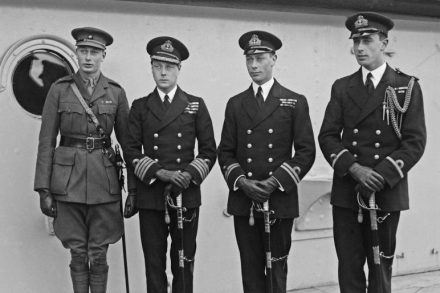
The Windsors at War tells the rest of Edward VIII’s story

From our US edition

Alexander Larman’s The Crown in Crisis ended with the former Edward VIII, "now exiled to Europe, traveling away in the night." In his engrossing The Windsors at War, Larman relates what happened next. In some respects, the tale he tells can be read as a pitch-black comedy, something signaled by the dramatis personae that begins it. A "disgraced Yugoslavian prince" makes it into "Society — high" joining, among other grandees, a millionaire murder victim, and no fewer than three "playboys," one of whom was the millionaire’s suspected murderer. A "would-be royal assassin" fares less well, banished to "Society— low," along with the likes of a journalist (naturally) and an American engineer "unimpressed by the Duke and Duchess of Windsor.

windsors war
spy

The imperfect spy

From our US edition

On one level, Lis Wiehl’s enthralling and grimly astonishing A Spy in Plain Sight is simply the story of Robert Hanssen, an FBI agent whose espionage activities were described by the Department of Justice as “possibly the worst intelligence disaster in US history,” a crowded field even at the time of his arrest in February 2001. “Over twenty-two years,” explained the DOJ in a 2002 report, Hanssen had “given the Soviet Union and Russia vast quantities of documents and computer diskettes filled with national security information of incalculable value.” And his betrayals had cost lives.

Shipwrecks, amputations and polar-bear attacks: the doomed voyage of the Karluk

From our US edition

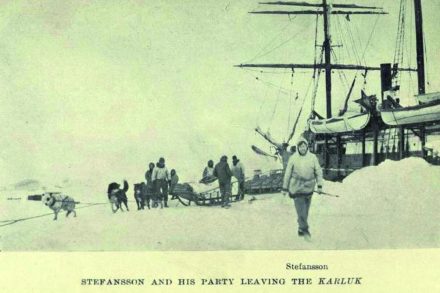
The heroic age of polar exploration gave birth to epics as grand and as harsh as the landscapes in which they unfolded. And, as in all the best epics, their protagonists are often of interest not only for what they do, but also for who they are, or, in the case of the Arctic adventurer — “explorer” is too confining a word — Vilhjalmur Stefansson (1879-1962), who they pretend to be. Stefansson is the “villain” of Buddy Levy’s Empire of Ice and Stone: The Disastrous and Heroic Voyage of the Karluk, a tale that reads like an unusually grim, remarkably gripping Edwardian imperial yarn.

karluk

Germany’s folly: Berlin has miscalculated on Russia and China

From our US edition

The notion that closer trade connections with the West will necessarily set less enlightened nations on a course toward prosperity and liberty is nonsense, but convenient nonsense. Germans have a phrase for it — Wandel durch Handel, change through trade — often given as a justification for their business dealings with Russia and China. Unfortunately, the change they triggered was in Germany. In one case it has been for the worse; in the other it appears to be headed that way. To start with Russia, it’s true that Germany’s ultimately disastrous dependency on natural gas from the east has its origins in the Ostpolitik years: by 1989 the Soviets were supplying West Germany with around a third of its gas.

germany

After Sturgeon

40 min listen

This week: What next after Sturgeon? In her cover piece for the magazine, The Spectator's political editor Katy Balls considers what Sturgeon's exit means for the future of Scotland – and the Union. She is joined by Iain Macwhirter, author of Disunited Kingdom, to discuss whether Scottish independence can survive after Sturgeon (01:09). Also this week: Elif Shafak writes a moving diary in The Spectator, reflecting on the terrible earthquakes that hit her homeland Turkey, and neighbouring Syria. She is joined by Turkey correspondent at the Financial Times Adam Samson, to assess President Erdogan's reaction to the disaster (15:03).

The truth about UFOs

New York Even if Chinese spy balloons – or alien spacecraft scouting the planet ahead of their coming invasion – start being deployed more discreetly than they have been of late, there will still be more sightings than usual of unidentified aerial phenomena (UAPs: a new set of initials designed to help UFOs shed their dodgy past). The word has gone out that the stigma attached to military personnel who report UAPs has gone, and they appear to have responded: there were more reported UAP sightings between March 2021 and August 2022 than in the previous 17 years, including nearly 200 that remain unexplained.

Berlin as the unreal city

From our US edition

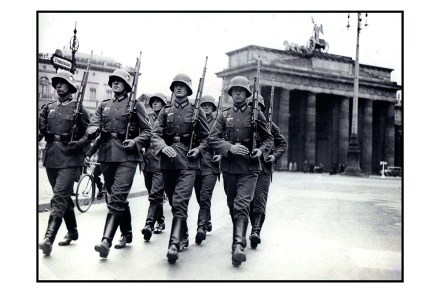
"Berlin has too much [history]." Sinclair McKay cites this rueful observation in the preface to his new book about the city. Given that he is not simply discussing Berlin between the wars, or during the second of those wars, or in the Cold War that followed, but all of it, this may come off as a cry for help. History may — in those words attributed to, well, take your pick — be “one damned thing after another,” but when it came to Berlin, those things hurtled through time in a horde, colliding, overlapping and refusing to form an orderly line. And, in Berlin’s case, they had a way of mattering. Not for nothing does this book’s subtitle refer to Berlin as “the city at the center of the world.” Bad news for a writer aiming, presumably, at a degree of concision.

berlin

Our enemy’s enemy

From our US edition

After Nazi Germany attacked the USSR, Winston Churchill had no qualms about entering into an alliance with Stalin, whose regime he understood all too well: “If Hitler invaded Hell, I would make at least a favorable reference to the Devil in the House of Commons.” Similar thinking does much to explain the enlistment of former (and not so former) Nazis by the Western allies in intelligence work against the Soviets after 1945. With the Red Army in the heart of Europe, co-opting suitably qualified veterans of the fallen Reich — some of whom had very dirty hands indeed — made some sense, according to that Churchillian logic, but mainly when those selected were anti-Communist and now aligned with a democratic Germany.

fugitives

Who killed Bambi?

From our US edition

It never occurred to me that one day, I would review Bambi (the novel). If it had, I would not have expected that its story and backstory would, among other surprises, include the Nazis, a communist, pornography and talking leaves. In fact, I didn’t even know that the film had been preceded by a novel. Felix Salten wrote Bambi: Eine Lebensgeschichte aus dem Walde in Vienna, where it appeared as a newspaper serial in 1922 before being published in book form in Germany the following year. It debuted in America in 1928 as Bambi, a Life in the Woods, translated by none other than Whittaker Chambers, already a communist, but not yet in the Soviet agent phase of his astoundingly protean career.

bambi

The return of the UFOs

From our US edition

By the time you read this, Uncle Sam’s latest ‘definitive’ report on UFOs (it’s not the first) will have been made widely available, with the exception of a classified annex (there’s always room for a sequel). If the leaks are to be believed, we will have learned that there’s a lot more out there that we don’t know. Some of the material may well be impossible to explain, but inexplicable is not a synonym for extraterrestrial. Could we instead be catching glimpses of something the Russians or the Chinese have dreamt up? E.T., though, will neither be ruled in, nor, crucially, ruled out. For their part, ufologists will take what they can get.

UFOs

Fascist means, green ends

From our US edition

This article was originally published in The Spectator’s February 2021 World edition. Subscribe here. In ‘What is Fascism?’ (1944), George Orwell complained that the word ‘fascist’ had been applied to so many groups, (including conservatives, socialists, communists and Catholics), beliefs and even species (dogs!) that it had been reduced to something close to meaninglessness. And yet, he observed: ‘Fascism is...a political and economic system. Why, then, cannot we have a clear and generally accepted definition of it?... To say why would take too long, but basically it is because it is impossible to define Fascism satisfactorily without making admissions which neither the Fascists themselves, nor the Conservatives, nor Socialists of any color, are willing to make.

Wind Turbine

Something woke this way comes

From our US edition

Man’s refusal to accept reality can take entertainingly paradoxical form. One of the more enjoyable is the New Atheists’ crusade (I use the term advisedly) against God — a battle with human nature which, like most battles with human nature, can never be won. God may never have appeared in a burning bush, but, he, she or they came to life in the brains of some ancient hominids, probably as a bug in a new pattern-recognition app. It was a bug with benefits, and as evolution is an opportunist, God has never gone away since. Tara Isabella Burton, who has a doctorate in theology, does not deal with the sources of religious belief in Strange Rites, Instead, she focuses ‘primarily on what a religion does’.

rites

Do cry for her, Argentina

From our US edition

This article is in The Spectator’s March 2020 US edition. Subscribe here. The odds of becoming a cult figure improve with the speed of departure. Among musicians, Jimi, Jim, Janis, Kurt and Amy played their last notes at 27. By dying at 33 and later becoming the subject of an Andrew Lloyd Webber musical, Eva Perón joined an even more exclusive club. ‘Half a million people kissed the coffin,’ says the Argentine novelist Tomás Eloy Martínez in Santa Evita (1995). ‘A million-and-a-half yellow roses, stocks from the Andes, white carnations, orchids from the Amazon, sweet peas from Lake Nahuel Huapi, and chrysanthemums sent by the emperor of Japan… were thrown from balconies.

argentina