Andrew McQuillan

Andrew McQuillan writes about politics and unionism across the UK. He is Scottish and has lived and studied in Belfast for several years.

Will Northern Ireland ever learn to solve its own problems?

From our UK edition

If the relationship between the UK and the United States is allegedly special, the relationship between Northern Irish politicians and the US presidency is a whole different level.  In the mythologised, Derry Girls telling of the Troubles, Bill Clinton turning on Belfast’s Christmas lights in 1995 heralded a transformative US intervention. One which allegedly managed more in delivering the Belfast Agreement than the hard yards trod by UK and Irish civil servants, the security forces and the more constructive figures involved in local politics.  How can Northern Irish politicians be encouraged to take some responsibility for providing stable, local government?  Since then, Northern Irish politicians have revelled in the purported glamour of a presidential head rub.

The intellectual hollowness of Scottish Labour

From our UK edition

The implosion of the Scottish National Party has led Scottish Labour to dream again of one day returning to what it assumes is its birth right: the berth at the top of Scottish politics. Many of the banalities and buzzwords in Labour’s most recent manifesto make Humza Yousaf’s blandishments about a ‘wellbeing economy’ sound deep and serious. Humza Yousaf’s increasingly pyrrhic looking triumph in the contest to replace Nicola Sturgeon was met with much merriment in Labour ranks; one source quoted in the Times during the leadership contest bluntly said, ‘I hope Humza wins because he is fucking s****.’ Polling since Yousaf’s win has found that the SNP’s lead over Labour in Westminster seats has been slashed to five points.

The Good Friday Agreement hasn’t solved Northern Ireland’s troubles

From our UK edition

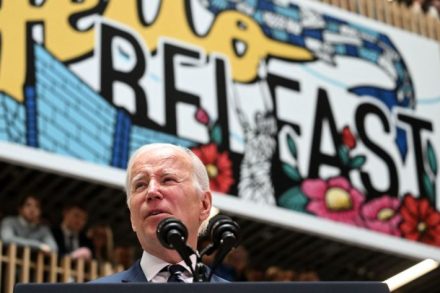
Northern Ireland is a few weeks out from a Davos-style gathering of the great and the good to mark 25 years since the signing of the Belfast Agreement. The Clintons will be in town, Joe Biden will be there to presumably tell some folksy, paddywhacking wisecrack and Tony Blair might even feel the familiar touch of the hand of history upon his shoulder.  Unhelpful, then, that the real world is deciding to intrude. Outside the backslapping get-togethers planned at venues such as Queen’s University in Belfast, villains still roam the streets and backroads of Ulster.

Rishi Sunak’s Protocol could tear the DUP apart

From our UK edition

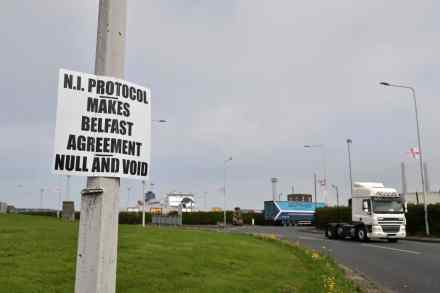
Will the Windsor Framework prove the undoing of Jeffrey Donaldson and the DUP? The mood music amongst some of the louder elements of this fractious political tribe points to trouble ahead.  The premature champagne corks released in London and Brussels earlier this week were greeted with stony silence in the unionist heartlands. The party’s public position – and that of its leader – is that it is still chewing through the document. Though Donaldson did not issue an outright no, he did say some issues remained with what had been agreed by the UK and EU.  However, the pressure on Donaldson to respond in the negative has been cranked up by an intervention from some of the DUP’s more outspoken and mischievous types.

The Windsor knot – how long will Unionists wear the deal?

From our UK edition

White smoke has emerged from Windsor. Now that a deal between the UK and EU over Northern Ireland has emerged, can the DUP endorse it?  Early reports that the party were on board – and were planning on using a dinner in London this evening to begin rationalising this to their supporters – were dismissed by the DUP leader Jeffrey Donaldson as ‘entirely fictional’. He reiterated the line that he and his party needed time to chew it over.  The DUP themselves have said in their own response to today’s developments that there has been progress. The fact they have not gone for an outright no will please Downing Street and the Northern Ireland Office greatly.

The DUP has a right to be difficult over the Northern Ireland Protocol

From our UK edition

It’s easy to take an unsympathetic view of the Democratic Unionist Party. For many, its politicians are caricatures of the dour Ulsterman come to life; flinty types with an antediluvian outlook. An unfortunate reminder – for a certain type of Englishman – of all that ‘Irish stuff’ they would rather not have to deal with.  The back and forth over the Northern Ireland Protocol has seen this sentiment ratcheted up. Jeffrey Donaldson’s standpoint – no return to devolution without his party’s tests being met – is engendering incredible frustration among government ministers and a press tired of having to surrender column inches to this intractable tale.

Is Whitehall inadvertently funding Sturgeon’s push for separatism?

From our UK edition

Is Whitehall at last baring its teeth in response to the Scottish government and SNP’s separatism push? A look into how the Scottish civil service conducts itself is long overdue.  Scotland Secretary Alister Jack confirmed earlier this week that senior civil servants in the Cabinet Office are examining whether their Edinburgh counterparts should be allowed to keep working on plans for independence following last week’s Supreme Court ruling. Unless Whitehall intervenes or the Scottish government junks its plans, around £1.5 million worth of taxpayer money will reportedly continue to be spent each year on the team of 25 civil servants tasked with providing a revised prospectus for separation.

Nicola Sturgeon is running out of road

From our UK edition

Nicola Sturgeon gave a predictable response to the Supreme Court's ruling that the Scottish government does not have the power to legislate for a referendum on Scottish independence. The First Minister dialled up the grievance factor by claiming the decision ‘exposes as myth any notion of the UK as a voluntary partnership’. If only there was a vote in the past eight years which disproves her point.  The court's ruling, delivered in the clipped tones of the Edinburgh-educated Lord Reed, was a fitting coup de grace in response to the grandstanding of the Scottish government and Scottish National Party. Rallies and protests are reportedly being scheduled the length and breadth of Scotland by the faithful of the nationalist movement in response.

Another set of Northern Irish elections won’t solve anything

From our UK edition

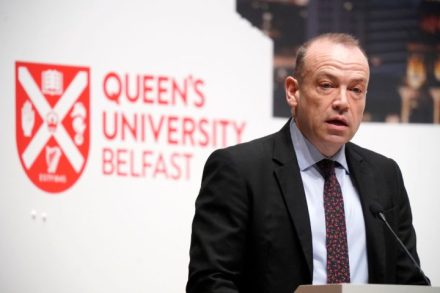
Northern Ireland is set for another election. The failure to reboot the province’s power-sharing Executive by the deadline last Friday means Northern Ireland Secretary Chris Heaton-Harris is compelled to call another poll. The current absence of an Executive stems from the Democratic Unionist party’s refusal to join in until substantive progress is made on the Northern Ireland Protocol. What will an election solve? The frank answer is nothing. Sinn Féin, currently the largest party following an election in May, will be able to present this to nationalists and republicans as yet another chance to give those democracy-denying unionists another mighty kicking on the road to a united Ireland.

The sectarian shame of Ireland’s women’s football team

From our UK edition

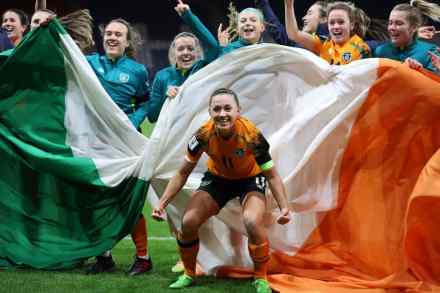
How bad is Irish nationalism’s sectarian problem? In the somewhat Panglossian world occupied by nationalist and republican activists and politicians – boosted by recent census and election results – it doesn’t really feature in the discussion.  At the recent 'Ireland’s Future' conference in Dublin, attended by thousands of people, the grubby stuff – the legacy of the Troubles and all – barely featured amidst the hopeful mood music and good vibes. The sight of the Republic of Ireland’s women’s football team celebrating their World Cup qualification in Glasgow earlier this week with the pro-IRA chant of 'Oh, Ah, Up the ‘RA" – a line taken from a Wolfe Tones song – struck a discordant tone.

Has Sinn Féin really changed its spots?

From our UK edition

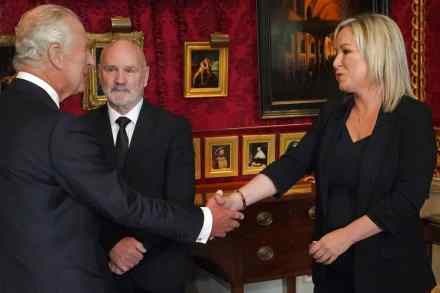
In a week of solemn intonation and symbolic meaning, the sight of Sinn Féin’s leader Michelle O’Neill shaking hands with the King at Hillsborough Castle was yet another event to be dissected and extrapolated. Hushed tones providing narration from London fell over themselves to stress the meaning of this and repeated the article of faith: ‘How far we’ve come’. From the BBC to Sky, and even GB News, broadcasters were united on that front in their commentary. Others, especially those outriders for the so-called ‘New Ireland’ which would appear following any border poll, pointed triumphantly. This gesture showed that unionists had nothing to fear and that their traditions would be accommodated.

The DUP is failing to learn any lessons from Sinn Fein’s victory

From our UK edition

Is the DUP intent on compounding the disaster of its recent election defeat which saw Sinn Fein returned as Northern Ireland’s largest party? It certainly seems that way. In the aftermath of that result, the DUP, the TUV (Traditional Unionist Voice) and other loyalists have been quick to point out that the unionist designation remains the largest at Stormont, albeit marginally. They argue that polling continues to show a majority in favour of Northern Ireland staying within the UK. This has been used to downplay Sinn Fein’s achievement last week. But this complacency is dangerous. Contrary to the predictable hyperbole of recent days, a united Ireland is not imminent.

Are Northern Ireland’s unionists about to hand Sinn Fein victory?

From our UK edition

'Ulster stands at the crossroads,' Northern Ireland's prime minister Terence O'Neill famously declared in 1968 as the Troubles began to take hold. A crossroads moment is once again looming into view. If current polling is to be believed, Sinn Fein will be returned as the largest party following Thursday’s assembly election. Such a victory would pose an existential problem for Northern Ireland’s unionists – and the governments in London and Dublin.  Unionists only have themselves to blame for this crisis. While what they stand for – the preservation of the Union – is obvious, the means by which they want to achieve it is anything but.

The DUP’s dangerous game in Northern Ireland

From our UK edition

Sir Jeffrey Donaldson’s leadership of the DUP has been characterised as something of a phoney war against the Northern Ireland Protocol (NIP) – until now. After months of threatening to pull down the Northern Ireland executive should he and his party not be satisfied with progress on removing the protocol (which creates checks on goods between Britain and Northern Ireland) Donaldson has made his move. Paul Givan, something of a lame duck in his role as First Minister, has resigned and left his post at midnight. Because of the intricacies of Stormont, the deputy First Minister Michelle O’Neill of Sinn Fein will also depart but junior ministers will remain in post until an election.

Could the rise of Sinn Fein lead to a united Ireland?

From our UK edition

The possibility of a political wing of a terrorist organisation becoming a party of government in an EU member state would normally be headline news. But that's precisely what's happening in Ireland.  Sinn Fein is currently enjoying a consistent lead at the top of the polls in the Republic; a recent example from the Irish edition of the Sunday Times shows it had surged by six points to 37 per cent, some distance ahead of Fine Gael and Fianna Fail, currently coalition partners. Public approval of the Sinn Fein leader Mary Lou McDonald — the middle-class Dubliner who described the IRA campaign as 'justified' and mused that there was 'every chance' she would have joined in if she had the chance — is at 50 per cent.

Dennis Hutchings and the problem with a Troubles amnesty

From our UK edition

The death of the former solider Dennis Hutchings from Covid-19 during his trial for attempted murder is yet another example of the complex legacy problem which besets Northern Ireland. Hutchings, who was 80 years old, was accused of killing John Pat Cunningham, 27, in County Tyrone in 1974. Hutchings’ supporters – which includes a broad swathe of unionist politicians, the Tory MP Johnny Mercer and the wider veteran community – regarded his prosecution as a disgrace. The 80-year-old, kept alive by dialysis, was dragged to Belfast from Cornwall for the non-jury trial.

When will the DUP realise the truth about the Tory Brexit strategy?

From our UK edition

Are the Tories serious about getting rid of the troublesome Northern Ireland Protocol? The latest extension to the so-called grace period – the third in recent months – means that plans for post-Brexit checks on some goods entering Northern Ireland have been suspended again. But this isn't the good news you might think it is for unionists in Northern Ireland. In the short term, of course, it avoids a repeat of 'sausage wars' and megaphone diplomacy around the Protocol's Article 16 (which allows Britain or the EU to take unilateral action in certain circumstances). This can only be good news. Yet for nervous unionists there is a disturbing lack of security about what might happen when this grace period does eventually come to an end.

Northern Irish unionists are united against the protocol

From our UK edition

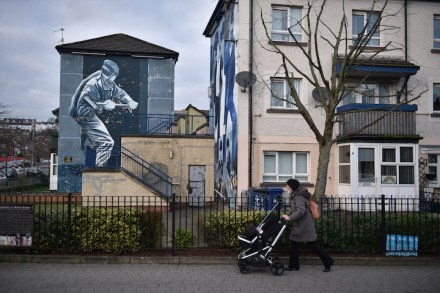
The DUP’s departed leader Edwin Poots spoke in his valedictory interview of a 'significant victory' heading unionism’s way regarding its bête noire, the Northern Ireland protocol. The outright, irrevocable removal of the ‘sea border’ imposed by the protocol has become the fundamental objective of all shades of political unionism and loyalism.  Anti-protocol street art garlanded two deeply different citadels of unionism in the past week — the working-class heartland of Belfast’s Shankill Road and the affluent County Down village of Killyleagh. There is a sense of shared purpose.

The Troubles amnesty and the hypocrisy of Sinn Fein

From our UK edition

Predictably – and understandably – the Northern Ireland Office’s proposed amnesty for crimes relating to the Troubles has resulted in a backlash across both sides of the Ulster divide. Yet, while the criticism was initially uniform, rifts have already emerged in the week since they were first unveiled. The noble ideal that justice delayed is justice denied has proved relatively feeble as a unifying glue, despite the Northern Ireland Assembly voting on Tuesday for a motion rejecting Westminster’s proposals. Prior to that vote, which heard many heartfelt and worthy speeches from across the chamber about the moral and legal basis for rejecting the amnesty, a gathering took place outside the Stormont chamber to protest the proposals.

Has Boris Johnson forgotten what he once said about IRA terrorists?

From our UK edition

Boris Johnson's approach to dealing with historical prosecutions in Northern Ireland has achieved that unique political feat in the Province: uniting both sides in revulsion at what is being proposed. Northern Ireland minister Brandon Lewis is expected to announce a statute of limitations ending prosecutions in cases which pre-date the 1998 Belfast Agreement. Reports suggest that this will apply not only to members of the security forces but also republican and loyalist paramilitaries. This was always a likely end point in Northern Ireland’s 'process', indicative of the British political class’ reflex instinct to wish the Province and its troubles away.