Andrew Lambirth

Drawing on experience

From our UK edition

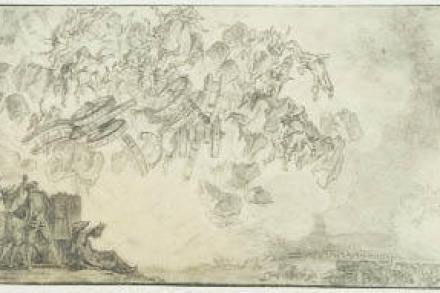
Theatres of Life: Drawings from the Rothschild Collection, The Wallace Collection, Manchester Square, London W1, until 27 January 2008 Pop Art Portraits, National Portrait Gallery, until 20 January 2008, Sponsored by Lehman Brothers Waddesdon Manor, the stately home of the Rothschilds near Aylesbury now managed by the National Trust, is lending for the first time a group of master drawings for outside exhibition. London’s Wallace Collection is the fortunate recipient, and some 75 high-quality drawings (mostly French 18th-century) are currently on display in the basement galleries of Hertford House in Manchester Square. Here is yet another example of the current fetish for subterranean galleries devoid of natural light.
Sex with no appeal

From our UK edition

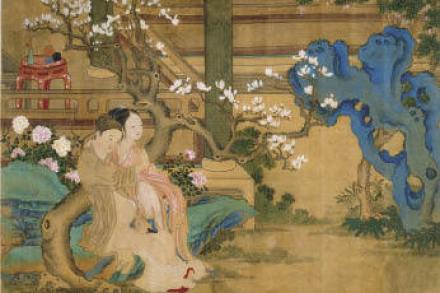
What has come to be known as the Sex Show at the Barbican has received mixed reports. Some people dismiss it out of hand (and unseen) while others profess to enjoy it immensely. One painter I know loved it, but then he is a voyeur both by profession and inclination. I approached it with an open mind, ready to be seduced (if need be, and strictly for the sake of my readers) but found myself all too soon turning judgmental, as critics tend to do. I also found myself thirsting for an oasis of subtlety among the deserts of brashness: thankfully, there are real works of art here interrupting the tasteful or not-so-tasteful pornography, which provide some respite from the overweening lubricity.

Domestic harmony

From our UK edition

Home and Garden: Domestic Spaces in Paintings 1960–2004; Geffrye Museum, Kingsland Road, E2, until 4 February 2008 The final part of a quartet of exhibitions devoted to the subject of Home and Garden, competently supported by a useful catalogue, is currently enlivening the Geffrye Museum in London’s East End. It’s a pleasure to visit: the Geffrye’s permanent display of period rooms is always worth looking at, there’s a garden and restaurant, and downstairs is the still newish space for temporary exhibitions.

Round the galleries

From our UK edition

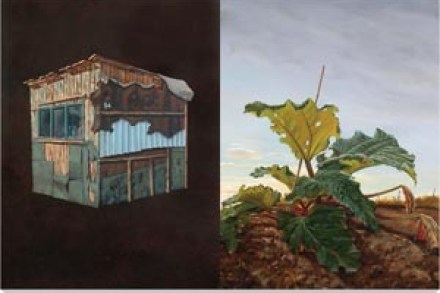
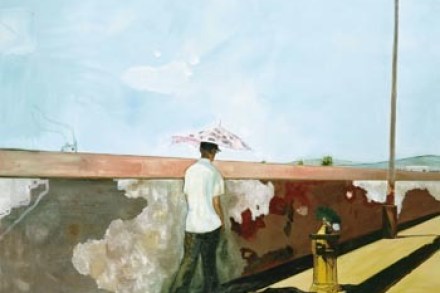
The autumn brings a fine crop of new exhibitions, some of them even full of ‘mellow fruitfulness’. I have been watching the development of Julian Perry’s work over the past ten years with considerable pleasure, but his new show is his best yet. Perry has an eye for the details of suburban living and recreation, for south coast holiday homes, caravan parks and tower blocks. His last show, at Guildhall in 2004, focused on the arboreal delights of Epping Forest.

Glowing in the dark

From our UK edition

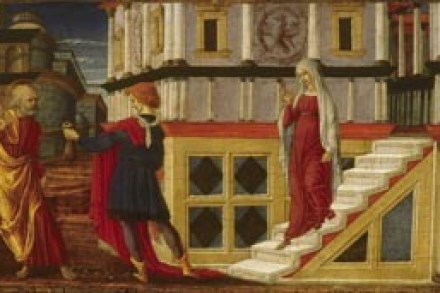
The latest exhibition in the grim dungeon of the National Gallery’s Sainsbury Wing actually looks rather splendid. After a slow start, this tribute to later Renaissance Siena blossoms forth — despite the dim lighting — into real magnificence. It brings together more than a hundred exhibits, mostly paintings and drawings, but including sculpture, ceramics and manuscripts, in a well-designed and skilfully installed display which focuses on the Sienese achievement from 1460 to 1530. I suppose if people think of Sienese painters, they think of Duccio, the Lorenzetti brothers, Simone Martini and Sassetta, all of whom were dead before the period covered by this exhibition begins.

A well-kept secret

From our UK edition

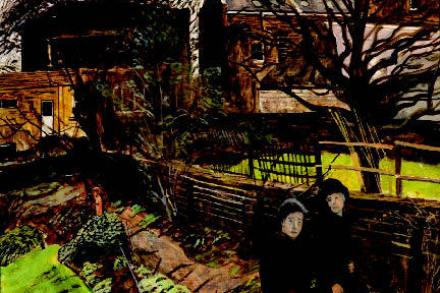
One of the great things about having an area of specialism is the discovery of a new aspect to it. Since my teens, I have developed a particular interest in 20th-century British art, encouraged initially by a brilliant art teacher and by the writings of Sir John Rothenstein, quondam director of the Tate Gallery. Well, it’s a big area to cover, so for me new things are emerging all the time as my knowledge extends and my tastes change and develop. Charles Mahoney (1903–68) is one of those artists who had somehow slipped through the net of connections and cross-references I have gradually built up over 30 years of reading and research. Looking back, I realised I had come across his name from time to time but without the artist coming into focus.

Restless mind

From our UK edition

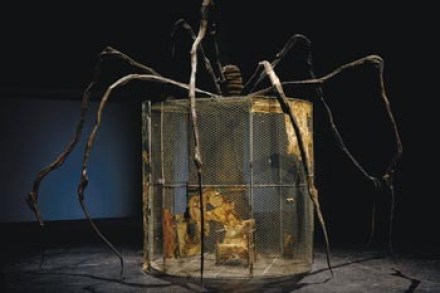
For once a major blockbuster exhibition at the Tate justifies its size: the imaginative world of Louise Bourgeois is so potent and all-encompassing that a show of more than 200 works, from small experimental objects to large installations, seems not a fraction too extensive. Bourgeois, born in Paris in 1911, is famous — in this age of confession and determinedly autobiographical art — for her troubled childhood. Whereas most artists of this type foist their traumas on us raw, Bourgeois cooks hers to a turn. What is more, she has the imagination and creative vision to translate and transform her source material, transcending its personal impetus and making it universal.

Lost in translation | 13 October 2007

From our UK edition

Any show that sets out to be definitive encourages brickbats and controversy. When Charles Baudelaire called in 1863 for a painter of modern life, he was seeking the kind of artist who would do justice to the realities of contemporary existence rather than escape them as was the habit of the French Salon painters of the time. Eventually he lit upon the elegant though minor graphic talent of Constantin Guys (1805–92), unable to appreciate the towering genius of Manet who in fact precisely exemplified the painter he was looking for. Such is the short-sightedness of even the greatest critics.

Bucolic pleasures

From our UK edition

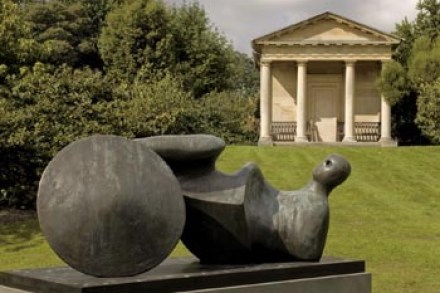
It’s tempting to think we know everything about Henry Moore (1898–1986), household name that he is. As early as the 1950s, Percy Cudlipp was composing satirical ditties for magazines like Punch with rousing first lines such as ‘Don’t do any more, Mr Moore’, which suggests an over-familiarity perhaps bordering on satiety. But it’s all too easy to shoot down a leviathan — the most miserable shot can hardly miss. It’s far more profitable to consider Moore’s strengths and look at some of his real and substantial achievements. One of these was to make large-scale sculpture that looked at its best in the landscape. Moore always maintained that sculpture was an art of the open air.

Topsy turvy

From our UK edition

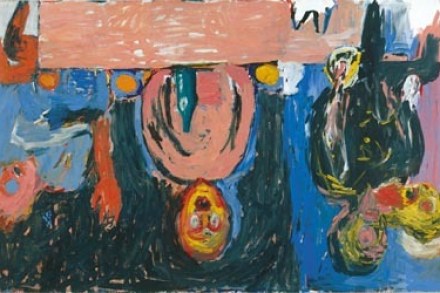
Born Georg Kern in 1938, Baselitz adopted the name of his birthplace in Saxony, East Germany just after his definitive move to the West in 1958. Brought up in an atmosphere of gloom and social realism, he had been expelled from art school in East Berlin for ‘social-political immaturity’. He fared better in West Berlin and firmly grasped the fashionable nettle of existential angst while struggling with a whole raft of Western influences, from Abstract Expressionism to Pop Art. He developed his own brand of uncouth and aggressive figuration, making his trade-mark (from 1969) the upside-down motif.

Miller’s colourful tale

From our UK edition

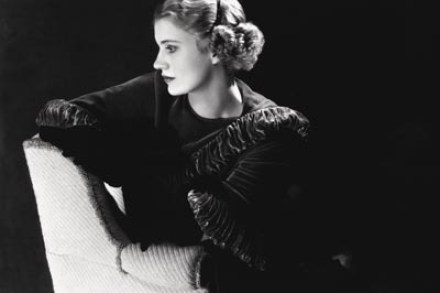
This beautiful exhibition celebrates the 100th anniversary of Lee Miller’s birth in Poughkeepsie, New York State, and it takes place 30 years after her death from cancer. When she died, her only child Antony Penrose had no idea of her achievements as muse and artist, and only learnt about them gradually. As he grew to understand her better, he determined to set about the rehabilitation of her artistic reputation. This he has achieved with exemplary thoroughness, through a series of publications and exhibitions which have made Lee Miller a well-known and much admired figure. The last substantial museum show was at the National Portrait Gallery in 2005 — is it a little soon to be having another?

Feat of clay

From our UK edition

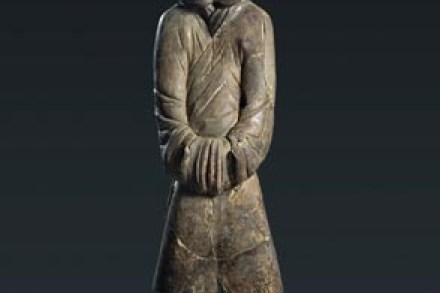
The First Emperor: China’s Terracotta Army, British Museum, Sponsored by Morgan Stanley Here’s a show to pull in the public. More than 100,000 advance tickets already sold (Michelangelo’s drawings, though popular, sold only a fifth of that before it opened), and so much media coverage you scarcely need my review. Except, of course, that most of what passes for reporting is ill-informed and simply parrots the party line of press release and salesmanship. In other words, it’s just another form of advertising, which is why the art institutions of our country are desperate to get it — the life-support system of free publicity apparently necessary to the economic survival of museums.

Beguiling mix

From our UK edition

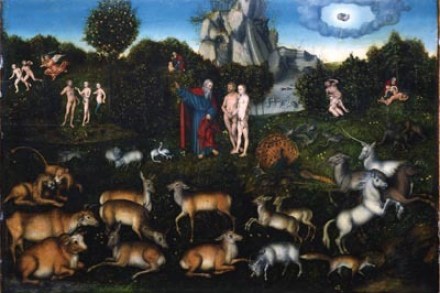
Exhibitions: Temptation in Eden: Lucas Cranach’s ‘Adam and Eve’; Work, Rest & Play Amazingly, the Courtauld can claim to have mounted the first exhibition in England devoted to Lucas Cranach the Elder (c.1472–1553). He’s not an artist we know at all well here, though one or two images will be familiar from reproduction, probably elegant, elongated and slightly heraldic full-length portraits, or glimmering erotic nudes. There’s something very individual and instantly recognisable about his images, an aura of self-containment which is based on a decorative unity which looks back to Gothic art. This is balanced by the new naturalism of the German Renaissance.

True colours

From our UK edition

Exhibition; Hélio Oiticica: The Body of Colour How diminished our lives would be if suddenly we could only see in black and white. ‘Colour is the first revelation of the world,’ exclaimed Hélio Oiticica (1937–80), a Brazilian artist with a mission to liberate colour and help it to embody itself in other guises. He thought of colour as a dimension, like space or time. How far would he have travelled if his tragic early death had not stopped short his career? He had already gone beyond helping colour to escape from the imprisoning rectangle of the picture frame and move into three-dimensions; he had even given it human locomotion and brought it into the arena of performance. Where would he have taken it next?

Passionate precision

From our UK edition

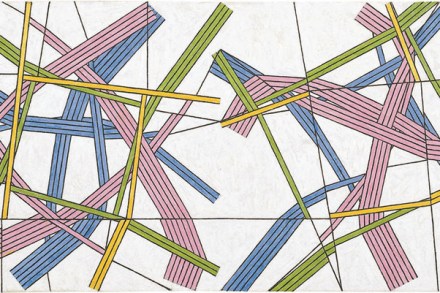
If you feel strong enough to postpone for a while the pleasures of the bookshop and the restaurant (without which it seems no self-respecting art gallery can exist these days), proceed upstairs at Camden Arts Centre into the light and welcoming hall, where the visitor is offered an introduction to the work of Kenneth and Mary Martin, husband and wife team of abstract artists, once deemed radical and avant-garde, but now somewhat out of fashion. Both came to abstraction relatively late, in the third wave, so to speak, after the Vorticists under Wyndham Lewis had initially ploughed the abstract furrow in England in 1914–18. The second wave was in the 1930s, when the sculptors had a go: Hepworth and Moore and the irrepressible Ben Nicholson making his beautiful white abstract reliefs.

The power and the glory

From our UK edition

Taking the train from Paddington to Bristol can be hazardous if you coincide with an exodus of holidaymakers on summer excursions. I travelled down on a Thursday morning and the Paignton express was not only packed to the gunnels (if trains can rightly be said to have gunnels), but even picked up more passengers en route. But the effort was very definitely worthwhile: in the superb top-lit galleries of the Royal West of England Academy is a glorious show of paintings by the RWA’s president, Derek Balmer (born 1934). Here are paintings of place coursing with rich colour, evocations of foreign travel and the landscapes of home, cities and fields endorsed with the traces of man — a history of civilisation in the making.

Artistic harmony

From our UK edition

If you are planning a holiday visit to Shakespeare country and fancy a change of mood and visual pace from the usual round of sightseeing and theatre-going, Compton Verney is a splendid alternative destination. Besides the remarkable permanent collections of paintings, Chinese bronzes and English folk art, there is a programme of changing exhibitions which make something of a virtue out of contrasting the historic with the contemporary. Thus an older master will be shown side by side with a modern (a previous grouping was the sculptor Messerschmidt with Van Gogh and Francis Bacon) in order to strike new resonances from each by this unexpected juxtaposition.

Birth of the seaside

From our UK edition

If we must have frequent Impressionist exhibitions, and it’s clear from the public’s insatiable appetite for them that we must, then at least let’s have good ones. The current show at the Academy is a well-conceived and enjoyable expedition into a theme. All too often themed shows seem forced — the art selected to illustrate an idea, rather than the idea helping us to focus on key works of art. Impressionists by the Sea is both interesting and revealing, and it includes a good percentage of high-quality art into the bargain. An excellent show for those who prefer the idea of the seaside to the actuality of overcrowded or rain-despoiled beaches.

Going Dutch | 28 July 2007

From our UK edition

Andrew Lambirth delights in the National Gallery’s exhibition of a Golden Age I’ve been reading Still Life with a Bridle by the poet Zbigniew Herbert in preparation for Dutch Portraits: The Age of Rembrandt and Franz Hals at the National Gallery. It’s a fascinating collection of essays which examines and pays tribute to the Golden Age of Dutch art and the society that produced it. Packed with unusual and stimulating perceptions, not to mention poetic inventions, the book only increases one’s sense of wonder at such an efflorescence of talent concentrated in one unprepossessing place over a relatively short period. (This exhibition covers the years 1599–1683 and runs until 16 September, sponsored by Shell.

Bringing peace to the spirit

From our UK edition

Hockney on Turner Watercolours at Tate BritainAnnely Juda — A Celebration at Annely Juda Fine Art If you enter Tate Britain via the side entrance on Atterbury Street, you will find five large new landscape paintings by David Hockney hanging above the stairs to the main galleries, to celebrate his 70th birthday. Each painting is composed of six canvases in two layers of three. All depict the same stretch of woodland in east Yorkshire, seen at different times of year. I am not an admirer of Hockney’s recent landscape paintings, finding the colours insensitive and the drawing surprisingly inexact. His purples and oranges are not quite wild enough, while his greens lack all conviction.