Andrew Lambirth

Man as machine

From our UK edition

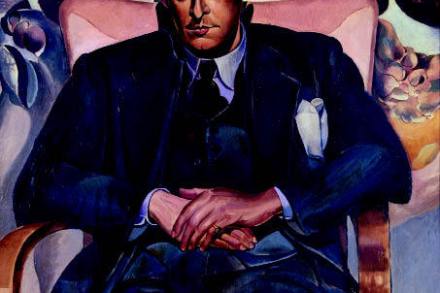
Cold War Modern: Design 1945–1970 V&A, until 11 January 2009 It’s difficult not to admire the ambition of the V&A in mounting exhibitions which summarise and explain the great historical movements in design. There have been notable successes in the past, particularly with their surveys of Art Nouveau and Art Deco, but the closer the organisers approach our own times, the more fraught with complication is the enterprise. It’s almost impossible to locate and maintain any degree of objectivity about very recent happenings — we have no historical perspective on them and find it difficult to view them except in terms of personal preference.

Force of nature

From our UK edition

Ancient Landscapes — Pastoral Visions: Samuel Palmer to the Ruralists Victoria Art Gallery, Bath, until 19 October Don’t be misled by the title: although in its entirety this is a wide-ranging exhibition, it was organised by Southampton Art Gallery (and thus draws heavily on that remarkable permanent collection) and was originally intended for a much larger musem. In Bath, restrictions of space mean the show had to be cut in half — but like an earthworm, both halves have continued to flourish. Part 1 dealt with the historical context, the Samuel Palmers, the Graham Sutherlands and the Paul Nashes, and Part 2 comes up to date with the Brotherhood of Ruralists.

Abbreviate into intensity

From our UK edition

Francis Bacon Tate Britain (sponsored by Bank of America), until 4 January 2009 At Tate Britain is a glorious centenary show of paintings by one of our greatest modern painters, Francis Bacon. It’s more than 20 years since the last Bacon retrospective at the Tate, but the Bacon industry has been chugging steadily away in the interim. His studio — which the Tate declined, astonishingly — was transported to Dublin, and opened there with much fanfare over the vast archaeological operation of decoding the layers of source material and detritus which comprise the studio floor.

Family business

From our UK edition

Painting Family: The De Brays, Master Painters of 17th Century Holland Dulwich Picture Gallery, until 5 October Cecil Collins — A Centenary Exhibition Monnow Valley Arts Centre, Middle Hunt House, Walterstone, Nr Abergavenny, Herefordshire, until 14 September I must say I admire museums and galleries that put on exhibitions devoted to the revival of lost reputations, in other words to a genuine spirit of reassessment. In these revenue-dominated days, exhibition organisers are driven increasingly in the direction of guaranteed best-sellers, and the crop of predictable subjects on the gallery circuit grows apace. So it is refreshing to be greeted by a relatively unknown name, and have a whole exhibition attached to it.

Artistic diversity

From our UK edition

Love National Gallery, until 5 October It’s that time of the year — some call it the Silly Season — when a themed exhibition visits the Sunley Rooms of the National Gallery, after previously showing at Bristol’s City Museum and Art Gallery, and the Laing Art Gallery, Newcastle upon Tyne. This is the seventh in a series of collaborative exhibitions organised by the NG in partnership with Bristol and Tyne & Wear Museums, and this year the selection of exhibits relies very heavily on the National’s collection, with only one work each borrowed from Bristol and Newcastle. Happily, there is no restriction to sourcing loans elsewhere, so the show does not lack variety and strength. If anything, its diversity makes the theme a tenuous cohesive device.

Perennial Cézanne

From our UK edition

Andrew Lambirth on the artist’s profound and far-reaching influence For a certain generation of English artists, there have been enough Cézanne exhibitions to last more than one lifetime. These are the painters who had the gospel of Cézanne rammed down their gullets at art school, and who feel that the world has other things to offer. Roger Fry was the first great apostle of Cézanne in England, who at every opportunity lectured the unwary on the principles of ‘significant form’ and the consciousness-changing gifts of the master. Henry Tonks (who, as head of the Slade, resisted the siren call of modern art as forcefully as he could) caricatured him mercilessly in a 1922 painting called ‘The Unknown God’.

All roads lead East

From our UK edition

Andrew Lambirth on our continuing fascination with the Orient Almost everywhere you look these days there’s an exhibition to do with China or the Far East. Tinselly young oriental artists are fêted as if they were better than their limp-brained occidental counterparts, and scarcely a considered brushstroke between them. The East is Big Business and there’s more than one specialist agent concentrating on bringing over Chinese contemporary art to deluge the already schmaltz-surfeited English market.

Once a fashionable monster

From our UK edition

Maurice Yacowar, Emeritus Professor of English and Film Studies at the University of Calgary, begins his ‘portrait’ thus: ‘John Bratby was an overachiever who fell short of his potential.’ Rather like this book really. Instead of a balanced assessment of one of the most interesting postwar figures in the British art world, we are offered a lurid account of Bratby’s private life and loves in the sort of shameless exposé of which their hero would quite possibly have approved. But it’s a very different thing for an artist to leak his own scandal to the papers in order to boost sales from a foreign academic’s coming along and reheating it all. This book simply promotes the Bratby myth without attempting to explain it.

Master of interior space

From our UK edition

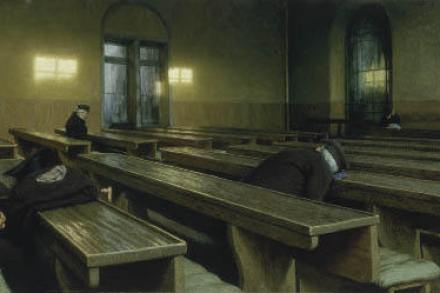
Vilhelm Hammershoi: the Poetry of Silence Royal Academy, until 7 September The poet Rilke cautioned that ‘Hammershoi is not one of those about whom one must speak quickly. His work is long and slow...’ It is certainly muted, being composed mostly in shades of oatmeal and grey. Interiors and the fall of light were favourite subjects, together with buildings and the occasional landscape. He also had a taste for painting portraits of the back of the head, a theme developed by the surrealists (think of Magritte’s portrait of Edward James) and still popular with some artists today.

Emperor’s vision

From our UK edition

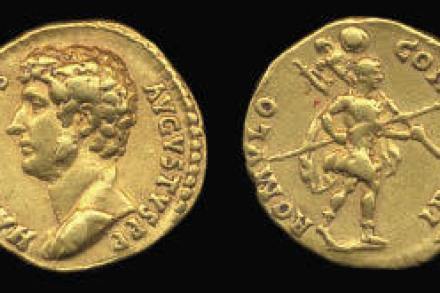
Hadrian: Empire and Conflict The British Museum, until 26 October Sponsored by BP After last week’s Hadrian supplement in The Spectator, readers will be well-informed about this prince of emperors, so I will confine my remarks to a personal response to the exhibition. I must say immediately that it looks very impressive and that Sir Robert Smirke’s round Reading Room is the perfect setting for a display that also focuses on the architecture of the Pantheon. (Smirke based his dome directly on that great classical exemplar.) But this is not another Terracotta Army blockbuster: it is, in effect, an exhibition of busts and architectural models.

Light and shade

From our UK edition

Colin Self: Art in the Nuclear Age Pallant House Gallery, Chichester until 12 October David Tress: Chasing Sublime Light Petworth House, West Sussex, until 29 July Colin Self (born 1941) is one of the unsung talents of the English art world, a maverick who made intensely original Pop art in the 1960s and then rusticated himself in Norfolk, where he continues to make all manner of art from the satiric to the pastoral. He is not the easiest of characters, and the last time a major museum exhibition of his work was planned, he cancelled it at the last moment. So Pallant House must be congratulated on achieving such a full account of an immensely distinguished and largely unknown artist. The catalogue accompanying the show (£19.

Shifting truths

From our UK edition

Before getting down to a discussion of Wyndham Lewis and an exhibition I’ve been looking forward to for months, I want to register a protest about this year’s recipient of the Wollaston Award at the Royal Academy Summer Exhibition. This prestigious prize is worth £25,000 and thus ranks with the Turner Prize as a top art world award, and yet it receives very little publicity. Deserving past winners have included Robert Medley, John Hoyland and R.B. Kitaj, but this year it has gone to Jeff Koons. In my review of the summer show I pointed out that Koons should not be taking up space which could be more profitably used by others.

Shifting combinations

From our UK edition

Margaret Mellis: A Life in Colour Until 31 August Constructed: 40 Years of the UEA Collection Sainsbury Centre for Visual Arts, until 14 December The painter and construction-maker Margaret Mellis has led a remarkable and productive life, though sadly she is now living out the remainder of her existence in the twilight of Alzheimer’s, confined to bed and unable to work. Born in 1914 in China of Scottish parents, she came to Scotland as a baby, growing up to study music which she forsook for painting at Edinburgh College of Art in 1929. A talented student, she won a travelling award, studied with André Lhote in Paris, got to know Spain and Italy a little, before studying briefly at the Euston Road School in 1938 and marrying the writer and painter Adrian Stokes.

Distinctly lacklustre

From our UK edition

Radical light: Italy's Divisionist Painters 1891-1910 National Gallery, until 7 September, Sponsoered by Credit Suisse Divisionism is based on the scientific theory of the prismatic division of light into the colours of the spectrum. It’s more familiarly known as pointillism and its greatest exponent was Georges Seurat. Italy bred a minor outbreak of Divisionism, and it is to these artists and to a fleeting period of their work that this show is dedicated. Divisionism was one of the key staging posts on the way to Futurism, but I doubt that it deserves an exhibition all to itself. Divisionism developed out of the Impressionists’ habit of putting unmixed colours next to each other and making the surface of the painting dance with light.

Traces of self

From our UK edition

Cy Twombly: Cycles and Seasons Tate Modern, until 14 September This year, Cy Twombly celebrated his 80th birthday. As the leading modern American artist who decamped to Europe and went his own way regardless of developments at home, Twombly was for many years out in the wilderness. But he held his course and now he is the darling of the art glitterati. However, his work is not so easy for the uninitiated and many feel slightly at a loss when confronted by one of his scribbly canvases. Those with closed minds tend to dismiss him, and, as Nicholas Serota in the foreword to the exhibition catalogue (£24.99 in paperback) points out, Twombly’s art is ‘elusive and, for many people, even enthusiasts of contemporary art, unfathomable’.

Fluff and granite

From our UK edition

Boucher and Chardin: Masters of Modern Manners The Wallace Collection, Hertford House, Manchester Square, W1, until 7 September Alan Green: Joan Miro Annely Juda Fine Art, 23 Dering Street, W1, until 18 July  I can never visit the Wallace Collection without lamenting the filling of the erstwhile courtyard with an airless restaurant which scarcely does justice to the noble proportions of Hertford House. Meanwhile, temporary exhibitions are crammed into two smallish rooms in the basement, which just goes to show that apparently we value our stomachs over our hearts. Luckily, the Wallace regularly mounts high-quality exhibitions in its subterranean galleries (rather as the National Gallery occasionally does), and the current one is no exception.

Mixed blessings

From our UK edition

Summer Exhibition Royal Academy, until 17 August The Summer Exhibition at the Royal Academy, now in its 240th year, is still an event, even if visitors don’t dress up quite as ornately as once they did. For the first time I attended Buyers’ Day. The atmosphere is convivial but competitive, as people jostle to see exhibits and further thicken the crowds round the provenly popular. It’s not always easy to look at art in these conditions, but the acquisitive hum in the air almost compensates for the lack of calm.

Collaborating with chaos

From our UK edition

John Hoyland dislikes being called ‘one of Britain’s leading abstract painters’. He thinks it’s lazy thinking, and over-reliance on labelling. ‘They don’t say: “Lucian Freud, leading figurative painter” — he’s just a painter. Or “Francis Bacon, leading melodramatist”.’ Mention of Bacon sends him off on a tangent, one of the digressions that make Hoyland’s conversation — along with his forthright opinions — so rewarding and enjoyable. ‘I look at Bacon’s paintings and instead of being moved by them they make me want to laugh. They’re supposed to be horrible and moving and frightening, but they’re so shrill and so theatrical.

Dancing lines

From our UK edition

Leon Kossoff: Unique Prints Art Space Gallery, 84 St Peter's St, London, N1, until 21 June Paintings of Stockport by Helen Clapcott Stockport Art Gallery, until 28 June Leon Kossoff (born 1926) is best known as a painter of people and buildings, rendered in thickly meshed paint surprisingly full of light. He trained at the Borough Polytechnic under the visionary David Bomberg, from whom he learnt about the conveyance of insight and emotion through the stuff of paint. It’s a form of expressionism by which the world is apprehended through the senses and given back in paint. The subject and the artist’s experience of it become one, and are then gathered into the structure of the paint to exert their effect on the sensory system of the viewer.

Presentation over content

From our UK edition

Blood on Paper: The Art of the Book V&A, until 29 June The partnership between the written word and the visual image has a long and distinguished history. Leaving aside the pictographic tradition and the fertile area of calligraphy, the first artists’ books must date from the modern period when artists began to grow ever more independent and self-confident. Although it could never be said that Leonardo or Piero della Francesca lacked self-confidence, it should be remembered that they functioned within a culture which recognised the position of artists primarily as craftsmen who were employed to fulfil a need — mostly in the domain of religious imagery, and increasingly in that of secular portraiture.