Ameer Kotecha

Ameer Kotecha is CEO of the Centre for Government Reform. He was formerly a senior diplomat, serving as the head of the British consulate in Russia 2023-25. He is the author of Queen Elizabeth II’s official Platinum Jubilee Cookbook (Bloomsbury).

The fireside dishes to feast on this bonfire night: from baked apples to nachos

From our UK edition

There’s never been a better year to celebrate Bonfire Night. Late night, outdoor, responsible fun to enjoy now that there’s precious little else to do after 10 p.m. Plus it’s surely therapeutic to remind ourselves that while things are currently a little tough going and hosting a dinner party in your home is an act of high treason, the country had its fair share of problems in 1605 too. Round-the-fire cooking isn’t the same as barbeque cooking: utensils are at a minimum; heat control is down to a wing and a prayer. This is ‘chuck it near the heat and pray the kids won’t go hungry’ cooking. So here are six things to try on 5th November, when you can’t face another toasted marshmallow.

Cheat’s Penda: a Diwali dish with a British twist

From our UK edition

Diwali is synonymous with fireworks and candles (diwas) – it is after all the ‘festival of lights’ – but sweet morsels of sugar and spice are almost as important a part of the festivities. Just as Christmas is a time when restraint rightly crumbles in the face of mince pies and lashings of brandy butter, so Diwali is an occasion for pendas, burfis, ladoos and other sweet largesse. Most of these sweets have in common plenty of ghee (clarified butter) and goor (unrefined jaggery), as well as lots of spice (cardamom and saffron are particularly ubiquitous) and often nuts. As delicious as it all sounds, Indian sweets often suffer from a bad reputation, in particular for being tooth-achingly sweet.

A foodie’s guide to game season

From our UK edition

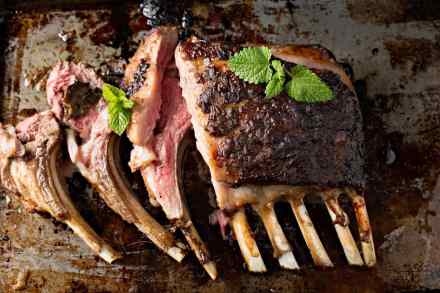
If the brimming hedgerows were not enough to sate your taste buds this autumn, then it's time to turn your attention to game season. As I’ve written, game is not only delicious but sustainable and healthy too. Indeed, venison is higher in protein and lower in fat than any other meat. It's not for nothing that the British Association for Shooting and Conservation (BASC) are in conversations with NHS leadership to explore getting ‘boil in the bag’ game to rural hospitals to nourish inpatients. Game is also extremely varied. Poultry can sometimes get boring: chicken is too ubiquitous, duck too fatty to eat often, and no-one really likes turkey except once a year for nostalgia’s sake.

How to spice up winter soup

From our UK edition

There are few things as good as soup for comfort and warmth. Though, with the very notable exception of Heinz tomato, I find ready-made soups invariably dull. The fresh counter ones are even worse than the tinned: bland, gloopy, surprisingly calorific and expensive for what is, after all, liquid food. When it comes to soup, I go for one of two approaches. When I need instant warmth and salty satisfaction I’ll have a mug of broth— Bovril beef tea, miso soup from a sachet, or even just a crumbled veggie stock cube in boiling water. And when I want a real meal, something nutritious and filling, I’ll make a proper blended soup.

The secret to making egg-fried rice

From our UK edition

Getting a takeaway doesn’t quite mean what it used to. The choice used to be between a pizza, ‘an Indian’ or ‘a Chinese’, and was reserved as a Friday night treat, to be eaten out the box while flopped on the sofa watching Cilla Black’s Blind Date. Nowadays one is as likely to order a truffle risotto as a Pizza Hut combo deal. Furthermore, many millennials and Gen Z-ers seem to have no qualms ordering takeaway several times a week, carefully transposing the slow-cooked beef Massaman curry onto bone china so they can pretend (to themselves or their Instagram followers) that it’s home-cooked – honest. But all these new trends give the old-school takeaway options a somewhat nostalgic appeal.

How to make Bhanda – the Indian-African fusion dish ideal for autumn

From our UK edition

African politicians often have a playful turn of phrase. The former president of Zambia, Levy Mwanawasa, was dubbed 'the cabbage' by his political opponents. There is nothing to suggest that the founding president of Malawi, Hastings Banda, was called 'the kidney bean' by the political opposition but he could’ve been. For banda/bhanda is the word for the kidney bean in the Malawian language of chichewa. Many culinary cultures vaunt their prowess with the kidney bean; it is of course a prized ingredient in Mexican and Cajun cuisine too. But prepared in the Indian-African manner, as a spicy curry-like stew and served with basmati rice ('bhat', in the Gujarati language of western India), it is wonderful: as warming and satisfying as a chilli, and perfect autumnal food.

Curry can be guilt-free (if you know how to make it)

From our UK edition

Two of the misconceptions surrounding curry that it consistently struggles to shrug off are one, that it is unhealthy, and two, that it is difficult to make at home. I’ve always found both perplexing. Turks and Persians must be similarly bemused given the reputation of their archetypal food, the kebab. Yes the late night version, carved from a rotating trunk of greasy lamb with a mini chainsaw and then covered in garlic mayo, is a calorific car crash. But kebab as it was meant to be – meat simply grilled over charcoal and served with rice and salad – is perfectly healthy every day food. And yes a curry house korma is fattening, even before you add in the three poppadoms and pints.

In defence of curry

From our UK edition

When a dear friend recently was clearing out her dad’s house following his death, she uncovered a tin of ancient Harrods’ Madras Curry Powder – several decades old and emblazoned for some reason with the name 'Ameer' on the front. This sort of attic find is considered an offending item nowadays, if the recent ‘curry is racist’ furore is to be believed. Madras curry powder is an essential ingredient of Anglo-Indian cuisine. Indeed, the flavouring is as much a part of British cuisine as Worcestershire sauce and English mustard. And it is, happily, still labelled 'Madras' – the imperial name for the city of Chennai –  when bought today. 'Chennai curry powder' doesn’t quite have the same ring to it.

Food, glorious food: the rise of the culinary mini break

From our UK edition

After a fraught summer of changing restrictions, it seems likely that staycaytioning is here to, er, stay. The good news for food-lovers is that Britain is now home to a growing number of boutique breaks that are centred around eating. Our weather may be unpredictable but the top-notch dishes at these destinations will more than compensate for even the wettest of weekends. So here is a guide to the best all in-house foodie staycations – from Michelin-starred manors to wholesome working farms – all with fabulous food and drink on offer within a postprandial stagger to the bedroom.

Entente Cordiale: why French wine and British food are a perfect match

From our UK edition

Hopping across the Strait of Dover remains something of an Olympian task. A mere 20 miles of water it may be but ten days of quarantine on return is unpalatable no matter how good the baguettes are across the Channel. Even once the rules change, it will be too late for the holiday hopes of many this summer. But it doesn’t mean we can’t enjoy a summery French wine. The good news is that French wine and British food make for a surprisingly strong match. I am sometimes loath to recommend anything other than English and Welsh wine given the quality of what we now produce on home soil.

How to make your own sushi

From our UK edition

I have an ambivalent attitude to sushi. It has become, on the one hand, one of the favoured foods of the joyless ‘clean eating’ and perpetually-dieting brigade. On the other, sushi is as delicious as it is healthy; filling but not heavy; dainty but not pretentious. No need to feel abashed then about being a sushi fan: just get your tips from an itamae (sushi chef) rather than Gwyneth Paltrow. Making sushi at home makes a lot of sense. A sushi dinner for the family is suddenly a more affordable proposition, and it is surprisingly easy. It is also one of those foods that is essentially the same effort whether you’re serving one person or a dozen: perfect party food then, if you’re getting together with friends to watch the latest Olympics action from Tokyo.

Al fresco dishes to serve outside

From our UK edition

We have all become rather used to socialising outside. Thanks to the pandemic, for perhaps the first time in our national history, al fresco dining has become the norm well outside of the summer months. We shivered under wraps for the last nine months only to finally be allowed to socialise indoors once more just at the moment when we’re all keen to light up the barbecue and enjoy the warmth outdoors. Nothing compares to the pleasure of a lunch or dinner en plein air in the summer months. It sharpens the appetite and provides happy opportunities for people or garden watching when the conversation bores. Sometimes you can even get away with taking off your shoes. The appeal lies above all in its novelty.

Quick, crowd-pleasing snacks for the big game

From our UK edition

Until this week I don’t think my mother had ever in her life watched a football game. Wednesday changed that, marking the start of her new-found frenzy and puns about England’s 'Sterling effort!' (to squeals of laughter from her female friends gang). Now they’re in a state of hysterical excitement and are busy planning their match day. Football really is coming home. With nobody – including mum – minded to spend all day slaving away in the kitchen, food for Sunday’s game needs to be quick, easy and ideally unhealthy. Here are some ideas. Baked cheese A baked brie or camembert – or even better a British cheese like Baron Bigod or Tunworth – is one of the very easiest and most satisfying things you can make.

The favourite dishes of royals

From our UK edition

Graphologists have long busied themselves studying Prince Charles’s handwriting in the ‘black spider memos’ for clues as to the personality of our future King. And in recent months kinesicists have been wheeled out from obscurity to sit on breakfast show sofas to opine on Harry and Meghan’s body language in that interview. But perhaps royal watchers are looking in the wrong place for insight. 'Tell me what you eat and I will tell you who you are.' So declared the celebrated gastronome Jean Anthelme Brillat-Savarin. Diana apparently liked to wander into the royal kitchens to cook her own pasta and chat with the chefs which provides a glimpse into the discomfort she felt at the perceived constraints of her position. But what of the other royals?

What to eat and drink while watching Wimbledon

From our UK edition

Wimbledon is back. Having been cancelled last year, it is now one of the pilot events chosen as part of the Government Event Research Programme, with 50 per cent capacity crowds on the main courts at the start rising to full capacity for the semi-finals and finals. What is more, organisers have said Murray Mound will also be open to spectators and the grumpy Scot himself has been given a wildcard qualification for this year’s tournament. Those attending can look forward to suffocating in their face masks as they move from court to court in the June heat. Thankfully, masks will not be required once seated in the stands and so spectators can swig at their Pimms and scoff their strawberries and cream with abandon.

The very British history of HP sauce

From our UK edition

HP Sauce is a glorious thing. The French may have their five, gastronomic Mother Sauces but we in this sceptered isle have HP and that’s what counts. Because nobody wants a pool of hollandaise with their Full English. It first appeared on our dining tables in the late nineteenth century and has since grown to account for three-quarters of sales in our brown sauce market. Its story begins in 1884, when a Nottingham grocer, Frederick Gibson Garton invented the sauce in his pickling factory in New Basford (later also the home of Cussons Imperial Leather soap). It was a classic culinary product of Empire, with tomatoes, tamarind, dates, molasses and soy amongst its ingredients.

A fresh start: delicious twists on breakfast

From our UK edition

The chance to enjoy a proper sit-down breakfast ­– or even, I daresay, the occasional breakfast in bed – on a weekday has been one of the (few) perks of lockdown. If I’m going to be under year-long house arrest then I’m going to have a three-minute egg on a Monday dammit. But as return to the office beckons for many of us, carving out time for brekky will become trickier. I’ve always been envious of the effortlessness and speed with which Romans take their breakfast: cappuccino and cornetto eaten standing at the bar counter. Somehow gulping down cornflakes or Weetabix standing in front of the mirror whilst shaving doesn’t have the same glamour about it. But breakfast can be speedy, enjoyable and sustaining.

The perils of TikTok cooking

From our UK edition

An iron is not your traditional cooking appliance. But then again nothing about TikTok cookery is traditional. TikTok users have grilled chicken with an iron, boiled meatballs in a percolator, and cooked steak in a toaster. And not only do they do these things, but they earn internet fame and sometimes create new livelihoods for themselves as ‘influencers’ for doing so. Dance and comedic sketches used to be the mainstay of TikTok's content but they now compete alongside cookery videos. Lockdown, which has turned all of us into home cooks, has caused a boom in cookery tutorials on social media: from amateurs looking for dinner ideas to professional chefs suddenly without restaurants to run.

How to mix up your spring salad

From our UK edition

Almost anything can constitute a salad. Yes dictionaries variously describe salad as cold, consisting of raw vegetables, and featuring a dressing, and often these things are true – but not always. For there are warm salads, salads with grains or seafood, and salads where the pairing of ingredients is so precise and perfect – think pear and Roquefort – that not even a dressing is required. For me what is essential about a salad is freshness and piquancy; it must be vibrant and sprightly. If you need a rule of thumb though, to use when constructing your salads, think in terms of leaf, grain, protein, and dressing.

How to jazz up instant noodles

From our UK edition

During a long year of lockdown, we have all been cooking at home like never before. It’s been a delight to be able to spend all evening stirring a pot of risotto with no social plans to feel guilty about missing. But these stretched-out times, be they languorous or languid, are coming to an end. The social diary is filling up, and I for one don’t plan on missing a long-awaited reunion with mates because I need to be around to check on the roasties. Sometimes we all need something quick and easy for dinner. That’s when I turn to instant noodles. For a self-avowed ‘foodie’, this is quite an admission. But for those days where speed is everything, and the alternative is therefore UberEats, there are far worse things.