Alice Beale

Turkey’s slide into authoritarianism continues

It took only a few hours for hope to turn to fresh despair. At lunchtime on Friday, the German-Turkish journalist Deniz Yucel was freed after more than a year in detention. An image of Yucel embracing his wife – who he had married while he was incarcerated – outside the concrete and razor-wire gates of Istanbul’s Silivri prison raced across social media, to widespread jubilation. But by the time the day’s evening call-to-prayer sounded, six other journalists had been convicted and jailed, three of them with aggravated life sentences. All have been accused of supporting terrorist groups, either the Kurdish militants of the PKK or the Gulenists, the Islamic sect that President Erdogan accuses of launching the 2016 coup attempt.
Turkey tightens control over Syria’s war narrative

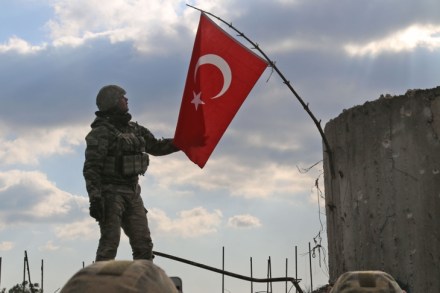
Something has changed in the way we cover Syria. In 2015, Turkey began building a wall along the length of its 550-mile frontier with the war zone. The reasons were valid: Turkey wanted to cut the jihadi highway through which tens of thousands of foreigners had travelled into Syria and joined up with Isis. It also wanted to stop them travelling back the other way. The wall is now almost finished. It is three metres high, made of reinforced concrete topped with razor wire, and mounted with security cameras and automated guns. The area around the wall is heavy with soldiers and parts are periodically declared restricted military zones – especially when operations like the battle for Afrin – which is in northern Syria – are underway.