Ali Ansari

Ali Ansari is professor in modern history with reference to Iran at St Andrews university.

Iranians are blaming the regime for the Kerman terrorist attack

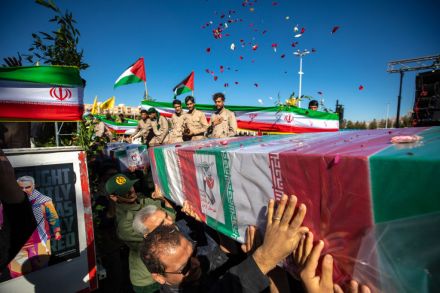
Two suicide bombs killed nearly 100 people and wounded many more in the Iranian province of Kerman on 3 January, as Iranians gathered to commemorate the anniversary of the assassination of IRGC commander Qasem Soleimani. It was the most devastating terrorist attack to hit Iran in many years.    Iranians are questioning why Soleimani’s family and the IRGC leadership missed their flight to Kerman, and so did not attend the commemoration There is little agreement in Iran over who was ultimately culpable for the attack. Opinions have sharply divided along political lines. The government quickly blamed the United States and Israel, suggesting the attack was an Israeli attempt to draw Iran into a wider regional conflict.

What a gay sex tape says about the state of Iran

The revelation that an Iranian official in charge of Islamic values has been caught on video having sex with another man will have come as no surprise to much of the Iranian population.   The hypocrisy of the ruling class has long been a topic of discussion among Iranians Few care about the individual’s sexual preferences but many have contempt for the hypocrisy that is emblematic of the ruling class. Reza Saghati, the local representative of the ministry of Culture and Islamic Guidance in Gilan province, appears to have been imprudent (or hubristic) enough to video his escapades. One of those videos then found its way, courtesy of local activists, onto a local social media channel.

How the Freemasons influenced Iran’s modern history

The political movement that led to Iran’s first constitution in 1906 – which established the country’s first parliament – was underpinned by an intellectual revolution which absorbed and adapted ideas from the European Enlightenment. How these ideas came to influence Iran, given the absence of a print industry in the country, is a question that has long intrigued intellectual historians. One route was membership of the Freemasons.  In 1835, three Iranian Princes paid a visit to London where they visited and commented on the varied and interesting developments that were taking place in England, including the construction of the Thames Tunnel – an engineering wonder – and a review of the political system which was described in thoroughly whiggish terms.

Inside the Iranian regime’s protest panic

During a press conference in Tehran on 3 December, Iran’s Attorney General, Mohammad Javad Montazeri was asked by a journalist what had happened to the country’s morality police, which have been strangely absent from Iran’s streets. Clearly irritated by the question, Montazeri snapped that the morality police had nothing to do with the judiciary and they had been ‘abolished’ by the same body that had installed them. The word he used could also be translated as ‘suspended’ but the implication that the force had been in some way removed was seized upon by international journalists that something was beginning to give in the Islamic Republic.

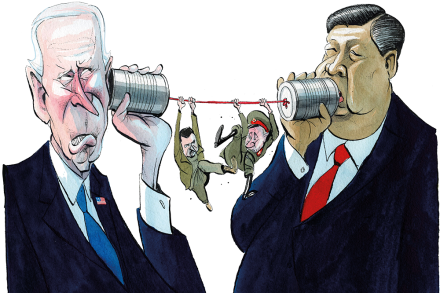
The red line: Biden and Xi’s secret Ukraine talks

38 min listen

On this week's podcast: Could China be the key to peace in Ukraine? In his cover piece for the magazine this week Owen Matthews reveals the covert but decisive role China is playing in the Ukraine war. He is joined by The Spectator's Cindy Yu, to discuss what Xi's motivations are (00:53).  Also this week:  Harriet Sergeant writes that the Iran is at war with its own children as it cracks down on young protesters. She is joined by Ali Ansari, founding director if the Institute for Iranian Studies, to consider the fragility of the Iranian regime (14:32).  And finally:  Julie Bindel says in the magazine this week that after recent controversy the Society of Authors is no longer fit for purpose.

Is Iran going to execute its protestors?

Are protestors in Iran going to be sentenced to death? That grim question will be on the mind of many Iranians today, after protestors reportedly threw petrol bombs last night at the former home of Ruhollah Khomeini, the founder of the Islamic Republic. Insults to supreme leaders past and present carry the death sentence in Iran. Further reports that 227 members of the Iranian parliament had signed a statement declaring the protestors ‘enemies of God’ and calling for them to be executed also went viral this week. The story managed to elicit a wave of condemnation across social media, the wider press and even led to Canadian prime minister Justin Trudeau condemning the regime’s ‘barbaric decision’ to kill the protestors.

Iran’s leaders are fighting a losing battle

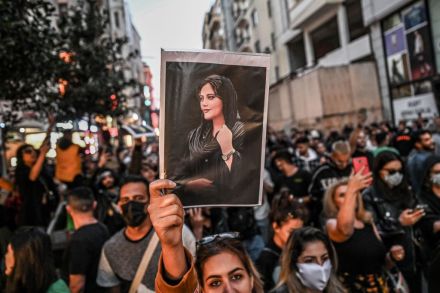
Iran's rulers are holding firm. The country's Supreme Leader Ayatollah Khamenei has expressed sorrow at the killing of Mahsa Amini – who died last month after being arrested by the state's morality police – while squarely, and unsurprisingly, blaming foreign agitators for the protests that have followed. Ominously, Khamenei has said the protestors are not ‘real Iranians’ – a statement which echoes his crocodile tears in 2009 before he unleashed a bloody crackdown. Protesters have a key advantage over the regime Hundreds died during those and subsequent demonstrations, in 2017 and 2019, as state security forces struck back against ordinary Iranians who had taken to the streets.

The fragility of the Iranian regime is being exposed

A wave of protest is sweeping across Iran. Sparked by the death in police custody of Mahsa Amini, a 22-year-old who allegedly contravened oppressive and arbitrary laws on veils, demonstrators are taking to the streets in towns and cities across the country. Ever since Ebrahim Raisi became president last summer in a widely derided Potemkin election, a crackdown on those who refuse to wear the veil has been gathering pace, with women manhandled and harassed by Iran’s notorious ‘morality’ police. Raisi regards veiling as the frontline in a continuing cultural war against western moral corruption, which he clearly feels Iran is losing. But now the crackdown on the veil has backfired.