Alexandra Coghlan

Lessons from the front

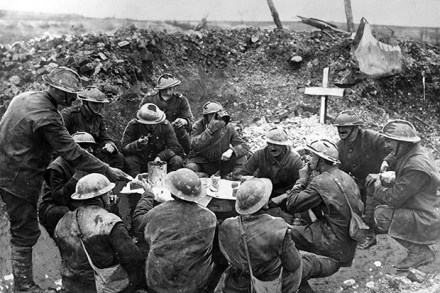
Christmas, for many people, begins at exactly 3 p.m. on Christmas Eve. It’s the moment when everything stops, frantic present-wrapping, mince-pie making and tree-decorating ceases and calm briefly takes hold. The reason? A single boy treble whose voice, clear and fragile as glass, pierces through the chaos with those familiar words: ‘Once in Royal David’s city/ Stood a lowly cattle shed...’. The service of Nine Lessons and Carols from King’s College, Cambridge, and its annual broadcast on BBC Radio 4 is as essential a part of contemporary Christmas folklore as stockings and Santa Claus, plum pudding and presents.
All’s well that ends well

The last ten minutes of any Don Giovanni tell you more about a director than the previous two hours. Mozart’s elastic ‘dramma giocoso’ can take a lot of pulling about, can be stretched taut into tragedy or squeezed into the tight confines of a farce, but whatever option (or combination of options) you choose, those final moments are the test of success — the point at which the dramatic threads either sag, snap or hold firm. Oliver Mears’s production — first seen at the Bergen National Opera and now at NI Opera in Belfast — lets them fall limp. Seemingly unsure which choice to make, he makes no choice at all, leaving us with an ending that isn’t so much elusive as it is evasive.

Buried treasure | 3 November 2016

Wexford is to opera-goers what casinos are to gamblers. The uncertainty, the hope, the exhilaration — they’re all a crucial part of a festival that annually rolls the dice, plucking three obscure, often all but unknown, operas from the repertoire and giving them a staging. Dealing the cards is David Agler, the artistic director whose canny choices ensure that not only the house but also the audience always wins. Add to the mix Wexford’s ear for an up-and-coming star (Juan Diego Flórez, Mirella Freni, Joseph Calleja and Daniela Barcellona have all made their mark here), and you can understand the festival’s uniquely addictive quality.

High and low

‘Besides feeble writing, there is a mixture of tragic-comedy and buffoonery in it, which Apostolo Zeno and Metastasio had banished from serious opera’. You can always rely on Charles Burney (the celebrated musicologist, who spent most of the 18th century being professionally underwhelmed) to find fault. But writing here about Handel’s Xerxes he has a point. The opera’s blend of lighter and more serious elements, though typical of Venetian opera, was by no means the norm for the Londoners who were its audience. They didn’t like it then, and nearly 300 years later it’s something we still seem to struggle with, as English Touring Opera’s latest season makes unexpectedly clear.

Losing heart | 29 September 2016

The subtitle for Mozart’s Così fan tutte may be ‘The School For Lovers’, but it’s as a school for directors that the opera is most instructive. From four lovers and two different romantic pairings, the composer spins a parable whose moral is as elusive as its morals. Faced with so much ambiguity (and so little political correctness) directors tend either to sand down the rough edges with laughs, or fling a capacious concept over the whole lot. It says something about the awkward profundity of this most inscrutable and affection-resistant of the Mozart-Da Ponte collaborations that it can take it. It says even more that you so rarely see an outstanding production.

Saintly sins

They say that the devil gets all the best tunes, and on the basis of this week’s opera-going it would be hard to disagree. Performances by Cape Town Opera and Opera Rara turned their attention on two historical icons: South Africa’s anti-apartheid campaigner and president Nelson Mandela, and ancient Assyria’s murderous and would-be incestuous queen regent Semiramis. No prizes for guessing who came out on top. When it comes to art, evil takes it nearly every time. Who wouldn’t choose The Rake’s Progress over The Pilgrim’s Progress, Don Giovanni over Don Ottavio, sex over sanctity? For a good man, Nelson Mandela has inspired a lot of really, really bad art.

French connection | 28 July 2016

It takes a particularly wilful wit to alight on Berlioz’s Béatrice et Bénédict as the perfect operatic nod to a Shakespeare anniversary. To walk past Verdi’s Otello, Falstaff and Macbeth, to pass over Purcell’s Fairy Queen, Gounod’s Roméo et Juliette and Bellini’s I Capuleti e i Montecchi and instead opt for this curiously and idiomatically French piece of musical flummery, in which Shakespeare’s Much Ado About Nothing finds itself stripped of any sour notes and whipped up into a sugary dramatic froth, is bold indeed. If it weren’t for the revival of Britten’s A Midsummer Night’s Dream, opening at Glyndebourne later this season, it might even look a bit like taking le piss.

Fifty shades of grey

Grey men in grey overcoats walking through grey architecture. If you had to pick an image to reflect the current mood, the prevailing fashion in opera productions, this would be it. We may have outgrown the overtly Nazi settings of a few years back, but stepping into their highly polished boots are a whole platoon of non specifically fascist, 20th century exilic fantasies — all brutality, brutalism and barbed wire. Glyndebourne’s Poliuto, the Royal Opera’s Guillaume Tell, Idomeneo and Nabucco, even English National Opera’s Force of Destiny, the list goes on, and now boasts a new member in David Bösch’s Il trovatore. At least Bösch isn’t going gentle into that all obliterating fascist night.

Light and shade | 30 June 2016

Comedy and tragedy sit close beside one another in Mozart’s operas. Whether it’s the grinning horror of the Così finale — lovers joined, perhaps for ever, to the wrong partners — or the violence and mental instability so barely contained in the flimsy comic fabric of La finta giardiniera, there’s a continuum of emotion that belies the easy binaries of opera buffa and opera seria. Two new productions explore the shifting light of the composer’s chiaroscuro world, letting sunshine into the near-tragedy of Idomeneo and glancing into the darker corners of Le nozze di Figaro.

The food of love | 30 June 2016

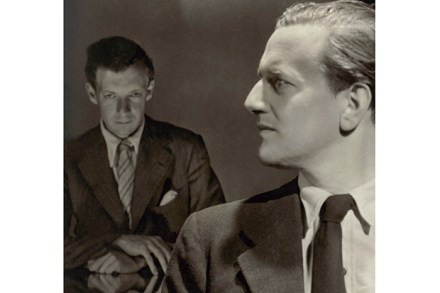
‘You are the most adorable man and artist, intelligent, gifted, simple, loving and noble… I am really very, very lucky to be alive with you around....’ The relationship between the tenor Peter Pears and the composer Benjamin Britten is part of our cultural and national furniture. A partnership spanning nearly 40 years drove each artist to the peak of his creative and expressive powers, producing works like Peter Grimes, Winter Words and the War Requiem, as well as their definitive recordings. But music is only half of the Britten-Pears story. Before his death in 1976, Britten asked his friend and publisher Donald Mitchell to ‘tell the truth about Peter and me’.

No laughing matter | 9 June 2016

Rossini is the meat-and-two-inappropriately-shaped-veg of summer opera; he’s the wag in the novelty bow tie, the two satyrs shagging enthusiastically among the lupins and lobster on the cover of this year’s Glyndebourne programme. His comic bel canto frolics are the natural soundtrack to this off-duty opera-going, a champagne-perfect combination of frothy plots and fizzing coloratura. So why are they so hard to pull off? Perhaps it’s the pressure of expectation. It has been more than 30 years since Glyndebourne last staged Il barbiere di Siviglia, and hopes were high for Annabel Arden’s new production. For the first half-hour it looks as though they’re going to be met.

Hit-and-miss Handel at the Göttingen Festival

Ask anyone to name the greatest classical composers and certain names are bound to come up – Mozart, Wagner, Beethoven, Bach. But ask them which composer’s music they’d most like to live with for a week, exclusively, and answers will change. Greatness is one thing, but a great festival composer is quite another – someone whose works have not only sufficient quality and variety to stimulate, but also a certain comfort, a clubbable ease about them. Handel is one such, a composer whose music has spawned festivals from London to Halle, Dublin to Tokyo. It’s only appropriate, given the composer’s long association with England, that two of these festivals – London and Göttingen – are now directed by an Englishman.

Women and song

Just a few weeks ago, Germany’s VAN magazine published an interview with the composer Olga Neuwirth. In it she describes her early career in the 1980s and ’90s — a ‘lone’ female voice in the ‘wilderness’ of classical music. So far, so sadly, so frustratingly predictable. But then she turns to the current situation and things become rather more startling. ‘I think it has become nastier,’ she says: A more ‘elegant’ chauvinism prevails… When a woman calls attention to injustices today her objections are often dismissed as hysteria… She is kicked out and declared an adversary without further explanation or discussion.

Whose opera is it anyway?

Disguises and mistaken identities are a staple of opera, but usually as part of the onstage, not the offstage, action. So what are we to make this week of a Handel opera that isn’t by Handel at all, and a Mozart opera that was largely composed in 1990? As usual in the opera house, there are good — if complicated — explanations. Every year the London Handel Festival tests the theory that forgotten operas are forgotten for a reason, rooting around the darkest corners of the composer’s output to find some abstruse treasures for their audience. This year they’ve outdone themselves, with a performance by Opera Settecento of Elpidia — an opera not heard since its initial run in 1725. The reason?

Comic relief | 7 April 2016

Comic opera is no laughing matter. Seriously, when was the last time you laughed out loud in the opera house? The vocal slapstick of Gianni Schicchi, laid on six banana skins deep? The farcical plot convulsions of Il barbiere? What about the arrival of Mozart’s ‘Albanians’ in Così? (Oh, those moustaches! Oh, those naughty boys!) It’s all about as spontaneous as a health-and-safety briefing, and almost as funny. Thank goodness, then, for Gerald Barry’s The Importance of Being Earnest — an opera that’s dangerously, anarchically hilarious. The project sounds like a joke in itself. Have you heard the one about the Irish composer who tried to improve on Oscar Wilde?

Has there ever been a better time to be a lover of Baroque opera?

Time was when early music was a 6 p.m. concert, Baroque began with Bach and ended with Corelli’s Christmas Concerto, and speeds were so portentously slow that you’d have to start the B Minor Mass shortly after lunch in order to make it home in time for bed. Those dark days — caught between Baroque and a hard place — are over now. Period ensembles have never been better or more numerous, Handel and Monteverdi are a staple of operatic programming, and even Vivaldi, Cavalli, Cesti and Steffani are making their mark. Baroque is back, and this time it’s here to stay. One of the biggest success stories of recent years is the Globe’s new indoor theatre. Opened just last year, it’s already hard to remember musical life before the Sam Wanamaker Playhouse.

Irish ayes

It’s Halloween, and right on lightning-flash cue enters an operatic ghost story exhumed from the grave of long-since-buried works. You couldn’t hope for more discerning grave-robbers than Wexford Festival Opera, however, who have long made it their mission to bring forgotten operas back to life. Mascagni’s Guglielmo Ratcliff is a proper blood-on-the-tartan gothic thriller, all duels, doomed lovers, fainting heroines and family curses, with a score as fleshy with tunes as the composer’s more famous Cavalleria rusticana — think Lucia di Lammermoor without the fey bel canto warblings. So why so long neglected? There are no musical mad wives lurking in Guglielmo Ratcliff’s attic, but there are more than a few technical demons.

I doubt Goethe intended Werther’s sorrows to be as unremitting as this

There are some things the French do better than everyone else. Cheese, military defeats and extra-marital affairs are a given, but what about opera? English Touring Opera’s autumn tour sets out a tasting plate of the nation’s Romantic finest, hoping to persuade audiences that there’s more to France than just Carmen. Debussy’s delicate tragedy Pelléas et Mélisande sits between the fragrant melodies of Offenbach’s The Tales of Hoffmann and the Armagnac-soaked passions of Massenet’s Werther. It’s a typically wide-ranging programme from this small company, but one whose compromises inevitably equal its ambitions.

The polyphonous Babel of global music

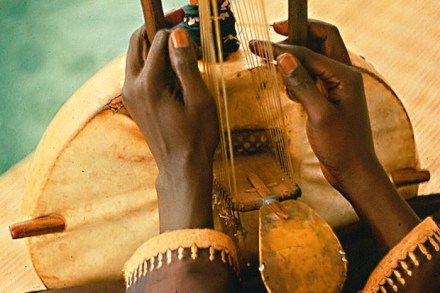
‘Following custom, when the Siamese conquered the Khmer they carried off much of the population, including most of their musicians, to be resettled in what is now Thailand.’ The history of music isn’t a story of chords and scores, instruments or their players. Music’s story is one of wars, invasions and revolutions, religion, monarchy and nationhood. Whether you look at the histories of Africa or Iran, Europe or Uzbekistan, the narratives are the same: colourful, bloody, complicated. Music is not an aesthetic response, an artistic translation of life; music and musicians are society itself. It’s a principle that acts as the guiding thread through the labyrinth of traditions and terminologies that make up The Other Classical Musics.

Fossilised Figaro

Is there a more extraordinary, more heart-stilling moment in all opera than the finale of Mozart’s The Marriage of Figaro? The Count, suddenly understanding his wife’s fidelity, begs her forgiveness — ‘Contessa perdono!’ Her answer comes like a musical benediction, but not until after the very slightest pause — space to doubt, to hope. It’s a touchstone for any production, and it says everything about the current revival of David McVicar’s long-lived Figaro that, on press night, the audience laughed. Since 2006, McVicar’s elegant period update — poised in the fragile political hinterland between France’s First and Second Republics — has done the business at the Royal Opera.