Alexander Larman

Alexander Larman is an author and the US books editor of The Spectator.

Joaquin Phoenix, the anti-Hollywood star

From our US edition

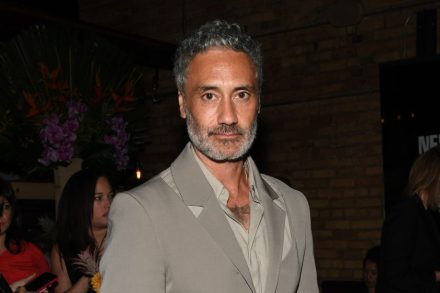
It is possible that there are A-list Hollywood stars who enjoy fame less than Joaquin Phoenix, but it would be hard to find them. The impression the man formerly known as Leaf Bottom gives is that any kind of public appearance is a miserable chore. It's as if he would rather be swimming through sewage than presenting awards at the Oscars, glad-handing at film premieres, giving interviews — oh, how he seems to hate giving interviews! — or any of the hundred and one other obligations that any leading actor faces today. Yet he continues to make fascinatingly offbeat choices that have kept him firmly at the top of filmmakers’ wish lists for decades. Joaquin Phoenix is a rare figure in an increasingly homogenized industry. Imagine if Johnny Depp had never made Pirates of the Caribbean.

joaquin phoenix

Charles III is fighting for the monarchy’s life

From our US edition

On September 10, 1946, British foreign secretary Ernest Bevin remarked, “kings are pretty cheap these days.” His comment was directed at the displaced monarchs who floated, dispossessed, around Europe, but it might also have been a dig at the ailing king George VI, who had found his métier in wartime but struggled to regain it afterwards. Less than six years after Bevin’s comment, the king died and Elizabeth II assumed the throne, leading to an unprecedented period of monarchical duration, stability and popularity. Yet after her own death last September, at the age of ninety-six, and the subsequent accession of her son, Bevin’s statement has assumed new and unlooked-for relevance.

Charles
coward

Noël Coward, the English playwright who loved all things American

From our US edition

Half a century after his death, the playwright, songwriter, actor, director and general Renaissance man Noël Coward is regarded, with some justification, as the quintessential English polymath. His best-known plays and songs, from Private Lives and Present Laughter to “Mad Dogs and Englishmen” and “London Pride,” seem so steeped in their Britishness — even if Coward was catering to a country that loved seeing a distorted, exaggerated version of itself — they could be placed in a time capsule as perfectly executed microcosms of the national identity. Any man who could write “Wouldn’t it be dreadful to live in a country where they didn’t have tea?

Is King Charles bringing Andrew back into the fold?

I am beginning to wonder if there are, in fact, two incarnations of King Charles that co-exist simultaneously. The first is a remarkably generous-spirited and forgiving man, who responds to insults and slights with Christ-like forbearance and shows nothing but a genuine love for his country and his people. And the second is a more flawed and capricious human being, who displays his temper both publicly and in acts of revenge against members of his family who have displeased him. If Charles really has managed to neutralise the two most troublesome and publicity-hungry members of the Firm, it’s a remarkable achievement These personae may appear to be contradictory, but when it comes to the coronation, it is the first side of him that has been on display.

Why isn’t Meghan going to the coronation?

Today’s announcement that Prince Harry will be coming to London for his father’s coronation is not a surprise. Yet it comes with a sting in the tail. It has been revealed that Meghan will not be attending; the official statement from Buckingham Palace, while saying that they were ‘pleased’ that the Duke of Sussex would be present, also announced ‘The Duchess of Sussex will remain in California with Prince Archie and Princess Lilibet’.  Usually, there would be some face-saving explanation for her absence, but as none has been offered, speculation will begin immediately.

Dungeons and Dragons makes a comeback in theaters

From our US edition

I have a confession, or perhaps a boast. I have never played the roleplaying game Dungeons and Dragons, and now, at the grand old age of forty-one, I doubt I ever shall. But there’s no doubt it’s a cultural phenomenon that has long since transcended any suggestion of being the preserve of adolescents, literal and overgrown alike. Since it was created in 1974, sales of the game have grossed billions, and it has been played by tens if not hundreds of millions of people worldwide. To be an aficionado is to find yourself in broad company — but how does that translate at the movies?  The first answer to this question came in 2000, when a film that starred Jeremy Irons as the villainous Mage Profion was released in cinemas.

dungeons

When will Prince Harry break his Coronation silence?

Two thousand among the great and the good from around the world will soon receive a letter from King Charles III and Queen Camilla. The invitation to the coronation on 6 May, which has been unveiled today, is not what people might have expected. Elizabeth II’s coronation invitation was formal, and, even by the standards of 1953, old-fashioned: it looked like the sort of thing that Victoria would have issued for her eventful, near-disastrous ceremony over a century before. The implication was clear, namely that her reign would be a formal, decorous one, firmly in keeping with the high ideals of her predecessors, and it proved an apt portent for her highly successful time upon the throne.

The new foul-mouthed Great Expectations is as bad as you’d expect

From our US edition

When Peaky Blinders creator Steven Knight’s adaptation of Dickens’s A Christmas Carol aired on FX in 2019, it was very quickly decided that, whatever it was, it wasn’t Dickens. From Guy Pearce’s foul-mouthed Scrooge to a scene in which Mrs. Cratchit strips and offers Ebenezer sex in exchange for money to buy the medicine she needs for her son Tiny Tim, it was a strange combination of would-be gritty social realism and hysterical prurience. It was not well-received in the United States: Salon’s comment that it was “short on joy and very, very, very long on purgatorial slogging” was typical.

olivia colman great expectations

The dark side of Ted Lasso

You’ll know where you are with Ted Lasso – the third season of which has just started on Apple TV – as soon as you hear the Marcus Mumford co-written theme song. It peddles a sort of sub-Coldplay uplift, with a lot of big, meaningless anthemic 'yeah's in the chorus. Bright, accessible, catchy and instantly forgettable, you still enjoy hearing it every time you watch a new episode. And that’s the show in microcosm: cheery, amusing and utterly inconsequential. Yet somehow the Jason Sudeikis vehicle has become not only Apple TV’s biggest hit to date, but the most Emmy-nominated comedy in recent years.

Jonathan Majors’s arrest is the ultimate headache for Marvel

From our US edition

The arrest of Jonathan Majors last weekend, which resulted in his being charged with several assault and harassment misdemeanor charges — despite his lawyer announcing he is “completely innocent and is probably the victim of an altercation with a woman he knows” — is one of the more surprising developments in recent popular culture. Majors, who recently appeared as the arch-villain Kang in the latest Marvel picture Ant-Man and the Wasp: Quantumania, has been progressing steadily towards superstardom for some time, starring as the antagonist in the third Creed film and appearing in a series of ads for the US Army. Those commercials have since been pulled, with a spokesman declaring that the Army was “deeply concerned by the allegations.

The chaos of coronations over the centuries

In January 1559 an Italian envoy wrote of Elizabeth I’s coronation that ‘they are preparing for [the ceremony] and work both day and night’. More than four and a half centuries later much the same could be said of the imminent investiture of Charles III – an event overshadowed, at the time of writing, by the uncertainty as to whether his publicity-shy younger son and wilting violet of a wife will be attending. But, as Ian Lloyd describes in The Throne, there have been many more dramatic build-ups to coronations, some culminating in injury or even death.

Paris: the place to be as a royal in exile

From our US edition

When rulers are thrown out of their countries, they cannot expect all that much. Think of Napoleon, first cooling his heels in Elba, then ending his days in the damp-infested confines of Saint Helena. Which is why the former Edward VIII, later the Duke of Windsor, was comparatively fortunate that the Parisian spot in which he found himself living after his abdication in December 1936 was Le Meurice in Paris: then, as now, a hotel that offers not only glitteringly luxurious accommodation to its well-heeled denizens, but a tangible sense of history — its lavishly appointed suites and restaurants exude an atmosphere that’s simultaneously relaxing and conspiratorial. Turn an unexpected corner, and you half-expect to see the ghost of Wallis Simpson, barking orders at some hapless minion.

Paris

The perverse and addictive appeal of Netflix’s You

In our risk-averse, deeply fearful age, the idea of one of the most popular shows on any streaming service being a black comedy about a serial killer who has an unfortunate penchant for murdering the women he falls in love with might be something of a tough sell. But the bloody exploits of Joe Goldberg, a bookstore worker-turned-university-professor, who has so far terrorised the denizens of New York, California and London, have run to four immensely popular seasons on Netflix, with a likely fifth and final instalment in the next year or two. Not bad for a series that – intentionally or otherwise – treads a fine line between hilarity and horror, its essential ridiculousness jostling against its near-nightmarish central conceit.

Is Quentin Tarantino finished as a filmmaker?

From our US edition

Throughout his career, director Quentin Tarantino has been admirably consistent about his ambition to make ten films — no more, no less — and then move on to other fields. He once stated, “I like that I will leave a ten-film filmography… it’s not etched in stone, but that is the plan. If I get to the tenth, do a good job and don’t screw it up, well that sounds like a good way to end the old career.” He was savvy enough to include a caveat: “if, later on, I come across a good movie, I won’t not do it just because I said I wouldn’t.” He concluded, “But ten and done, leaving them wanting more — that sounds right.

Prince Harry’s new project to challenge ‘gender norms’

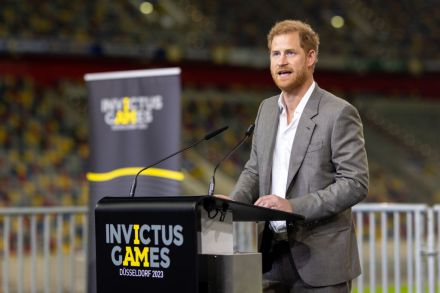
What are Prince Harry’s pronouns? The obvious ones, of course, are ‘he/him’, but the mischievous might suggest that ‘heir/spare’ are just as likely. In either case, the Duke of Sussex has struck most of the world as a man who is in touch – if perhaps not through his own volition – with contemporary gender recognition. Therefore, it’s not a vast surprise that the latest charity that he and Meghan have chosen to support is one that has planted its flag in these areas, albeit with a twist.

Crash test: the new era of economic uncertainty

40 min listen

On the podcast: The Spectator's economics editor Kate Andrews looks back on a week of economic turbulence and asks whether we should be worried, for her cover piece in the magazine. She is joined by the economist – and former 'Trussketeer' – Julian Jessop, to discuss whether we are entering a new era of economic uncertainty (01:06). Also this week: In the magazine, The Spectator’s deputy features editor Gus Carter says that the culture of toxic masculinity has gone too far, and that young men are being marginalised in schools and online as they are repeatedly told that they are a danger to women. He is joined by the Times columnist Hugo Rifkind, to explore how today's sexual politics is impacting young men (13:21).

The first post-slap Oscars was a bit dull

From our US edition

It was ordained months ago that this year’s Academy Awards were going to be dominated by Everything Everywhere At Once, and so it has proved spectacularly. The film has taken seven awards, including Best Film, Best Director, Best Actress, Best Screenplay and Best Supporting Actor. While I was not one of the fans of the duo Daniels’s picture — multiverse spanning fantasy films are not exactly my bag, whether they’re made by Marvel or the hipper-than-hip indie company A24 — it’s still a distinctive and original work of cinema, albeit less likely to be regarded as a future classic than Todd Field’s magnificent Tár, which went home empty-handed. It may well be that Tár’s magnetic star Cate Blanchett lost to EEAO’s Michelle Yeoh for reasons of optics as much as ability.

michelle yeoh oscars

Harry and Meghan want it both ways with royal titles

For all of Harry and Meghan’s near-constant talk about needing their privacy, it is an unfortunate running theme that their every single action seems designed to elicit both headline inches and discussion as to what they’re going to do next. It also appears, alas, that their entire family are fair game for this kind of exposure, as can be seen by the news that their younger child, Lilibet Diana, was christened in California on Friday 3 March. Yet the Sussex PR game is not a perfect one.

Arnold Schwarzenegger’s leftward turn

From our US edition

In the '80s and early '90s, there was perhaps no greater cinematic hate figure for liberals than Arnold Schwarzenegger. Since his first big hit in the politically dubious Conan the Barbarian (Roger Ebert wrote of the film's James Earl Jones-decapitating ending, “I found myself thinking that Leni Riefenstahl could have directed the scene, and that Goebbels might have applauded it”) he became a Reaganite fantasy, disposing of foreign-accented villains who threatened the good ol’ United States of America with little more than automatic weaponry and an Austrian-accented quip. Never mind that his father Gustav was a leading light of the Nazi party.

The Christian movie finally finds its niche

From our US edition

When Mel Gibson’s ultra-violent, ultra-religious Passion of the Christ made $612 million worldwide, it was not earning its money from teenagers looking for a night out. Despite its R rating, churchgoers were being bused to theaters by the millions, thanks to the heavy support it received from evangelical Christian groups. Everyone from Billy Graham and Jerry Falwell to Pat Robertson and Chuck Colson came out in support of the film, although the Pope’s supposed endorsement — "it is as it was" — was denied by the Vatican. Yet faith-based films have quietly been big business in Hollywood for decades now.