Alexander Larman

Alexander Larman is an author and the US books editor of The Spectator.

Of course Taylor Swift deserves to be TIME’s Person of the Year

From our US edition

Well, it had to happen. Taylor Swift has been the most talked-about person in the world for some time now. After 2023 saw her conquer both stadiums and the world’s cinemas with her Eras Tour film — which, with a current gross of $249 million, is now the highest-earning concert movie ever made — her remarkable year has been capped off both with the enormous success of her re-recorded album 1989 (Taylor’s Version) and now, the news that TIME magazine has awarded the thirty-three-year-old musician the accolade of Person of the Year. She follows in the footsteps of everyone from Josef Stalin and Adolf Hitler to Mark Zuckerberg and Elon Musk. There are several noteworthy features of the accolade.

taylor swift

Sex and the Famous Five

Generations of readers of Enid Blyton’s Famous Five series have enjoyed the books without having to contemplate the erotic properties of the canine member of the quintet. After reading Nicholas Royle’s one-of-a-kind fantasia on Blyton and David Bowie, they may never be able to do so again. Royle writes confidently that ‘the most obvious route to thinking about sex in the Famous Five books is Timmy the dog’. Once this bombshell has been absorbed, he knocks the reader down again by writing: ‘Timmy is a big dog. He is a big-tongued dog. He must have had a huge donger too.’ The idea behind David Bowie, Enid Blyton and the Sun Machine first occurred to its author during the first 2020 lockdown.

Can The Crown redeem itself in its final hours?

From our US edition

Netflix’s royal saga The Crown has been one of its biggest hits of the past few years. Sacrificing subtlety for big, dramatic arcs, with award-winning performances by a cast that has, in a stroke of genius on the part of its creator Peter Morgan, changed every two seasons, it’s been the most gripping and rich account of the post-war British royal family ever put on screen. It has been helped both by an enormous budget and the useful way in which the present-day battles between Prince Harry and Meghan Markle and the rest of the Firm have come to mirror The Crown’s increasingly eventful power struggles among the various branches of the family.

the crown

Harry, Meghan and the mystery of the ‘royal racist’

Ever since 2021’s absurd Oprah Winfrey interview, in which the Duchess of Sussex coyly suggested that a member of the Royal Family had speculated about what colour her then-unborn first child’s skin would be, there has been an egregious fascination with the identity of the notorious figure known only as ‘the royal racist’. Speculation has swirled around virtually every member of the Firm – if you want to edify yourself further, the words ‘royal family’ and ‘racist’ entered into the right search engine will eventually lead you to the probable culprit. But although their identity has been hiding in plain sight for a considerable period of time, there has been a refusal to name this man or woman.

When you Wish upon a star: is the Disney shine fading?

From our US edition

Did you see Wish last weekend? Chances are, according to the box office receipts, you didn’t. The latest big-budget Disney extravaganza, with the voices of Ariana DeBose and Chris Pine, was expected to be a hit, grossing a decent $50 million on its opening weekend. Instead, to the studio’s chagrin, it came in third with a comparatively measly gross of $31.7 million, bested not only by the second weekend of the Hunger Games prequel, The Ballad of Songbirds and Snakes, but, considerably more surprisingly, Ridley Scott’s Napoleon, which soared past early estimates to come in with an impressive $32.5 million. Not bad for a film without any bankable movie stars (sorry, Joaquin), mixed reviews, a B- CinemaScore rating and a subject with which American audiences are not intimately familiar.

wish

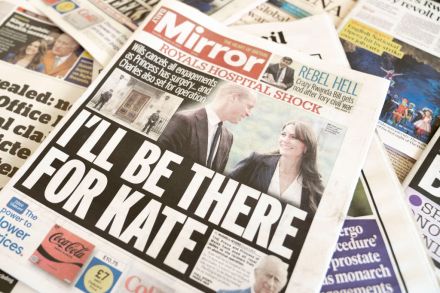
The knives are out for Prince William and Kate

Omid Scobie’s Endgame is now available from a bookshop near you, and no doubt republicans and admirers of Harry and Meghan alike will be flocking to buy it on the day of release, gleeful to soak up the revelations about the Royal Family. For the rest of us, the appeal is less clear. The book’s tawdry and scandalous provocations have been extensively trailed in the press over the past few days and, as I wrote yesterday, its most attention-grabbing suggestions are hardly newsworthy or particularly surprising, which means that, like Spare, this book is likely to meet with vast initial sales and will then dwindle into obscurity before very long.

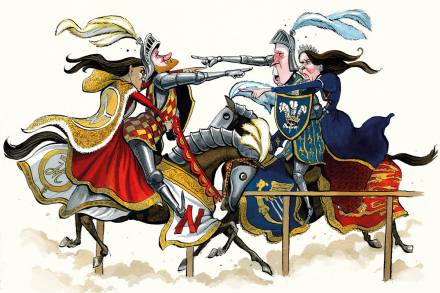
Is the war of the Windsors about to blow up again?

The name ‘Omid Scobie’ must be one of the least popular ever uttered in Buckingham and St James Palaces. Not only was the royal reporter's bestselling 2020 book Finding Freedom a firmly partisan account of Harry and Meghan’s quasi-abdication – and, it later transpired in court, assisted by someone close to the Duchess, so that her 'true position...could be communicated to the authors to prevent any further misrepresentation' – but now the man known, without affection, as ‘Meghan’s mouthpiece’ has returned with another certain-to-be-controversial book. Entitled Endgame – probably not a reference to the Samuel Beckett play – Scobie has stated that the book is not designed to be a sequel to Finding Freedom, and that the Sussexes only play a relatively minor role in it.

Sir Ridley Scott and the subtle art of not giving a damn

From our US edition

Most men approaching the age of eighty-six would be forgiven for taking it easy. Not so Sir Ridley Scott: legendary filmmaker, director of the eagerly anticipated epic Napoleon and, it appears from the recent interviews he has given, someone who does not give a single solitary cuss about how he, or his film, are received. He is fresh from telling historians who have criticized his film’s factual accuracy that they should “get a life” and that “when I have issues with [them], I ask: ‘Excuse me, mate were you there? No? Well, shut the fuck up then.

ridley scott

In defence of The Crown

Since 2016, we have cultivated a new national pastime: moaning about the latest series of The Crown. Every time Netflix’s royal soap opera appears on our screens, we become united in our determination to spot errors of fact and taste in Peter Morgan’s show, ranging from the trivial to the major. No wonder that Morgan, in a tetchily defensive interview with Variety last month, said 'I just don’t like talking about it. I don’t think it’s possible to have a sensible conversation about The Crown in the United Kingdom.' Morgan will have felt vindicated, perhaps, by the dismal response the first four episodes of the sixth series have received from television critics and royal historians alike.

Could Prince Harry be brought in from the cold?

For those of us who believed that hell would freeze over before the Duke of Sussex was welcomed back into the bosom of his family, it will have come as a surprise when it was revealed that Prince Harry would be telephoning King Charles on his 75th birthday this week. It has been reported that the call went well: over the course of a warm conversation, during which Meghan also spoke to her father-in-law, plans were set in motion for more regular chats between the two. Another call has reportedly been scheduled for next week. It was also briefed that the King was sent a video of his grandchildren Lilibet and Archie singing happy birthday – as Charles has barely met Lilibet, this was a particularly well-judged touch.

the crown diana

The Crown season six: a regal return to form?

From our US edition

Say what you like about Netflix’s The Crown, now coming into its final series — the first four episodes launch on the service today, with the concluding half-dozen coming next month — but it is one of the few shows that has combined winning truckloads of awards with compelling its viewers to have an opinion on its often surprising manipulations of history. Its creator Peter Morgan has been both praised and vilified for the liberties with fact he has taken, all of which he has dismissed on the grounds that he is creating fact-based entertainment, rather than a documentary series. That invention can often illuminate, rather than obscure, the workings of the forever secretive British royal family.

Have we misunderstood David Fincher?

From our US edition

The trailer for David Fincher’s latest movie, the hitman thriller The Killer, promises that admirers of one of cinema’s most talented directors will be getting their money’s worth, whether they see it during its theater release or wait for it to premiere on Netflix (which paid for it), just as they did Fincher’s previous film, Mank, and his serial-killer series Mindhunter. There will be a lead performance by Michael Fassbender — returning from several years away from the big screen racing cars — that will, as usual, combine icy charisma with brute physicality. There will be impressively gloomy cinematography, courtesy of Erik Messerschmidt.

Will Charles enjoy a birthday reconciliation with Harry?

Happy birthday, Your Majesty. The King turns 75 today but the celebrations will be muted: Charles is spending the day launching the Coronation Food Project, which is designed to deal with the pressing issue of food shortages throughout the country. He’ll also be hosting a reception for NHS nurses and midwives. For a monarch who has been accused of taking it easy (there was an extended summer break in Scotland), this represents a riposte to his critics. Charles is once again seeking to present himself as a dutiful, committed monarch, getting on with the business of ruling. Yet it is Charles’s private life – particularly his relationship with Prince Harry – that continues to excite most attention and has done since his accession to the throne.

The Killer is a black-comic masterpiece

From our US edition

When David Fincher’s latest picture The Killer premiered at the Venice Film Festival in September, it was to a more muted reception than might have been anticipated. Part of this may have been because, with the actors’ strike very much in force, its stars Michael Fassbender and Tilda Swinton were nowhere to be seen, with Fincher himself the only A-lister on the red carpet. But it was also undoubtedly because the finished film was not remotely what many had anticipated. Early hype suggested that The Killer would follow the exploits of Fassbender’s anonymous assassin as he (inconveniently) develops a conscience, presumably setting up an existential quandary.

killer

Prince Harry wins his latest legal battle – but at what cost?

Prince Harry has won a small victory in his High Court battle: a judge ruled this morning that his privacy case against Associated Newspapers, the publishers of the Daily Mail and Mail on Sunday, can proceed to trial. Harry is part of a group of seven, including Doreen Lawrence and Sir Elton John, who have accused the newspaper group of all manner of reprehensible behaviour, including listening in on private telephone conversations, accessing confidential records and even planting bugging devices within vehicles. Associated denies the accusations, calling them 'preposterous smears'. It asked the judge hearing the case, Mr Justice Nicklin, to dismiss the case without trial. But Nicklin refused to do so, paving the way for a return to the witness box for Harry.

SAG strike resolution: what happens next?

From our US edition

After a paralyzing 118 days, the actors’ strike is now, finally, looking like it’s over, following hard in the footsteps of the similarly resolved WGA strike a couple of weeks ago. The SAG are claiming victory over the studios, who took an exceptionally long time to ratify demands that included everything from increased fees for work appearing on streaming services, to protections regarding the use of AI, to reproduce actors’ images on screen. There were many times during the strike when it looked as if both sides were simply too far apart to achieve a resolution. In the end, money talks: the major Hollywood studios and streaming services realized that without the swift agreement they needed, there would be a drought of product in the marketplace next year, and beyond.

sag-aftra

Charles’s debut King’s Speech was a triumph

The King’s speech was a damp squib – but for that we should blame Rishi Sunak rather than Charles III. Most of the announcements – from tougher prison sentences to cracking down on smoking – were already known about. But while the Prime Minister's agenda was far from inspiring, today's pomp and ceremony did give some cause for optimism: Charles's speech showed that Britain's monarch is doing a good job in his role. Even before he said a single word today, Charles looked thoroughly at home in the surroundings. It's hard to believe that this was the first speech that Charles has delivered as ruler, so established does he now seem in the role of monarch.

marvels marvel

How Marvel lost its way

From our US edition

Are you excited about seeing The Marvels, the mega-budget sequel to 2019’s billion-dollar grossing Captain Marvel? Judging by the advance box office predictions, not very many of you are. Current tracking has the film opening at around between $50 and $75 million on its first weekend. For most non-superhero franchise pictures, this would be excellent, but for a film that was budgeted at between $220 and $280 million, depending on whom you talk to, it has all the hallmarks of a colossal flop, capping off what has been a truly terrible year for Marvel Studios. It was never supposed to be this way.

‘Now and Then’: the Beatles are back

From our US edition

In the Sixties, the rivalry between the Beatles and the Rolling Stones  — even if it was more of a hype battle dreamt up by their respective publicity departments — meant that whenever one band released an album or single, the other was never too far behind. Sometimes, they even explicitly referenced their competitor’s work; the Stones’s 1967 album Their Satanic Majesties Request was “inspired” by the Beatles’s LP Sgt. Pepper’s Lonely Hearts Club Band, released earlier that year. Yet after the Beatles split up in 1970, the rivalry seemed to be at an end, and the deaths of John Lennon in 1980 and George Harrison in 2001 apparently put paid to any possibility of the Liverpudlian band continuing in any form. Oh, how wrong we were.

beatles

Should Charles apologise to Kenya for Britain’s colonial past?

It was no coincidence that Kenya was chosen for King Charles’s first state visit as monarch outside Europe. After all, it was at the Treetops hotel in Aberdare National Park on 6 February 1952 that his mother acceded to the throne. As the politician and diarist Harold Nicholson quipped, ‘She became Queen while perched in a tree in Africa watching the rhinoceros come down to the pool to drink.’ Charles’s visit had to acknowledge the wrongs done in his country’s name while not offering a full, formal apology.  Such symbolism, and historical resonance, will have dearly appealed to Charles, as he acknowledged in his speech after a state banquet on the first day of his trip.