Alec Marsh

Alec Marsh’s latest novel, Cut and Run, is published by Sharpe Books.

Scotland is sailing’s best kept secret

From our UK edition

Among the glorious shores of these islands, there is one of the best-kept secrets of sailing. It’s a ragged and rocky coastline that is blessed with the sort of idyllic, empty sandy beaches stretching on for miles that would make Tom Hanks's castaway shake from method acting-induced PTSD. Here the blue waters are scattered with islands rising from the depths with the kind of muscular topography that would have your average geography teacher reaching for their colouring-in pencils. This, my friends, is the west coast of Scotland. Forget the Caribbean, wonderful though the punch, the people and the terribly reliable temperature all are. The untouched beaches of the Western Isles are every bit as beautiful, just permanently 15 degrees Celsius colder.

Buy a boat, not a holiday home

From our UK edition

One of the most striking features of the second Covid summer has been the soaring prices of holiday cottages. How dare the owners of static homes in the vicinity of the coast be charging quite so much for the uneven pleasures of a week in a caravan park? Well, get used to it because as Britain’s population continues to soar – we’re on track to hit 75 million in the next two decades –pressure on property and prices is only going to increase. As Mark Twain remarked: ‘Buy land, they’re not making it anymore.’ All right, you say, we’ll go abroad instead, plus the weather’s better over there. Well good luck with that, too.

Why Powys should be on your property radar

From our UK edition

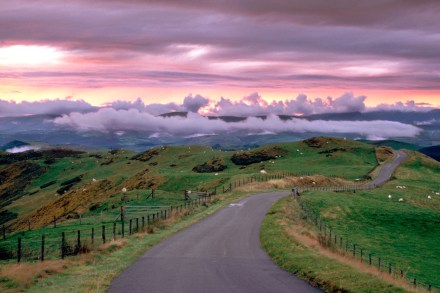
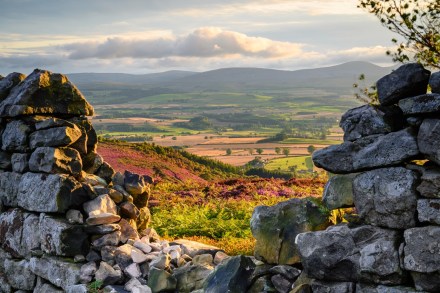
The word Powys is not filled with onomatopoeic potential and, to the English ear at least, doesn't conjure up a particular image. And yet the region has a dizzying lineage, one that stretches back to antiquity. In the fifth century, the Romans scarcely off the stage, Powys was ruled one of the last kings of the Britons named Vortigern – that’s according to the Venerable Bede not the comedically venerable Monty Python. Later still Powys was ruled by Brochwel Ysgrithrog (‘the fanged’ or ‘of the tusk’) and did battle with the Saxons before Alfred the Great had even been born – let alone burned his fingers on a cake. It thus qualifies as one of the most ancient place names in Britain – predating the Saxon era.

Richard Branson is the Thomas Cook of space travel

From our UK edition

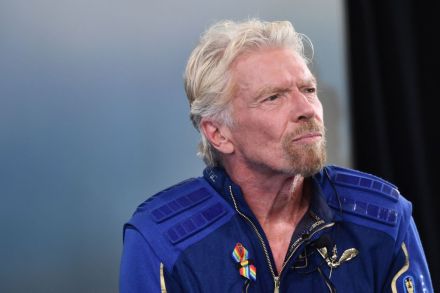
When Sir Richard Branson blasted off into space on Sunday he broke – or rather established – several important records. While he wasn’t the first billionaire to go into space – the extra-terrestrial ten-digit honours belong to Hungarian-born Microsoft Office software magnate Charles Simonyi, who went up to space on a Russian rocket in 2007 – Branson was the first man (billionaire or no) to go to space in a rocket that he had funded and built himself. For what it’s worth, he’s also the first knight of the realm to go into space, which has a certain anachronistic cachet, like a time-travelling Roman senator.

In praise of the Ford Escort

From our UK edition

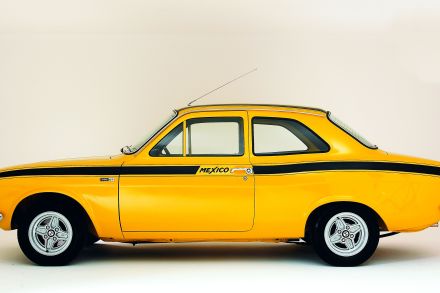
It’s safe to say that the Ford Escort does not enjoy a straightforward place in the British national consciousness. And it’s not a position, furthermore, that is simplified in any way by being reminded that the Prince of Wales actually bought one of them for Lady Diana Spencer as an engagement present in 1981. I challenge you to think of a less romantic engagement gift – albeit the car did have a frog mascot on the bonnet – for a bride-to-be, especially one due to be joined in holy matrimony to the heir to the throne. (God alone knows what Meghan Markle would have said if Prince Harry had turned up with a Vauxhall Astra to celebrate their engagement.

Why the British should eat more oysters

From our UK edition

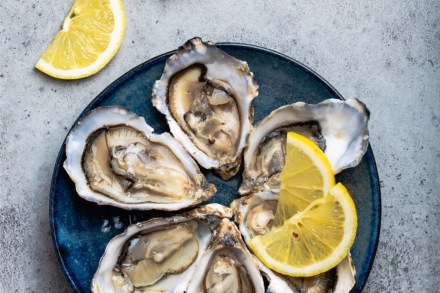
Back when the dinosaurs still thought they were the bees-knees, another little creature was gently making its way into the big wide world. And now, more than 150 million years later – having withstood at least one planetary-wide annihilation (the one that knocked T-Rex off his perch) – the humble oyster may be on the cusp of making history itself.That’s because this simple bivalve mollusc, cultivated on our shores since Roman times, really could help save the planet, albeit this time from an annihilation of man’s own making.

Sprawling forests and space galore: is this Britain’s next property hotspot?

From our UK edition

There comes a point in every metropolitan potentate’s journey from London to Edinburgh, when he or she looks up from their laptop in First Class and gazes from the window of the train. At this point, they suddenly realise that whatever’s been absorbing their interest for the last hour or two, is completely irrelevant. Chances are they are gazing out at some of the 60 or so miles of Northumberland that the doubtlessly ageing LNER rolling-stock is careening through at 100 miles per hour.

From Suffolk to Essex: why moving east makes sense

From our UK edition

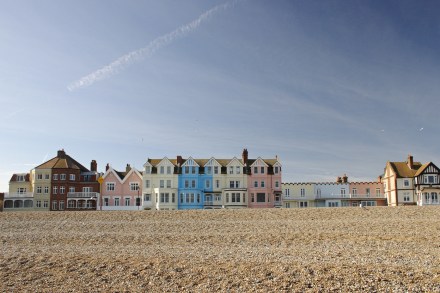
You might remember, back before Covid, when life was ‘normal’, at three o’clock on a Friday afternoon, the Volkswagens, Audis and Jaguars clogging up the pavements of Kensington, Parsons Green and Hammersmith would one by one nudge out, and make for the Great West Road, duly clotting the A4 like a fast-food addict’s aorta. To all points west they would go – to the dewy hamlets of Hampshire, to the honeyed villages of the Cotswolds, to the pebbled beaches of Dorset’s Jurassic Coast, to the curvaceous nooks of Devon’s South Hams. But there is another way you can go, my friends, one which isn’t west. You can go east. And, boy, does it pay dividends.

The remorseless rise of ‘so’

From our UK edition

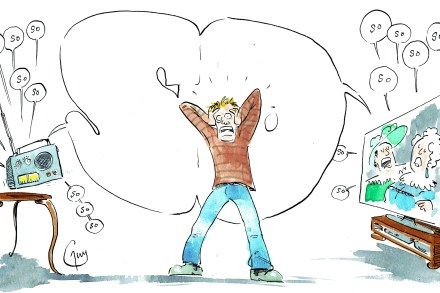
So, a question for you. Are you bothered by the fact that you hear the word so, quite so often? Does ‘so’ grate on you? It grates on me. A lot. Every time I hear it I shudder, which makes certain television channels frankly hazardous. In fact, I’ve reached my absolute 'so' saturation point. It happened the other morning when my son, who is just five, walked into the sitting room and announced portentously: ‘So, the question is...’ I didn't catch the question because I was wracking my brain as to where he had come up with that form of words. And then it dawned on me... Over the next half an hour I must have caught myself either saying ‘so’ or very nearly doing so, about half a dozen times.

The problem with driving in Britain

From our UK edition

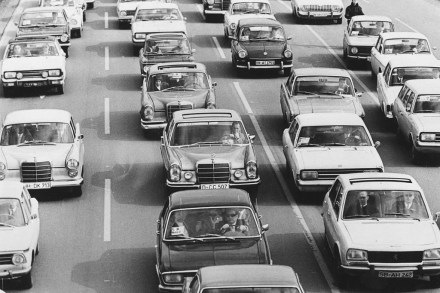
Admit it, the joy of driving is a myth - in Britain at least. Drivers who talk about the thrill of getting behind the wheel should ask themselves, when was it that they last really enjoyed driving somewhere? Because the grim truth is that unless you are on an isolated country road miles from the nearest speed camera – and certain that no one else is around – you simply can’t let rip anywhere now. The traffic never subsides enough for you to get a decent run up and, if it did, you’d be flashed by speed camera or break the average speed limit before you could even hit fourth gear (let alone hit the near-mythical realm of Fifth Gear).

Spare a thought for introverts

From our UK edition

How do you feel about 17 May, when the next major set of lockdown restrictions are due to be lifted in England? Are you looking forward to going out to dinner with friends inside an actual restaurant, or are you breathless with anticipation at the prospect of hosting your first, legal, dinner party for as long as you care to remember? Quite how you feel about any of the above will relate closely to how strongly you perceive yourself to be either an extrovert or an introvert. If you’re the former, then 17 May, followed by 21 June (when apparently lockdown will be ‘over’), will have you salivating with joy at the prospect of virtually untrammelled social contact. Bring it on. But if you’re an introvert then it’s the opposite story.

It’s time to revive the handshake

From our UK edition

Those with a watchful eye might spot something this week (or next)  not seen in a while. And I’m not talking about a freshly poured pint, or the sight of your forehead after three months without a barber’s care. Rather, as England and the whole of the UK, begins to ‘open up’ after the third national lockdown, and as we emerge socially emboldened into the spring sunshine inoculated to the tune of some 32 million first doses of Covid vaccine, there's a chance we might see the handshake make a tentative return. I can't be the only one who has begun to wince slightly every time I see someone on TV shaking hands in a social setting, in a film or programme evidently filmed in the world before Covid robbed us of such basic, everyday civilities.

You’ll miss Piers Morgan when he’s gone

From our UK edition

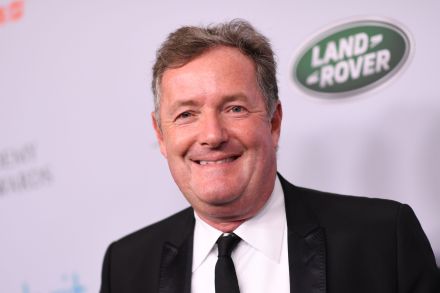
Why is anybody offended by Piers Morgan? That’s the point. It’s his job to be offensive. It’s his job to say out loud what many in society are thinking but lack either the courage or the platform to voice. He is the Wat Tyler of the Whatsapp age. Now of course you won’t always agree with him — perish the thought — but the fact of his existence within the mainstream media ensures the expression of opinions that polite society might find distasteful. There is something almost dialectic about Morgan’s performances. His job is to provoke, and in their response the viewer better knows his or her own mind.

Princess Eugenie and the perilous business of baby names

From our UK edition

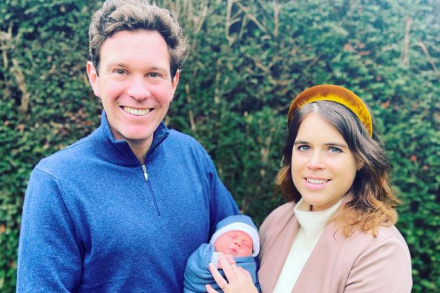
Naming a child turns out to be one of the hardest things you can do. The secret to nailing it is to avoid choosing something outlandish or freakish at one extreme – but then sidestep the trap of settling on something profoundly mundane at the other. Unless you are a rock star or a tech billionaire, for instance, it best to avoid the following: Tree-stump, Treble Clef, or a non-verbal sign that was formerly adopted by the artist Prince when he was still a going concern – these are not the imprimatur available to the majority of us who have to occupy terra firma. And yet... and yet, you don’t necessarily want to give your bundle of joy a name that has about as much unique appeal as BMW Mini. You want something that your son or daughter can own and make their own.

Why we’ll soon look forward to a day in the office

From our UK edition

The office, as we once knew it, is dead. Zoom has killed it; the digital genie is out of the lamp. What most of us didn’t realise before Covid – back in April 2020 – was that the closure of offices was final and that the daily commute may well be confined to the history books. Even when things return to ‘normal’ we won’t be able to uninvent remote working, and companies know it. In fact, many of them knew it before the pandemic struck. As one leading business figure told me back the early summer, Covid – by forcing remote working – allowed companies to activate a decade’s worth of mooted corporate culture change in just three months.

It’s time to say adieu to the tie

From our UK edition

When’s the last time you wore a tie? Was it yesterday? Are you wearing one now? Somehow I doubt it. After all, why should you, sitting there in your home office or spare bedroom, or sitting room?  Of course there was a time, if you’re a male reader, that you would have worn one every day to work. But ties are rapidly disappearing. Where once half-Windsors wider than 747s straddled the necks of pontificating ex-footballers on Match of the Day, open shirts now rule the roost. When you see a politician out and about on the television, his tie is gone, his sleeves are rolled up – like a vet about to perform a highly intimate procedure – and he’s even jacket-less.

Don’t expect Trump or Clinton to stick around for a second term

From our UK edition

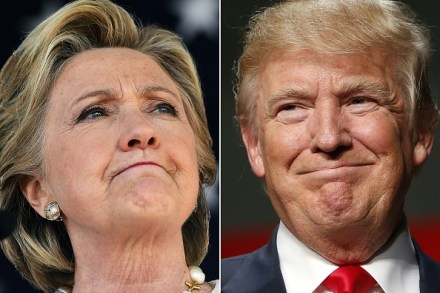
Whichever unappealing candidate wins the US Presidential election next week, one thing seems to be pretty certain: they are almost certainly going to be one-term presidents. If he’s elected, 'the Donald' will be a 74-year-old incumbent come 2020, so even if he turns out to be a much more effective president than most would predict at this juncture, he’ll be getting on a bit to run again. If nothing else, there’ll be significantly less bounce to his bonce. Meanwhile, President Hillary, if that’s what she becomes, will be 73 in 2020.

Britain should be grateful for its new aircraft carriers. They do still make waves

From our UK edition

As the Russian aircraft carrier Admiral Kuznetsov finally nears the eastern Mediterranean, with a trail of ugly black smoke belching from its funnels, it’s a fitting moment to acknowledge some credit where it’s due. For the waves created by President Putin’s flagship as it passed our shores – before steaming into further controversy in Spain – more than endorse the Cameron government's brave decision to press on with Britain’s new £3 billion aircraft carrier, the HMS Queen Elizabeth, in the aftermath of the 2008 financial crisis.

The loss of his knighthood is the least of Philip Green’s problems

From our UK edition

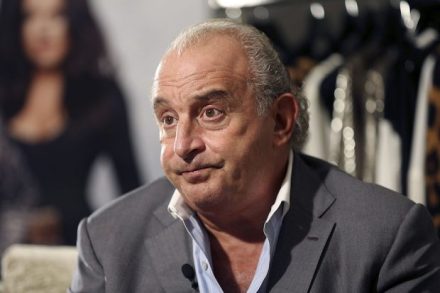
The prospect of becoming plain old Mr Green again may be troubling 'Are-you-staring-at-me' Sir Philip Green less than we might imagine.  Because compared to the other problems facing him, his knighthood is arguably pretty small beer.  Take the value of sterling: since the Brexit vote, the collapse in its fortunes has sent the currency tumbling in value by as much as 20 per cent. Then if you consider that almost everything sold in Sir Philip’s shops – be it Topshop, Topman, Dorothy Perkins or Miss Selfridge – is imported from overseas (from places like Bangladesh, China or India), it doesn’t take long to realise that somewhere along the way a sizeable chunk has been gobbled out of his margin.

Why is Sadiq Khan giving Americans his views on the US election?

From our UK edition

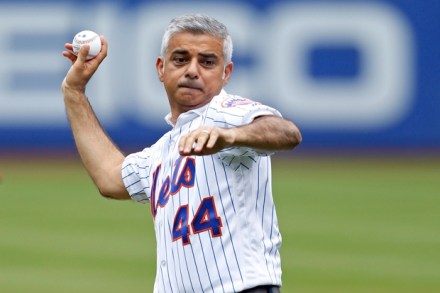
‘It’s important for those of us who are foreigners to stay out of the US elections.’ So said the mayor of London, Sadiq Khan, with due propriety during his visit to America last week. Unfortunately he then added: ‘I hope that the best candidate wins and I hope she does win with a stomping majority.’ Given the febrile state of US politics, I’m sure that this cringe-worthy endorsement is precisely the sort of intervention that Clinton needs in order to get her faltering campaign back on track. And perhaps the lord mayor of, say, Wandsworth could polish his chain of office and head to Paris to advise the French on how to cast their votes in next year’s presidential campaign? It would do about as much good and a lot less harm.