Alec Marsh

Alec Marsh’s latest novel, Cut and Run, is published by Sharpe Books.

A daily shower is money down the drain

From our UK edition

When did it become an inalienable human right to have a shower every day? I ask the question because pretty clearly it wasn’t always so. Yes, the Romans had showers – of course they did (they probably had the internet, too, but archaeologists can’t see it). A potter about online will tell you that we got the first mechanical shower here (hand pumped) thanks to the ingenuity of a plumber from Ludgate Hill named William Feetham. That was in 1767, which means that by the time Jane Austen was getting ink on her fingers a shower was an option for some. So the answer to my question is somewhere between 1767, when I expect a monthly bath was de rigueur for most of us, and around 1990, by which point it become common for Britons to take a daily shower and regard it as essential.

The lost art of the bow tie

From our UK edition

Whatever you think about Deputy Prime Minister Dominic Raab – whether you think he’s bully or a tomato-thrower, and whether you couldn’t care less if he is or isn’t – there is something you ought to know about him. Apparently, he can’t do up a bow tie. That’s according to the Financial Times journalist Sebastian Payne and his forthcoming book about the last days of Boris Johnson’s government. He tells the story of Raab arriving to counsel the Prime Minister during his last hours in Downing Street, dressed in white tie. ‘Raab awkwardly told Number 10 staffers he had to attend a white-tie dinner at the Mansion House in the City of London that evening, but required assistance with the outfit. An attendant was found with the skills to fix his bow tie.

The power of the dog

From our UK edition

We live in a dog-crazy land. You know it’s true. There are 12.5 million pet dogs in Britain, and no fewer than one in three households have one. Which is, by any measure, a lot of dogs, especially when we’re confronting a cost-of-living crisis. Most people, of course, will already know why we have quite so many of them: they’re cute when they’re young and beautiful or handsome when fully grown; they provide companionship, yet they don’t do passive aggression or sarcasm. Most of us already have siblings, parents or a spouse for that.

In defence of booze

From our UK edition

Once upon a time, well within living memory, a free-born Britisher could drink as much as he or she liked and smoke with a carefree abandon – all within working hours, and even without leaving their desk. You may remember elevenses – immortalised in those moments when M briefs Bond in the 007 films and the decanter comes out. That’s how people did a business meeting once, before Starbucks and 15 types of coffee. And then there was lunch. This could begin with a pint of beer or a steep gin and tonic, before some wine, and then perhaps a glass of port or brandy. Water? Kah! That’s for rinsing the glasses, not going in them. Nowadays, if you suggest having a glass of wine at a work lunch people will look at you like you’ve just offered their toddler a line of cocaine.

The hateful sterility of new-build houses

From our UK edition

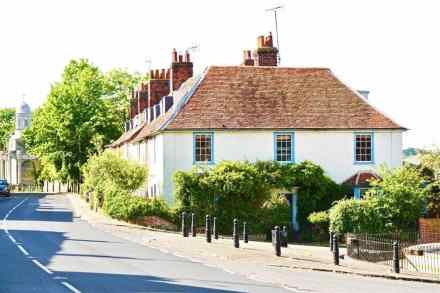
Where do you stand on new houses? You know, the little red boxes you see massed along the sides of motorways or clustered on what used to be flood plains? They’re hateful, aren’t they? Now, I know many people (my mother included) who own perfectly lovely new houses – and these houses are indeed all very lovely, and I bow to their pragmatism in putting basic necessities such as effective heating and draught-free corridors above the concerns of taste or aesthetics. But I can’t do it. Whether it’s down to the fact that the windows are a funny shape and as impossible to open as those on an Airbus, or that there are fire doors everywhere with nasty brass handles, or that the ceilings are too low, I could not tell you.

Why Charles is the King of Savile Row

From our UK edition

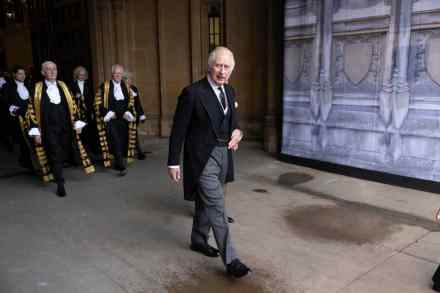
No one who has watched the events of the past ten days could doubt the King’s commitment to his late mother – or to his people. But I think another of Charles III’s commitments is also becoming apparent: one to British tailoring. From his black-braided morning suit when he addressed the Houses of Parliament at Westminster Hall to the ceremonial Air Marshal’s uniform he wore to process the Queen’s coffin from Buckingham Palace to her lying-in-state, His Majesty has been nothing less than impeccably attired at every turn. Perhaps it shouldn’t be surprising that we’ve got probably the best-dressed head of state in the world. As Prince of Wales, Charles had long flown the flag for British style.

Churchill and the house that saved the world

From our UK edition

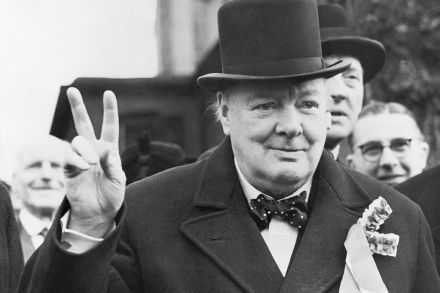
A short train journey from London, in the outer reaches of suburbia in Kent, sits the house that saved the world. Or rather: it’s the house that saved the man who saved the world. The property in question, of course, is Chartwell, which 100 years ago this month was bought by a certain Winston Churchill, then a Liberal MP. Back then his career was in ascendance: in 1924, with Churchill having crossed the floor, Stanley Baldwin made him Chancellor, a post he retained until 1929. But then, rather suddenly, he was out in the cold. That was when Chartwell – and the 81 acres it sits in – came to the rescue.

Lessons for life from the Queen

From our UK edition

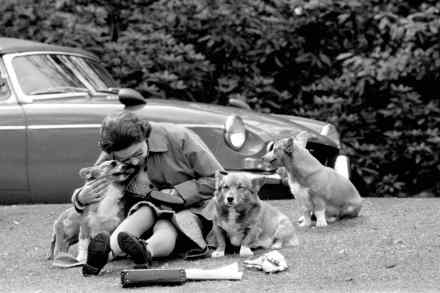
Having taken the Queen’s remarkable longevity, good health and work ethic for granted right until the end, might her subjects now appreciate her approach to life? Because through her combination of sheer graft – she received Liz Truss to kiss hands two days before she died – and her attitudes towards health, leisure and emotional resilience, Queen Elizabeth II bestowed on us an invaluable guide to living well. The problem is that most of us haven’t spotted it. It begins with some obvious don’ts: don’t smoke – the Queen had that lesson first-hand from her father George VI (albeit her sister Margaret didn’t listen).

The politics of topless sunbathing

From our UK edition

I’m pretty certain that what I’m about to say is essentially unsayable. So here goes: we need to have a frank conversation about boobs. Bare boobs. Because on my recent holiday to Majorca, I have to confess to being a little astonished to see quite so many topless women on the beach. But what a simple joy it was; old, young, lithe, voluminous, ponderous – there they were in all their glory, glistening or wilting in the sun, or simply splashing about in the sparkling water. Boobs. I know, I know… as a straight, white, privately educated man in the raw good health of middle age this is not territory that I’m completely comfortable venturing into. And perhaps I shouldn’t. But I feel this needs to be said.

Off the books: there’s more to Hay-on-Wye than the literary festival

From our UK edition

Chances are you will have heard of Hay-on-Wye. You might even have been. It’s the town on the Anglo-Welsh border where more than 30 years ago a man called Peter Florence began what has become the world’s most famous literary festival. Now some 200,000 people descend on the place each May and June, and for 11 days it feels like the centre of the literary universe, with hordes carrying tote bags traipsing hither and thither and pubs and restaurants overflowing like Venice in high summer. If that’s what floats your boat, then get stuck in. But for my money, Hay is worthy of a visit in its own right – and preferably when all those other visitors (not to mention ex-presidents and Booker prize-winners) aren’t there.

The Brompton bike has overcome its biggest drawback

From our UK edition

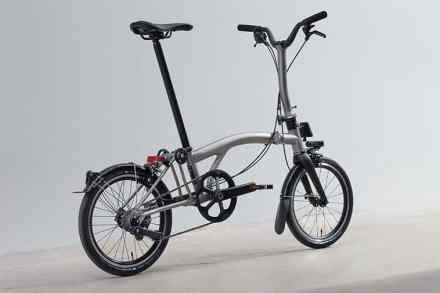
Brompton is one of those brands that has Britishness baked into it; it's the reason why the bike has become a status symbol amongst China's metropolitan elites and why 75 per cent of Bromptons are exported. But it was always hard to tell whether riders loved the idea of the bike more than its reality. On paper, a folding bike is a no-brainer for city commuters short on space, but packing in so many mechanisms while keeping the bike light has proved more than a little challenging. If you’ve ridden a standard Brompton then – say it quietly – you’ll know that despite their massive success they do have a tiny bit of a weight problem: not that it’s polite to talk about these things any more.

Why the English love lazy sports

From our UK edition

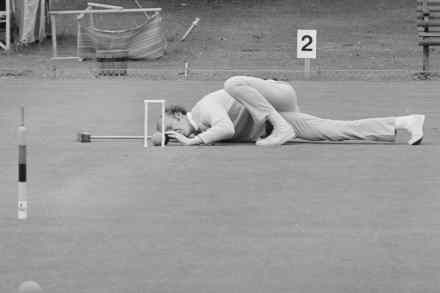
Once upon a time, when the fingerprints on the Wimbledon trophy were more or less exclusively British, you could win in SW19 whilst wearing trousers. Even a tie if you go back far enough. But then, back in those days, tennis was a no-sweat sport. Well, perhaps a drop or two, but essentially there was much less of it around than today, when sweatbands, perspiration and frequent towelling off are part of a fetishised display of effort and strain – one that’s often accompanied by verbal ejaculations of sometimes rather alarming severity. I’m sure I’m not the only one who’s been forced to mute Wimbledon at times because of the repetitive baseline grunting. But it wasn’t always this way.

I’m a tip addict – are you?

From our UK edition

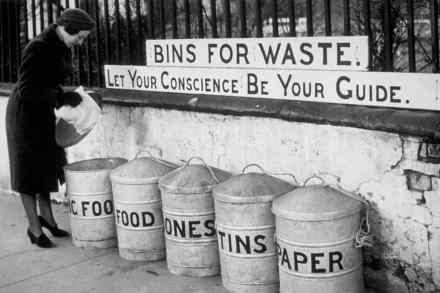
You’ll know the feeling: it’s that moment when a large, bulky item – perhaps a plastic children’s sit-on tricycle or a degenerating Ikea bedroom unit – leaves your fingers after months, years of being tolerated. Despite the stink, there's no denying the unsurpassed elation that a trip to the tip can induce — a rare sublimity that some people pay thousands to achieve through exotic spa treatments in the Alps, or by snorkelling in crystalline waters with banjo-playing Buddhist monks in Borneo. As the detested tricycle or Ikea unit crashes down behind you, you are transported. You stride back to your car, a taller, happier homo sapiens, one that commands all the suburbia he surveys.

Why the British don’t do superheroes

From our UK edition

I don’t know about you but I’m a rather a fan of Batman or The Batman, if you prefer to give him the definite article as the new film does. It’s also rather heartening to see so many fine British actors earning a pretty penny portraying him – Robert Pattinson dons the cowl in the new film, hot on the heels of Christian Bale. And it’s not just Gotham’s bone crushing vigilante that our acting schools are clearly adept at preparing actors for: Brits Tom Holland Andrew Garfield have both slung webs as Spider-man and of course Henry Cavill has done the blue leotard proud playing Superman four times.

What the flight of Russian money means for the London property market

From our UK edition

Ever since the early 2000s, London’s luxury property market has been the preserve of foreign investors, many of whom are purported to be Russian. In Chelsea, Highgate and Hampstead, streets of empty mansions quickly became an inevitable part of city life, while the Russian investment phenomenon was dubbed ‘Londongrad’. Thanks to the use of myriad offshore companies and ownership structures, and the practice of buying properties in the names of third parties – so called nominee accounts, it is all but impossible to identify the owners of these houses. Short of posting a private detective outside of each one for weeks on end and hoping the real owner shows up, the exact number of Oligarch-owned homes remains a mystery.

There’s more to Essex than TOWIE

From our UK edition

That Essex County Council is spending £300,000 on an advertising campaign to rehabilitate its reputation can’t come as a surprise. The only surprise is that it didn’t think to do it before – or that somehow they believe £300,000 is enough to turn the tide. As far as I can tell, £300,000 won’t touch the sides. And in a strange way, I'm glad. Because Essex, as Britain's most underrated county, is something of an undiscovered haven for ex Londoners like me. Don’t believe me? Let’s do a test: if I say the word ‘Essex’ to you, what images come to mind? The cast of Birds of a Feather, perhaps? The boy band Bros, a Mark III Ford Escort and perhaps Sir Alan Sugar?

Roy Hodgson and the death of retirement

From our UK edition

The news that former England manager Roy Hodgson is the new manager of Watford Football Club at the grand old age of 74 has generated quite a lot of excitement. Much of it, of course, is focused on his age ­– 74 is undoubtedly old for a Premiership Football manager, particularly when you consider he’ll be three times the age of his players. Don’t forget that when Sir Alex Ferguson retired as manager of Manchester United in 2013 he was 71, which is positively Jurassic in the land of football. Hodgson’s even older. But we shouldn’t be surprised or indeed sceptical about this, because come 2050, chances are we’ll all be doing a Roy Hodgson. Not managing Watford, but working.

There’s no virtue in Veganuary

From our UK edition

Despite appearances, the word ‘Veganuary’ is not a part of the female anatomy – nor is it a venereal disease. It’s probably as irritating as the latter, however, and I dare say just as resistant to even the most powerful antibiotics. In case you are unfamiliar with this unsavoury neologism, its refers to an annual initiative, first launched in 2014, to get people to forgo meat, poultry, fish and dairy products for the first 31 days of the year. That’s right, it’s like an especially joyless form Dry January dreamt up for masochists – those seeking the black-belt in self-denial, and a sure-fire way to usher in the January blues. Despite this, it’s been more successful than you’d suppose.

The death of ‘Father Christmas’

From our UK edition

I don’t know if you’ve noticed, but the F-word is vanishing.  It’s been insidious, but where once perhaps 20 or 30 years ago it was ubiquitous at this time of year, now – well – you can hardly find it. In fact, look carefully, and you’ll see that Father Christmas is disappearing quicker than an ice cap. That’s because Father Christmas is being supplanted by a stronger, altogether better-resourced foreign invader: Santa Claus. Browse the shelves of Tesco, Morrisons, Asda and yes, my friends, even Waitrose, and you’ll find dozens of ‘Santa’ themed products – but hardly anything associated with Father Christmas.

Why the Aga classes have fallen for the Thermomix

From our UK edition

Say it quietly, but a new must-have accessory is stalking the bank accounts of Britain’s middle classes. Like several of the other essential baubles of bourgeois life (BMWs, Audis etc) it hails from Germany, and just like these brands it’s pitiless in its quest for your dosh. But it’s also very, very good. Step forward the Thermomix. At first glance it could be the world’s most expensive blender, but as the name implies it also cooks. Yes, it chops, whisks, sous-vides, steams, boils, it acts as weighing scales, it makes sauces and batters, virtually anything you could wish for – it even self-cleans. Better still it actually tells you what to do and when to add the ingredients for your recipe.