Aime Williams

Review: In Times of Fading Light by Eugen Ruge – a tale of rebellion and conformity

In Times of Fading Light’s seven narrators exist in an almost permanent state of bewildered disappointment. Given that the narrators are various generations of the same family, what we’re shown is youthful hope turning recurrently to despair. The story begins in Berlin with Alexander, who is dying, visiting his now demented father, Kurt. This is 2001 and Kurt is at the end of his life, speechless and largely uncomprehending. Alexander, meanwhile, plans to elope to Mexico where his grandparents lived in exile almost 50 years previously.


Dangerous romance – Clever Girl by Tessa Hadley

‘The bus company’s yellow tin sign on its concrete post seemed for a long while a forlorn flag announcing nothing,’ notes Stella, the narrator of Tessa Hadley’s new novel Clever Girl. Stella moves from childhood in 1950s Bristol through a series of episodes to end up married and financially secure. However, a ‘flag announcing nothing’ might describe some of these discrete episodes, which sometimes fail to contribute to the larger narrative of Stella’s life. It’s as if the book is a study in the misunderstanding of consequence, where this misunderstanding is played out at a formal level. An early encounter between a child and a seemingly dangerous man appears to play no part in Stella’s psychological development.

Alienation effect

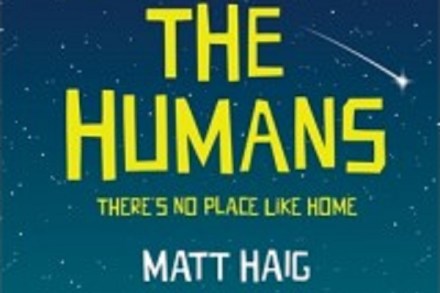
‘To give you an idea of the way people here consume stories, I have put this book together as a human would’ writes the alien narrator of Matt Haig’s novel The Humans. Professor Andrew Martin is not Professor Andrew Martin at all, but rather a Vonnedorian sent to destroy all evidence on Earth that Martin has solved the Riemann Hypothesis. This mathematical breakthrough, think the Vonnedorians, would lead to technological advances not safe in the hands of the violent and primitive humans. They must be stopped. Martin is murdered and his laptop destroyed. His wife, Isobel, and son, Gulliver, must also be killed; but perhaps a little predictably, what happens instead is that our alien begins to fall in love. The greatest danger to this novel is its narrator.

Heat Lightning by Helen Hull – review

‘I had decided that I wished to write a novel about the immediate present – this was the summer of 1930 – and I had been speculating about the way people were acting and feeling,’ wrote Helen Hull of Heat Lightning in 1932. Heat Lightning follows the tumultuous Amy Norton as she returns temporarily to her family home, only to be subjected to all sorts of minor family dramas — illegitimate children, sudden deaths, hidden debts and destroyed wills (the usual problems). This book, beautifully reprinted by Persephone, is solid domestic fiction, but it replaces the acute social observation and deep psychological profundity available to the best of its genre with the ‘speculation’ of our confused protagonist.

Review – Shall We Gather At The River, by Peter Murphy

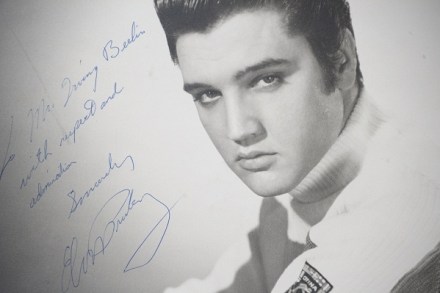
Shall We Gather At The River is a book of unfortunate endings — the stories of nine suicides hang from a plot-line that tells of a freak flood in the small Irish town of Murn. Fittingly for a book preoccupied with endings, we begin at the end: our hero, Enoch O’Reilly, is sitting in his father’s basement and staring down the barrel of a gun. The narrative then leaps backwards by 28 years to give us Enoch as a child in that same basement, stumbling upon his father’s old radio equipment and finding, in that forbidden room, a radio that channels an Old Testament sermon delivered in such rousing style that Enoch feels compelled by the power of Elvis Presley (who appears to Enoch in a dream that night) to ‘steal the preacher’s fire’.