Adam Begley

John Updike’s letters overflow with lust, ambition, guilt and shame

When John Updike died in 2009, aged 76, he left behind the last great paper trail. Novelist, short story writer, poet, essayist and art critic, he published with unstoppable fluidity in every genre. The sheer tonnage of his 60-odd books has now been augmented by A Life in Letters, a comparatively small sampling of the 25,000 or so epistles he sent out over the course of his life. This unwieldy volume serves up about 700 of them. I say he wrote with unstoppable fluidity (it was David Foster Wallace who dangled the question ‘Has the son of a bitch ever had one unpublished thought?’), but I should add that the letters and postcards (Updike loved a postcard) contain more than just pretty phrases.

Who killed Jane Britton in 1969?

The problem with telling stories about Harvard is that Harvard, if it teaches anything these days, teaches distrust of stories. So, for example, two thirds of the way through Becky Cooper’s long, ambitious book about the murder of a Harvard graduate student, the author explains that ‘we’ — those attempting to fashion a narrative about the gruesome fate of a 23-year-old woman bludgeoned to death in her Cambridge apartment in the late 1960s — ‘had unconsciously been perpetuating a story whose moral derived from the very patriarchal system we thought we were surmounting by telling the story in the first place’. This is a book that twists itself into a succession of knots — some elegant, some awkward, and some that simply can’t be untied.

On the trail of a missing masterpiece: What We Can Know, by Ian McEwan, reviewed

Ian McEwan delivers pleasure on the page with the ticktock reliability of an expensive Swiss watch. Even the lesser novels are immaculately written and cleverly plotted, full of provocative ideas, captivating characters and compelling incidents. In the better novels, he achieves a kind of elevated self-awareness, a supercharged intelligence that gives the fiction what feels like literary autonomy. My favourites, Black Dogs (1992) and Atonement (2001), seem to take on a life of their own. I imagine McEwan serenely blessing their emancipation. What We Can Know is not lesser, and the pleasures – bookish pleasures, especially –are in abundant supply. As the title implies, McEwan is testing the limits of human knowledge.

The ‘idiot Disneyland’ of Sin City

In italics at the very end of the preface to Slouching Towards Bethlehem (1968), Joan Didion spills the beans: ‘Writers are always selling somebody out.’ It’s hard to improve on that, but we can at least specify that she had journalists in mind, not poets or novelists, though probably she looked on all scribblers with a cold eye. Six years later, Didion’s husband John Gregory Dunne published Vegas: A Memoir of a Dark Season, which isn’t really a memoir, more a queasily auto-biographical novel. Or, as he puts it, ‘a fiction which recalls a time both real and imagined’. A time and also a place – Las Vegas, Nevada, in the early 1970s.

In the grip of apocalypse angst

You have to love a book about the end of the world in which the first two references are to Saul Bellow’s Herzog and the HBO series The White Lotus, a high/low combo that preps us for authorial omniscience. In the next few paragraphs we get Marc Maron, Sally Rooney and Frank Kermode. Buckle up, kids, a cultural whirlwind is coming! The day of judgment is at hand, and the all-knowing Dorian Lynskey, who seems to have doomscrolled through every card catalogue on the planet, is just the person to provide live commentary. A capacious cultural history of ‘apocalyptic angst’, his Everything Must Go will make you happy to be alive and reading – until the lights go out.

Fast and furious: America Fantastica, by Tim O’Brien, reviewed

It’s been said again and again but rarely so plainly illustrated: American life is now too berserk for fiction to keep up. Tim O’Brien’s wild, rollercoaster satire America Fantastica is as wacky as its title suggests; but it can’t compete with the daily trainwreck that calls itself the land of the free and the home of the brave. O’Brien tracks with furious contempt the spread of a highly contagious illness: mythomania and delusional conspiracy theories infecting the body politic and poisoning a defenceless citizenry in the dark pre-Covid days of 2019. The name ‘Trump’ is never mentioned in the novel, but the ‘avalanche of oratorical whoppers’ issuing from the White House is the obvious source of O’Brien’s raging dismay.

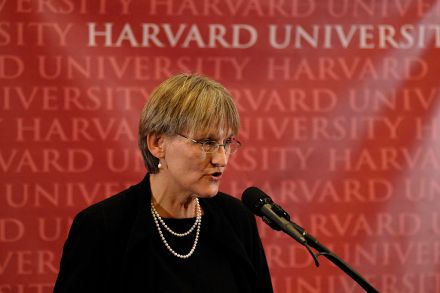
Drew Gilpin Faust, a rebel with a cause

From our US edition

In 1957, when Drew Gilpin Faust was nine years old and growing up in the Shenandoah Valley, she learned from the car radio that in Virginia, black children were forbidden by law from going to school with white children. Disturbed by this egregious instance of Jim Crow segregation, she sent a letter to the president. “Please Mr. Eisenhower,” she wrote, “please try and have schools and other things accept colored people.” Young Drew’s sense of what was and wasn’t fair lay at the heart of her childhood rebelliousness, as well as her battle, as a young woman coming of age in the 1960s, against unjust social hierarchies.

faust

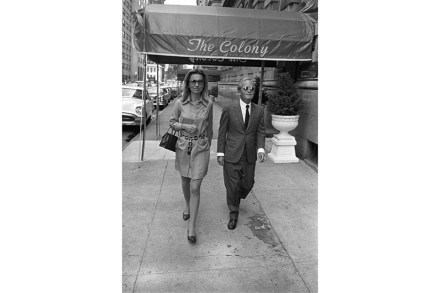
Why did Truman Capote betray his ‘swans’ so cruelly?

The first rule in John Updike’s code of book reviewing is: try to understand what the author wished to do and do not blame him for not achieving what he did not attempt. I should therefore not blame Laurence Leamer for failing to capture in Capote’s Women any sense of what made Truman Capote irresistibly attractive to all sorts of people – rich, poor, male, female and especially to his flock of high-society swans, the women of Leamer’s title. Nor should I blame him for failing to identify what made Breakfast at Tiffany’s and In Cold Blood both beloved by critics and hugely popular. I can’t blame Leamer, because what he has attempted is a book of undiluted gossip, and that’s what he has achieved.

A doomed affair: Kairos, by Jenny Erpenbeck, reviewed

We all live with boundaries, but few of us feel that as keenly as Jenny Erpenbeck, who grew up in the Pankow district of East Berlin, a stone’s throw from the Wall. Now a leading novelist of a unified Germany, she explained several years ago that when the Wall came down in 1989 and the East German state collapsed (she was 22 at the time), a ‘border’ was created between two halves of her life. ‘Without this experience of transition, from one world to a very other one, I would probably never have started writing.’ It will never be like this again, thinks Hans.

Man on the run: Sugar Street, by Jonathan Dee, reviewed

A man is driving alone across America, under the passenger seat is an envelope containing a large chunk of cash. For reasons unclear, he’s desperate to erase himself; he avoids surveillance with the inspired agility of the truly paranoid. His urge to disappear, ‘to leave as illegible a mark as possible on the Earth’, leads him to a city, ‘big enough to be anonymous in’. The clever premise hooks the reader. Will our unnamed narrator contrive to live an untraced life? And why does he want to make this new life ‘a kind of spacewalk: to step outside the capsule, to cut the tether’? What, as he would say, is his ‘deal’?

An avian allegory: Dinosaurs, by Lydia Millet, reviewed

Adapt or die. That brutal Darwinian dictum is too blunt to serve as the motto of Dinosaurs, Lydia Millet’s slim, quietly powerful 12th novel, but the threat of extinction, implicit in the title, hovers in the air. Bird-obsessed – our feathered friends are ‘the last of the dinosaurs’ – the novel tracks two years in the life of a ‘stricken’ character who feels ‘less than whole’. Gil was damaged in early childhood by the sudden death of both parents, and then by a second abandonment, by a long-term girlfriend who absconded, leaving a three-word note: ‘I met someone.’ Gil is rich, having inherited his grandfather’s fortune. He has few friends and no reason to be in one place rather than another.

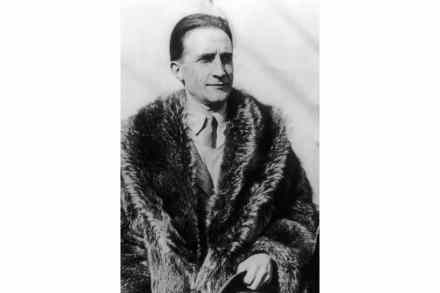
The effortless magnetism of Marcel Duchamp

One could compile a fat anthology of tributes to Marcel Duchamp’s charm – especially what one friend called the artist’s ‘physical fineness’ – but it would be hard to top Georgia O’Keeffe’s memory of their first meeting: Duchamp was there and there was conversation. I was drinking tea. When I finished he rose from his chair, took my teacup and put it down at the side with a grace that I had never seen in anyone before and have seldom seen since. A tempest stirred by a teacup!

God is everywhere, sometimes in strange guises, in Jonathan Franzen’s Crossroads

Twenty years ago The Corrections alerted a troubled world to the talents of Jonathan Franzen. Though cruel and funny and aggressively clever, the novel did more than display its author’s spiky brilliance. A stubborn moral core, in the person of the ailing patriarch of the Lambert family, and a tangled web of fierce emotion binding him and his wife and three children, gave it powerful resonance. Franzen’s new novel, Crossroads, presents us with another patriarch and another set of dysfunctional family dynamics. What has changed in the past two decades? Now less inclined to show off, Franzen is more assiduous in his excavation of character. We get less dazzle and a deeper dive.

New Yorkers talk the talk

New York in a nutshell? No way. New York in a New York minute? Forget about it. The city contains multitudes: it contradicts itself, wantonly. Any attempt to summarise will fail. Not even Craig Taylor’s delightful cacophony of voices, dozens and dozens of them spilling their New York stories, can compass its vastness and variety. But what a tasty slice Taylor serves up! Until you can fly into JFK and see, hear and smell for yourself, savour the grit, sweat in the choking humidity and shiver in the canyoned midtown winds — until then, his New Yorkers is just the ticket. This is Taylor’s second anthology of urban voices. It follows more or less exactly in the footsteps of Londoners (2011) which was widely and warmly praised.

Cheering for Jürgen Klopp: Liverpool FC’s manager can do no wrong

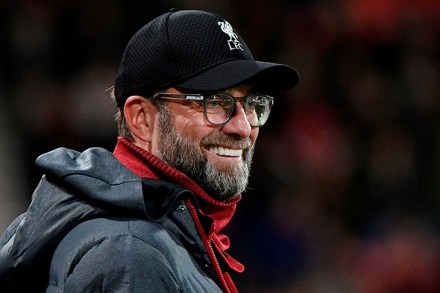
As his biographer, I feel obliged to quote John Updike’s wise sayings — among them the first rule in his code for book reviewers: ‘Try to understand what the author wished to do, and then do not blame him for not achieving what he did not attempt.’ Too bad about the gendered pronoun; otherwise, spot on. Rules are made to be broken, though, and when it comes to Anthony Quinn’s Klopp, I have to say I wish there were more Klopp, less Quinn. In the prologue, the author warns us: ‘This book is not a biography of Jürgen Klopp.’ So what’s with the title? Jürgen Norbert Klopp arrived at Anfield five years ago to take charge of Liverpool Football Club.

Cyber apocalypse: The Silence, by Don DeLillo, reviewed

Elaborated over a writing career that spans half a century — a career crowned with every honour save the Nobel Prize — Don DeLillo’s great project has been to explore a world where paranoia is not only warranted but healthy, a sane response to imminent threat, man-made or otherwise. He didn’t win the Nobel again this year, and may never, but his literary stature remains colossal. He’s revered as a writer and also as a prophet, a bard who sings our future into being. His very short, bracingly bleak new novel The Silence is DeLillo distilled. Anyone who doesn’t like the taste will find it unendurable; for fans it’s a straight shot of the good stuff.

French lessons, with tears: inside a Lyonnais kitchen

You can’t say he didn’t warn us. In the final sentence of his previous book, Heat, a joyously gluttonous exploration of Italian gastronomy, Bill Buford announced that he would be crossing the Alps: ‘I have to go to France.’ And here he is, in Dirt, another rollicking, food-stuffed entertainment, determined to unearth, as it were, the secrets of haute cuisine. Lyon, being the gastronomic capital of France, is where he decides to dig in, having uprooted his family (wife, twin toddlers) to facilitate his investigations. Gourmets and gourmands will savour this account of his five-year adventure — and so will students of the author’s curious, compelling character.

The brilliance of Houdini

36 min listen

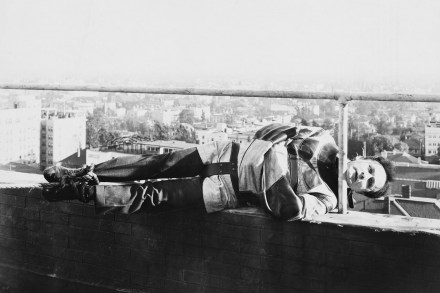
My guest on this week's Book Club podcast -- recorded as part of an online event with Circle Square (https://circlesq.co) -- is the biographer Adam Begley. Adam's work includes biographies of John Updike and the Belle Epoque photographer, cartoonist and aeronaut Felix Tournachon, aka Nadar. In his new book he turns his attention to the great escapologist Harry Houdini. I asked him what it was that made Houdini special, what challenges a lifelong myth-maker (aka inveterate liar) poses to the biographer, and how Adam tends to get on with his subjects. As Adam describes in our talk, you can watch a video of Houdini in action here: https://www.youtube.com/watch?v=E_HHFMSmHCQ And Christopher Bray reviews the new biography for the Spectator here.

The blistering experience of writing about Samuel Beckett

For those of us with nagging doubts about the value of literary biography, books that show the biographer at work — a genre with a solid pedigree — exert a peculiar and not entirely healthy fascination. We traipse through the sausage factory feeling sick to our stomachs yet weirdly hankering for a bite of the finished product. Some eminent biographers — Hermione Lee, for instance, in Body Parts (2008) — have exposed the tricks of the trade with clinical detachment, scarcely mentioning their own practice; others, such as Michael Holroyd in Works on Paper (2002), Richard Holmes in This Long Pursuit (2016) and the late James Atlas in The Shadow in the Garden (2017), mix in a generous measure of self-scrutiny.

Meet Dr Love: the infallibly seductive, pioneering French gynaecologist

Do not google Samuel Jean Pozzi. If you want to enjoy Julian Barnes’s The Man in the Red Coat — and believe me, it’s teeming with delights — stay away from search engines and trust the author to tell the story in his own way. But just to get you started: Pozzi (1846–1918), the man John Singer Sargent painted, gloriously, in sumptuous red, was a Frenchman, a prominent, pioneering doctor in Belle Epoque Paris, and a charming, ubiquitous, infallibly seductive socialite. (‘Disgustingly handsome’ is how the Princess of Monaco described him.) He was Sarah Bernhardt’s doctor and also her lover; she called him ‘Docteur Dieu’. (His other nickname was ‘L’Amour médecin’, which Barnes translates as Dr Love.