Culture

Culture

The good, the bad and the ugly in books, exhibitions, cinema, TV, dance, music, podcasts and theatre.

Why is this Tudor drama full of swearing?

Theatre

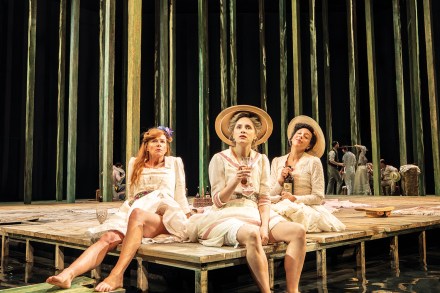
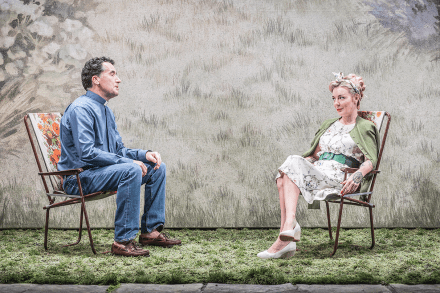
1536, by Ava Pickett, is set in a wheatfield near Colchester during the final months of Anne Boleyn’s life. Three peasant women, Jane, Mariella and Anna, meet to discuss the latest news as it trickles in from London. When Anne is imprisoned in the Tower, they try to imagine her state of mind. ‘Terrified,’ says Mariella. ‘Furious,’ says Anna. ‘Starving,’ says Jane. After her execution, Jane shrugs, ‘She deserved it.’ The others are more sympathetic but their commentary is hard to care about because they can’t influence the events they’re discussing. Nor does Anne’s experience affect their lives in any way so their chitchat is narratively pointless. They’re far more interested in two local lads, William and Richard, who represent the extremes of male behaviour.

A Beatles show without the love

Theatre

Please Please Me is a play about Brian Epstein whose brief and troubled life remains relatively unknown. Tom Wright’s linear script opens with the teenage Epstein enjoying secret affairs with teddy boys while working at his dad’s record shop on Merseyside. When he spotted the Beatles at the Cavern, he was smitten by their homoerotic energy rather than their music or their potential for making tons of cash. He put them in suits to soften their image while encouraging their talent for witty backchat. ‘A little pinch of naughty but family friendly,’ was his branding message. But he lacked artistic vision and he cut a lousy deal to sell plastic Beatles dolls which cost the band a fortune and angered Paul McCartney.

Students of theatrical history will adore David Hare’s Grace Pervades

Theatre

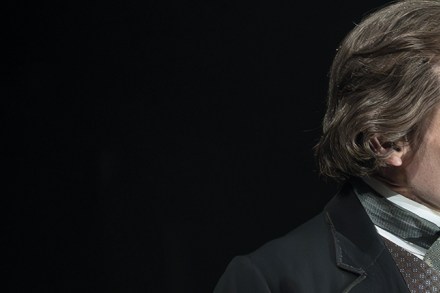
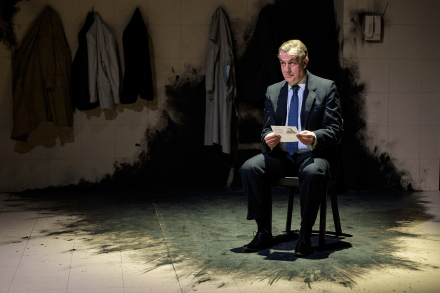
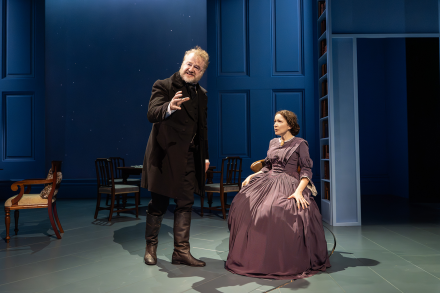
Grace Pervades by David Hare is a drama-documentary about the life and theatrical work of the great Victorian thesp, Sir Henry Irving. He was a morose and obsessive perfectionist whose style was considered dated even in the 19th century. Success arrived relatively late in life. He was making his way as a jobbing actor until he took the lead in an overheated French melodrama, The Bells, which turned him into a star in 1871. Ralph Fiennes delivers a dour, mirthless and deliberately stiff performance as the cranky and unapproachable actor. In drawing rooms, he shifts his feet awkwardly as if trying to find a floorboard that doesn’t creak. On stage, his mannered performances are presented as absurdities, full of grimacing, eye-rolling, jaw grinding and head tossing.

Why actors love to play lunatics

Theatre

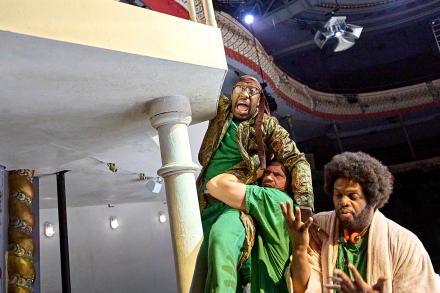
One Flew Over The Cuckoo’s Nest, adapted from Ken Kesey’s book by Dale Wasserman, is exactly like the movie but without Jack Nicholson’s star power. The cast have to impersonate lunatics for 150 minutes and they clearly love their job. Playing madmen comes naturally to actors and it’s an easy task because no creative discipline is required. Lunatics are capable of anything so the actor needn’t feel anxious about making a false move or indulging in an improbable gesture. Anything goes. The result is a hectic display of lazy, unfelt, superficial and repetitive caricatures. One actor holds a toolbox in his lap like a pet dog. Another jerks obsessively. A third leans against a pillar with his arms held out, dribbling and twitching.

Almeida’s new Doll’s House is all wrong

Theatre

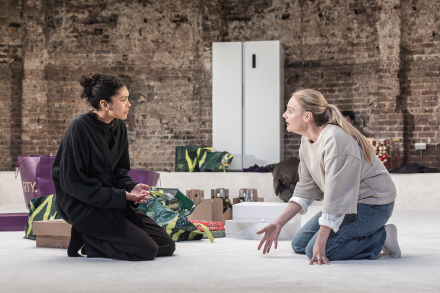
A Doll’s House has been reconstructed at the Almeida with a new script by Anya Reiss. Torvald Helmer is an inept drug-addled financier who wants to sell his business to a wealthy American investor. But the deal is a dud. Without his knowledge, Torvald’s bossy wife, Nora, has stolen £860,000 from a client’s account to boost the firm’s apparent profitability and her crime is about to be disclosed by a bent accountant, Nils, who wants to blackmail her. She needs to get her hands on a small fortune fast. This cumbersome and intricate back story is explained to us during the first half which is set over the Christmas holidays in the converted cellar of Nora and Thorvald’s beautiful London home. The cellar appears to be the family nerve centre.

The torture of Michael Frayn’s Copenhagen

Theatre

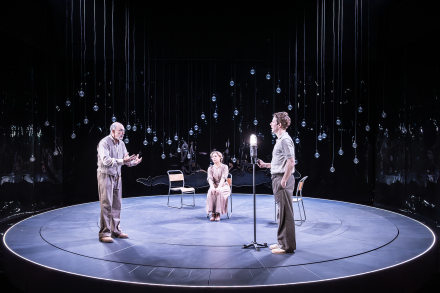
Copenhagen by Michael Frayn is a problem play. It debuted at the National in 1998 and ran for two years in the West End before transferring to Broadway. Since then, no UK producer has mounted a revival. Something must alarm investors. It’s a very chatty show. Three actors with three wooden chairs appear on a plain stage reciting dialogue about a meeting in Denmark in 1941 between the physicist Niels Bohr, his missus, and a family friend, Werner Heisenberg. The discussion focuses on the main developments in atomic science during the 20th century. Mrs Bohr, played by Alex Kingston, is there to offer a female angle on the ruminations of the two mega-nerds.

The National Theatre needs help

Theatre

In The Print is a docudrama about the bitter war between Rupert Murdoch and the unions in the mid-1980s. Murdoch was determined to computerise the production of his UK titles and to terminate the far left’s stranglehold on his business. Daily papers are vulnerable to last-minute strikes and his thieving employees made no secret of their larcenous tactics. The print workers, known as ‘inkies’, earned £1,000 a week for 16 hours’ work and their union, Sogat, behaved like a bunch of racketeers. They laughed at Murdoch by submitting wage claims for employees called ‘Donald Duck’ and ‘Ronald Reagan’. Murdoch fought back with smart, imaginative tactics that Sogat, under Brenda Dean’s leadership, couldn’t handle.

Self Esteem is the star of this David Hare musical

Theatre

Teeth ’ n’ Smiles is not quite a musical. David Hare’s 1975 play about rock’n’roll includes a handful of tunes performed by a group of failing musicians. It feels like several dramas rammed together. One strand concerns the aimless witter of instrumentalists who lounge around backstage discussing drugs and groupies. Another strand follows the lead singer, Maggie, and her destructive appetites for booze and casual sex. The third element concerns the band’s manager, Saraffian (Phil Daniels), who knows nothing about showbusiness and seems keen to advertise his ignorance to the world. Saraffian is a Dickensian figure who talks like Fagin and believes that pop stars should resemble school prefects.

Don’t miss it: Summerfolk, at the Olivier, reviewed

Theatre

Dachniki meaning ‘dacha people’ is the Russian title of the National Theatre’s new production of Gorky’s sprawling 1905 drama. Nina and Moses Raine, who adapted the play, chose the flavourless title Summerfolk which doesn’t quite capture the play’s distinctive Russian atmosphere of ennui, intellectual rumination and despair. However, their perky, supple and idiomatic dialogue works very well. Gorky appears to have written the script as a feverish homage to Chekhov, who died in 1904, and he pinched numerous characters and plot twists from his mentor. The beautiful, vain and sexually inert Varvara is a copy of Yelena in Uncle Vanya. Kaleria, the nervous actress who performs amateur verse for her friends, is inspired by Nina in The Seagull.

Lazy: America is Beautiful, Chapter 1 reviewed

Theatre

Neil LaBute is one of America’s most provocative and interesting playwrights. His best-known work, The Shape of Things, was made into a movie starring Rachel Weisz and Paul Rudd. America the Beautiful consists of nine plays in three chapters, the first two of which are being staged at King’s Head, the third at the Greenwich Theatre. This complex arrangement sends a signal that LaBute is a mercurial and elusive artist whose fans must chase across London to savour the full richness of his talent. The lesbian stares and leers aggressively while her victim cowers and bleats in protest The first show, Chapter 1, consists of three unconnected skits about sexual jealousy.

Cynthia Erivo’s Dracula is tiresome

Theatre

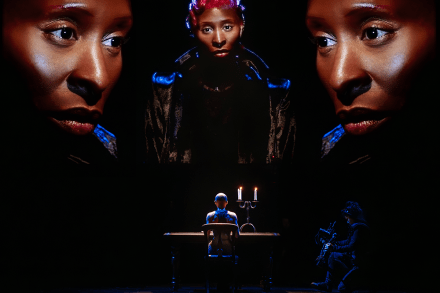
Interest in Dracula seems to go on for ever. Kip Williams has chosen Cynthia Erivo to star in his new version of the yarn about a clique of blood-quaffers who bite their victims’ necks and lick the seepings. The show is staged as a read-through of Bram Stoker’s text supplemented by costumes, wigs and a few orchestral hits recorded on tape. Erivo plays all 23 roles and her performance is simultaneously filmed and broadcast to the audience on TV screens dotted around the theatre. This creates two problems. First, Erivo can’t see or interact with the crowd because she’s encircled by wardrobe assistants and cameramen who swarm around her like gnats. Secondly, the audience are expected to look at the screens and not at the stage. This is odd.

Fans of George Eliot are in for a shock: Bird Grove at Hampstead Theatre reviewed

Theatre

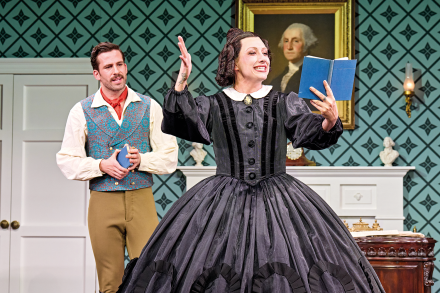
Bird Grove by Alexi Kaye Campbell is a comedy of manners set in 1841. A portly suitor, Horace, arrives at a respectable house intending to propose to a rebellious and brilliant 22-year-old, Mary Ann. Horace’s father is dying and he must find a bride before nightfall or lose a substantial legacy. This ludicrous but very human situation starts the play. It’s instantly gripping. Mary Ann is in the drawing room being treated for headaches by a French mesmerist along with two wealthy radicals, Mr and Mrs Bray, who encourage her political activism. Her father, Robert, introduces his guests to each other and invites them to stay for tea. This fascinating glimpse of her early life shows George Eliot as a surly, arrogant, spoilt and heartless pest A hilariously awkward party ensues.

The blandness of Hugh Bonneville

Theatre

Shadowlands, by William Nicholson, is a solid and unsurprising account of the brief marriage between C.S. Lewis (known as Clive), and the American poet Joy Davidman. Her cancer diagnosis overshadowed their romance but they snatched a few lustful holidays together before she expired in an NHS hospital in 1960. Hugh Bonneville, as Clive, delivers his standard three-note performance – bemused decency, bumbling hesitation, ironic charm – which tells us nothing about the author’s inner life. Bonneville has succeeded in building a huge presence in the movie industry from an almost complete dearth of actorly qualities. He’s not handsome, sexy, tough, athletic, amusing, mysterious, evil or even slightly unpleasant. He’s not brilliant or stupid. He’s not admirable or despicable.

Dazzling: I’m Sorry, Prime Minister at the Apollo Theatre reviewed

Theatre

Jim Hacker is back in the West End. I’m Sorry, Prime Minister, written by Jonathan Lynn (who co-wrote the original TV series), brings us the former PM in semi-retirement as the Master of Hacker College, Oxford. Jim, now Lord Hacker, is facing a revolt by the students and the senior fellows who claim to have been offended by his high-table banter. He was overheard making positive comments about the British Raj and suggesting that the word ‘negro’ should not be expurgated from the work of James Baldwin. Both opinions are blasphemous according to the killjoy theocrats who govern our political discourse. Jim is ordered to quit his post but he refuses and the college authorities offer him a chilling compromise.

No chemistry between the performers: Arcadia at the Old Vic reviewed

Theatre

The Old Vic’s production of Arcadia by Tom Stoppard has a vital component missing. The house. Stoppard’s brilliant historical comedy is set in a country manor owned by the Coverly family and the script examines, among other things, the evolution of decorative taste during the 18th and 19th centuries. But no architecture is present on stage. The audience has to imagine what the show fails to supply because the Old Vic’s interior has been redesigned ‘in the round’ with a central playing area encircled by pews as seats. This leaves no room for a large-scale set. Arranging the venue like a boxing ring ensures that parts of the action are invisible to parts of the audience.

Marvellously conservative: Cable Street reviewed

Theatre

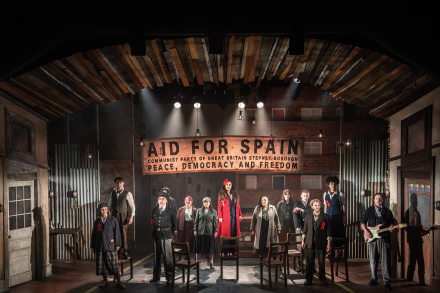
Cable Street is a musical that premièred last year at the Southwark Playhouse and has now migrated to the Marylebone Theatre. Fans of beautiful staging will be instantly smitten by the amazing achievement of the designer, Yoav Segal. The script by Tim Gilvin and Adam Kanefsky tells the story of a violent stand-off in October 1936 between cockney activists and Oswald Mosley’s British Union of Fascists. The authors treat the East End during the depression as a panto or a moral fairy tale. It’s good vs evil. The socialists are hard-working, golden-hearted heroes who rise up against the wicked landlords and their cruel rent hikes. The fascists are angry, misshapen losers led by a waddling baldie in a stick-on moustache. The socioeconomic background is hard to decipher.

If this play is correct, the Foreign Office is a joke

Theatre

Safe Haven is a history play by Chris Bowers who worked for the Foreign Office and later for the UN as a human-rights activist. The two careers seem to be interchangeable. His drama follows an idealistic and oversensitive Oxford graduate, Catherine, who joins the diplomatic service during the first Gulf War in 1991. Catherine believes that the Foreign Office exists to throw money at basket-case countries that lack the maturity to govern themselves. The entire department acts as a sort of puppy rescue service for dysfunctional nations overseas. All her colleagues accept the wisdom of this approach even though it has the same effect as casting diamonds into quicksand. Catherine responds to historic events like a homeowner assessing a new lamp for the guest bedroom.

Why is this low-grade Ayckbourn play in the West End?

Theatre

Woman in Mind is a dyspeptic sitcom set in 1986 starring Sheridan Smith as Susan, a moaning Home Counties housewife who slips into a Yorkshire accent when she gets cross. Susan sunbathes in her leafy garden sipping coffee and carping about everyone close to her. She loathes her scowling sister-in-law, Muriel. She can’t bear her husband Gerald, a cerebral vicar, and she refuses to revive their moribund sex life. She constantly badmouths their grown-up son, Ricky, who lives with a community of mute hermits in Hemel Hempstead. How did this scout-hut show reach the West End? In Act One we learn that the rules of Ricky’s community forbid him from speaking to his parents. But in Act Two the story changes.

Oh, Mary!’s climax is an inspirational bit of comedy

Theatre

High Noon, directed by Thea Sharrock, is a perfectly decent version of a trusty western which celebrates its 74th birthday this year. An elderly sheriff, Will Kane, marries a priggish beauty, Amy, on the day of his retirement but his marital plans are overturned by news that a dangerous convict, Frank Miller, has been released from jail and hopes to shoot Will dead. Amy is a devout Quaker and she grumbles bitterly as Will cancels their honeymoon and heads back to town to deal with the evil Frank. But Frank is not the brightest criminal in New Mexico. News of his plans have spread and everyone knows that he’ll show up at midday aboard the express train.

Why has the National got it in for Oirish peasants?

Theatre

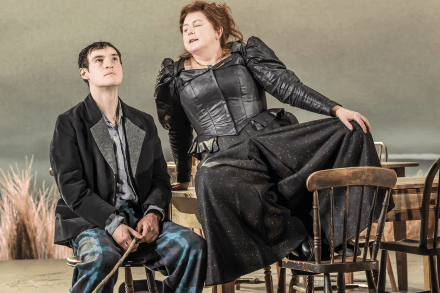
The Playboy of the Western World is like the state opening of parliament. Worth seeing once. Director Caitriona McLaughlin delivers a faithful production of John Millington Synge’s grand satire about dim-witted Oirish peasants and, perhaps unwisely, she spreads the show across the entire length of the vast Lyttelton stage. It looks as if it’s being performed on a railway platform. The drama consists of several broad, daring and improbable steps. A handsome farmer’s boy, Christy, rolls up in a sleepy village in Co. Mayo and claims to have murdered his father. The lustful local girls treat him as a hero rather than an outlaw and compete for his hand in marriage. When Christy wins a prestigious donkey race he sets the seal on his pluck and manliness. Then, disaster.

One for hardcore Stoppard fans: Indian Ink reviewed

Theatre

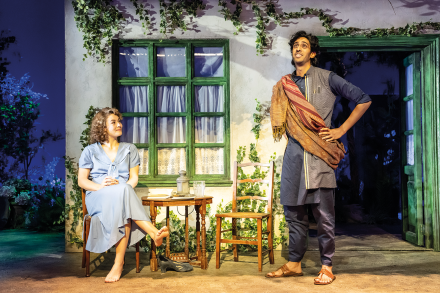
Unusual. After the press night of Indian Ink by Tom Stoppard, no one leapt up and cheered. The crowd applauded politely at the amusing dialogue and the marvellous acting in Jonathan Kent’s handsome three-hour production but there was no standing ovation. The script feels like a literary novel overstuffed with detail. Flora Crewe is a ravishingly beautiful but utterly sexless poet who floats around India in the 1930s provoking the adoration of lustful men. But she doesn’t evolve or change during the action. And she’s maddeningly indifferent to the romantic attention she excites. A maharajah tries to impress her with his fleet of Rolls-Royces. A dashing English captain proposes marriage and she laughs in his face.

Paddington – The Musical is sensational

Theatre

Who doesn’t love Paddington? The winsome marmalade junkie has arrived at the Savoy Theatre in a musical version of the 2014 movie. First of all, the show is sensational. Absolute box-office gold, full of joy, mirth and spectacle. It’s also quite pricey but never mind. Sceptics who feel indifferent to children’s fiction will be relieved to learn that the dyspraxic Peruvian asylum seeker doesn’t feature much in the story. Paddington’s main attribute is his physical clumsiness and once he succeeds in destroying the crockery and furniture at the Browns’ family home, he runs out of narrative possibilities. His fur is invitingly combustible. Could someone set him on fire? Not quite.

Ivo van Hove tries and fails to destroy Arthur Miller

Theatre

All My Sons, set in an American suburb in the summer of 1947, examines the downfall of Joe Keller, a wealthy and patriotic arms manufacturer. During the war he was falsely accused of selling wonky parts to the US military which caused the deaths of 21 airmen. He blamed his partner for the blunder but when the truth emerges he also finds out why his eldest son, Larry, went missing in action. The plot is one of the greatest inventions in world drama and it deserves to be presented with candour, simplicity and naturalism. Director Ivo van Hove dislikes Miller’s decision to set the play on Joe’s front lawn where the neighbours mingle, chat and exchange secrets. In his version, the vacated stage is overlooked by a huge blank wall decorated to resemble a doormat.

The wit of Tom Stoppard

Theatre

The playwright Peter Nichols created a character based on Tom Stoppard. Miles Whittier. On a car journey across London, I once asked Peter why he was so irked by Stoppard. Thelma, his wife, answered for him: ‘He uses all the oxygen.’ But Stoppard was miles wittier. Asked by a punter, after the New York first night of Rosencrantz and Guildenstern are Dead, what his play was about, he replied: ‘It’s about to earn me a great deal of money.’ Think about it: the only person capable of preserving that bon mot was the playwright himself. He knew how funny he was. Later, he was more careful.

A sack of bilge: End, at the Dorfman Theatre, reviewed

Theatre

End is the title chosen by David Eldridge for his new relationship drama. Clive Owen and Saskia Reeves star as Alfie and Julie, a pair of wildly successful creative types who live in a mansion near Highgate. Both are 59. Alfie is a retired DJ who made a fortune touring the world at the height of the ecstasy craze and Julie earns a living from crime fiction. But she’s bored with detective stories and wants to publish her memoirs and to write a state-of-the-nation novel set during the 2012 Olympics. Despite their amazing careers, both characters are moaning dimwits who swear constantly and have nothing of value to say about their lives, their professions, or anything else. Listen to them discussing an unseen character named Boring Tone.

The babyishness of Hunger Games on Stage

Theatre

The Hunger Games is based on a 2008 novel  about a despotic regime where brainwashed citizens are entertained with televised duels between teenagers. Not a bad idea. We go behind the scenes and watch Katniss (Mia Carragher) being selected to fight Peeta (Euan Garrett) who secretly adores her. As soon as the plot starts, it seizes up. Instead of a gripping tragedy about two lovers forced to kill each other on TV, we’re given a masterclass in the show’s elaborate format. The duellists take part in interviews, coaching sessions, target practice, public parades and a popularity contest which permits them to attract ‘sponsors’ whose role is opaque. At the same time, we get a civics lesson.

This Othello is almost flawless

Theatre

Othello directed by Tom Morris opens with a stately display of scarlet costumes and gilded doorways arranged against a backdrop of black nothingness. This is Venice at night with no hint of sea or sunshine. Crimson-robed senators gather to discuss Othello’s alleged abduction of Brabantio’s daughter. And here he comes, David Harewood as the Moor, wearing a gauche two-tone suit like a tasteless guest at a wedding. The scene is stiff, arid and over-ornate but the show opens up when the location shifts to Cyprus. Warmth and light fill the stage and the costumes improve. Othello and his men wear creamy white battle fatigues that look stylishly and subtly masculine.

One of the best plays about the 1980s ever staged

Theatre

Alan Hollinghurst’s The Line of Beauty has been turned into a stage show directed by Michael Grandage. We’re in the early 1980s and Nick has just left Oxford with a literature degree. He lodges with his wealthy friend, Toby Fedden, in their family home and he offers to keep an eye on Toby’s troubled sister, Cat, who suffers from depression. Despite her disorder, Cat is a rebellious type who quizzes Nick about the intimate details of his casual flings with men. Her father, Gerald, wins a safe Tory seat and persuades Mrs Thatcher to attend a ball at their mansion in the country. The prime minister’s arrival throws the Feddens into a panic but Nick saves the day by smoothly asking Mrs Thatcher for a dance. ‘Do you know,’ she says, ‘I would like that very much.

Perfection: Hampstead Theatre’s The Assembled Parties reviewed

Theatre

The Assembled Parties, by Richard Greenberg, is a rich, warm family comedy that received three Tony nominations in 2013 following its New York première. Hampstead has taken a slight risk with this revival. The cryptic title doesn’t suggest an easygoing drama full of excellent jokes. The Yiddish slang may be unfamiliar to English ears, and the social pedigree of the family needs explanation. These are wealthy New York Jews living in a 14-room apartment which they rent but don’t own, so their fortune is insecurely anchored. And the action starts in 1980 and fast-forwards to 2000 so it feels like a period piece aimed at the over-sixties. Those drawbacks aside, the show is a sensation.