Culture

Culture

What do the Emmy nominations tell us about television?

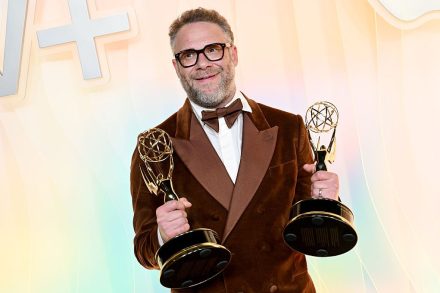
It must feel pretty good to be Seth Rogen today. His Apple TV series The Studio –in which he stars as a beleaguered studio chief attempting to walk the fine line between commercial and artistic respectability – has been nominated for an impressive 23 Emmy awards. This ties the second season of The Bear (2023) for the most nominations for a comedy. Rogen himself could potentially win plaudits for writing, acting and directing, and the show itself looks like the one to beat in the category of best comedy series. The show’s opponents include The Bear – which ceased to be funny at least two seasons ago – as well as Hacks and Only Murders in the Building, both of which have had their moment in the sun.

The enduring appeal of Jaws, 50 years on

It’s been 50 years since audiences first thrilled to the thudding theme music and bared teeth of the original Jaws. The movie, released on June 20, 1975, immediately had customers lining up around the block, recouping its then-astronomic $20 million production cost within a week. It still stands alongside Rocky and Star Wars as one of a trio of enduring “high-concept” mid-70s blockbusters. In keeping with Sylvester Stallone’s boxing picture and George Lucas’s space opera – and most other Hollywood money-spinners – it’s easy to forget that there was nothing inevitable about the film’s long-lasting success.

Jaws
Hoover

‘Being a mom sometimes sucks’: an interview with Sarah Hoover

I am expecting Sarah Hoover to be brash. The New York art-scene stalwart and influencer has written a warts-and-all misery memoir about motherhood and self discovery called The Motherload, which is presently cruising atop US bestseller lists. The book, unanimously agreed to be “unflinchingly honest” about all the bad things that can happen on a woman’s journey to and through new motherhood, opens with a stream-of-consciousness account of a party Hoover threw at the Chateau Marmont in 2017 for her first baby’s ten-month birthday. “I’d be in LA for a couple of weeks, staying at the hotel, and a diet of room service and edibles was my general game plan.

Museums

How museums can promote diversity without demonizing tradition

The resignation of Jim Ryan as president of the University of Virginia in June marks the growing momentum of the Trump administration’s efforts to dismantle diversity, equity and inclusion initiatives within US universities. The Department of Justice deemed Ryan’s resignation a step toward resolving its inquiry into UVA’s compliance with the administration’s new policies. Conservatives may be encouraged by news of major institutions like UVA and Harvard rolling back heavy-handed DEI programming. But pure reactionary animus to the excesses of progressive ideology has often gotten conservatives into trouble – not just in education, but in the arts.

The resistible rise of Pedro Pascal

A British film fan recently took to social media to share an unusual experience that had happened to her while visiting the Picturehouse cinema in central London. She was standing in the foyer, watching the trailer for the forthcoming superhero picture The Fantastic Four: First Steps, when she became aware of a middle-aged man standing next to her, enjoying the same preview. He then said, in apparent surprise, “Look! I’m in that!” She turned to him, expecting to see some character actor with a one-line role, and it was none other than Pedro Pascal: film and television star, self-appointed nemesis to J.K. Rowling and “the internet’s daddy.

On holiday with Goya

When I’m first invited to a sojourn in Madrid to learn about the life and work of Francisco Goya and the conservation work of Factum Arte, I’m thrilled but also a little apprehensive. While art-themed travel is right up my street and I live a mere train trip from the Spanish capital, Goya’s work is known for being a little, well, dark – particularly during his later years. As a fan of the Botticellis of this world, spending a few days with the artist famous for his "black paintings" was not something I was sure I’d enjoy.  And yet, three days later, as I stand in front of Goya’s grave in La Ermita de San Antonio de la Florida, I find myself moved in a way I never could’ve anticipated.

Goya

Elio and the decline of Pixar

The news that Pixar’s latest picture, the alien-contact family comedy Elio, has been an egregious flop at the American box office, grossing a mere $20.8 million on its opening weekend, has been greeted with both surprise and disappointment. Surprise, because Pixar has long been seen as the gold standard of contemporary animation, and disappointment, because its films are not supposed to flop. No fewer than 13 of their pictures are in the 50 highest-grossing animated films of all time roster, and nine have won Best Animated Feature at the Oscars, most recently 2020’s Soul. And if there had been rumors that the company was in trouble, these were apparently put to bed by the enormous, epochal success of Inside Out 2 last summer, which grossed $1.7 billion at the box office.

elio disney
Diddy

Diddy is finished

In the end, the verdict in the most talked-about trial of the year, perhaps the decade, came in far quicker than most commentators had expected. Judge Arun Subramanian had wisely suggested that he wanted a unanimous verdict on the charges that Diddy had been arraigned on and that he wanted this verdict to come in before the 4th of July holiday. Many had assumed, given the sheer weight of evidence against Diddy (real name, as we were informed many times, Sean Combs), that it would take at least a week to sort through the often sordid and distressing material that the jury were presented with over the course of the seven-week trial. In the end, however, it took just over a day of deliberations.

The wildly misguided My Oxford Year

When I studied English literature at Oxford about two decades ago, the issue of tutor-student relations was a vexed one. On the one hand – so the reasoning went – students were adults, over the age of consent and entitled to make their own decision as to whether they wanted to indulge in sexual congress with the men and women responsible for inculcating a knowledge and, hopefully, love of their subject into them. On the other, there were clear – although sometimes blurred – conflicts of interest relating to these invariably older figures also on occasion being responsible for marking their favored students’ examinations.

my oxford year
Rushmore

Who could be Mount Rushmore’s fifth head?

Late last week, the New York Times once again floated the idea that President Trump could become the fifth head on Mount Rushmore, to the right of Abraham Lincoln (that’s for sure). He’d be like the fifth Beatle, but yuge. While it’s true that Trump has brought peace to Africa and the Middle East in the last week, and has done an excellent job lining the Oval Office with gold filigree, maybe we should hold off on carving his visage into a mountainside until we see the final fate of the Big, Beautiful Bill. For Trump’s a jolly good fellow, and what nobody can also deny is that there’s available rock space in South Dakota. The President likes nothing more than a good real-estate deal on undeveloped land. But let’s hold off on clearing headspace for the Donald just yet.

Sabrina Carpenter

Sabrina Carpenter mainstreams cutesy violence towards women

With a deliberateness that did not escape critics and onlookers, the Carpenter-fed algorithm had suddenly decided to choke us on her sweet and frothy song "Espresso" in such a relentless fashion that we soon ended up drinking it down, begging for more. “Move it up, down, left, right, oh, switch it up like Nintendo,” I and plenty of other people too old for her dire Gen Z, Taylor Swiftian fare, found ourselves singing it anyway, day and night, on its release last year. “Say you can't sleep, baby, I know. That's that me espresso.” Sleep was certainly not improved by the earworm of the song.In fact, I thought at first that Carpenter was a bot because the songs are such calculated, algorithmic pop, from top to bottom.

F1 is forgettable, but a lot of fun

In a largely patchy summer for blockbusters – the excellent 28 Years Later aside – Joseph Kosinki’s F1 stands out for two distinct reasons. The film has arrived at an interesting time for the sport, which is finding increased popularity in the United States among demographic groups that previously may have ignored it – such as younger women – due to the success of the Netflix show Drive to Survive, accordingly name-checked in the movie. That show gives a behind-the-scenes look at Formula One racing and is now onto its seventh series.

f1
Television

Don’t mourn the death of TV

The online American right is positively obsessed with the nineties. It’s easy to establish the cause here: a surfeit of Gen X and early millennial users, many of whom are fresh converts from within the last decade. Social-media posts by conservative users depicting America’s cities, beaches, and nightclubs from this era regularly achieve staggering virality. The memorialization of these things is justified by presenting them, perhaps not wrongly, as evidence of the cultural homogeneity that America has lost in the past quarter century. There is one tendency among these that I find particularly troubling – lamenting the death of American network television.

28 Years Later is the movie of the summer

Was anyone out there desperate for a third instalment of the 28 Days Later series? It has been nearly two decades since 28 Weeks Later. Many who were once thrilled to the adventures of hapless humans attempting to dodge the ravages of surprisingly fast-moving zombies have moved onto other genre fare, not least The Last of Us. However, the astonishingly visceral trailers for 28 Years Later, soundtracked by a vintage audio recording of Rudyard Kipling’s poem ‘Boots’, were some of the most compelling and attention-grabbing trailers ever made. So does the film live up to its advertisements? Thankfully, it does.

28 years later

The Tony Awards were surprisingly safe and unexciting

So, in the end, it wasn’t so much Oh, Mary! as it was Not Tonight, Mary! Cole Escola’s out-there, queer-as-they-come farce, revolving around the strained relationship between the “foul and hateful” Mary Lincoln, a dipsomaniac with ambitions to be a cabaret singer, and honest Abe, here presented as a pitiful figure so deep in the closet he may as well be in Narnia, was widely regarded as the play to beat at this year’s Tonys. There hasn’t been an out-and-out comedy that’s won the major awards for a considerable time, let alone one that emerged from off-Broadway, and it’s testament to Escola’s prowess (as well as some of the most laudatory reviews in recent memory), that it was front-runner for Best Play.

tony
Antonia Showering

Figures emerge like ghosts from Antonia Showering’s canvases

Figures emerge like ghosts from Antonia Showering’s canvases, their sketchy lines and expressionistic color palette relaying an atmosphere of deeply personal narrative as much as an emotional message, wordless but with universal resonance. Take 2025's "The Waiting Room" (2025), from her current show, titled In Line, at Timothy Taylor: A woman, resting on a bed in a pool of maroon, has just given birth; her belly appears aglow in a warm yellow as her newborn, outlined in pale purple, rests next to her, umbilical cord still attached. “I wanted to talk about the vulnerability about someone postpartum,” says the artist. The hues she’s employed are bodily, those of flesh, fat, and veins, yet here transcend into a surreal haze of life’s first moments. Antonia Showering, 5L (2024).

Patti LuPone is a diva – not a racist

No one feuds quite as well as a celebrity woman. Don’t believe the sickly sweet farce between Ariana Grande and Cynthia Erivo, ego, bright lights and competition for stage time have always provoked infighting. But while leading ladies used to duke it out Bette Davis and Joan Crawford style, today’s celebrity duels are a lot nastier.Over the weekend, Patti LuPone did something unheard of – she apologized. Or, at least, she released an apologetic statement. While appearing on Broadway in The Roommate, LuPone complained to the theater next door about a sound bleed from the Alicia Keys musical Hell’s Kitchen. After the sound was adjusted, LuPone sent the tech team some flowers and a thank you note.

Patti LuPone

Why does Irish art avoid the Troubles?

Almost three decades after the Good Friday Agreement was signed in 1998, it is possible, if not always easy, to see the funny side of the Troubles. Derry Girls, Lisa McGee’s coming-of-age television series, and Milkman, Anna Burns’s surreal novel, wring laughs as well as tears out of mayhem. There are few laughs in Steve McQueen’s Hunger, which did “for modern film” according to one critic, “what Caravaggio did for Renaissance painting.” For those who prefer horror unmediated by fiction, Patrick Radden Keefe’s Say Nothing is the best example of longform journalism since Capote’s In Cold Blood. But along with their setting, these dazzling creations have something else in common: to get made, they all needed the backing of a producer or publisher from the UK or US.

Irish
Dead Outlaw

Dead Outlaw is sharp-witted and irreverent

In 1976, the TV series The Six Million Dollar Man arrived to shoot at an amusement park in California. A central attraction was the funhouse ride, where screaming thrillseekers hurtled past a red mannequin hanging garishly from a noose. It was only when a crew member touched the body – and an arm fell off, revealing bone – that they realized the mannequin was, in fact, a corpse. Painted in phosphorus and slathered in wax, it had been suspended, unnoticed, for years. So began a frenzied investigation into who this mystery cadaver was. An autopsy revealed that the man had died from a bullet wound. His jaw was wired shut; inside his mouth were ticket stubs to a crime museum and a penny dating back to 1924. He had been preserved using arsenic.

Mountainhead gets nowhere near the polished vitriol of Succession

There are few American shows more acclaimed and successful in the past decade than Succession, Jesse Armstrong’s peerless study of the corrupting influence of money and power, as illustrated through a Murdoch-esque media dynasty led by Brian Cox’s bull-like Logan Roy. The series was magnificent because it blended hysterical, unexpected black humor (step forward the excellent Matthew Macfadyen as Tom Wambsgans, who is hilarious virtually every moment he’s onscreen) with the serious thespian pyrotechnics of a starry cast including Cox, Kieran Culkin and the great Jeremy Strong, who, rumor has it, did not believe that he was making a comedy but a serious study of moral decay.

mountainhead

What future awaits the new Harry Potter stars?

If you haven’t yet heard the names Dominic McLaughlin, Arabella Stanton or Alastair Stout, then rest assured, in a couple of years they will be entirely inescapable. They are the three actors who have been cast in the new and highly anticipated Harry Potter television series, which is going into production for HBO later this year with a likely broadcast date of late 2026 or 2027. Respectively, they’re playing Harry, Hermione Granger and Ron Weasley, and they have been picked after a long search that has seen 32,000 children put themselves forward (or, more likely in many cases, been put forward by their ambitious parents) to play the iconic trio in the new adaptations of J.K. Rowling’s wizarding series.

harry potter

In Andor, Tony Gilroy showed us the emotional power of Star Wars

Tony Gilroy’s Andor, having concluded its second season on Disney+ this week, stands as a monumental achievement given the pressures of Disney-era Star Wars leadership and its Kathleen Kennedy authoritarian “The Force is Female” complex.  The excellence seems almost accidental, a trick of timing and opportunity. With Gilroy exercising the authority of an auteur director from outside the world of science fiction, equipped with sensibilities derived from corporate thrillers and conflicts that pit differing clans of elites against one another, the series is the standout of an otherwise unmemorable or eagerly forgotten era of Star Wars creations.

andor

Mission Impossible: The Final Reckoning isn’t very good

“And now, the end is here, and so I face the final curtain”... If Tom Cruise isn’t quite Sinatra performing “My Way,” then the long-anticipated, much-hyped apparent finale to the Mission: Impossible series has a similarly valedictory feel to it. Ever since a youthful Cruise first took to movie screens in 1996 in the first, Brian de Palma-directed film – which those with long memories might recall was unfairly criticized on release for being virtually incomprehensible – the movies have been a welcome part of the contemporary movie-going experience.

mission: impossible
win butler arcade fire kanye west

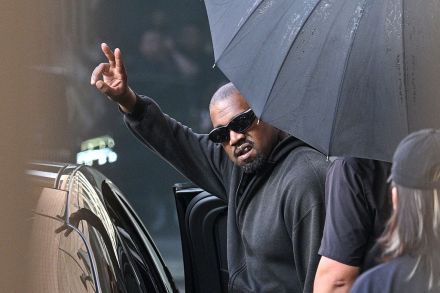
Kanye West and Arcade Fire: a tale of two cancellations

At first glance, Kanye “Ye” West and the Arcade Fire’s lead singer Win Butler might seem to have little in common. Ye has built his increasingly deranged career on provocation and confrontation, and that has now reached its nadir in his latest single, “Heil Hitler,” in which he declares that “All my niggas Nazis, nigga Heil Hitler.” After listing the various perceived wrongs that have been done to him, Ye states, all too accurately, “So I became a Nazi, yeah bitch, I’m the villain.” Inevitably, it ends with the song sampling a Hitler speech, in which the Führer cried that, “Whether you think my work is right... if yes, then stand up for me as I stood up for you.” The song has attracted outrage, upset and genuine confusion as to Ye’s mental state.

Charles Ives was a composer before his time

In February 1951, Leonard Bernstein led the New York Philharmonic through the première of a symphony by an American composer unknown at Carnegie Hall. The composer in question was Charles Ives, by then too frail to attend in person. He listened from home when the concert was broadcast a few weeks later. An experimenter by instinct, Ives’s work had already proved an inspiration to a younger generation of radical American composers including John Cage, Lou Harrison and Morton Feldman. But that Ives listened from afar to the première, at long last, of his Second Symphony – completed in 1902 – was symbolic of the distance he maintained from America’s classical mainstream.

Ives
Dorian

The Picture of Dorian Gray is headache-inducing

The Picture of Dorian Gray begins on an unadorned note. Sarah Snook sits alone on an otherwise empty stage, facing a camera which projects her image on to a giant vertical screen. Chameleon-like, she switches instantaneously between two characters: the awkward but sincere painter Basil and his more debonair – and dastardly – friend Lord Henry. Snook may be Australian and a woman, but borne on her considerable gifts we are transported to Victorian England. With no props save a paintbrush for Basil and a cigarette for Lord Henry, Snook chops and changes between the two men: she contorts her face into nervy, painful subservience for Basil and her voice into a high, febrile whine.

Dylan

My Bob Dylan pilgrimage

On March 25, Bob Dylan delivered his first performance of the year in Tulsa, Oklahoma, as his “Rough and Rowdy Ways” tour enters its fourth year running. At 83 years old, there was no guarantee Dylan would keep performing live. At the start of the year, there were no new dates listed on his website. Then, in early January, one performance popped up. The show was to be held at the Tulsa Theater – an important location for the performer, as the city is home to the Bob Dylan Center, located in the downtown art district. Tulsa also has a reputation as a musical destination through which almost every legendary folk, rock, country and blues artist has toured. Dylan is no exception.

Foreign governments have themselves to blame for Trump’s movie tariffs

Donald Trump has thrown another trade grenade. His latest idea – a 100 percent tariff on all foreign-made films – is crude, impractical and potentially disastrous for his frenemies in the Hollywood industry that he has suddenly decided to champion. Announcing the tariffs via Truth Social, Trump tried to paint movies produced overseas as a danger: not just to America’s film production industry, but national security too. “WE WANT MOVIES MADE IN AMERICA, AGAIN!" he thundered. Invoking national security to justify these tariffs is legally shaky. Practically, it’s not clear how you even impose tariffs on a complex, multi-national production like a modern movie. Films shot in Croatia, edited in the UK and funded by America pose an administrative nightmare.

marvel movie
jon voight movies

The problem with Trump’s plan to make American movies great again

Donald Trump is a cinephile, of sorts. Not since Ronald Reagan has there been a US President so visible in theater, with Trump making cameos in everything from Home Alone 2 to Zoolander. Yet just as Trump has been steadfast in his determination to Make America Great Again, so he has been equally keen to Make Hollywood Great Again, too. Initially, he appointed Sylvester Stallone, Mel Gibson and Jon Voight as “Special Ambassadors” to “a great but very troubled place.” Gibson and Stallone appear to have taken the honor on the chin, but Voight has been diligently organizing meetings and has now fed back his thoughts to the President. As a result, Trump has declared that he has his own, unorthodox plans to save the American motion-picture industry.